


Mount It in Minutes: The MagLock Pro Magnetic Mount for Tradie and Light Commercial Fleets
For a service ute that moves between jobs all day, a satellite mount has to be fast, strong and drill-free. That is exactly what a magnetic mount is for.
There is a version of the remote-work setup that lives on a desk, and there is the version that lives on a tray-back. For electricians, fitters, mobile plant mechanics and field service crews across Australia, the connectivity kit is part of the vehicle — and the difference between a setup that works and one that frustrates is usually the mount.
Drilling a permanent hole in the roof of a company ute is not an option for most crews. The vehicle is leased, it is shared across shifts, and the next job might be in a different vehicle anyway. The traditional answers — clamp-on brackets, roof racks, suction mounts — each come with their own compromises. A strong magnetic mount solves the problem cleanly: it holds the terminal securely at speed and on corrugations, and it is on and off in seconds with no tools and no holes.
This guide looks at how magnetic mounting works for light commercial and field service vehicles, what separates a mount that stays put from one that lets go, and how the MagLock Pro and the rest of the Outcamp magnetic mount range fit into a working vehicle setup.
The mounting problem on a working ute
A field service ute is not a touring vehicle. It is a working tool that carries tools, gets parked in dusty laybys, runs corrugated access tracks, and gets handed between drivers. The satellite terminal has to live somewhere it does not get damaged, does not get in the way of the work, and can be deployed and packed up within minutes — often several times in a single day.
Roof racks are the default for many crews, but they add height, weight and wind noise, and they are not present on every vehicle in the fleet. Suction mounts are convenient but rely on clean glass and do not suit every cab layout. Clamp mounts need a rail or a lip to bite onto. For a crew that moves the terminal between vehicles, the mount has to be standardised — the same interface on every roof, so the terminal moves, not the mount.
Why magnetic works for this job
A properly engineered magnetic mount is the fastest repeatable mounting solution available. Place the terminal on the base, feel it pull down, and it is mounted. Lift it off at the end of the job and it is packed. There is no bracket to unbolt, no strap to thread, no suction cup to reset. For a crew doing three or four stops a day, that time saving is real.
The second advantage is the roof itself. The steel panels above the cab of a modern dual-cab ute are a large, flat, metallic surface — which is exactly what a magnetic mount needs. The mounting point is clear of the load, high enough for a good sky view for the satellite terminal, and out of the way of the work being done on the tray.
What separates a strong mount from a toy
Not all magnetic mounts are equal. The differences that matter in a working environment are the strength of the magnets, the quality of the interface with the terminal, and the way the mount handles vibration and heat.
A mount built around strong neodymium magnets holds the terminal flat against the panel, distributing the load across the magnetic surface. A weak mount — the kind sold for phone holders — will slide on corrugations, and a satellite terminal sliding across a roof at highway speed is a loose object in the worst possible place. The mount also needs a flat, stable interface for the terminal: the Starlink Mini sits on the mount with its own base, and the connection between the two has to be positive enough that wind load at speed does not shift it.
Heat is the less obvious one. A roof panel in outback sun can be genuinely hot to the touch, and the terminal itself generates its own heat in use. A magnetic mount with a protective layer between the magnets and the terminal keeps the two from sharing heat problems, and it protects the paint on the vehicle.
The MagLock Pro and the magnetic mount range
The Outcamp magnetic mount range is built around the same principle applied to different vehicles and roles. The MagLock Pro Magnetic Vehicle Mount is the heavy-duty option for light commercial and fleet use, designed to hold a Starlink Mini securely on the roof or bonnet of a vehicle in motion.
Built for the working day
The MagLock Pro uses strong magnets rated to hold the terminal in place at highway speeds and on rough tracks, with a protective interface that keeps the terminal and the vehicle's paint safe. Its footprint is sized for the Starlink Mini, so the terminal sits flat and stable, and the mount can be moved between vehicles in the fleet without any modification — the same terminal, the same mount, any roof.
The rest of the family
The range covers the other common mounting points:
- The Starlink Mini Stainless Steel Magnetic Mount and Starlink Mini Alloy Magnetic Mount With Shield are lighter-duty options for camp and day-to-day use, and the shield version adds protection for the dish face.
- The Starlink Mini Portable Magnetic Roof Mount is the take-with-you option for crews who swap between the work ute and the personal vehicle.
- The MagLock Pro itself is the pick for vehicles that spend their days on corrugated roads, where holding strength and vibration resistance are the whole game.
For vehicles that spend more time parked than moving — a site office, a camp, a breakaway trailer — the Starlink Mini Tripod Mount or a rail mount is the better fit, because a tripod can be repositioned to the best sky view rather than being tied to the vehicle.
Power and the complete vehicle setup
A mount is only one half of a vehicle install. The terminal needs power, and in a working ute the power source is the vehicle itself.
The clean answer for most setups is the Starlink Mini Cigarette Lighter Power Supply (165W USB-C) — it plugs into the existing 12V socket in the cab, supplies the terminal through the USB-C connection, and keeps running while the vehicle is parked with the ignition off, drawing from the battery. For crews that leave the terminal running through the workday, this single cable replaces a pile of adapters and keeps the install simple enough that anyone in the fleet can set it up.
The other piece is the cable routing. A mount on the roof means the cable has to get from the terminal into the cab — through a door seal, a vent or a grommet. Keeping that run short, protected and easily removable matters when the terminal is packed up at the end of every day. The Starlink Mini 2-in-1 DC Power Cable + RJ45 Data is a practical option for crews that also want a wired network connection at the vehicle, combining power and data in one cable run.
Installation, cable management and maintenance
A magnetic mount makes the daily setup trivial, but the long-term reliability of a vehicle install comes down to the details around it. The good news is that none of them require a workshop.
The three-step daily routine
The working rhythm for a field crew with a magnetic roof mount settles into three steps. Mount: lift the terminal onto the base and let the magnets seat it. Connect: plug in the power cable, already routed into the cab. Pack up: unplug, lift the terminal off, stow it in its case. The whole cycle is under two minutes, and it does not require tools, ladders or a second person.
That speed matters more than it sounds. A setup that takes two minutes gets used for a ten-minute email check between jobs. A setup that takes fifteen minutes gets used once in the morning and once at night — and the connectivity that should be available through the day quietly stops being part of the workflow. Magnetic mounting keeps the barrier to deployment low enough that the kit actually gets deployed.
Cable routing on a working vehicle
The cable is the least glamorous part of any vehicle install and the most common source of frustration. On a roof-mounted terminal, the power cable has to come from the terminal down to the cab, and the two things that kill installations are chafing and pinch points.
The practical approach is to route the cable along the A-pillar and through the door seal or a small rubber grommet, leaving enough slack for the door to open and close without pinching the cable, and securing the run with cable ties so it does not flap in the wind. A short, tidy run that can be disconnected at the terminal end makes the pack-up routine painless. The Starlink Mini 2-in-1 DC Power Cable + RJ45 Data is a useful option here for crews that also want a wired data connection at the vehicle, because it means one cable run instead of two.
The maintenance checklist
A magnetic mount needs almost no maintenance, but a 30-second check every few weeks keeps it dependable. Wipe the base and the panel surface clean of dust and grit before mounting — grit trapped between the magnets and the paint is the main cause of fine scratches. Check the protective interface for wear, and inspect the cable at the points where it passes through seals. If the terminal has been sitting on the roof in heavy rain, dry the mounting surface before the next use. That is the whole list.
Real-world fleet patterns
The magnetic mount shows up in three common fleet patterns, each with a slightly different emphasis.
The mobile plant service crew
Mobile plant fitters and heavy equipment electricians move between sites all day, carrying diagnostic laptops and a connectivity kit to look up service manuals and order parts on the spot. For this crew, the mount's speed is the feature: the terminal goes up at the first site, comes down at the last, and the same unit works in a different ute tomorrow. The MagLock Pro's holding strength matters when the vehicle spends the day on unsealed access roads.
The FIFO and shutdown crew
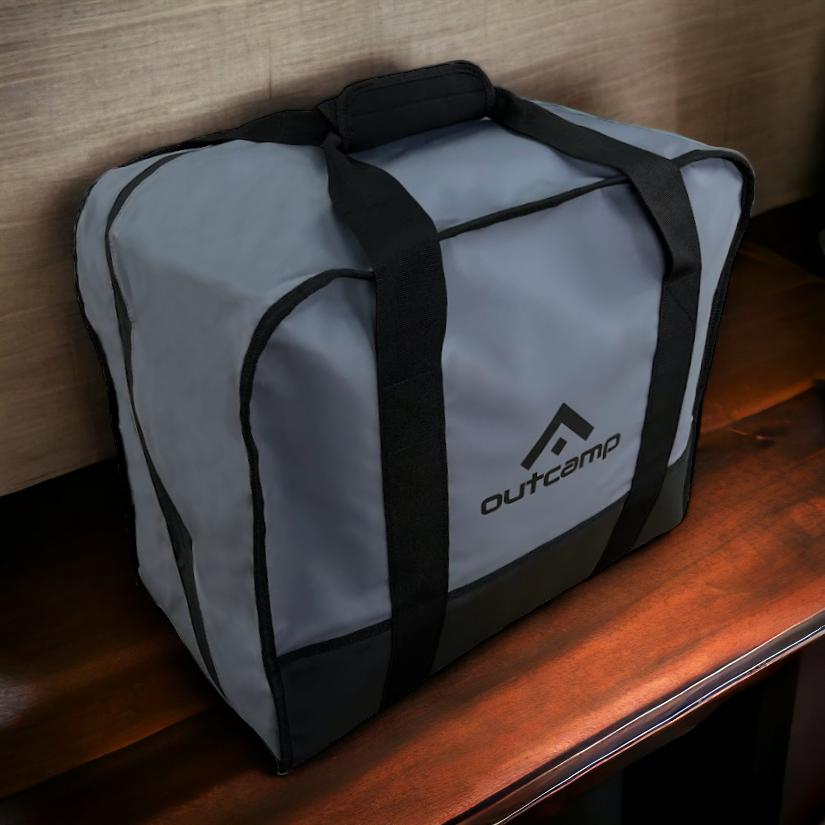
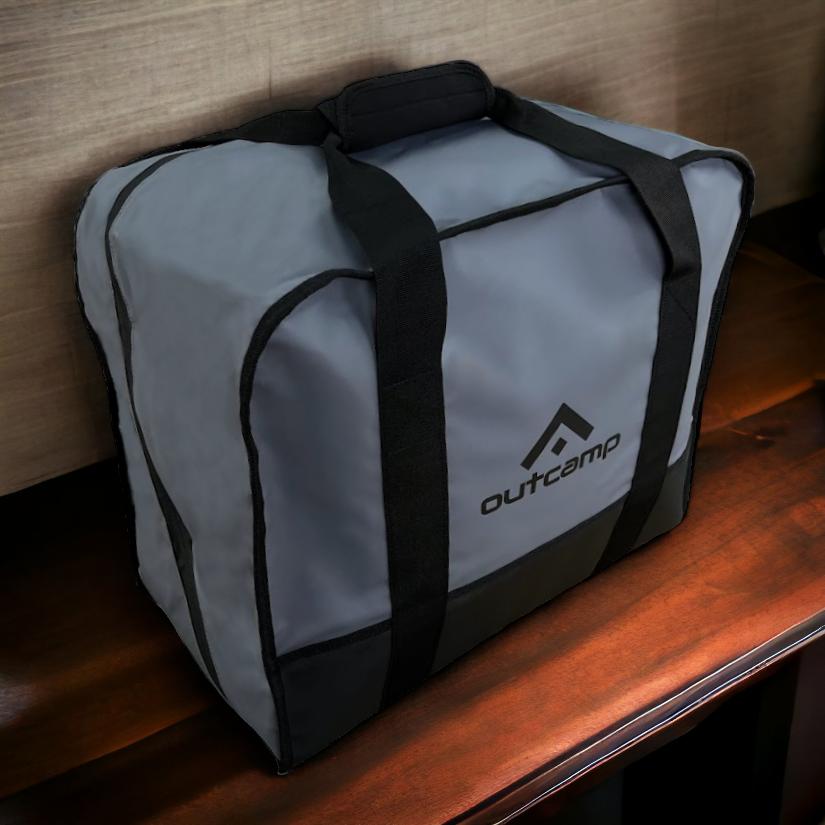
For crews on shutdowns and FIFO rotations, the vehicle is often a hire ute issued at the airport. A magnetic mount converts a standard hire vehicle into a connected field office without modifying it — a decisive advantage when the lease agreement says no drilling. The terminal and mount travel in a carry bag and are deployed on whatever vehicle the roster hands out that week.
The remote services and inspection role
Surveyors, inspectors and compliance officers working remote sites need connectivity at the vehicle while the job is in the field. A roof-mounted terminal with a tripod as the alternative deployment gives them both options: mount it on the vehicle for the drive and the mobile office, or drop the same terminal onto a tripod beside the work area when the sky view from the vehicle is not good enough.
Frequently asked questions
Will a magnetic mount hold a Starlink Mini at highway speeds?
Yes, when the mount is engineered for it. The MagLock Pro and the other Outcamp magnetic mounts use strong neodymium magnets sized to hold the terminal flat against the panel at speed, and the design is intended for vehicles that spend time on corrugated and unsealed roads. A phone-holder style magnetic mount is not the same thing — it lacks the magnet strength and the stable interface for a larger device.
Will a magnetic mount damage the roof or the paint?
No, when the mount is designed correctly. The Outcamp magnetic mounts include a protective interface between the magnets and the panel, which prevents metal-on-metal contact and stops the magnets from scratching or degrading the paint. The standard advice applies: clean the mounting surface occasionally, and check the mount for grit between it and the panel.
Can the same terminal be moved between vehicles?
Yes. That is one of the main advantages of the magnetic system for fleets. The terminal and its mount move together as a unit — lift it off one roof, place it on the next. There is no permanent modification to either vehicle, which makes it work for leased vehicles and shared fleets. Each vehicle just needs a clean, flat steel panel on the roof.
The connection follows the truck
For a field crew, the connectivity kit is only useful if it is actually deployed — and a setup that takes fifteen minutes to mount and unmount will quietly stop being used by the end of the week. Magnetic mounting removes that friction. The terminal lives on the roof in minutes, comes off in seconds, and moves between vehicles without a tool in sight.
The MagLock Pro and the wider Outcamp magnetic mount range are built for exactly this pattern of work: vehicles that move, crews that share them, and terminals that need to be where the job is. Combined with a 12V power supply and a clean cable run, it turns a standard fleet ute into a mobile field office that sets up as fast as the coffee machine.
Looking for more on vehicle connectivity? Browse the Outcamp news and guides for practical coverage of power management, cable routing and mounting systems for Starlink Mini across Australian industries.




Leave a comment (all fields required)