


The power station arrived with a big number printed on the side of the box, it ran the fridge beautifully in the driveway for an entire afternoon, and it was flat by the second morning at a free camp. Nothing was broken. The number on the box simply was not the number that mattered.
Portable power gets sold on capacity and bought on capacity, but a caravan runs on two figures at once. One decides how long the box lasts. The other decides whether it can start the thing plugged into it at all.
The short version: watt-hours decide how long, watts decide whether it starts. Work from usable watt-hours rather than the figure on the label, take roughly 15 per cent off if you are inverting to 240V, and check the continuous and surge ratings against your biggest load before you hand over any money.
Two numbers, two different jobs
Every unit carries a capacity figure and an output figure. They answer different questions, and buying on one without the other is how people end up disappointed by a perfectly good product.
Watt-hours: how much is in the box
Watt-hours (Wh) are energy, which is to say the size of the tank. For a battery quoted in amp-hours, multiply volts by amp-hours: a 12V, 100Ah battery holds about 1,200Wh on paper. That figure tells you roughly how long a given load will run.
Watts: how fast you can pull it out
Watts (W) are flow rate, the width of the tap. A unit can hold 1,000Wh and still refuse to start a fridge whose compressor surges past its output limit. The continuous rating is what it will hold indefinitely. The peak or surge rating is a short burst, usually seconds, and it is the figure that decides whether a motor turns over.
The capacity figure that matters is usable capacity
A battery's nominal capacity is not what you can take out of it. Chemistry sets the practical limit, and this is where most caravan power plans quietly fall apart.
| Chemistry | Practical usable capacity | What that means for a 100Ah 12V bank |
|---|---|---|
| AGM or flooded lead-acid | About 50 per cent | Around 600Wh before you start shortening its life |
| Gel | About 50 per cent | Around 600Wh |
| LiFePO4 (lithium) | 80 to 90 per cent | Around 960Wh to 1,080Wh |
Those are planning rules of thumb, not lab measurements. The gap between them is still wide enough to change what you buy, and it explains why a lithium bank rated the same as an AGM one runs so much closer to its label.
The inverter tax
Anything running from a 240V socket has been converted from 12V DC to 240V AC, and the conversion costs energy. Losses commonly sit in the order of 10 to 15 per cent, and an inverter also draws a trickle just by being switched on with nothing plugged in.
Where an appliance offers a native 12V or USB-C input, use it. On a caravan that usually means charging cameras, phones, routers and the satellite terminal from DC and saving the inverter for the kettle and the laptop.
Output, surge and the fridge problem
A 12V compressor fridge draws a few amps while it is running, but it only runs part of the time. That duty cycle is why people get complacent about refrigeration, and why the fridge is so often the load that exposes an undersized unit.
The difficult moment is startup. When the compressor kicks in it pulls a short surge well above its running draw, and a unit with the watt-hours on paper but not the output to match will trip or stall. Check the surge rating against the startup draw, then leave margin for a hot day.
Pass-through charging, and why caravans care
Plenty of portable units behave differently while charging than while discharging. Some will not do both at once. Others pass power through but at a reduced output, or stop accepting charge once a load is connected. None of this is a fault. It is a design choice that rarely makes it onto the box.
If the unit will live in the van permanently, that behaviour matters more than the capacity printed on it. A unit that charges and supplies at once behaves like an uninterruptible supply. One that cannot is a box you swap in when needed, which changes how you wire the van.
Heat, cold and where the box lives
Lithium batteries dislike being charged below 0°C. Many units will refuse the charge to protect themselves, which is the correct behaviour and still a surprise on a frosty morning. Heat is the other end of the scale: a unit left in a closed van in the sun sits inside a greenhouse, and the cells age faster for it.
Mount it with airflow, out of direct sun, and bring it inside on freezing nights if it needs to charge overnight. A van's internal temperature swings further than most people assume.
A sizing method that stops the guessing
- List the loads. Write down what actually runs and its wattage or amperage, preferring the DC option where the appliance offers one.
- Estimate run hours, not plug-in hours. A fridge cycling on and off is not drawing full current all night, and a router draws a small steady trickle nobody notices.
- Convert to watt-hours per day. Multiply watts by hours for each load, then add the daily totals together.
- Divide by usable capacity. Take the total, divide by the usable fraction for your chemistry, then add the inverter loss if you are running 240V gear.
- Compare against what goes back in. Solar and DC-DC charging decide whether the bank recovers. A system sized only on draw will run flat by day three.
- Add margin, then check the output rating. Sizing is only half the decision, and the surge figure is the half people skip.
Real-world tips from a touring setup
- Write your loads on a sticker inside the van cupboard. It ends the annual argument about whether the fridge can stay on overnight.
- Keep one 12V lead long enough to reach the fridge without a tensioned run. Tight cables pull connectors loose on corrugations, and a half-seated plug gets hot.
- Charge everything you can while driving. The alternator is the cheapest generator you already own.
- Test the setup in the driveway for two nights before a trip. A flat battery at home is an inconvenience; the same battery 400 km from a shop is a change of plans.
- When something drains faster than expected, knowing the baseline is what finds the fault instead of guessing at it.
Where Outcamp fits
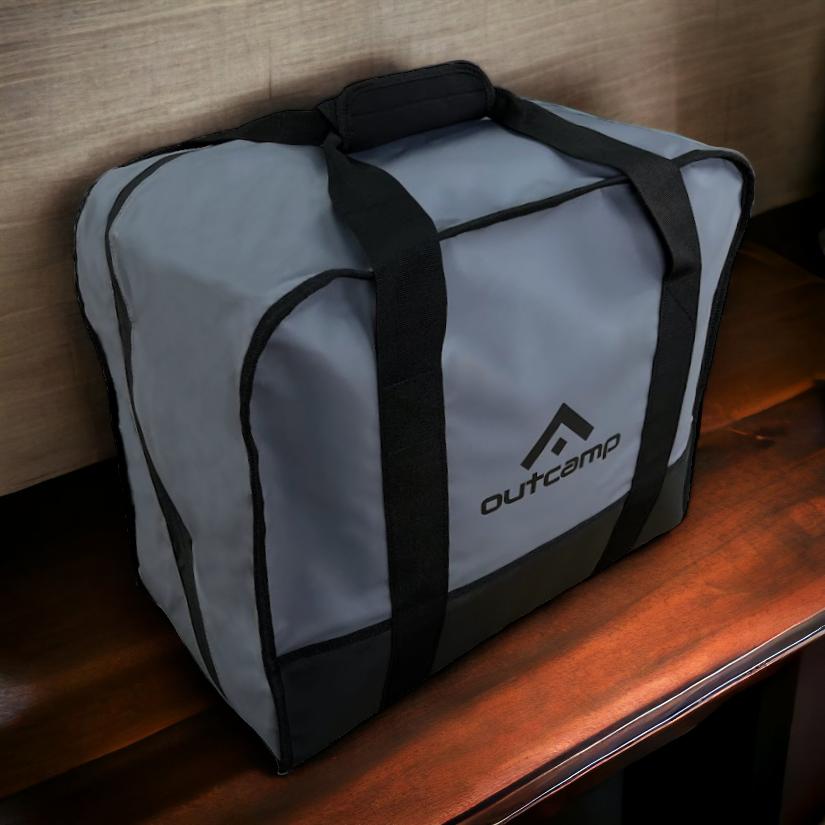
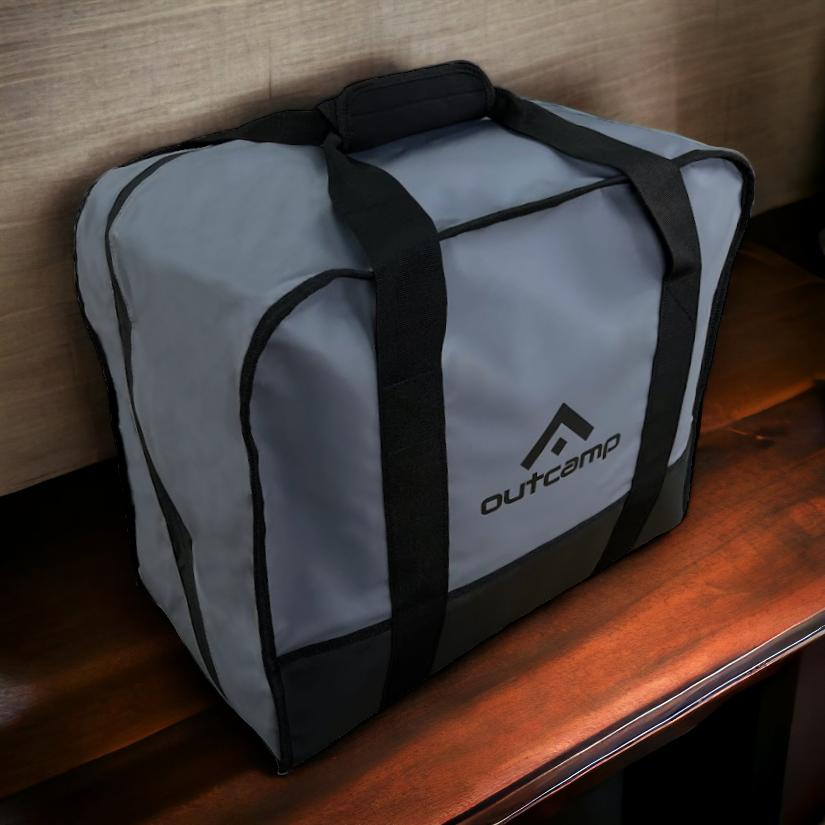
Most of this comes down to running one specific load for a predictable number of hours, and for a Starlink Mini the load is small but constant. The Starlink Mini Battery Mount pairs a 39,000mAh pack with an aluminium alloy power handle so the terminal and its power travel as one unit. If you want the terminal to keep running through a power interruption instead of simply drawing from a pack, the Portable Battery, UPS Power Supply for Starlink Mini is rated for 7 to 10 hours of runtime. And if you already carry a portable power station in the van, a carry bag costs far less than replacing a cracked casing after one bad track.
The number to remember
Watt-hours tell you how long. Watts tell you whether it starts. Usable capacity, not nominal capacity, is what you plan with, and the surge rating is the figure that decides whether the fridge gets through the night. Get those three right at the shop and the box in the cupboard stops being a gamble.
What is your van running on, and what caught you out the first time? Tell us in the comments.




Leave a comment (all fields required)