


 Introduction
The phone rings at 2 am and the pager lights up. By first light your crew is staged on a dirt road with a fire front moving faster than forecast, and the nearest working tower is the one you drove past forty minutes ago. Every incident commander has lived that version of the scenario — the moment the job depends not on your gear, but on whether your comms still work.
Starlink Mini for emergency services changes that equation. A terminal small enough to live in a vehicle, powered from a 12V system, deployed in minutes and pulling broadband from orbit gives incident teams something they have never reliably had: a link that does not depend on infrastructure that just burned, flooded or lost power.
Why nowAustralia's fire danger season is stretching. Southern states start preparing in spring, and the corridors where crews operate — forested ranges, coastal scrub, remote farmland — are precisely the places where mobile coverage is thinnest. Flood response has the same profile: SES units get tasked into river valleys where the towers on the ridge may be up, but the ones in the valley are not.
Agencies already use satellite phones for voice. What they have lacked is data — bandwidth for mapping, video from drones, live incident management systems, welfare calls for crews. Starlink Mini delivers that bandwidth in a package that fits beside the trauma kit.
Section 1 — What Starlink Mini changes on the fireground
The rapid-deployment advantage
The first hour of any incident sets the tone. Command posts need to stand up before the situation outruns them. A Starlink Mini tripod setup is out of the case, pointed at the sky and online in under five minutes. No trenching, no generator hire, no technician callout. The crew that deploys it has working data before the first briefing ends.
That speed matters in a way that is hard to overstate. Incident management teams use live weather, satellite fire mapping and asset tracking from the moment they arrive. Every minute those tools are dark is a minute decisions are made on older information.
Connectivity that survives the event
Ground infrastructure fails exactly when it is needed most. Power poles burn, exchanges flood, generators run out of fuel. A satellite link terminates in orbit, not in a building down the road. As long as the terminal has a view of the sky and a power source, it stays up.
This is the property that makes Starlink Mini suitable for emergency services work: it is not more of the same infrastructure, it is independent of it. That independence is the whole value proposition for disaster response.
Bandwidth for the tools that matter
Voice is handled by radios and sat phones. Data is the new gap, and it is a wide one. Modern incident response runs on it — electronic incident action plans, shared situation maps, drone feeds, video teleconferences with regional control, welfare messages for hundreds of crew members.
The Starlink Mini link carries all of it. It is not a trickle of text; it is broadband at a scale that lets a forward command post behave like the head office it is remote from.
Section 2 — Building the incident-ready kit
Power is the real constraint
A satellite terminal is only as useful as its power supply. In a disaster zone, mains power is the first thing to disappear and generators are loud, thirsty and shareable only so far. The workable answer is the vehicle: every response unit has a 12V system and most have significant alternator capacity.
The [Starlink Mini 12V to 30V Power Supply (Anderson Plug)](https://outcamp.com.au/products/starlink-mini-12-volt-to-30-volt-power-supply-with-anderson-plug) turns a vehicle's auxiliary power into a clean, regulated feed for the terminal. Anderson plugs are already standard in emergency and 4WD fleets, so the cable plugs into an existing distribution point without adapters or bodgy joins.
For the moments when the engine is off — a long briefing, a staging period, a night on station — a battery buffer carries the load. The [Starlink Mini Portable UPS Power Supply (7-10 Hours)](https://outcamp.com.au/products/starlink-mini-portable-ups-power-supply) sits between the vehicle supply and the terminal, so the link survives engine-off periods and protects the gear from voltage dips when the compressor kicks in.
Mounting that moves with the unit
A disaster response terminal needs to be deployable in seconds and equally quick to pack. Drilling mounts into agency vehicles is rarely an option, and every hole is one more thing to explain to the fleet manager.
The [Starlink Mini Magnetic Mount](https://outcamp.com.au/products/starlink-mini-magnetic-mount-1) is the practical answer for steel roofs and bonnets. It holds the terminal at highway speed, releases cleanly when the unit needs to move to the command table, and leaves the vehicle untouched. For crews that run a tray, a tripod on a flat surface achieves the same portability.
Networking inside the command post
A single terminal is a start, but a forward command post is a network. Incident management teams run multiple laptops, a printer for maps, handheld programmers and occasionally a satellite phone docking station. They all need a wired, stable connection, not a free-for-all on WiFi.
The [Starlink Mini/Gen 3 Ethernet Adapter (4 Ports)](https://outcamp.com.au/products/starlink-gen-3-starlink-mini-ethernet-adapter-for-wired-external-network-4-ports-starlink-ethernet-adapter) converts the terminal's single connection into four wired ports. Wired links in a command environment matter: they are immune to interference from radios, they do not drop when twelve devices join at once, and they keep sensitive planning traffic off the air.
Section 3 — Real deployments: how the capability is used
Bushfire strike teams and forward command
The typical fireground deployment puts a strike team leader in a vehicle with a terminal on the roof, a UPS in the footwell and a tablet on the dash. From that setup they pull live fire mapping, send updated asset locations to the incident controller and run welfare check-ins without leaving the vehicle.
As the day progresses and the fire front shifts, the same kit moves with the crew. That mobility is the point — the link belongs to the team, not to a fixed site, so command follows the operation rather than the other way around.
SES flood response in river valleys
Flood response is a different beast: slow-moving, water-damaging and spread across a wide area. SES units get cut off when roads close, and their comms are tested when the repeater on the hill loses power at hour six of a twenty-four-hour event.
A unit with Starlink Mini keeps its data link regardless of what the river does. Tasking updates, damage photos for the control centre and welfare calls for isolated residents all flow over the same terminal, and the whole kit packs into the back of the vehicle when the water drops.
Disaster base camps and evacuation centres
When an event overwhelms a region, base camps and evacuation centres become small towns. They need registration systems, medical coordination, family reunification tools and internet for hundreds of displaced people. Mobile data will not survive the load, and the local network may be damaged anyway.
Multiple Starlink Mini units — one per marquee, or one central unit with wired distribution — give a camp a real network. The Ethernet adapter becomes the backbone, running cable to registration tables and welfare desks while the terminal sits on a pole or tripod with a clear sky view.
Section 4 — Practical considerations for agencies
Training and testing
Emergency gear only works when crews are trained on it. The good news is that Starlink Mini is simple enough that an afternoon session covers deployment, power hookup and pack-down. The better news is that regular use — in the workshop, on exercises, during prescribed burns — keeps the skills current.
Include the terminal in exercise scenarios. If the kit never leaves the shelf until the real thing, the first deployment will be the training session, and that is the wrong time to learn that a cable is missing.
Redundancy and interoperability
Satellite data is a layer on top of radio voice, not a replacement for it. The professional setup keeps both: UHF and VHF radio for tactical voice, satellite for data and long-haul links. Where agencies already run satellite phones, the Starlink Mini data link complements them rather than duplicating them.
Interoperability matters across agencies too. A terminal that connects a CFA crew, an SES unit and a council controller to the same incident management platform reduces the coordination friction that costs time during fast-moving events.
Handling, storage and spares
Field gear takes a beating. The terminal itself is rugged, but the cables are the fragile part — they get stood on, dragged through mud and coiled badly in the dark. Stock a spare power cable and a spare data cable in the case, and check them on the same schedule as the first aid kit.
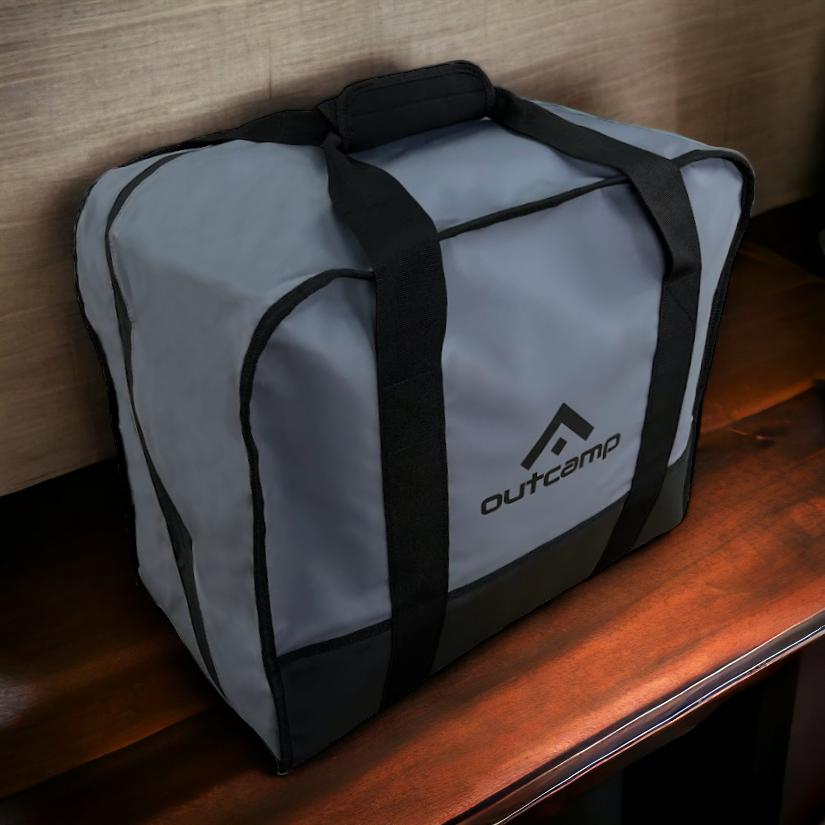
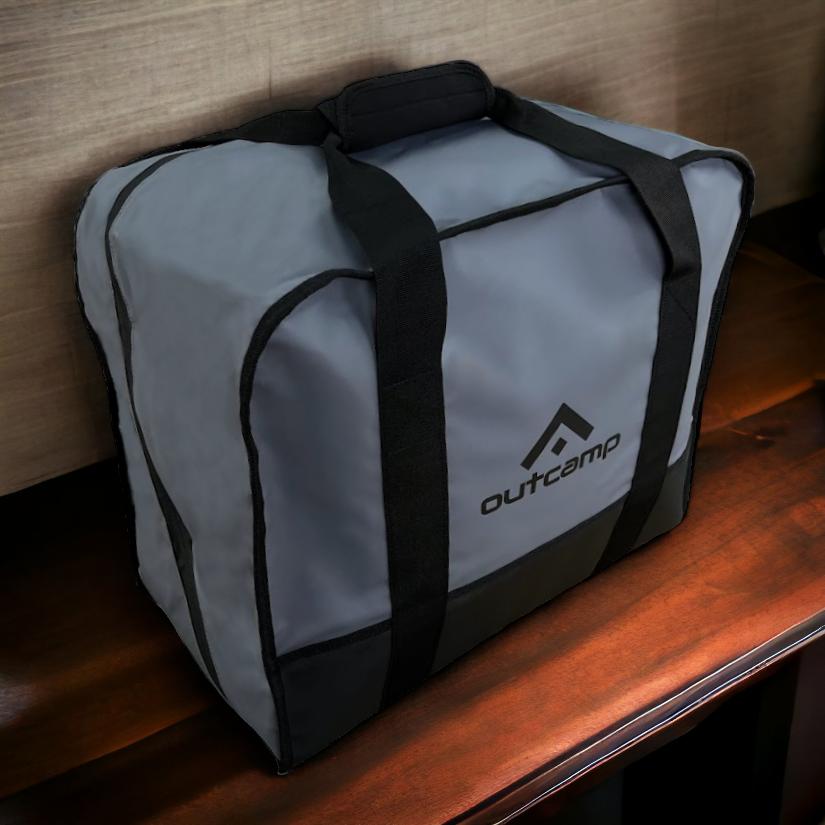
Storage matters as much as handling. A hard case with cut foam protects the terminal in transit, keeps the cables organised and makes the whole kit a single grab-and-go item. A dedicated case also makes the accountability question simple: if the case is on the truck, the kit is complete.
The incident that runs on solid data is the incident where the commander is watching the map, not waiting for a phone call. Field-deployed satellite broadband is what moves a team from reactive to current.
Section 5 — Getting agency buy-in
Start with a single unit
No agency adopts a new capability on paper alone. The practical path is a single trial unit, placed with a strike team or SES unit that operates in the worst coverage area in the region. Let them use it for a season — for actual incidents, not just demonstrations.
The results will speak for themselves. When a crew sends damage photos from a flooded valley while the towers are down, the capability sells itself. When the next season's budget cycle starts, the trial data is the evidence.
Align with existing procurement
Agencies already have supplier lists, fleet standards and safety documentation. Satellite data kits slot into those frameworks cleanly — the Anderson-plug power supply matches the 12V standard most fleets already run, and the mounting options avoid any permanent vehicle modification that would require engineering sign-off.
That alignment matters. The fastest way to kill a good idea in an agency is to make it require a new process. Starlink Mini gear drops into the existing ute, the existing power system and the existing operating procedures.
Plan for the seasonal cycle
Fire and flood seasons are cyclical, and so is the procurement conversation. The right time to propose the capability is before the season, not during it. Agencies that trial through spring have the paperwork, the training and the confidence in place by the time the first serious event arrives.
FAQ
Is Starlink Mini suitable for use during bushfires and flood response?
Yes. Starlink Mini is a satellite terminal, so it does not depend on ground towers that can be damaged or lose power during a disaster. It deploys in minutes, runs from a 12V vehicle system or a portable battery, and provides broadband data for mapping, drone feeds, incident management systems and welfare calls. It complements — not replaces — existing radio voice networks.
How does Starlink Mini get power in a remote emergency setting?
The standard approach is to feed it from the vehicle's 12V auxiliary system using the [Starlink Mini 12V to 30V Power Supply (Anderson Plug)](https://outcamp.com.au/products/starlink-mini-12-volt-to-30-volt-power-supply-with-anderson-plug), which suits the Anderson-plug distribution already fitted to many response vehicles. Adding the [Starlink Mini Portable UPS Power Supply (7-10 Hours)](https://outcamp.com.au/products/starlink-mini-portable-ups-power-supply) lets the terminal keep running when the engine is off, protecting the link during briefings, staging and overnight operations.
Can multiple devices connect to a single Starlink Mini at an incident command post?
Yes. The terminal's built-in WiFi handles standard devices, but for a busy command post the [Starlink Mini/Gen 3 Ethernet Adapter (4 Ports)](https://outcamp.com.au/products/starlink-gen-3-starlink-mini-ethernet-adapter-for-wired-external-network-4-ports-starlink-ethernet-adapter) provides four wired connections. Wired links are more stable than WiFi under radio interference and handle the load of multiple laptops, printers and mapping systems at once, which is the typical profile of a forward command setup.
ConclusionAustralian emergency services operate in some of the most demanding communications environments on earth. The terrain is unforgiving, the distances are enormous and the infrastructure fails exactly when it is needed. Starlink Mini for emergency services does not pretend to solve every problem, but it closes the biggest one: the data gap at the point of the incident.
The kit is simple and it is proven in the field — a terminal, a 12V power feed, a battery buffer and a wired distribution point. That is the difference between a crew that waits for information and a crew that has it. For agencies weighing the capability, the season is the deadline. A unit trialled now is a unit that is trained, tested and trusted before the next major event arrives.
Outcamp builds the support system around that terminal: the Anderson-plug power supplies, the UPS, the magnetic mounts and the Ethernet adapters that turn a satellite link into an incident-ready network. If your crew or agency is standing up a remote comms capability, the setup guide is shorter than you think — and the confidence it buys is worth the afternoon of training.
Product PDP handles for Operator to resolve (internal links in body):- [Starlink Mini 12V to 30V Power Supply (Anderson Plug)](https://outcamp.com.au/products/starlink-mini-12-volt-to-30-volt-power-supply-with-anderson-plug): `starlink-mini-12-volt-to-30-volt-power-supply-with-anderson-plug`
- [Starlink Mini Portable UPS Power Supply (7-10 Hours)](https://outcamp.com.au/products/starlink-mini-portable-ups-power-supply): `starlink-mini-portable-ups-power-supply`
- [Starlink Mini Magnetic Mount](https://outcamp.com.au/products/starlink-mini-magnetic-mount-1): `starlink-mini-magnetic-mount-1`
- [Starlink Mini/Gen 3 Ethernet Adapter (4 Ports)](https://outcamp.com.au/products/starlink-gen-3-starlink-mini-ethernet-adapter-for-wired-external-network-4-ports-starlink-ethernet-adapter): `starlink-mini-gen-3-ethernet-adapter-4-ports`
Hero image src: https://sc02.alicdn.com/kf/Af21190112c3b47659f716b935ae8c4010.png Alt text: White Toyota LandCruiser 200 Series emergency response vehicle with red and blue roof light bar, Starlink Mini terminal mounted on a bracket, rugged communications case with monitor and antenna beside it, smoke plume from a bushfire on the horizon at golden hour in the Australian outback




Leave a comment (all fields required)