


A chainsaw is one of those bits of kit that earns its place the first time you use it and then sits in the back of the wagon for months. Then a cold wet night arrives, the campfire is the only warmth for fifty kilometres, and the saw comes out.
The trouble is that a chainsaw comes with more rules than most 4WD accessories. Where you can cut, when you can cut, how you carry it and how you fuel it are all regulated somewhere in Australia, and getting it wrong can cost you a fine or start something you cannot put out.
The short answer
Carry the saw in a proper case, chained or strapped down so it cannot move. Fuel it on a hard surface away from any ignition source, and never inside the vehicle. Only cut firewood where collection is legal for personal use, and never run a chainsaw on a day of Total Fire Ban.
Where you can and cannot cut firewood
This is the part that catches people out, because the rules are set by each state and they are genuinely different.
In New South Wales, collecting firewood inside national parks and reserves is prohibited, and parks ask you not to bring firewood in either, because moving wood can spread pests and diseases. In Victoria, firewood collected from State forest is for personal use only, and only on days and in areas that are open for collection. Western Australia runs a permit system through the state conservation agency, and some forest areas are signposted for baiting that is hazardous to dogs.
The practical rule: before you pack the saw, check the current collection rules with the relevant state forestry or parks agency, and assume that national parks are off limits entirely.
Total Fire Ban days are non-negotiable
On a day of Total Fire Ban you do not use a chainsaw. That is not a grey area — Victorian firewood guidance states it plainly, and other states take a similar line, because a saw in dry grass throws sparks and hot exhaust.
Keep a habit of checking the fire danger rating each morning on tour. If it is a Total Fire Ban, the saw stays in the wagon and you buy your firewood or do without. This is also why it pays to carry a small gas cooker for cooking even on trips where you plan to cook over coals.
Carrying the saw: what a proper setup looks like
A chainsaw is a hot, sharp tool sitting in a vehicle that leans, bumps and corrugates. The goal is simple: it must not move, it must not leak, and nothing sharp should be exposed where a hand or a load can find it.
Case it, then tie it down
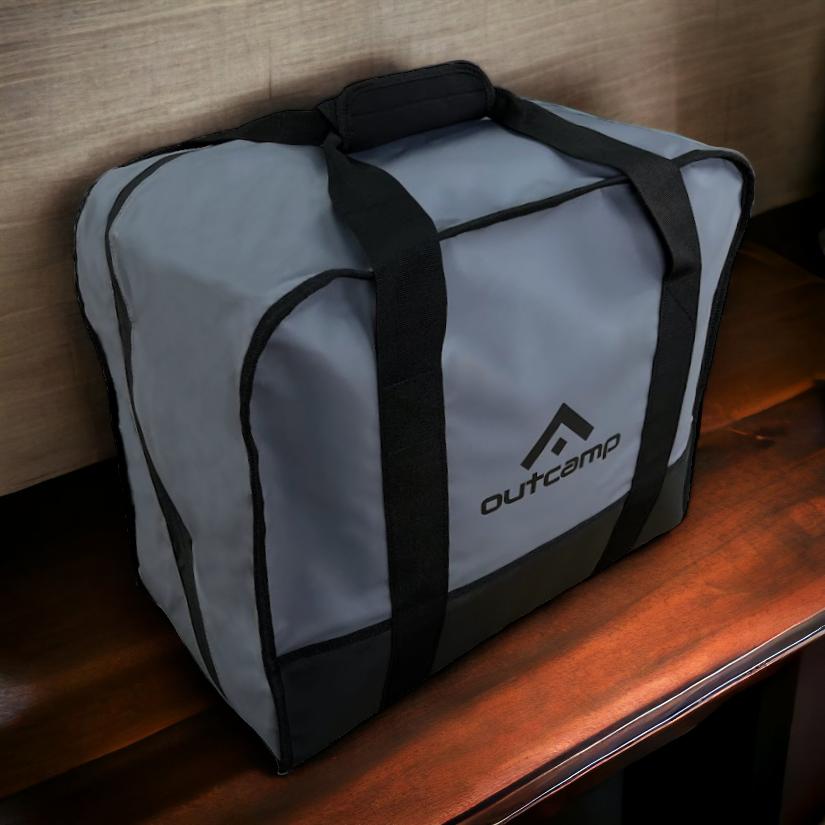
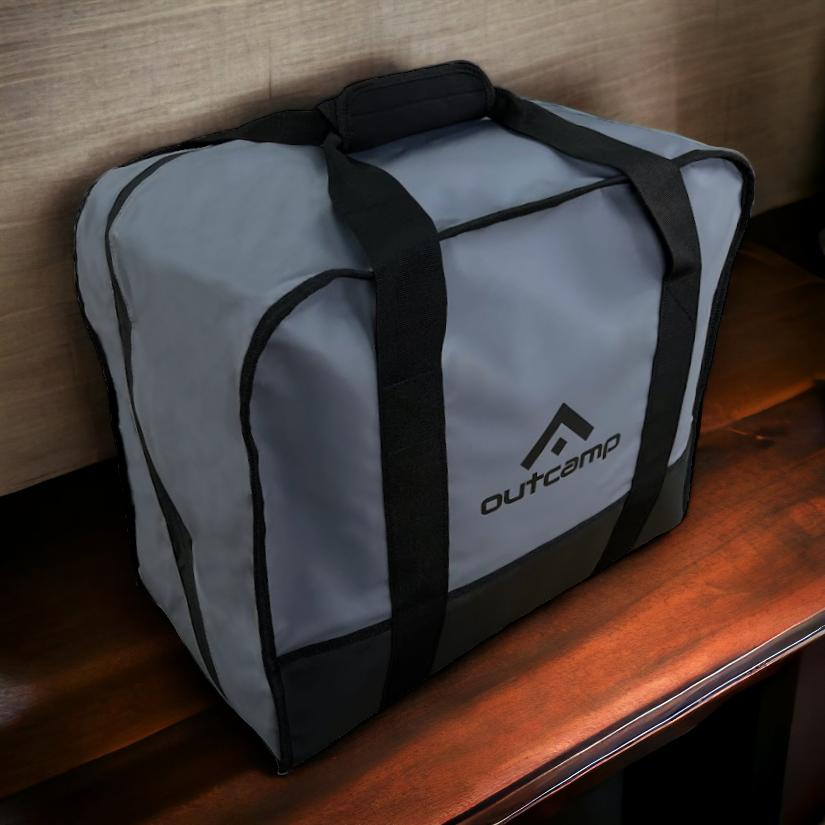
Never carry a bare saw. A carry bag or hard case keeps the bar covered, contains the chain oil that inevitably weeps from the bar, and stops the saw from becoming a missile in a sudden stop.
The bag is only half the job. It still needs to be tied down. A couple of bungees through the handles and around a fixed tie-down point will hold it, and roof rack eyelets give you proper anchor points if your tray or canopy does not have any.
Check it before you load
Before the saw goes in, do a thirty-second check: bar oil topped up, chain tension correct, air filter clean, and the chain brake working. A saw that gets checked before it is loaded is a saw that starts on the first pull when you actually need it.
Fuelling and starting safely
Refuel and re-oil on a hard surface where a spill cannot leach into forest soil — that is the specific guidance Victorian firewood rules give, and it makes sense anywhere you care about the ground you are standing on.
Never fuel a hot saw, and never fuel inside the vehicle or a tent. Move the saw at least a few metres from where you were cutting before you open the fuel cap, and let it cool. Store the fuel can sealed and upright, and not in the cabin with you.
When you start it, put the saw on the ground with the bar clear, engage the chain brake, and keep your feet out of the arc of the chain. Chaps, gloves, boots and eye and ear protection are the standard safety kit for a reason.
A word on chain tension and sharpening
A loose chain flops and a dull chain burns. Both make the saw work harder and throw more debris, which is exactly what you do not want in dry fuel. Check tension before each session, and touch up the cutters with a round file every tank or so. A sharp saw cuts faster with less heat — which is both a safety and a fire consideration.
Real-world touring tips
- Carry dry wood in, if you can. Moving firewood spreads pests and disease, so if you are heading into a park, buy locally near the destination rather than hauling it from home.
- Cut dead, fallen timber only where collection is permitted. Standing dead trees are habitat, and they are also the ones most likely to drop a limb on you.
- Keep a spare chain and a file in the case. A sharp chain and two minutes of filing beats an hour of swearing.
- Burn it down to ash. A fire left to burn out overnight is a fire you are trusting to the weather. Put it out properly with water, not by covering it and hoping.
- Check the rating every morning. Fire danger ratings change fast in spring and summer, and a Total Fire Ban means the saw stays packed.
Keeping the load secure
The last thing worth sorting is how the saw and your firewood actually ride in the wagon. A saw rolling around loose is a hazard, and a bundle of split timber that shifts on a corrugated road can punch through a canopy window.
Outcamp's 4WD range covers the small, unglamorous bits that fix this. The stainless steel roof rack eyelets give you proper M8 anchor points for tying a saw case or a load down, and a pack of bungee loops with balls is the simplest way to hold a tarp over split firewood on the tray.
Neither of them is exciting. Both are the kind of thing you are glad you packed.
Wrapping up
A chainsaw is a genuinely useful touring tool, provided you treat it like what it is: a sharp, hot, spark-throwing machine that lives inside a fuel-filled vehicle in some of the driest country on earth. Carry it cased, secured and fuelled carefully, cut only where you are allowed, and leave the saw packed on Total Fire Ban days.
Get those habits right and the saw disappears into the background until the night you actually need it. Do you carry a chainsaw on tour, or do you buy your firewood? Tell us in the comments.




Leave a comment (all fields required)