


Six in the morning, not a cloud in the sky, and the whole camp is dripping.
The awning is beaded with water. The swag canvas is damp to the touch. Your boots, left under the annexe overnight, are wet through. The ground is powder-dry red dirt and nothing has fallen out of the sky for a week.
The short version: that water came out of the air, and a fair bit of it came out of you. Warm moist air inside the shelter hits cold canvas overnight, gives up its moisture, and runs downhill. Ventilation is the fix, drying gear before you pack is the habit, and packing damp is what turns one wet morning into a mouldy trip.
Where the water actually comes from
Warm air carries more water vapour than cold air. Overnight the inside of a closed tent or swag stays warm and humid while the outer surface of the fly radiates heat away and drops below the surrounding air temperature. Once it hits the dew point, vapour turns back into liquid.
In spring that gap between a warm day and a cold clear night is widest, which is why October mornings feel wetter than summer ones.
1. You, breathing
A person breathing and sweating through a night puts a steady stream of water vapour into a closed shelter. Two people and a dog in a sealed swag is effectively a humidifier running all night. This is the biggest single source, and it is the one nobody blames.
2. The ground underneath
Damp soil, wet grass and leaf litter release vapour that rises into the floor of your shelter. Pitching low, near a creek or in a gully makes it worse, because cold air pools exactly where you sleep.
3. Wet gear and wet clothes
Hanging a damp towel or yesterday's socks inside the tent is the quickest way to soak it. That moisture has to go somewhere, and it goes onto the coldest surface available, which is the fly above your head.
4. Cooking and boiling water
A kettle inside the annexe puts steam straight into the shelter. Burning gas produces water vapour as a by-product too, so a long cook-up under cover adds to the load.
5. Single-skin shelters
A double-wall tent traps moisture on the inner face of the fly, away from you. A swag, a single-wall tent or a canvas tourer does not have that gap, so condensation forms directly on the surface you are touching.
Condensation or a leak?
Worth sorting out early, because the fixes are completely different. A leak is a failure of the fabric or a seam. Condensation is a failure of airflow.
| What you see | Condensation | Leak |
|---|---|---|
| Where the water sits | An even film or fine droplets across the inside of the fly, heaviest above heads and feet | One repeating spot, often along a seam, zip or tie-out |
| When it appears | Worst at dawn, clears as the sun hits the fabric | During or shortly after rain, regardless of temperature |
| Pattern | Runs down the slope of the shelter | A streak or steady drip in the same place every time |
| Fabric condition | Dry on the outside, wet on the inside face | Wet through, or water beading poorly on the outside |
Ventilate like you mean it
Airflow is the whole game. Moisture only becomes a problem when the air holding it stops moving, so give vapour somewhere to go rather than sealing the shelter tighter.
Open vents at both ends so air can cross through, not just one. Leave the top of a door cracked even on a cold night, and accept that a slightly cooler sleep is a drier one. Keep the fly from touching the inner tent, because anywhere the two layers meet, the moisture transfers straight through. And if the swag has a mesh panel, use it.
Pick the site for the morning
Cold air drains downhill and pools in gullies and creek flats, which is precisely where condensation is worst. Camp higher, away from water, and clear of dense canopy that blocks the early sun. Facing the door east means the shelter starts drying itself while you are still boiling the kettle.
The morning routine that actually saves the trip
Most of the damage happens in the ten minutes between waking up and stuffing everything back in the vehicle. A short routine at camp beats an afternoon of drying gear at home.
- Wipe before it runs. Keep a microfibre cloth handy and wipe the inside of the fly and the swag hoop before the droplets merge and drip onto bedding. A dry cloth takes seconds and saves a wet sleeping bag.
- Open everything up. Unzip doors, peel back the fly, lift the awning. Even twenty minutes of morning sun and moving air will dry a surprising amount.
- Airlift the mattress. Turn the mat or stretcher over and let the underside breathe. Moisture trapped between mat and floor is what makes the bottom of a swag feel cold and clammy.
- Pack dry, separately. Anything with dew or dampness goes into its own bag, not into the main swag roll or the gear crate with everything else.
- Do not fold wet canvas for the trip home. If the shelter has to come down damp, drape it or leave it loosely bundled, then set it up in the yard the moment you get back.
Storing it damp is the expensive mistake
Canvas that goes away wet grows mildew in the seams; coated nylon delaminates and smells. Neither is fixable, and both shorten the life of a shelter faster than hard use will.
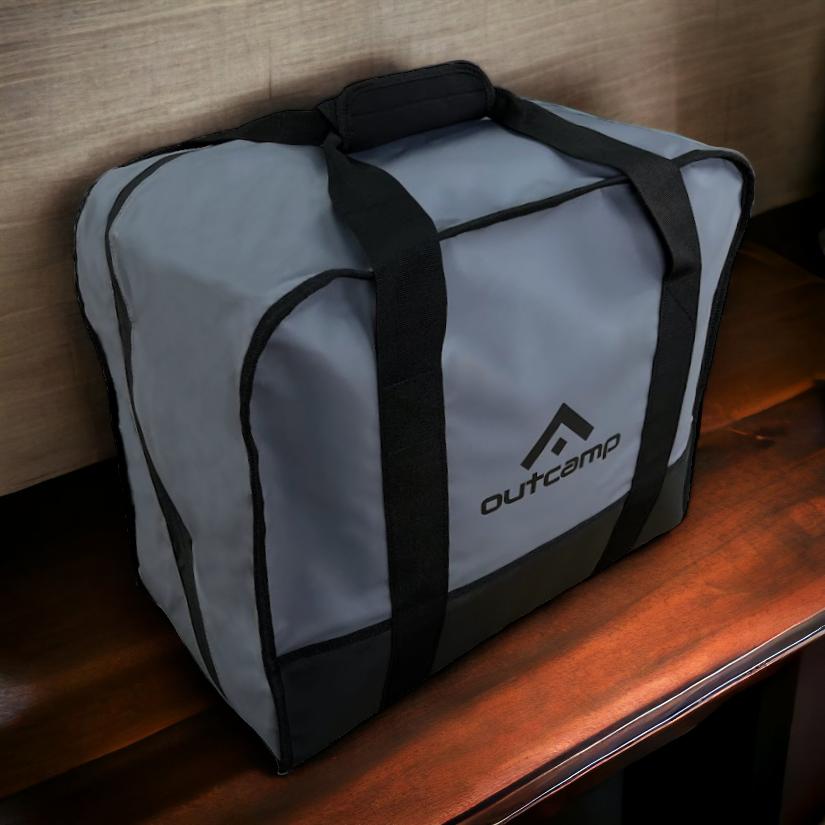
The practical answer is separating wet from dry inside the vehicle. A waterproof gear bag for damp canvas, wet towels and muddy boots keeps moisture away from sleeping bags and clean clothing, and it doubles as dust protection on corrugated roads where fine red bulldust gets into everything. Our waterproof gear bags are built for exactly that job, and the same approach works for awnings and annexe panels.
When it really is the tent
If the fabric is wet on the outside while the inside face is dry, water is coming through rather than condensing. Usually the durable water repellent coating has worn off from UV and abrasion, or a seam needs sealing. Clean it, reapply a suitable proofing treatment, and the beading returns. Avoid detergent, which strips the coating.
Real-world habits from the road
- Boil the billy outside. Steam under the awning ends up on the canvas within minutes. Cook and make tea in the open, even when it is cold.
- Keep a dedicated wet bag. One bag for anything damp means you are never digging through clean gear looking for the wet towel.
- Pitch for airflow, not for privacy. A shelter sealed up like a tent at a caravan park will always be wetter than a draughty one.
- Watch the low spots. If your boots are wetter than the tent, you camped in a cold-air drain. Move twenty metres uphill.
- Dry at home the same day. Set the swag or tent up in the yard, hose the dust off, and let it dry fully before it goes back on the shelf.
The dry camp is a design choice
None of this needs new gear: a vent left open, a cloth within reach, and the discipline to separate damp canvas before it goes in the vehicle. Do those three and wet mornings stop turning into wet weeks.
What is your setup for keeping gear dry on a long trip, where everything gets packed away damp at least once? Tell us in the comments.




Leave a comment (all fields required)