


When a generator earns its place
Some trips genuinely need one. A week of overcast weather that leaves the solar flat. A CPAP machine that has to run every night. A work laptop that stays charged because the invoices don't wait. A caravan fridge that never quite keeps up in a 38 degree run.
Then there are the trips where bringing a generator is the worst decision you could make — a quiet free camp on a long weekend, or anywhere inside a national park.
The trick is working out which trip you're actually on before you spend the money.
The short answer
If your needs are charging devices, running a fridge and keeping the lights on, a 1kW inverter generator is usually plenty. If you want to run a coffee machine, a microwave or a small air conditioner, you're looking at 2kW and up.
Whatever the size: buy an inverter model, look at the actual noise figure rather than the word "quiet", and check the generator rules at your campsite before you pack it.
What to look for
Inverter, not conventional
An inverter generator produces stable, clean power at a steady frequency. That matters for laptops, chargers, routers and anything with sensitive electronics in it. Conventional generators produce dirtier power and their frequency drifts with the load.
Running watts versus peak watts
There are two numbers on every unit and people buy on the wrong one. Running (or continuous) watts is what it will sustain all day. Peak (or surge) watts is a brief overload it can absorb — the kind of spike an electric motor draws in its first second.
So you size to the start-up surge of your biggest motor plus the running draw of everything else. A fridge compressor starting while a charger is already on is a different job to a fridge on its own.
Noise, in dB(A)
This is the number that decides whether your neighbours have a good trip. Ignore the adjectives and find the dB(A) figure at around seven metres. Lower is better, and you will notice a few decibels far more than the spec sheet suggests.
Weight and fuel
You will lift it in and out of the wagon more often than you think. Compact 1kW units generally sit in the 10 to 13 kg range, while 2kW units commonly land somewhere around 20 to 27 kg. Tank size then sets your runtime, so check the runtime figure at roughly a quarter load rather than at full noise.
Fuel type
Petrol is standard. Dual-fuel models that also run on LPG exist, and they can be handy if you already carry gas for the barbecue.
Common pitfalls
- Buying on peak watts alone. A big headline number means nothing if the unit cannot hold a steady load.
- Ignoring noise until you are parked next to someone.
- Assuming you can run it anywhere. Many national parks and conservation reserves restrict or ban generators outright, and plenty of caravan parks and free camps have set hours. Check before you go.
- Running it too close to the tent. This is the serious one. Generator exhaust contains carbon monoxide, which is invisible and odourless. Keep the unit well away from tents, awnings, windows, vents and annexes, and never run one inside an enclosed space.
- Storing fuel badly. Sealed, upright, and not loose in the cabin with you.
What a realistic camp load looks like
These are rough orders of magnitude. Check the label on your own gear rather than trusting a forum post.
| Load | Typical draw |
|---|---|
| Phones, tablets and laptops on charge | under 100 W |
| 12V fridge via a 240V charger | a few hundred watts |
| LED camp lighting | under 100 W |
| Kettle or coffee machine | commonly 800 to 1,500 W |
| Small air conditioner | 1,000 W and up, with a higher start-up surge |
Running it and looking after it
A generator that gets serviced at the start of the season is a generator that starts on the first pull. Keep to the manual on oil and spark plug, check the air filter, and if the unit is going to sit for months, stabilise or drain the fuel rather than leaving it to go stale in the tank.
Service it before the trip, not on it.
Real-world tips
- Park it downhill and downwind of where you eat and sleep.
- Run it during daylight. Nobody wants to hear it at 11pm, and you do not want to be the one running it.
- Use a short, heavy-duty extension lead rather than a long cheap one. Long thin leads drop voltage and stress the thing you are powering.
- Carry it in a padded bag so it does not get knocked around or leak fuel smell through the wagon.
- Keep a jerry can sealed and upright, and never transport it loose in the cabin.
Carrying and storing it
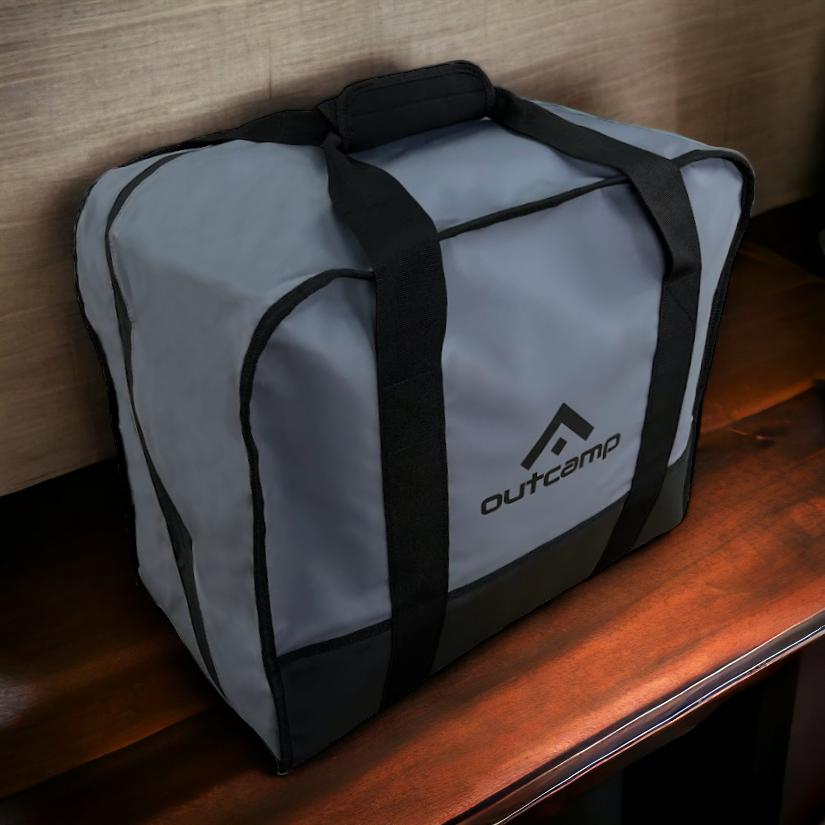
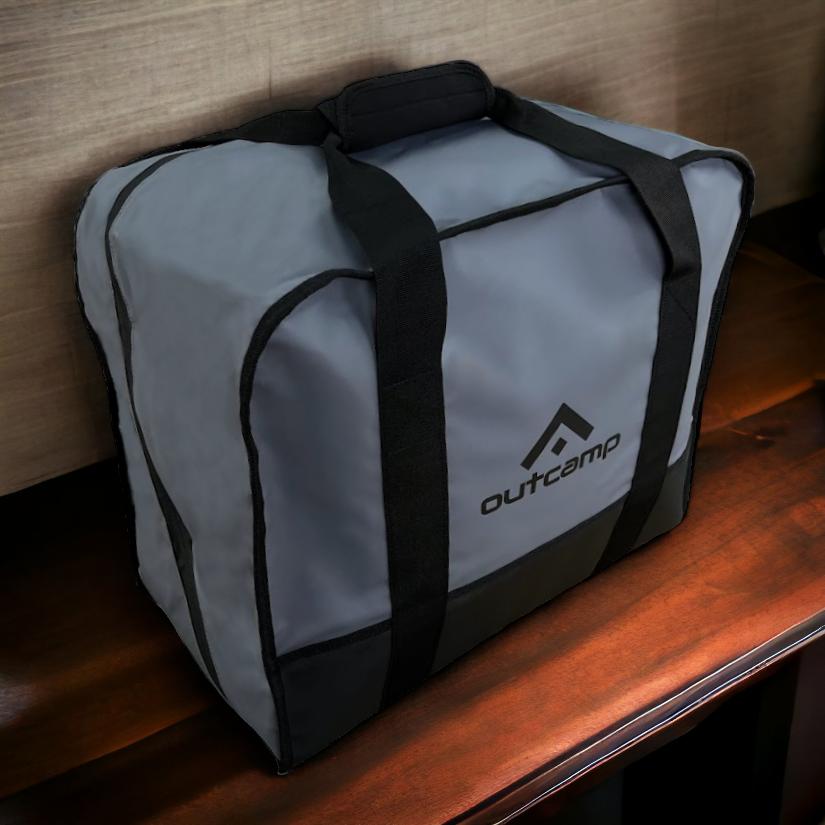
Once you have chosen a unit, the last thing worth sorting is the case. A padded carry bag protects the casing and the controls in transit and keeps the fuel smell out of your cargo area, which matters more than it sounds when the wagon doubles as the family car between trips.
Outcamp's generator carry bags are sized for the units campers actually run, including the Honda EU20i, the Yamaha EF2000iS, and an X-Large universal fit for the sizes in between.
Wrapping up
Check the rules where you are going first, then size to your real load rather than your dream load. A properly sized inverter generator is a quiet, dependable bit of kit. An oversized one is just weight and noise you paid for.
Got a setup that works for you, or a campsite that made you glad you left the generator at home? Tell us in the comments.




Leave a comment (all fields required)