


Somewhere on a bench in the Pilbara, a shotfirer is standing beside a ute with a tablet in one hand and a blast plan on the screen. The holes are loaded, the tie-in is done, and the exclusion zone is being cleared access point by access point. Almost everything about that job now depends on digital records moving between the field and the office. Blast exclusion zone communications are usually the one link in that chain nobody planned for.
It has quietly become a data problem rather than a radio problem. Your two-way still does the safety-critical work it has always done. What has changed is the volume of documentation that surrounds a shot: the plan itself, the clearance and sign-on records, the photographs that prove hole condition and tie-in, the post-blast inspection. Those files were once paper travelling back in the ute. Now they are expected in the system before the crew has washed the dust off.
What blast exclusion zone communications actually need to carry
The mistake most sites make is to treat connectivity at the shot as a welfare question. It is not. The data that has to move during a blast cycle is operational evidence, and it carries a deadline measured in hours rather than days.
Walk a single shot from the pre-blast meeting to the all-clear and you can count four distinct streams of information, each produced by a different person, each still relying on somebody driving it back to the office.
The blast plan is a digital document now
Modern electronic initiation is not a box of detonators and a firing cable. Electronic detonators carry microchips and communicate with a blasting computer, which means the shot design, hole depths, charge weights and delay sequence exists as a file that has to be loaded, checked and signed off. The plan is a document before it is ever a physical thing on a bench.
On a well-run site that document is revised right up to the pre-blast meeting. A geologist shifts a boundary, a supervisor changes a delay, an engineer flags a service running under the pattern. If the only current copy sits in an office, the crew is working against a version that stopped being true yesterday.
Nobody gets hurt by that, because the paperwork catches it eventually. The cost is quieter. The shot waits while somebody drives back for the revision, or the crew ties in against an assumption the plan no longer supports.
Guard sheets, sign-on and the perimeter
Clearing an exclusion zone is a physical process with a documentary trail behind it. The national shotfiring units require you to establish the exclusion zone according to site requirements and tie in according to the blast plan. Every access point that closes is a person, a position and a time.
On a large operation that is dozens of entries. Radios carry the verbal clearance and they do it well. What radios do not carry is the sheet itself: who is signed on at which post, which contractor crew is still inside, whether the count reconciles when the last post calls in.
When the count does not reconcile, the shot waits. That is the correct outcome and it is also the expensive one, and it happens most often on sites where the guard sheet is a clipboard in a vehicle two kilometres from the furthest post.
The record that has to exist afterwards
Post-blast inspection is where photographic evidence does most of its work. Muckpile condition, any misfire, the state of the bench face, the effectiveness of the fragmentation. All of it gets captured on a phone and all of it has to attach to the right shot record.
Those images are large and they are taken in the worst place on site for uploading them. The crew finishes the inspection, and the files sit on a device until it finds signal, which may well be the drive home.
Multiply that across a firing schedule and the compliance record develops a lag that nobody owns. The shot was safe. The file was simply late, and late files are what auditors ask about.
Why site office connectivity stops at the exclusion zone
Fixed connectivity on a mine site is designed around permanent places. The office, the crib room, the workshops, the gatehouse. These get fibre, microwave or a fixed satellite terminal because they do not move and they hold the people who need bandwidth.
The exclusion zone is the opposite of a permanent place. It follows the dig face. It is established where the next shot is, and then it is gone. Anything bolted to a pole is serving the wrong bench within a week.
The pit edge is a hostile radio environment
A deep pit is a bowl of rock and steel, and the geometry works against you. Line of sight disappears as the bench drops away, and the walls reflect and absorb whatever is left.
Mobile coverage in remote mining regions keeps improving and it remains patchy, and it is the first thing to go when you drop below the crest. A crew on a bench at the bottom of a deep pit is, for practical purposes, off the network.
This is the whole argument for a terminal that travels with the crew. Any fixed installation is serving a place the shot has already left.
Dust, heat and the hardware problem
The Pilbara and the Goldfields do not treat electronics gently. Fine red dust works into every connector that is not sealed, and surface temperatures on a vehicle tray climb well past what a consumer device expects.
The failure mode is rarely dramatic. A port corrodes, a cable loses contact at exactly the wrong moment, and the crew quietly stops relying on the equipment. By the end of the season the terminal is still in the ute and nobody uses it.
Kit that survives this is kit designed to be moved, sealed and cleaned. Anything that lives permanently in a cab and gets carried to the bench by hand is already on borrowed time.
When the vehicle is the only power source
A light vehicle in the field is a 12-volt system with a cranking battery that has one job. Running a terminal from it for a full shift with the engine off is a reliable way to finish the day with a flat battery and an unplanned recovery.
A Starlink Mini is modest by satellite standards, drawing roughly 25 to 40 watts in normal operation, but that is a steady draw across a long shift and it does not pause when the crew stops thinking about it.
The answer is either a dedicated auxiliary supply or a regulated converter that makes the vehicle's power predictable. What you cannot do is assume the cranking battery will absorb it and find out otherwise at knock-off.
The exclusion zone is the one part of a mine site deliberately designed so that nobody stays in it. That is precisely why the connectivity has to be something you carry in and carry out.
Building a blast exclusion zone communications kit
If the terminal has to travel, then the kit around it has to suit a vehicle that is loaded and unloaded twice a day. That changes what you prioritise. Setup time, power independence and protection in transit all matter more than peak throughput, because a fast terminal that stays in the case is worth nothing.
The hardware is no longer exotic. A Starlink Mini is roughly 30 by 26 centimetres, weighs a little over a kilogram and has WiFi built in, so the entire installation is a terminal, a power lead and something to stand it on.
Power that does not depend on the cranking battery
The Starlink Mini 12V to 30V Power Supply (Anderson Plug) is the straightforward answer for a vehicle-based kit. Anderson plugs are already the default connector on Australian field vehicles and auxiliary batteries, so the terminal draws from the same supply as the rest of your gear.
The wide input range matters more than it sounds. A 12-volt system is never really 12 volts. It sits above 13 while charging and sags under load, and a supply that tolerates the range avoids the dropouts that teach crews to distrust the setup.
With a dedicated auxiliary battery you can run a full shift without touching the cranking battery. Without one the supply still works, but you are managing state of charge as part of the job rather than as an afterthought.
Setup in under two minutes, wearing gloves
The Starlink Mini Tripod Mount solves the specific problem of a bench with no convenient steel and no flat surface. You are not hunting for a mounting point. You set the tripod down where the sky view is open and you are finished.
That matters because the exclusion zone moves. A magnetic or roof rack mount is right for a vehicle that returns to the same place every day. A tripod is right for a crew that establishes a position, works it for a few hours and leaves.
Gloves change the design requirement more than most manufacturers admit. Anything that needs a bare fingertip or a fine thread to assemble will not get assembled, and the kit stays in the ute.
Protection in transit is not optional
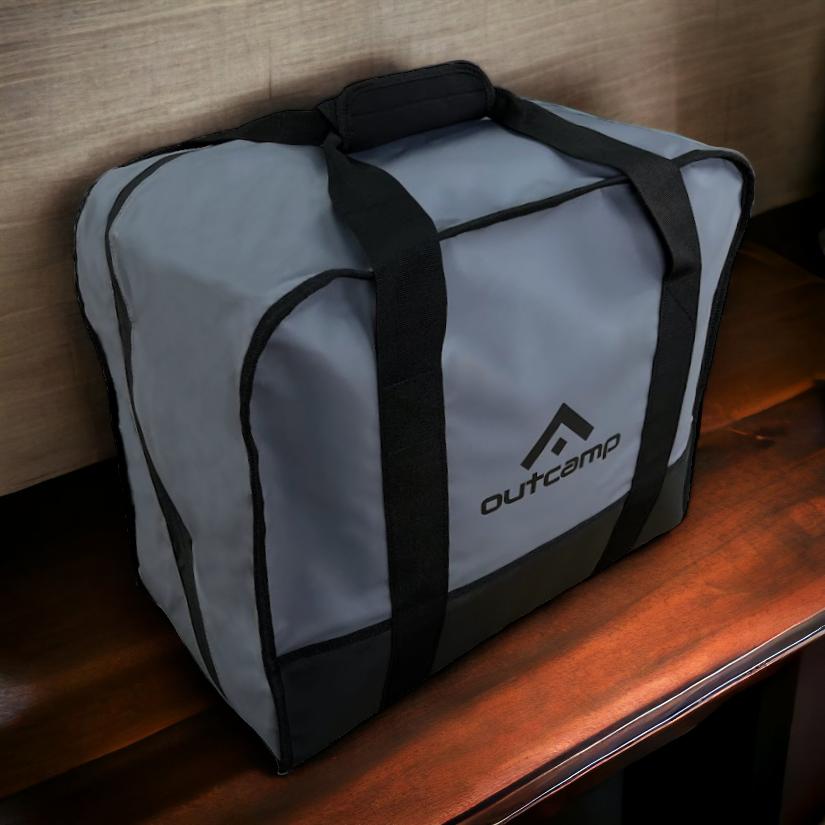
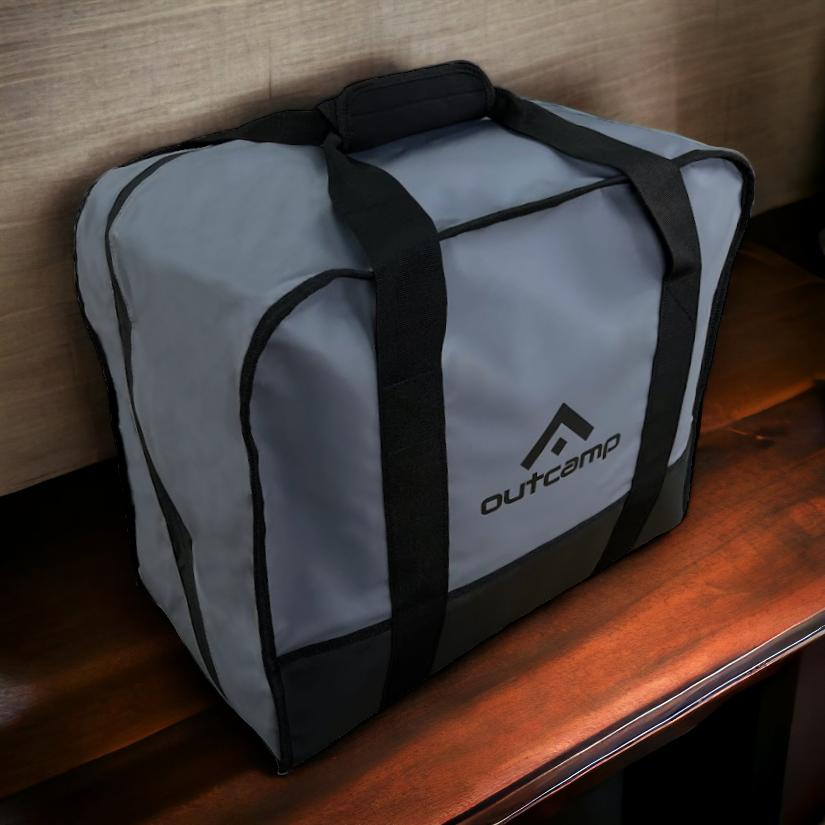
A terminal that rides loose in a tray beside drill steel and sampling bags will not last a season. The Starlink Mini Hard Protective Travel Case exists because that is ordinary treatment on a mine site, not abuse.
Dust is the other half of it. Fine material works into cable plugs and across the dish surface, and the Starlink Mini Silicone Cover gives you a removable barrier that can be wiped down rather than a face you are trying to clean in the field.
Treat the whole kit as one ruggedised unit, meaning case, terminal, mount, cable and supply, and it survives the roster. Treat it as four separate purchases and something goes missing by week three.
Where this approach stops
A satellite terminal in the exclusion zone is a tool with a defined job, and it is worth being blunt about the boundary. It carries data. It does not clear a shot, and it does not replace the systems that do.
Getting that line wrong is how good equipment gets blamed for a procedural failure. Better to state the limits before a crew discovers them at the worst possible moment.
It is not a blast signalling or clearance system
Clearance and firing signals are governed by site procedure and delivered over systems designed, maintained and assured for that purpose. Nothing about a portable internet terminal changes that, and no terminal should ever sit in the clearance chain.
The correct framing is simple enough. The terminal moves the paperwork. The radio and the site's own protocols move the people.
Where a site genuinely integrates data into its blasting system, that integration is an engineering decision with its own assurance process behind it. It is not something you assemble from a mounting bracket and a power lead.
Sky view is a real constraint
Satellite terminals need sky. A bench at the bottom of a deep pit, a highwall shadow or a dense run of infrastructure will degrade the link or block it outright.
In practice that makes positioning a skill rather than an afterthought. The tripod earns its place here, because it lets you move the terminal a few metres to clear an obstruction without moving the vehicle.
Expect a small proportion of positions to work poorly, and plan the shift so that the significant upload happens near the crest rather than depending on the pit floor.
Latency and the assumption of constant coverage
Satellite links carry latency, and plenty of site applications still assume a low-latency local network. Large model uploads, video review and remote desktop sessions will feel different over satellite than they do from the office.
Design around it rather than fighting it. Batch the photographs, upload at a natural pause in the cycle, and do not schedule a synchronous video call from the pit floor at the moment the shot is due.
The crew will work this out inside a week. The risk sits with the engineer in the office who assumes the field experience matches their own desk.
Frequently asked questions
Can a Starlink Mini replace two-way radios during a shot?
No. Radios and site clearance protocols govern the exclusion zone and the firing signal. A satellite terminal carries data such as the blast plan, guard records and inspection photographs, and should never form part of the clearance chain itself.
How much power does a Starlink Mini draw in the field?
Published figures put normal operation in the region of 25 to 40 watts, with lower draw when idle. Across a long shift that is a meaningful load, so run it from a dedicated auxiliary battery or a regulated supply rather than the vehicle's cranking battery.
Will a Starlink Mini work from the bottom of an open pit?
It depends on sky view. A deep bench with a highwall shadow can degrade or block the link. Position the terminal where the view is open, use a tripod so it can be shifted a few metres, and plan significant uploads for a point in the shift where the sky is clear.
Closing the gap without adding a procedure
Blast exclusion zone communications will keep being treated as a radio problem for as long as the digital half of the job stays invisible. It stops being invisible the first time a shot is held up because a plan revision was sitting in an inbox while a crew stood on a bench waiting for it.
The fix is not complicated. Give the crew a terminal that travels, a supply that does not lean on the cranking battery, a mount that assembles in gloves and a case that survives the tray. Everything else is procedure you already have and already audit.
Outcamp builds the mounting, power and protection side of that kit for Australian conditions, and the pieces are designed to work as one unit rather than four separate purchases that each solve a third of the problem.




Leave a comment (all fields required)