


Classroom in the Paddock: Starlink Mini for Remote Training on Australian Worksites
When the skills shortage meets the tyranny of distance, high-bandwidth satellite connectivity becomes the training room.
Australia's skills shortage is not a city problem. It is a Pilbara problem, a Darling Downs problem, a Gippsland problem, a Kimberley problem. For every qualified fitter, agronomist or electrician who cannot be found in a regional town, there is a training pathway that could fill the gap — if only the person on the far side of it could attend the course. The solution that is quietly transforming how Australian industry upskills its remote workforce is the same one that keeps mine sites, stations and construction camps connected: a compact satellite terminal that fits in a backpack.
Remote training on Australian worksites has moved from a nice-to-have to a commercial necessity. With skilled labour scarce and travel costs rising, organisations are looking for ways to deliver competency-based training, inductions, toolbox talks and supervisor development directly to the people who need it, exactly where they work. Starlink Mini for remote training is the piece of infrastructure that makes this possible in locations where fibre, mobile towers and reliable microwave links simply do not exist.
This guide walks through why remote training has become the new baseline for Australian industry, what a modern training session actually demands from a network, and how to build a portable training hub around Starlink Mini that works on a mine site, a cattle station or a construction camp.
Why remote training has become the new baseline
The economics of training have shifted. Flying a trainer to a remote site, or flying a worker to a capital city, costs thousands of dollars per head before a single module is delivered. Add accommodation, lost production time and the days spent out of the field, and a single certification can easily run to five figures by the time it is complete. Employers are doing the maths, and the answer keeps coming back the same way: bring the training to the workforce, not the other way around.
There is a second driver, and it is the one that makes remote training a strategic issue rather than a cost-cutting exercise. Australian businesses were expected to spend around eight billion dollars on employee learning and upskilling programs in 2024, according to industry estimates, and a large share of that spend is now expected to happen online. Blended and fully online training models consistently show better knowledge retention than one-off classroom sessions — some studies put the improvement from around eight to ten per cent up to 25 to 60 per cent — while cutting the time workers spend away from their core duties.
The catch is that online training only works if the network can carry it. A static PDF course might squeeze through a congested camp Wi-Fi network, but a live webinar, a video-based induction, a virtual reality safety simulation or an assessment session with a trainer watching in real time will not. That is where satellite connectivity enters the picture. In 2026, a Starlink Mini terminal the size of a laptop can deliver download speeds in the hundreds of megabits per second — enough to run the entire training stack of a small site.
The bandwidth reality of modern training
It is worth being precise about what a training session actually consumes. A standard video conference with a trainer runs at around one to two megabits per second for a decent stream. Add screen sharing, a document collaboration tool and a couple of participants, and you are comfortably inside ten megabits. A high-definition recorded course streamed to a group, with each learner on their own device, can push a network harder — five to ten megabits per second per learner is a reasonable planning figure. Throw in a live virtual reality or 3D walkthrough for equipment familiarisation, and you want headroom measured in the hundreds of megabits.
This is exactly the gap that satellite services like Starlink fill in remote Australia. The Mini terminal is designed for exactly this kind of portable, high-throughput use: it draws modest power, sets up in minutes and provides a stable connection that keeps its performance through a full training day. For a site that cannot get fibre and where the mobile network drops out after the first hill, this is the difference between delivering a course on schedule and postponing it for another month.
Building a remote training hub around Starlink Mini
A remote training hub does not need a server room. It needs a satellite terminal, a reliable power source, a Wi-Fi network for the learners and a way to lock down the connection. Here is how the pieces fit together for the three most common Australian scenarios.
The mine site or construction camp setup
On an active mine or a construction camp, the training space is usually a crib room, a sea container converted to a classroom, or a dedicated training building that sits at the edge of the site's existing network. The problem is that the site network is often oversubscribed — hundreds of people sharing a link sized for operational data, not for video training.
The clean answer is a dedicated training connection. A Starlink Mini terminal on a tripod or fixed to a wall bracket, feeding a small Wi-Fi router, gives the training room its own independent pipe. The Starlink Mini/Gen 3 Ethernet Adapter (4 Ports) is a practical addition here, letting the trainer hardwire a laptop, a smart TV and a video-conference unit rather than relying on Wi-Fi for everything. Hardwired connections are more stable under load, and stability is what you want when a dozen people are mid-assessment.
Power on a construction site is rarely an issue — there is usually a genset or a mains supply nearby. On a mine site, the same 12V to 24V or 12V to 30V power solutions used for fleet vehicles can keep a terminal running off the site's DC infrastructure. For the operator who wants a single, portable unit that can move between the training room and the field office, the Starlink Mini Cigarette Lighter Power Supply (165W USB-C) is a plug-and-play option that works from any vehicle or 12V source.
The cattle station and agricultural scenario
On a station, the training audience is spread across a vast area and the network is typically nil. Shearers need their wool handling accreditation renewed, station hands need chemical user certifications, and seasonal workers need inductions — and none of them can be sent to town for a week.
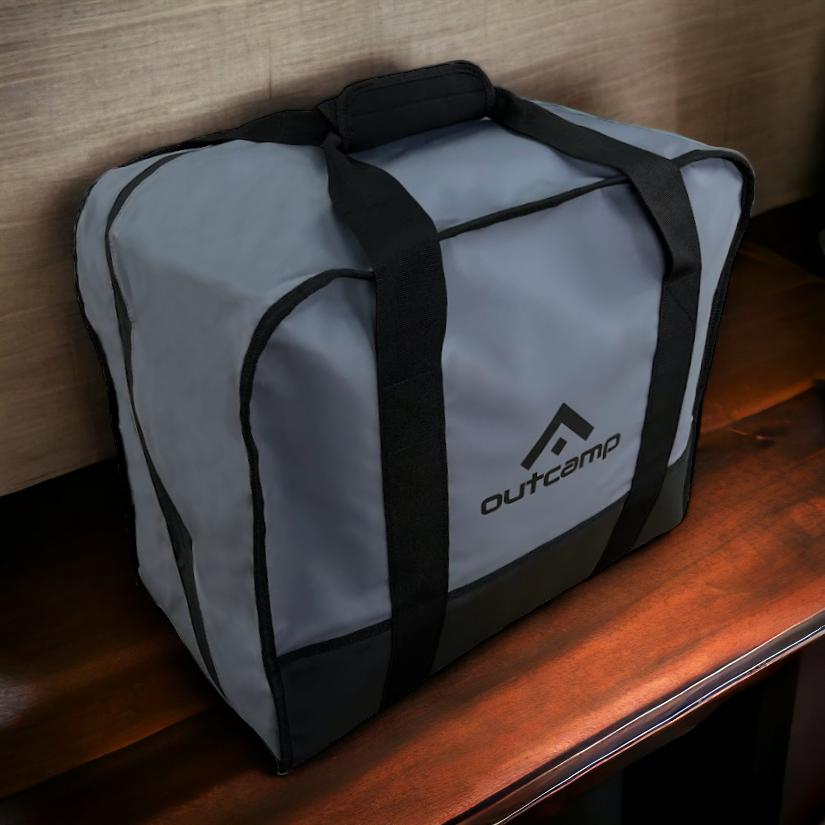
This is the purest use case for a portable training hub. Pack a Starlink Mini in a protective bag, set it up on the back of a ute or on a folding table beside the shearing shed, and you have a classroom wherever the muster trailer is parked. The Starlink Mini Travel Backpack (USB Charging Port & TSA Lock) was designed for exactly this kind of movement — terminal, cables, power pack and a laptop all in one unit that goes from vehicle to shed without a second trip.
For seasonal worker coordination, the same connection doubles as the hub for payroll uploads, health and safety documentation and the video inductions that must be completed before day one. Stations running this model report that inductions that used to take a full day of travel and paperwork can now be completed in the first hour of the worker's first shift.
The FIFO and remote services scenario
For fly-in fly-out workforces and mobile service crews — the electricians, fitters and technicians who move between sites — the training hub lives in a vehicle. A service ute fitted with a Starlink Mini on a roof rack or bull bar mount becomes a mobile classroom that delivers toolbox talks, refresher training and competency sign-off between jobs.
The power setup is critical here. A 99Wh battery like the PeakDo LinkPower 2 Portable Power Bank can run a Starlink Mini for several hours, which covers a full training block without touching the vehicle battery. For crews working from a vehicle all day, a hardwired solution such as the Starlink Mini 20V Hardwired Power Socket with Integrated Voltage Booster keeps the terminal running whenever the ignition is on, and the vehicle's auxiliary battery handles the rest.
What a good remote training network needs
Beyond the satellite terminal, there are a few pieces of the puzzle that separate a training setup that works from one that frustrates everyone involved.
Latency and stability over raw speed
Training sessions are interactive. A trainer asking a question and waiting for an answer, a learner submitting an assessment, a shared screen updating in real time — all of these are latency-sensitive. Low-Earth-orbit satellite services have brought latency down to a range that feels like a normal office connection, which is precisely why live training works over them. When you are planning a training network, test the connection under load before the course starts, not during it.
Wi-Fi coverage for the room
One terminal does not automatically mean good coverage for twenty learners. The Starlink Mini's built-in Wi-Fi is fine for a small group, but for a dedicated training room, a proper access point extends coverage to the far corners, the kitchenette and the outdoor smokers' area where half the crew will try to log in anyway.
Power redundancy
Nothing kills a training session faster than a flat battery. Run the terminal from a power source that has headroom, and keep a spare battery or a second power path available. The remote-control operated power supplies in the Outcamp range let a supervisor switch the training connection on and off from a distance, which matters when the terminal is mounted high on a pole or a roof rack and nobody wants to climb up to reset it.
Security for the organisation's data
A training network connected to a satellite link is an internet connection like any other, and it carries assessment data, personal information and sometimes commercial content. Put the training network on its own SSID with a strong password, and where possible keep it separate from the site's operational network. The network security piece of remote training is not glamorous, but it is the part that keeps HR and the compliance team happy.
The cost of not training remotely
The alternative to remote training is not cheaper. Every week a worker waits for a course, the site carries the risk of working with an expired ticket or an un-inducted crew member. In regulated industries — mining, energy, chemicals — that risk is measured in stop-work notices and regulator penalties, not just productivity. The cost of downtime on a modern mine or construction project dwarfs the cost of the connectivity that prevents it, and that asymmetry is the strongest argument for taking remote training seriously.
There is also a workforce retention angle. The workers who stay in remote roles are the ones who see a path forward, and a visible commitment to training is one of the strongest retention signals an employer can send. A site that can run a leadership course, an apprenticeship program or a cross-skilling pathway without shipping people to town is a site that can grow its own supervisors.
Frequently asked questions
How fast does Starlink Mini need to be for remote training?
A single video-conference session needs around one to two megabits per second, and a group training session with several learners on devices can run comfortably within the capacity of a Starlink Mini connection. The terminal regularly delivers hundreds of megabits per second in clear-sky conditions, which leaves substantial headroom for live video, screen sharing and recorded courses running at the same time.
Can Starlink Mini run on 12V power from a vehicle?
Yes. The Starlink Mini is designed for low power draw and can run from a range of 12V sources, including a vehicle's accessory socket. Dedicated power supplies such as the Starlink Mini Cigarette Lighter Power Supply (165W USB-C) or the 20V hardwired socket with an integrated voltage booster make vehicle-based operation straightforward, and a portable battery bank extends runtime when the vehicle is parked.
Is Starlink Mini suitable for a permanent training room?
It depends on the scale. For a single training room with up to a few dozen learners, a Starlink Mini with a proper access point is a practical and affordable solution, especially where no fixed infrastructure exists. For sites with larger populations or heavy simultaneous demand, a fixed residential or enterprise-grade Starlink installation feeding a structured network is the better fit. The Mini's strength is portability — moving the classroom from one site, shed or vehicle to the next.
The classroom follows the workforce
The organisations winning the skills war are not the ones with the biggest training budgets. They are the ones that can put a training room in front of a worker anywhere in the country, on demand. Starlink Mini for remote training turns a ute tray, a shearing shed or a crib room into a classroom, and it does it with gear that packs into a backpack and runs off a cigarette lighter.
Outcamp's range of Starlink Mini mounts, power supplies, cables and carry gear exists for exactly this job — keeping the terminal secure, powered and protected so the training connection is the one thing you never think about. Whatever the industry, whatever the distance, the classroom can follow the workforce.
Looking for more on remote connectivity? Browse the Outcamp news and guides for practical coverage of power management, weatherproofing and site networking for Starlink Mini across Australian industries.




Leave a comment (all fields required)