


Connectivity as a mental health essential for Australian remote work rotations.
It is half past four on a Tuesday morning at Perth Domestic. The line at gate 12 is moving toward a Dash 8 bound for one of the iron ore strips up in the Pilbara, and almost every bag rolling through the scanner looks identical: a black hard-case carry-on, a backpack, a battered hi-vis shirt folded on top. What is inside those bags has changed a lot over the last few years, though. The reading material is on a tablet. The site paperwork is in a phone. And tucked between the steel-cap boots and the spare socks, more and more of those carry-ons now hold a slim white Starlink Mini panel and a small black battery to keep it running between the donga and the drill pad.
For a fly-in fly-out (FIFO) worker, the "isolation tax" is a well-known reality. It is the mental fatigue that sets in when you are 1,500 kilometres from your family, living in a modular accommodation unit (donga), and relying on shared site WiFi that struggles to load a single photo, let alone a FaceTime call with the kids. In 2026, we have moved past the idea that internet is a luxury. For the Australian remote workforce, high-bandwidth connectivity is a mental health essential.
The PeakDo LinkPower 2 at exactly 99Wh has quietly become the default battery for Australians who fly to remote work with their own connectivity kit. This guide breaks down the technical reasons why this specific capacity matters, how it interacts with airline regulations, and why it is a critical tool for maintaining resilience on site.
The 100Wh Airline Rule, Explained Without the Jargon
The Civil Aviation Safety Authority (CASA) in Australia follows the same lithium battery limits as the rest of the world through the International Air Transport Association (IATA) dangerous goods rules. These limits exist because a lithium-ion cell that vents in flight is a serious problem, and the bigger the cell, the bigger the problem. So the rules sort batteries into three bands by how much energy they store, measured in watt-hours (Wh), and each band has its own carry-on rules.
The Three Tiers of Battery Travel
- Up to 100Wh: These can travel in carry-on baggage in any reasonable quantity for personal use. No airline approval is required, and there is no paperwork. Phones, laptops, and most personal power banks fit here.
- 100Wh to 160Wh: These need airline approval before you fly. You are typically limited to two spare batteries, and you must declare them at check-in.
- Over 160Wh: These are simply not permitted in passenger aircraft cabins at all. They must travel as cargo with formal dangerous goods documentation and specialized packaging.
Why 99Wh is the "Sweet Spot"
In theory, a 100Wh battery is fine to carry on. In practice, manufacturers leave a small safety margin under that number so a gate agent never has a reason to pause when they look at the label. 99Wh sits just below the line with room to spare.
The difference matters when you are running late, the queue is long, and the agent is having a hard day. A battery printed clearly with "99Wh" goes through without comment. A battery printed with "100Wh" might invite a closer look at the spec sheet, an explanation, or a check with a supervisor. That is the kind of friction nobody wants at half past four in the morning with a tight connection to make.
Most major Australian carriers — Qantas, Virgin, Rex, Alliance, and Skippers — publish the same numbers in their dangerous goods guides. Cabin-allowed up to 100Wh, conditional up to 160Wh, prohibited above. There is no airline anywhere in the world where a 99Wh battery is treated as anything other than ordinary carry-on luggage.
The International Perspective: TSA and FAA Rules
For those working on international rotations — perhaps a shutdown in Papua New Guinea, an oil and gas project in Southeast Asia, or a mining contract in South America — the rules remain remarkably consistent. The 100Wh limit is an international standard set by IATA. In the United States, the Transportation Security Administration (TSA) and the Federal Aviation Administration (FAA) maintain the same 100Wh ceiling.
This global standardization is a hidden advantage for the LinkPower 2. You can fly from Perth to Brisbane, then connect through to Houston or Santiago, and never have to worry about your battery being confiscated. It is a universal travel tool for the global industrial worker.
The Physics of 99Wh: Understanding the Voltage Math
One question we get often is: "Why does it say 27,500mAh on the box but I only get 99Wh?" Understanding this math is important for troubleshooting and for explaining the gear to site supervisors.
The energy capacity (Wh) is calculated by multiplying the charge (Ah) by the voltage (V). Most lithium-ion cells have a nominal voltage of 3.6V or 3.7V. - 27.5Ah (27,500mAh) x 3.6V = 99Wh.
However, generic power banks often use lower-quality cells that drop voltage under load (voltage sag). When this happens, the total energy you can actually extract is much lower than the nameplate suggests. The LinkPower 2 uses high-discharge cells that hold their voltage steady, meaning the 99Wh printed on the side is the energy you actually get to use for your Starlink Mini.
Comparison: Why Camping Power Stations are "Baggage Locked"
It is tempting to look at a 250Wh or 500Wh "portable power station" and think it is better value. But for a FIFO worker, these units are effectively useless for travel.
| Feature | PeakDo LinkPower 2 | Entry-Level Power Station | Generic USB Power Bank |
|---|---|---|---|
| Capacity | 99Wh | 250Wh - 700Wh | 37Wh - 74Wh |
| Carry-On Legal | ✅ Yes (No approval) | ❌ No | ✅ Yes |
| Checked Luggage | ❌ No | ❌ No | ❌ No |
| Freight Required | ❌ No | ✅ Yes ($100+) | ❌ No |
| Starlink Mini Run | 3.5h - 4h (Continuous) | 10h - 20h | 1h - 1.5h (Often fails) |
| DC Output | ✅ Yes (Variable) | ✅ Yes | ❌ No |
The "Entry-Level Power Station" in this table is a great tool if you are driving your own 4WD to a site. But the moment you have to step onto a plane, it becomes a liability. The "Generic USB Power Bank" is easy to carry, but it lacks the current stability and the DC port required to keep a Starlink Mini running through a satellite search cycle.
Donga Life vs. Camp Life: Connectivity as Infrastructure
In the Australian mining industry, there is a clear distinction between "The Camp" (the shared facilities) and "The Donga" (your room). Most camps have a "Wet Mess" (bar) and a "Dry Mess" (dining hall) where the social life happens. But for many, the mental recharge happens in the donga.
The Problem with Shared Camp WiFi
Camp WiFi is often designed for light browsing and email. It is rarely built for 2026 data loads. When everyone finishes their shift at 6 PM and jumps online, the network grinds to a halt. This is the "congestion tax." You might have four bars of signal, but zero bandwidth.
The Starlink Mini bypasses this entirely. By having your own satellite backhaul and your own battery power, you are no longer competing with the rest of the site for bandwidth. You can stream a movie, call your partner, or upload your shift reports without a single "buffering" icon.
Resilience in Blackouts
Remote sites are prone to power outages. Whether it is a generator fault, a maintenance shutdown, or a storm, losing power often means losing comms. Because the LinkPower 2 is a standalone UPS (Uninterruptible Power Supply) for your Starlink, you stay online when the rest of the camp goes dark. This provides an immense sense of security — knowing that no matter what happens to the site infrastructure, you have a direct line to the outside world.
Operational Field Guide: Charging, Heat, and Deployment
Working on an Australian industrial site means dealing with dust, vibration, and extreme temperatures. The LinkPower 2 is built to survive these conditions, but a few operational tips will help you get the most out of it.
Managing the Thermal Profile
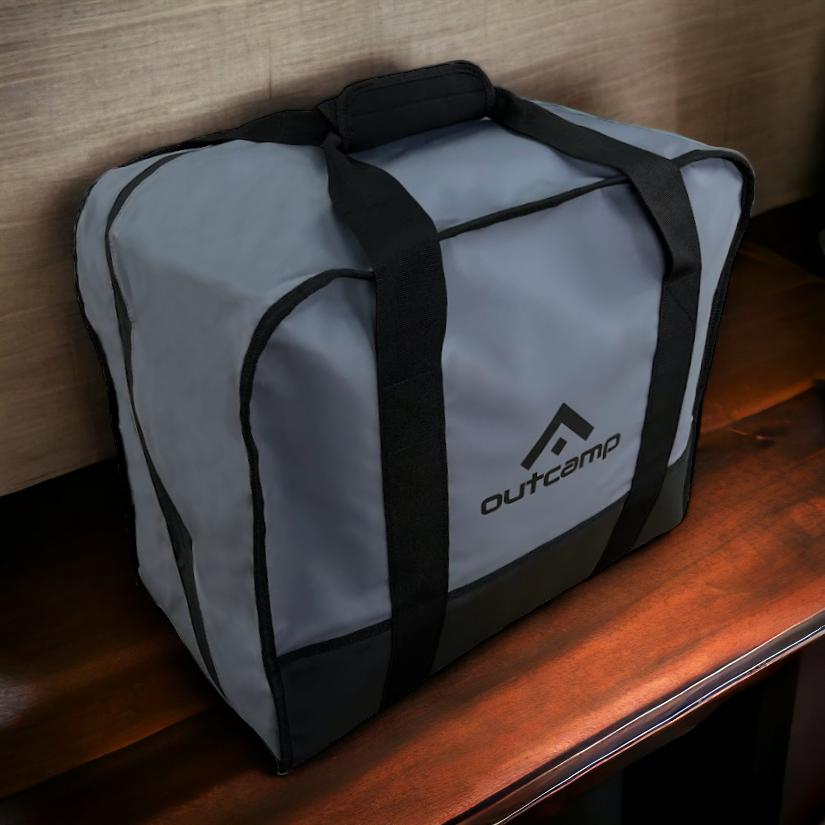
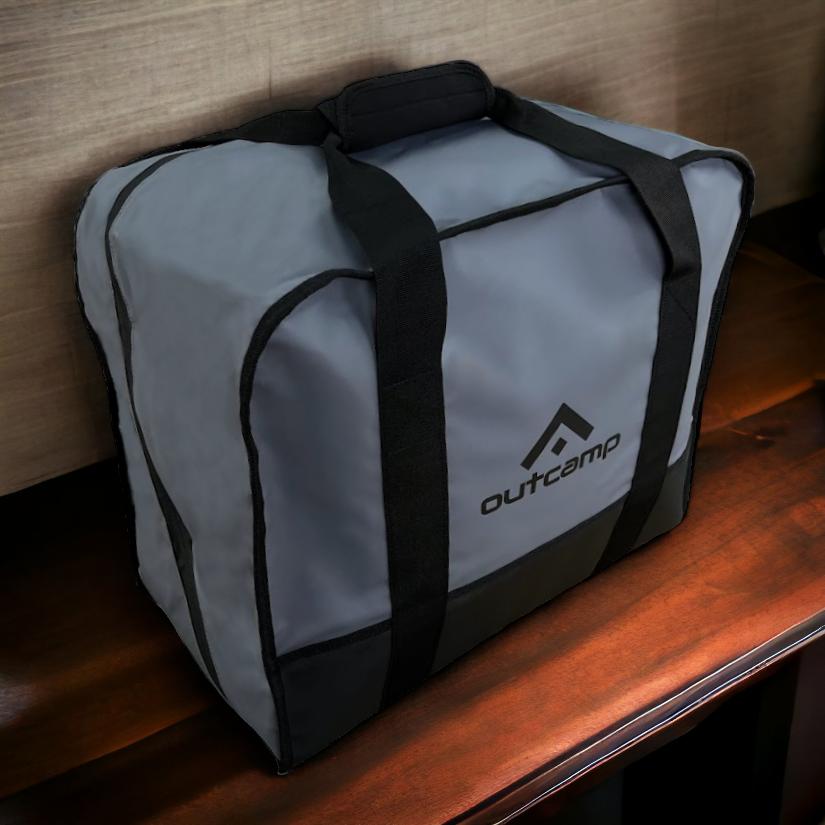
Lithium batteries do not like heat. If you leave the LinkPower 2 sitting in direct sun on a 45-degree day in Port Hedland, the BMS will correctly shut it down to prevent damage. When deploying your kit, keep the battery in the shade — either under the Starlink Mini itself or inside a vented carry case.
The DC Advantage
The LinkPower 2 features a dedicated DC output. Using this with a Starlink Mini DC cable is roughly 15-20% more efficient than using the USB-C port with a series of adapters. Over a full rotation, that extra efficiency adds up to more hours of runtime and fewer charge cycles.
Site Charging Cycles
The 99Wh capacity is designed to be recharged daily. You can top it up from a 12V outlet in your vehicle while driving between pads, or plug it into a wall socket in the donga overnight. It also supports pass-through charging, meaning you can charge the battery and run the Starlink Mini at the same time if you have a power source available.
Why Generic Power Banks Fail the Starlink Test
We often see workers trying to run their Starlink Mini off a generic $50 power bank from a chemist or an electronics chain. These units are designed to trickle-charge a phone, not sustain a 25-watt continuous load.
Current Draw and Voltage Sag
The Starlink Mini is sensitive to voltage. If the battery cannot provide a stable current, the voltage will "sag," causing the Mini to reboot or lose its satellite lock. The LinkPower 2 is engineered to maintain a steady output even as the battery level drops, ensuring your connection stays solid until the very last watt-hour is used.
The "Baggage Locked" Problem
Many workers buy a 200Wh or 300Wh "portable power station" thinking it is a better deal. Then they get to the airport and realize they cannot bring it on the plane. These units become "baggage locked" — you either have to leave them at home or pay hundreds of dollars in freight. The LinkPower 2 is the largest battery you can reliably walk onto a plane with, which is why it is the only one that truly fits the FIFO workflow.
Walking onto the Plane: A Pilot’s Eye View of Security
When you put your bag through the X-ray, the security officers are looking for large blocks of high-density lithium. If they see a battery, they may pull the bag for a manual inspection.
What to Say to Security
If an officer asks about the battery, be clear and technical. "It is a 99Wh lithium-ion battery pack for my satellite equipment. It is under the 100Wh CASA limit for carry-on." Most officers will check the label, see the "99Wh" print, and hand it back immediately.
Keep the battery in its original casing if possible, and ensure the ports are protected from short-circuiting. The LinkPower 2's design makes this easy, as its ports are recessed and its label is clear and professional.
Conclusion: Building Resilience in the Pilbara
Remote work is a marathon, not a sprint. The workers who last in the industry are the ones who find ways to stay connected, stay healthy, and stay human while they are away from home. The PeakDo LinkPower 2 is more than just a battery; it is a piece of infrastructure for your mental health.
By staying inside the 99Wh sweet spot, you remove the friction of travel. By choosing a high-spec, DC-optimized unit, you gain the reliability needed for the harshest environments on earth. At Outcamp, we stock the LinkPower 2 because it is the only battery that truly understands the Australian remote workflow.
Technical Specifications Summary: - Capacity: 99Wh / 27,500mAh - Airline Compliance: CASA / IATA compliant (<100Wh) - Outputs: DC (variable), USB-C PD, USB-A - Best Suited For: FIFO rotations, Starlink Mini standalone power, travel laptop charging. - Availability: Stocked in Australia for immediate dispatch.




Leave a comment (all fields required)