


Closing the Digital Divide: Improving FIFO Worker Mental Health and Welfare with Starlink Mini
The hum of a remote site in the Pilbara or the Bowen Basin at dusk is a sound of industry and isolation. For the thousands of men and women who keep Australia’s resource sector moving, the transition from the "on" shift to the quiet of the donga is where the real challenge often begins. Fly-in Fly-out (FIFO) work is a pillar of the Australian economy, but the social and psychological toll of being physically separated from family, friends, and support networks for weeks at a time is substantial. Maintaining FIFO worker mental health is a top priority for site managers and families alike, and for years, the digital divide on remote sites meant that a pixelated, lagging video call once a week was the standard. In 2026, that standard is no longer acceptable. The arrival of the Starlink Mini has done more than just provide faster data; it has fundamentally shifted the baseline for remote worker welfare.
Reliable, high-speed connectivity is no longer a luxury on a remote worksite; it is a critical piece of mental health infrastructure. When a worker can sit in their donga and have a crystal-clear FaceTime with their kids, watch their partner's graduation via a live stream, or simply wind down with the same high-definition streaming services they enjoy at home, the psychological weight of the "remote" aspect of their job is significantly lightened. This article explores how the democratisation of low-Earth orbit satellite internet is closing the welfare gap for Australia's remote workforce and the practical hardware required to maintain these vital links.
The Psychological Cost of Isolation in Regional Australian Sites
The statistics regarding mental health in the Australian resource sector are sobering. Recent studies have indicated that up to one-third of FIFO workers experience high or very high levels of psychological distress, a figure significantly higher than the national average. While the physical safety protocols on mine sites are world-class, the social safety net has historically been hampered by geography. The "communal" welfare models of the past—pool rooms and site pubs—are increasingly being supplemented or replaced by digital welfare models where workers seek connection and escapism through their personal devices.
The Impact of Limited Connectivity on Family Bonds
For a FIFO professional, the most significant stressor is the feeling of being "out of the loop" regarding home life. Missing out on the small, daily moments of family life creates a cumulative sense of alienation. In the past, legacy satellite connections provided at camp often suffered from extreme latency and data capping, making video calls frustrating or impossible. This lag isn't just a technical annoyance; it’s a barrier to intimacy. When you can’t see the nuances of a loved one's expression or hear their voice without a three-second delay, the emotional connection is strained.
The Starlink Mini solves this latency issue by operating in low-Earth orbit, providing ping times that rival urban NBN connections. This allows for real-time interaction, enabling a parent to "be there" for bedtime stories or homework help regardless of the hundreds of kilometres of red dirt between them. By maintaining these high-fidelity bonds, workers return home feeling less like a visitor and more like a present member of the household, reducing the "re-entry" stress that often occurs at the start of a break.
Transitioning from Communal to Digital Welfare in 2026
We are seeing a marked shift in how remote sites manage after-hours downtime. While site-provided recreational facilities still exist, many workers prefer the autonomy of their own digital space. This autonomy is crucial for mental health, providing a sense of control in an environment that is otherwise highly regimented. However, camp Wi-Fi is notoriously prone to congestion when hundreds of workers log on simultaneously after a shift.
By carrying a personal Starlink Mini, a worker creates their own private, high-speed bubble. This independence allows for unrestricted access to mental health apps, online counselling, and support groups that might otherwise be blocked or slowed by site firewalls. The ability to access private, confidential support from the comfort of their own room is a major step forward in reducing the stigma associated with seeking help on-site.
Starlink Mini as a Catalyst for Remote Worker Welfare
The true value of the Starlink Mini on a remote site lies in its portability and ease of deployment. Unlike previous iterations of satellite hardware, the Mini is designed to be carried in a standard gear bag and set up in seconds. This means a worker isn't just connected at the camp; they are connected at the exploration site, the pit, or the roadside during a transit delay. This persistent connectivity acts as a constant safety net, both for logistics and for morale.
Reducing "Donga Fever" Through Reliable Entertainment
The phenomenon often referred to as "donga fever"—the claustrophobia and boredom associated with living in a small, remote cabin—is exacerbated by a lack of mental stimulation. In 2026, digital entertainment is a primary tool for decompression. High-speed internet allows workers to maintain their hobbies, whether that is competitive gaming, participating in online courses, or following their sports teams in real-time.
Gaming, in particular, has become a vital social outlet for younger FIFO cohorts. Being able to jump into a lobby with mates back in the city and compete without lag is a powerful way to stay socially integrated. It provides a shared experience that transcends the physical distance. The Starlink Mini’s ability to handle high-bandwidth tasks like 4K streaming and low-latency gaming ensures that the quality of life on-site doesn't have to be a compromise.
Case Study: Real-Time Mental Health Support and Telemedicine
The integration of telemedicine into remote operations has been accelerated by the availability of reliable bandwidth. For a worker experiencing a mental health crisis or a physical ailment, waiting for a weekly flight or relying on a site medic with limited resources is a risk. High-speed video links allow for immediate consultation with specialists based in capital cities.
We have observed instances where remote exploration teams have utilised the Starlink Mini to facilitate real-time psychiatric evaluations for colleagues in distress. The speed of the connection allowed for a level of care that saved days of delay and potentially prevented a serious escalation. This capability turns a piece of consumer electronics into a life-saving tool, hardening the site’s WHS framework and providing peace of mind to both the workers and their employers.
"The true measure of a site’s safety culture in 2026 isn't just the lack of physical accidents; it’s the quality of the connection that keeps a worker tethered to their support network. A lagg-free video call is as essential as a hard hat."
Practical Gear for the Connected FIFO Professional
Maintaining this level of connectivity requires a hardware stack that is as mobile and rugged as the worker themselves. The unique constraints of FIFO life—frequent flights, harsh environments, and the need for rapid deployment—mean that the choice of accessories is just as important as the Starlink dish itself.
Portability and Flight-Legal Battery Requirements
The primary hurdle for many workers is power. Camps often have limited power outlets in dongas, and exploration sites have none. While large portable power stations are popular for caravanners, they are often too heavy or exceed the Wh limits for airline carry-on luggage. In Australia, CASA and IATA regulations generally cap lithium batteries at 100Wh for carry-on, with any larger units requiring special freight.
The PeakDo LinkPower 2 Portable Power Bank (99Wh) has become the standard for the connected FIFO professional. At 99Wh, it sits just under the legal limit for carry-on, meaning it can travel in a backpack on every swing. Despite its compact size, it provides enough energy to power the Starlink Mini for several hours of intensive use, making it the perfect companion for transits or for use when the camp power is unreliable. Standardising on a flight-legal battery ensures that your connectivity isn't grounded when you head to the airport.
Rugged Protection for the Australian Commute
A remote site is a hostile environment for electronics. Dust, vibration, and extreme heat are constant threats. Carrying a Starlink Mini in its original cardboard box is a recipe for failure. Professionals who value their gear utilise dedicated protective solutions to ensure their link to the world isn't severed by a rough landing or a dusty ute tray.
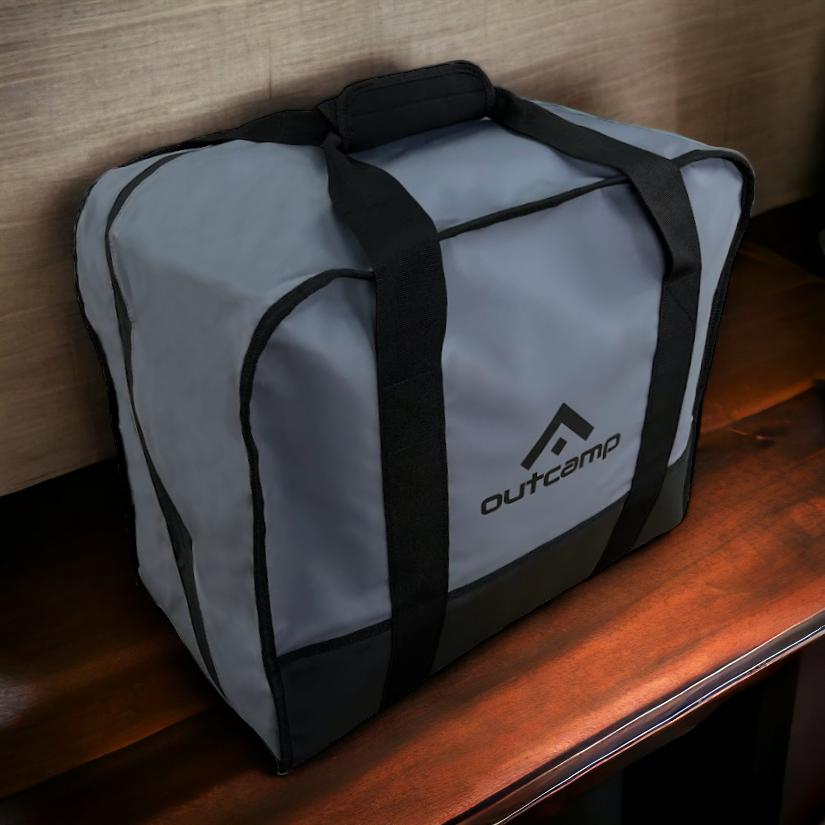
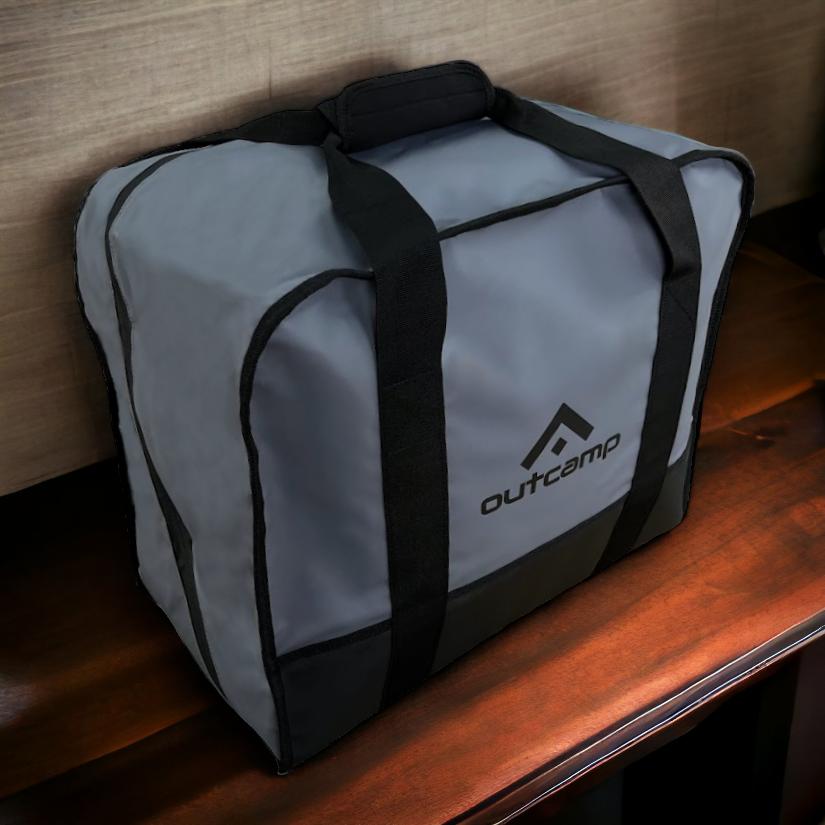
The Starlink Mini Hard Protective Travel Case provides the military-grade protection needed for the FIFO run. Designed to withstand abrasive outback dust and harmonic vibrations, it ensures the dish’s sensitive phased-array surface remains undamaged. For those who prefer a more integrated approach, the Starlink Mini Travel Backpack allows for the dish, the LinkPower 2, and a laptop to be carried in a single, TSA-lockable unit. This mobility is key for workers who move between different sites or who want to set up their mobile office at a moment's notice during a smoko break.
Frequently Asked Questions
Can I use the Starlink Mini on any Australian mine site?
Most mine sites allow personal electronics in dongas, but it is important to check your employer's policy regarding the use of personal satellite dishes on operational areas. Some sites have restricted zones due to radio frequency interference or safety protocols. However, for use within camp accommodation, the Starlink Mini is an increasingly common sight across WA and QLD sites.
How does the Starlink Mini handle the extreme heat of the Pilbara?
The Starlink Mini is built to operate in temperatures up to 50°C. However, in direct sunlight on a 45-degree day, any electronic device will struggle. We recommend utilising a Starlink Mini Dish Protector Shield to provide an additional layer of UV protection and keeping the power supply and battery in a shaded area. The Outcamp range of mounts and shields is specifically designed to harden the unit against Australian thermal conditions.
Is the Starlink Mini easy to set up for someone who isn't a tech expert?
Yes, simplicity is one of the Mini's greatest strengths. The setup process is entirely app-driven and usually takes less than two minutes from unboxing to being online. The dish has a built-in kickstand, but for more permanent or secure setups on-site, a Starlink Mini Magnetic Mount allows it to be quickly snapped onto a metal roof or ute tray without any drilling or permanent modification.
Conclusion
FIFO worker mental health is the foundation of the Australian resource industry's success. As we move further into 2026, the expectation of being "offline" while on-shift is becoming a thing of the past. The Starlink Mini, supported by professional-grade power and protection from Outcamp, is providing a vital social lifeline that reduces psychological distress and strengthens family bonds.
By investing in a personal connectivity stack—anchored by the flight-legal PeakDo LinkPower 2 Portable Power Bank (99Wh) and secured in a Starlink Mini Hard Protective Travel Case—the FIFO professional is doing more than just buying gear; they are investing in their own well-being. A connected worker is a safer, happier, and more productive worker. Explore our full range of [Starlink Mini Accessories](/collections/starlink-mini-accessories) and [Power Solutions](/collections/peakdo-battery) to ensure your next swing is your most connected one yet. Stay safe, stay connected, and we’ll see you out there.




Leave a comment (all fields required)