


There is a moment on every forestry job when the day's numbers have to leave the coupe. Harvest totals, load dockets, machine hours, the chain-of-custody paperwork that proves where a log came from and where it went. The coupe is eighty kilometres from the nearest town, the nearest tower is further back again, and the work ute has one bar of signal if the wind is right. It is the situation that Starlink Mini for forestry crews face every week of the season.
Forestry is the hardest connectivity problem in rural Australia, and it is worth being precise about why. The work moves every few days, so nothing can be permanently wired. The plant is expensive and the crews are small. The season is compressed. And from spring onward, the fire danger period raises the cost of being out of touch from an inconvenience to a genuine risk.
Why forestry is the hardest connectivity problem in the bush
Most remote industries have one fixed point. A mine has a pit and a village. A farm has a homestead. Forestry does not, because the resource itself moves across the landscape as each coupe is cut and the crew follows the timber. That single fact reshapes every technology decision that follows.
It also means forestry has never been a good fit for infrastructure built around permanent sites. What a forestry operation needs is a connection that travels with the crew, survives dust and vibration, runs from the vehicle it is bolted to, and can be packed up and moved again on Monday morning without a technician.
Coupes move, and so does the connection
A harvest crew might work one coupe for a fortnight and then shift thirty kilometres to the next block. Forwarders, harvesters, skidders and haulage trucks all follow that same rotation. Any connectivity that depends on a fixed tower, a trench or a permanent dish mount is useless the moment the crew moves on.
That is the argument for a terminal small enough to travel on a vehicle. Starlink Mini is a flat panel roughly the size of a laptop, which means it can live on a ute roof rack and move with the crew rather than waiting at a depot that nobody visits.
It also changes who is responsible. When the connection rides with the crew, the crew keeps it working, and the fix for a dropped link is usually a mount, a cable or a power source rather than a phone call to a carrier.
Compliance reporting has moved online
Twenty years ago a harvest supervisor carried a clipboard. Today the same information travels through harvest management systems, load dockets, weighbridge tickets and traceability records that increasingly expect to be filed while the shift is still running.
Forestry certification and chain-of-custody requirements mean a load can be traced from stump to mill. That traceability only works when the data leaves the coupe the same day it is created, not when someone drives it back to the office at the end of the week.
Delay is not just untidy. When reporting is filed late, discrepancies surface weeks after the fact, when the machine has moved on and nobody can remember which block the load came from. Connectivity is what compresses that delay to zero.
Fire season raises the cost of silence
From spring, the fire danger period opens across southern Australia and much of the north, and forestry operations sit inside some of the most combustible country in the country. A harvested coupe is littered with slash, and plantation timber burns with a speed that surprises people who have only seen bushland fires.
On those days, connectivity stops being about productivity. Crews need to receive fire danger ratings, total fire bans and harvest suspension notices, and they need to get word out immediately if they see smoke. A radio net covers the crew but not the fire authorities, the harvest manager or the family at home.
That is why forestry connectivity is best judged on its worst day rather than its average one. The connection that matters is the one that still works when the index is climbing and the decision window is measured in minutes.
A connection that only works on an average Tuesday is not a forestry connection. It is a connection that happens to work while nothing is going wrong.
What a working Starlink Mini for forestry setup looks like
A forestry kit has to survive three things that a caravan setup never sees: continuous vibration from unsealed roads, dust that gets into every seal, and constant mounting and removal as vehicles rotate between blocks. Build for those three and the rest tends to look after itself.
The practical shape of a working setup is a terminal that travels on the light vehicle, a mounting method matched to the surface it clamps to, a power source tied to the vehicle's own electrical system, and a case that keeps the unit intact between jobs.
Mounting a terminal on plant and light vehicles
Every forestry vehicle presents a different mounting problem. A supervisor's ute usually has a roof rack or a canopy, which suits a fixed bracket. A forwarder or skidder has a steel cab roof with limited flat area. A temporary setup at a landing might need to come off and go back on the same machine at the end of the day.
For vehicles with a rack, a bracket such as the Starlink Mini Roof Rack Mount gives a permanent, rattle-resistant home for the terminal and keeps the panel above the roofline where it has a clear view of the sky. That matters in plantation country, where a canopy of pine closes over the track and a terminal mounted low can spend the whole shift looking at timber instead of satellites.
Where there is no rack, a magnetic solution does the same job in minutes. The MagLock Pro Magnetic Vehicle Mount and the Starlink Mini Magnetic Mount both let a crew move the terminal between vehicles without drilling anything, which suits contractors running mixed plant and hire equipment.
Powering it from the vehicle's own system
A forestry ute already carries a battery and an alternator, so there is no reason to run a terminal from a separate power station. Tapping the vehicle's DC system keeps the terminal charged while the engine runs and removes one more thing a crew has to remember to pack.
The complication is voltage. Vehicle systems are not uniform, and a light vehicle may run at 12 volts while heavier plant runs at 24. A supply such as the Starlink Mini 12V to 30V Power Supply (Anderson Plug) accepts the input range and delivers the stable output the terminal expects, which is what stops a link dropping out every time the engine starts.
Anderson plugs are worth preferring in this environment for a blunt reason: they are hard to knock loose and easy to reconnect with gloves on. In a cab full of dust and vibration, a connector that stays seated is worth more than a neat one.
Networking a harvest camp or site office
A single terminal is enough for a phone and a laptop. It stops being enough the moment a landing office needs to run a printer, a tablet-based docket system and a machine telemetry dashboard at the same time.
That is where a wired connection earns its place. The Starlink Mini/Gen 3 Ethernet Adapter (4 Ports) turns one link into a small wired network, which is the difference between one supervisor being online and the whole landing working from the same connection.
Wired also behaves better than wireless in a dust-heavy environment. Cables do not suffer interference from a dozen parked machines, and a switch with a spare port means a failed patch lead can be swapped in seconds rather than diagnosed in the rain.
Protecting the terminal between jobs
A terminal that lives on a rack during the week still comes off the vehicle eventually. It goes into the cab, into the depot, onto a plane for a FIFO rotation, or into a tray where it slides around beside a toolbox for four hundred kilometres.
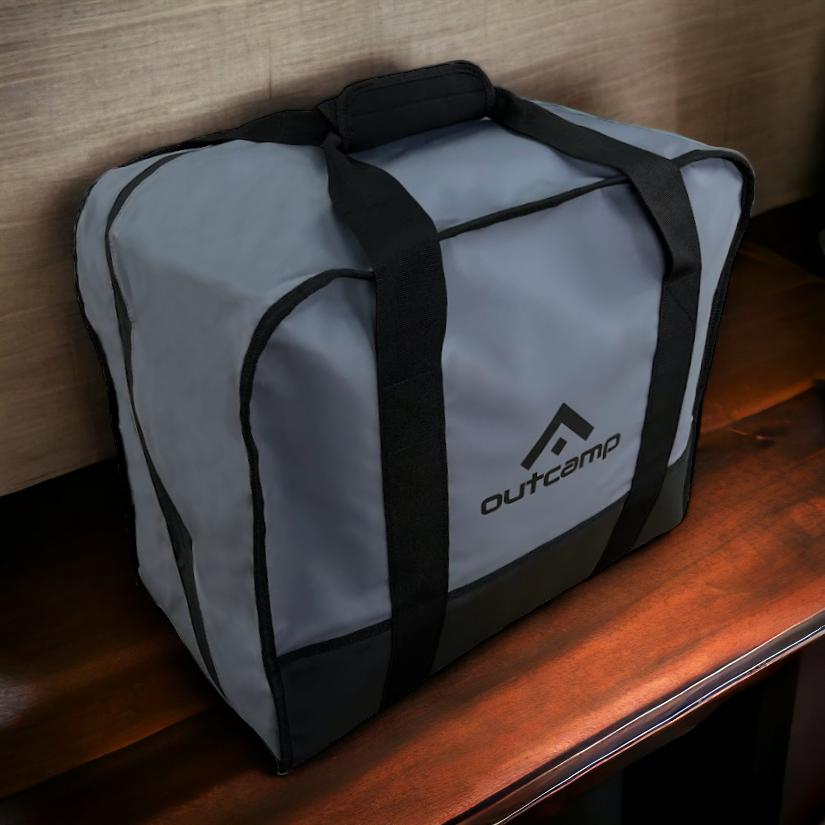
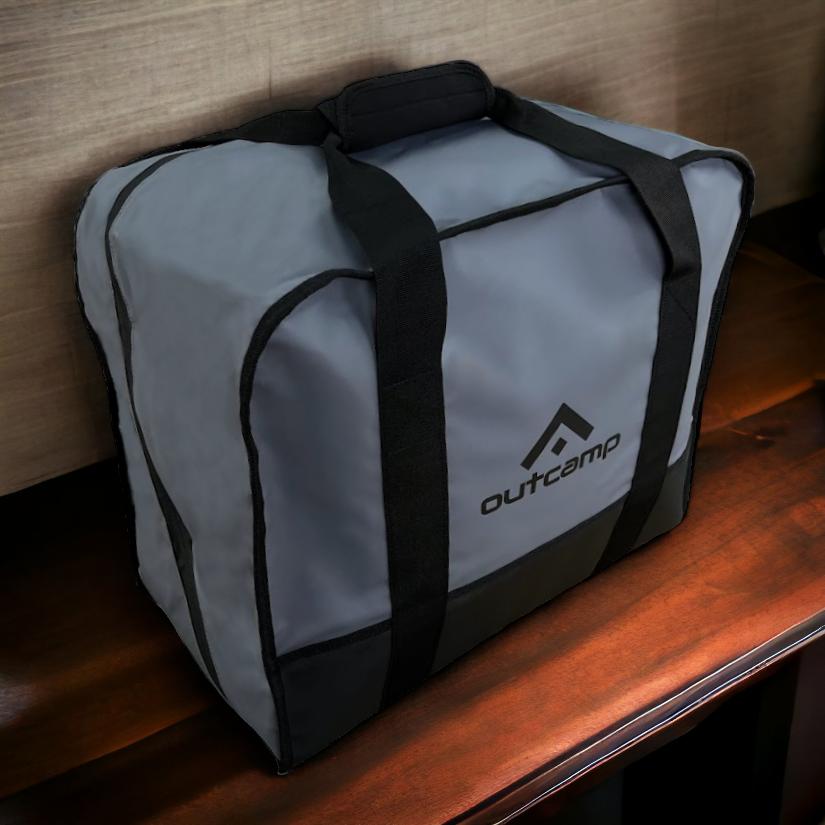
That is where most fleet damage happens, and it is rarely dramatic. It is a fine scratch across the panel face, a bent bracket, a connector that has taken a knock. A padded case such as the Starlink Mini Hard Protective Travel Case gives the unit somewhere to live that is not the floor of a tray.
The habit worth building is simple: the terminal comes off the mount and goes into the case at the end of every shift, the same way a chainsaw comes off the back. Gear that gets put away properly lasts the season rather than being replaced mid-way through it.
Fire detection, patrols and pre-season readiness
Nothing in forestry connectivity is judged more harshly than fire detection, because the whole value of a detection system is measured in the minutes between a ignition starting and someone knowing about it. That is a data problem long before it is a firefighting problem.
Detection networks, patrol vehicles and lookout towers all produce information that is only useful if it reaches a decision-maker immediately. A camera that records smoke and stores the image locally has solved nothing.
Camera towers and early detection
Australian plantation growers have been moving detection into networked camera and sensor systems for several years. In one documented example, Queensland timber grower HQPlantations reported using artificial intelligence alongside satellite data and camera networks to predict and detect bushfires across roughly 288,000 hectares of its pine plantations.
What makes that architecture work is the backhaul. A camera on a ridge is only as useful as the link that carries its imagery, and a satellite terminal at a remote tower or repeater site is often the only practical way to get that imagery out of the forest.
The same principle applies at a smaller scale. A single portable terminal at a seasonal lookout, paired with a vehicle-mounted unit on the patrol ute, gives a district two independent ways to move information when one of them is in a shadow or under canopy.
Pre-season checks before the danger period opens
The week before the fire danger period is the only week when a connectivity fault is cheap to fix. Once harvest suspension notices start arriving, a dead mount or a frayed power lead becomes an operational problem rather than a maintenance item.
A sensible pre-season routine walks the vehicles rather than the paperwork. Check that every bracket is tight, every Anderson plug seats firmly, every cable is free of chafe where it passes through a panel, and that the terminal still draws power from the vehicle with the engine off.
Then test the setup where it will actually be used. A terminal that performs perfectly in the depot yard can behave differently under a pine canopy, and the only way to know is to park in a coupe and watch the link hold while the crew works around it.
Keeping crews informed when the index climbs
On a high fire danger day the information flow runs both ways. Crews need ratings, bans and suspension notices pushed to them, and supervisors need a reliable way to confirm that every vehicle has acknowledged a stand-down.
Satellite connectivity is what makes that possible beyond the reach of the radio net. A radio reaches the crew in the block; it does not reach a harvest manager in town, a fire authority, or a contractor's office in another state.
Documented acknowledgement matters as much as the warning itself. When a total fire ban halts harvesting, being able to show that every crew was notified and every machine was stood down is the difference between a clean compliance story and an uncomfortable conversation afterwards.
The case for a connection that travels
Starlink Mini for forestry works because it matches the way the industry actually operates. The work moves, so the connection moves. The vehicles already have power, so the terminal uses it. The country is hard on equipment, so the mounting and the case matter as much as the terminal itself.
None of that requires a permanent installation or a site visit from a technician. It requires a bracket that suits the vehicle, a power supply matched to the electrical system, a means of sharing the link around a landing, and somewhere safe for the unit to live between shifts.
If you are specifying connectivity for a harvest crew, a plantation district or a haulage fleet, the place to start is the vehicle fleet itself. Outcamp builds Starlink Mini mounts, power supplies, cables and cases for Australian working vehicles, and the range is designed around the reality that the job moves on. Match the kit to how your crews actually work, and connectivity stops being the thing that fails first.
Frequently asked questions
Does Starlink Mini work under a pine canopy?
It needs a clear view of the sky, so dense plantation canopy will interrupt it. In practice, crews get the best results by mounting the terminal above the roofline on a rack or canopy, and by positioning the vehicle in a landing, on a track or at a coupe edge where the canopy opens up. If you regularly work under closed canopy, treat the terminal as a link you establish at the edge of the block rather than inside it.
Can I run a Starlink Mini from a 24 volt machine?
Yes, provided the supply accepts the input range and delivers a stable output. Forestry plant often runs at 24 volts while light vehicles run at 12, so a supply rated across that range, such as the Starlink Mini 12V to 30V Power Supply (Anderson Plug), lets the same terminal move between vehicles without a separate power brick for each.
How many devices can one terminal support at a landing?
For a handful of phones, tablets and a laptop, a single terminal is usually enough on its own. Once a landing office needs a printer, a docket system and machine telemetry at the same time, an Ethernet adapter such as the Starlink Mini/Gen 3 Ethernet Adapter (4 Ports) turns the link into a small wired network and keeps the load off the wireless side.




Leave a comment (all fields required)