


The Mobile Donga: Optimising the Starlink Mini Travel Backpack for Professional Site Transits
The red dust of the Pilbara and the humidity of the Gulf Country are more than just spectacles of the Australian landscape; they are the high-consequence environments where professional gear is either proven or discarded. For the thousands of site supervisors, geologists, and FIFO technicians who keep Australia’s resource and agricultural sectors moving, the transition from the city office to the remote location has historically meant a compromise in connectivity. In the past, remote production units relied on bulky geostationary systems that required permanent vehicle mounting and complex power arrays. In 2026, the baseline for mobile operations has fundamentally shifted. The arrival of the Starlink Mini has decentralised high-speed internet, allowing a single professional to carry an urban-grade network in a backpack. However, the true bottleneck for this mobile office isn't the bandwidth—it is the physical transit. The integration of a Starlink Mini Travel Backpack with built-in security and power infrastructure has turned a simple gear bag into a "mobile donga," providing the reliable protection and rapid deployment needed to harden the digital infrastructure of remote Australia.
Reliable, high-speed connectivity is no longer a luxury for a field technician; it is a critical piece of mental health and operational infrastructure. When a site manager can move from a Hilux cabin to a remote drill pad and maintain a crystal-clear video link to the head office, the operational risk of the "remote" aspect of their job is significantly lightened. This article explores the strategic role of the Outcamp Starlink Mini Travel Backpack in facilitating mobile operations across the mining, construction, and environmental sectors. We will examine the technical advantages of integrated TSA security, the importance of modular power management, and the practical scenarios where a backpack-based hub outperforms traditional hard-case solutions. For the professional who cannot afford to be disconnected, understanding how to optimise this mobile connectivity stack is essential for maintaining a competitive edge in 2026.
Engineering the Hub: The Technical Advantages of Integrated USB and TSA Security
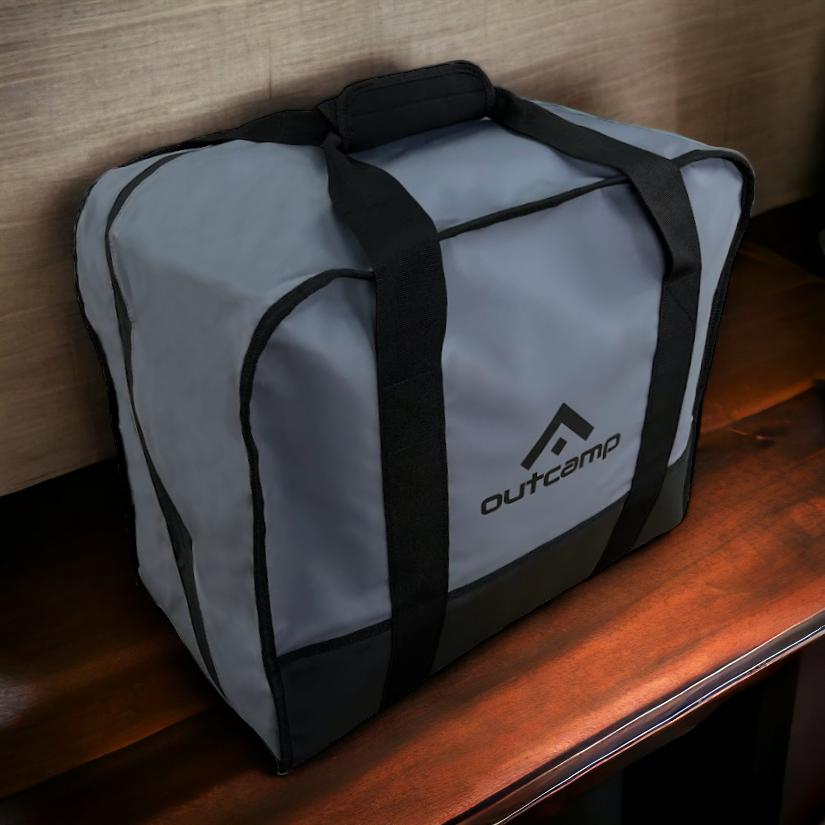
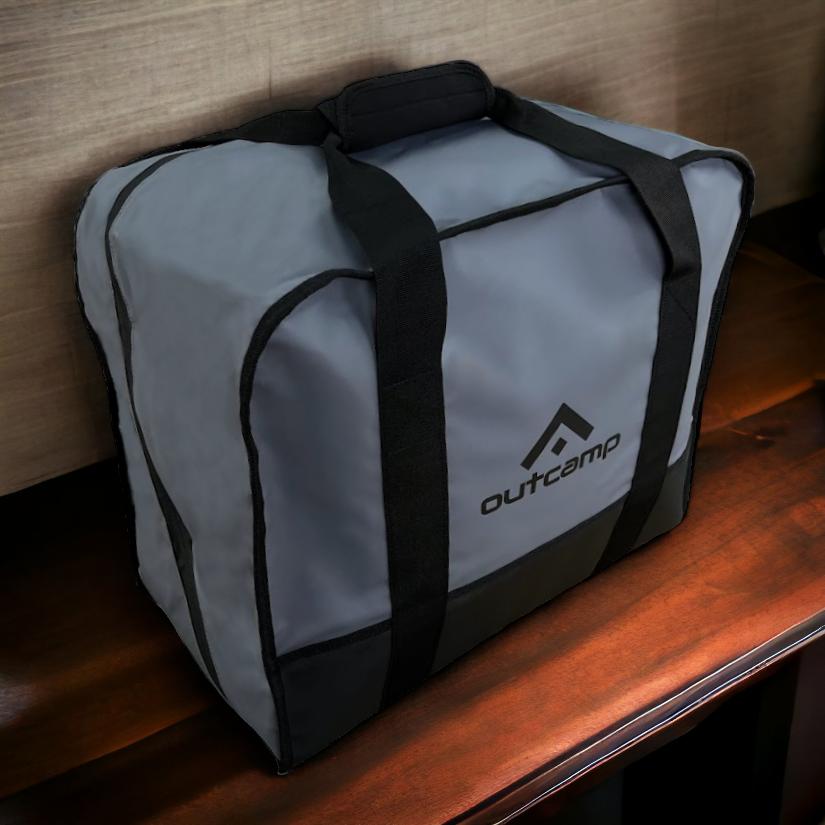
The choice of a gear bag for remote operations is driven by more than just volume; it is a matter of material resilience and security. On an Australian worksite, a backpack is subject to extreme thermal cycling, intense UV radiation, and the abrasive nature of outback dust. The Starlink Mini Travel Backpack is engineered to meet these demands, utilising military-grade 900D nylon that provides a superior strength-to-weight ratio compared to standard consumer luggage. This material choice ensures that the bag can withstand the rigours of being tossed into a ute tray or stored in a crowded donga without the risk of puncture or seam failure.
Standardising on TSA Security for FIFO Corridors
For the Fly-in Fly-out (FIFO) professional, the commute is often the most vulnerable phase for high-value electronics. Navigating regional airports and shared transport hubs requires a level of security that standard backpacks lack. The integration of a TSA-approved combination lock on the primary compartment of the Starlink Mini Travel Backpack is a critical hardening measure. This feature allows you to secure your Starlink dish and laptop during transit, preventing opportunistic theft while ensuring that airport security can inspect the contents without damaging the zippers.
Standardising on TSA security is particularly important in shared accommodation environments like mine site dongas. When a technician is working a 12-hour shift, their personal connectivity kit remains in a shared space. Being able to lock the backpack to a fixed point in the room provides a layer of psychological security, allowing the worker to focus on their task without "gear anxiety." In 2026, the professionalisation of the remote office includes the hardening of personal assets, and the TSA-lockable backpack is the first line of defence in that strategy.
The Integrated USB Port: A Site Supervisor's Charging Buffer
One of the most innovative features of the modern travel backpack is the integrated external USB charging port. For a site supervisor, the workday is a constant cycle of site walks, meetings, and data reporting. A site tablet or phone that runs out of battery at the edge of a five-thousand-hectare paddock is more than an inconvenience; it is a safety risk. The Starlink Mini Travel Backpack includes an internal cable that connects your portable power source to an external, weather-protected port.
This "charging buffer" allows you to keep your primary devices topped up while they are in use, without having to unbox your power bank or manage tangled cables in the red dirt. By connecting a PeakDo LinkPower 2 Portable Power Bank (99Wh) inside the bag, you create a seamless power bridge. You can charge your site phone or GPS unit while the bag is on your back or sitting on the tailgate, ensuring that you always have enough power for that final safety report at the end of the shift. This level of integrated power management is what transforms a simple bag into a functional mobile site hub.
Material Resilience: Military-Grade 900D Nylon on the Jobsite
The outback is a master of equipment destruction. Standard 600D polyester, found in most consumer bags, quickly degrades under the intense UV radiation of the Pilbara or the mechanical abrasion of saltbush and spinifex. The Outcamp backpack utilises 900D high-density nylon, which is significantly more resistant to tearing and abrasion. This material is treated with a water-repellent coating to protect against the sudden torrential downpours of a tropical wet season, ensuring your sensitive phased-array antenna remains dry and operational.
Beyond the outer shell, the internal padding is equally important. The Starlink Mini dish is a precision instrument, and its internal components are sensitive to harmonic vibrations. The backpack features high-density EVA foam compartments that act as a shock absorber during transit. Whether you are bouncing along a corrugated access road in a 79 Series or navigating the luggage conveyor at Perth Airport, this padding ensures that the delicate electronics inside remain perfectly aligned. Investing in a purpose-built protective solution is the cheapest form of insurance for your connectivity, preventing the "dead on arrival" scenarios that can derail a remote exploration project.
Tactical Packing: How to Build a Professional Connectivity Kit
A backpack is only as effective as the organisation of its contents. A disorganised kit leads to lost cables, damaged ports, and increased setup times in the field. To truly optimise the Starlink Mini Travel Backpack, one must adopt a tactical approach to packing that prioritises rapid deployment and equipment protection. A well-organised bag ensures that you can move from "bag on back" to "high-speed hotspot" in under 60 seconds, which is a vital capability for emergency responders and mobile technicians.
Cable Management and Stress Relief for Starlink Mini Lead-ins
The most common point of failure for the Starlink Mini isn't the dish itself, but the DC power and Ethernet cables. Frequent uncoiling and re-packing can lead to kinking and internal wire breakage. The Starlink Mini Travel Backpack includes dedicated mesh pockets and elastic loops designed for cable management. By coiling your Starlink Mini Hardwire Power Cable (3.0M) into these loops, you provide the necessary stress relief to the connectors, extending the lifespan of your cabling.
We also recommend utilising a localised cable "pouch" within the bag for small accessories like the Starlink Mini 12V to 30V Power Supply (Anderson Plug). Keeping these small but critical components in a fixed location ensures that they are always at hand when you need to switch from backpack power to vehicle power. This modularity is key for the professional who moves between different environments throughout the day. By minimising the "rummage time," you maximise the operational efficiency of your mobile office.
Balancing the Load: Integrating the PeakDo LinkPower 2
The ergonomics of a gear bag are often overlooked, but for a technician carrying their kit for 14 hours a day, weight distribution is a health and safety consideration. The Starlink Mini Travel Backpack is designed to position the heaviest components—the dish and the battery—closest to the wearer’s spine. This minimises the leverage effect on the lower back, reducing fatigue during long site walks.
The PeakDo LinkPower 2 Portable Power Bank (99Wh) is the ideal battery for this system. Its slim profile allows it to slot perfectly into the internal laptop sleeve or a side pocket, keeping the centre of gravity low and stable. Because it is a flight-legal battery (under 100Wh), it can remain inside the bag through every phase of the FIFO swing. This integration ensures that your "mobile donga" is always ready for deployment, regardless of whether you are in a regional airport lounge or at a remote bore head. Standardising on a flight-legal power source ensures that your logistics chain isn't interrupted by airline battery regulations.
Compartmentalisation for Site Tablets and PPE
In 2026, the modern remote worker carries more than just a satellite dish. A typical field kit includes a ruggedised site tablet, a handheld GPS, a laser distance measurer, and essential personal protective equipment (PPE). The Starlink Mini Travel Backpack features a multi-layered compartmentalisation system that allows you to keep your electronics separate from your tools and PPE. This segregation is vital for preventing the abrasive outback dust on your gloves from migrating into the sensitive ports of your Starlink dish or laptop.
The secondary compartments are sized to fit a 16-inch industrial laptop or multiple site tablets. These sleeves are elevated from the bottom of the bag, providing a "drop zone" that protects the devices from impact if the bag is set down heavily on a concrete slab or a rock ledge. By keeping your digital assets organised and protected, you ensure that your site intelligence—your maps, BIM files, and safety checklists—remains accessible at all times, hardening your operational continuity at the edge.
"The true measure of a mobile connectivity system in 2026 isn't just its bandwidth; it's the speed at which you can deploy it in a high-pressure environment. A backpack that organises your power, protection, and peripherals into a single rapid-response kit is an essential piece of field hardware."
Scenario Deployment: From the Hilux Tailgate to the Remote Drill Pad
The versatility of the backpack-based setup is its primary advantage over fixed vehicle mounts. While a MagLock Pro Magnetic Vehicle Mount is the standard for mobile haulage, there are many scenarios where you must move away from the vehicle to conduct your work. In these "off-ute" situations, the backpack becomes your primary site office, providing a stable platform for your Starlink Mini and a secure hub for your devices.
The 30-Second Setup: Using the Backpack as a Ground Mount
In situations where a vehicle cannot reach the area of interest—such as steep terrain, dense vegetation, or environmental exclusion zones—the technician must carry their connectivity. The Starlink Mini Travel Backpack is designed to act as a temporary ground mount. By unzipping the main compartment and utilising the bag’s internal structure, you can position the dish at a stable angle on the ground or on top of a toolbox. This "pop-up" office capability is a game-changer for environmental surveys and remote maintenance tasks.
The ability to set up your hotspot in seconds, without the need for a tripod or permanent hardware, allows for more agile field operations. If you are conducting a rapid inspection of a series of remote bore heads, you can deploy the dish at each stop, sync your data, and be back on the track before a traditional geostationary system would have even acquired a signal. This agility is the key to maintaining productivity in the vast distances of regional Australia, where every minute saved in setup time is another minute spent on high-value technical work.
Transit Resilience: Protecting Phased-Array Surfaces in Industrial Hubs
The environment of an industrial transport hub—the rail siding, the depot, or the site landing strip—is a storm of vibration and physical hazards. A Starlink Mini carried in a standard bag is at risk of being crushed or having its phased-array surface scratched by other gear. The Starlink Mini Travel Backpack’s rigid internal frame and reinforced front panel provide a "shield" for the dish, ensuring that it remains undamaged even in the most crowded cargo bays.
This transit resilience is particularly important for professionals who utilise the Starlink Mini Hard Protective Travel Case for long-distance freight but need a more mobile solution once they arrive at the site base camp. The backpack allows you to "break down" your primary kit into a hand-carryable format for the daily commute from the donga to the field. By protecting the unit's sensitive hardware from the "commuter crush," you ensure that your link to the world remains reliable throughout the entire duration of your swing.
Welfare at the Edge: Personal Connectivity in the Donga
The welfare of the remote workforce is the foundation of the Australian resource industry’s success. The isolation of site life is a major driver of psychological distress, and the ability to maintain a private, high-speed link to family and friends is a critical welfare requirement. Camp Wi-Fi is notoriously prone to congestion when hundreds of workers log on after a shift, leading to lagging video calls and frustration.
By carrying a personal Starlink Mini in their travel backpack, a worker creates their own private bubble of connectivity. This independence allows for unrestricted access to mental health apps, online counselling, and entertainment from the comfort of their own room. The backpack’s TSA lock ensures that this vital social lifeline is secured when the worker is on-shift, providing peace of mind and reducing the stigma associated with seeking help. In 2026, the expectation of being "offline" is a relic of the past; the connected professional is a safer, happier, and more productive professional.
Frequently Asked Questions
Can the Starlink Mini Travel Backpack fit the 12V power supply as well?
Yes, the backpack is specifically designed with internal dimensions that accommodate the Starlink Mini dish, the standard power adapter, and additional Outcamp power solutions like the PeakDo LinkPower 2. There are dedicated elasticated pockets for cable management to ensure everything stays organised and protected during transit.
Is the integrated USB port waterproof?
The external USB port features a rugged rubber seal that protects it from outback dust and light rain. However, like all electronic ports, it should not be submerged or exposed to heavy driving rain for extended periods. When the port is not in use, ensuring the seal is correctly seated is vital for maintaining the internal electrical integrity of the bag's power bridge.
Does the bag provide enough protection for checked airport luggage?
While the 900D nylon and EVA padding provide excellent protection for carry-on use and site commuting, we recommend the Starlink Mini Hard Protective Travel Case for scenarios where the equipment will be subjected to the extreme impact and pressure of checked-in hold luggage. The backpack is optimised for mobility and "on-person" protection, making it the perfect companion for the connected FIFO professional’s cabin baggage.
Conclusion
The digital transformation of Australia’s remote industries is no longer hindered by the edge of the mobile corridor. The integration of the Starlink Mini into a professional-grade travel backpack has eliminated the primary bottleneck for mobile connectivity, allowing for real-time site command, high-fidelity worker welfare, and enhanced safety at the edge. By hardening the physical connectivity stack with professional protection and integrated power, technicians and managers can now navigate the interior with the confidence that their link to the world will remain active, regardless of the distance from the coast.
As we move further into 2026, the value of this mobility will only grow. Whether you are managing an environmental survey in the Tarkine or overseeing a remote drilling project in the Top End, the Starlink Mini Travel Backpack is the foundational tool that secures your mobile office's place in the global digital economy. Explore the full range of [Starlink Mini Accessories](/collections/starlink-mini-accessories) and [Site Power Solutions](/collections/4x4-accessories) at Outcamp to ensure your remote frontiers remain hardened, protected, and connected. Stay safe, stay mobile, and we’ll see you at the next site.




Leave a comment (all fields required)