Whether you're chasing bream in a South Australian estuary, trolling for mackerel off the Queensland coast, or launching a tinnie into a remote Northern Territory river after a 4x4 drive through the bush, the boat accessories you carry can make or break your day on the water. Australian fishing conditions are as varied and demanding as anywhere in the world, and the gear that works for a Sunday morning on the Swan River won't necessarily cut it on a remote offshore run in the Coral Sea.
In 2026, the market for boat accessories in Australia has never been more sophisticated. Marine electronics have taken a significant leap forward, off-grid power solutions are increasingly affordable, and safety gear has improved substantially. This guide cuts through the noise to highlight the accessories that deliver real-world value for Australian anglers — from the weekend warrior to the serious offshore fisherman.
Marine Electronics: The Core of a Modern Boat Accessories Setup
There's no single category of boat accessories that has transformed fishing more than marine electronics. A quality fish finder and GPS combo is no longer a luxury — it's the foundation of a productive day on the water. The good news for Australian anglers is that the leading brands now offer serious technology at prices that won't require selling the caravan.
When choosing electronics for your boat, prioritise reliability and suitability for your typical fishing environment. A unit that performs beautifully in a freshwater impoundment may struggle with the salt, spray, and shock loads of offshore work. Always confirm IP ratings and check whether the manufacturer has Australian support and warranty coverage.
Fish Finders and Chart Plotters
The Garmin ECHOMAP Ultra series remains one of the most popular fish finder and GPS combos among Australian anglers in 2026. With integrated Panoptix LiveScope compatibility, you can see fish reacting to your lure in real time — a genuine game-changer for estuary and freshwater fishing. The touchscreen interface holds up well in wet conditions, and the preloaded BlueChart g3 charts cover Australian coastal waters with solid accuracy.
Humminbird's APEX series with Mega Live Imaging has also made serious inroads with offshore and reef anglers. The Mega Imaging side-scan technology delivers photographic-quality views of structure, making it far easier to identify where fish are sitting on a reef or rock bar. For anyone regularly fishing in depths beyond 50 metres, the APEX's deep-water performance is hard to fault.
Lowrance HDS Pro units are another strong contender, particularly for tournament anglers and those who spend time on larger coastal systems. The SolarMAX HD display is genuinely visible in harsh Australian sunlight — a practical consideration that often gets overlooked until you're squinting at a washed-out screen at midday. Pair any of these units with a quality transducer suited to your hull type and you'll have a setup that genuinely finds fish.
VHF Radios and Communication Gear
A waterproof VHF radio is non-negotiable for anyone fishing beyond sheltered waters. Australian Maritime Safety Authority (AMSA) regulations require appropriate distress signalling equipment for vessels operating in certain areas, and a fixed-mount VHF with Digital Selective Calling (DSC) capability is the baseline for most coastal and offshore fishing situations.
The Standard Horizon GX1850G is a popular choice among Australian boaties — it combines a solid fixed-mount VHF with an integrated GPS, which means your DSC distress call automatically transmits your position to rescue authorities. For anglers who venture into remote areas where mobile coverage is non-existent, pairing a VHF with a personal EPIRB and a satellite communicator provides meaningful backup.
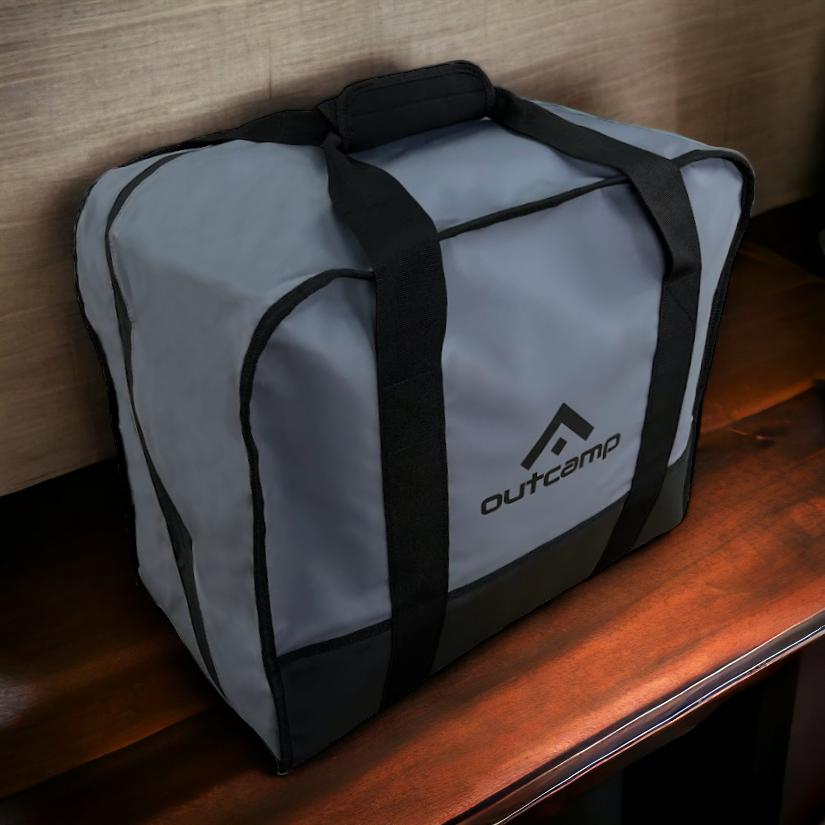
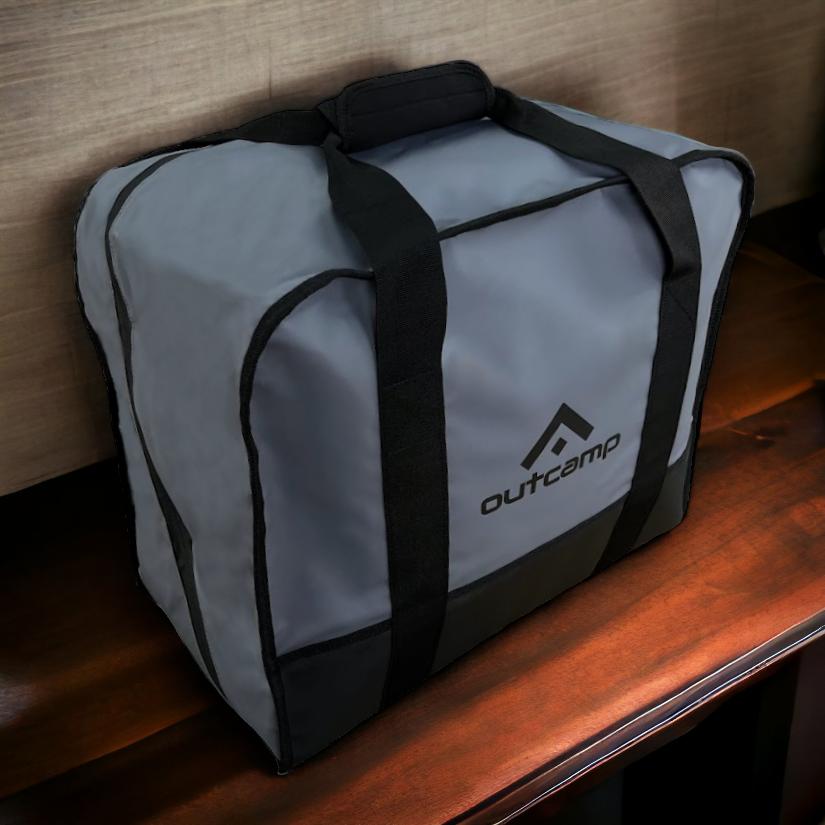
It's worth noting that connectivity at sea is changing rapidly. Starlink's maritime and roaming services have opened up genuine high-speed internet access even in remote offshore locations, making it possible to receive updated weather forecasts, communicate with shore parties, and access real-time marine weather data regardless of how far you are from the nearest tower. Outcamp's range of Starlink accessories — including carry bags, mounts, and cables — makes integrating satellite connectivity into your boat setup far more practical than trying to cobble together your own solution.
Autopilot and Trolling Motors
For serious offshore trolling or extended runs along the coast, an autopilot system pays for itself in reduced fatigue and fuel efficiency. Garmin's Reactor autopilot system integrates cleanly with their chartplotter range and handles a wide variety of boat types from small tinnies to larger centre console vessels. The ability to hold a precise heading while you manage lines or navigate a waypoint route makes long runs significantly more manageable.
Electric trolling motors have become a staple for freshwater bass and bream anglers as well as those chasing flathead in shallow estuaries. Minn Kota and MotorGuide dominate this space, with spot-lock GPS anchoring technology making it possible to hold position in current without the noise and disturbance of a traditional anchor. For 4x4 anglers exploring remote river systems, a quality electric motor on a lightweight tinnie is often the difference between reaching productive water and watching it from the bank.
Off-Grid Power and Battery Systems for Boats
Modern boat accessories demand power — and lots of it. Fish finders, VHF radios, live wells, electric motors, bilge pumps, navigation lights, and onboard refrigeration all draw from your battery bank. Getting your power setup right is one of the most important investments you can make, and in 2026 the options are better than ever.
The shift from AGM to lithium iron phosphate (LiFePO4) batteries has accelerated significantly in the marine sector. LiFePO4 batteries offer substantially more usable capacity, longer cycle life, and significant weight savings — all critical considerations for a boat where every kilogram affects performance and fuel consumption. While the upfront cost remains higher than AGM, the total cost of ownership over a typical boating lifespan makes lithium a compelling choice for regular users.
Choosing the Right Battery Bank
A single 100Ah LiFePO4 battery is adequate for a typical day's fishing with moderate electronics use, but serious offshore anglers or those running live bait tanks should consider 200Ah or more. The key advantage of lithium in a marine context is depth of discharge — you can safely use 80–90% of a lithium battery's rated capacity, compared to around 50% for AGM before you risk damaging the cells. This means a 100Ah lithium battery effectively delivers more usable power than a 100Ah AGM.
DCDC chargers are essential if you're running a separate starting battery and a house battery bank. Brands like Redarc, Victron Energy, and KickAss all offer quality marine-grade DCDC chargers that will keep your house battery topped up from the motor alternator while protecting your starting battery. Victron's BMV series battery monitors give you real-time state-of-charge data so you're never caught short on the water.
For overnight trips or extended stays at anchor, a small solar panel integrated into a fold-out bracket can meaningfully extend your autonomy. A 100W panel in full Australian sun will produce 40–60Ah per day depending on conditions — enough to offset moderate electronics use without running the motor. Combined with a quality MPPT solar controller, this approach keeps the battery bank healthy without relying solely on alternator charging.
Portable Power Solutions
For anglers who trailer their boat and want a flexible power solution that works both on the water and at the campsite, a quality portable power station is worth serious consideration. Units like the EcoFlow Delta Pro or Jackery Explorer 2000 Pro provide enough capacity to run a car fridge, charge devices, and power electronics for a weekend away. They're equally useful when the boat is on the trailer and you're camped at a remote boat ramp.
Pairing a portable power station with a folding solar panel gives you a completely self-contained off-grid setup that works for 4x4 and caravan travel as well as boating. If you're the type of angler who drives their 4x4 to remote boat ramps and camps on-site, this dual-use approach avoids duplicating expensive equipment across your boat and camping setups.
Safety Gear and Practical Boat Accessories
No discussion of boat accessories for Australian anglers is complete without a hard look at safety equipment. Australian waters can turn quickly, particularly in the north where afternoon storms build with little warning. The right safety gear won't just keep you compliant with state marine safety regulations — it may save your life.
AMSA and state agencies like Transport for NSW, Maritime Safety Queensland, and Transport WA all publish minimum safety equipment requirements based on vessel length and operating area. These are a baseline, not a target. Experienced offshore anglers consistently recommend carrying more than the minimum, particularly when venturing into remote or exposed waters.
EPIRBs and Personal Locator Beacons
A 406MHz EPIRB (Emergency Position Indicating Radio Beacon) registered with AMSA is essential for any vessel operating offshore. When activated, it transmits your vessel's identity and GPS position to the international satellite system, which relays the information to the Australian Maritime Rescue Coordination Centre. Response times have improved significantly over the past decade, but early activation remains critical in an emergency.
Personal Locator Beacons (PLBs) work on the same satellite network but are registered to an individual rather than a vessel. Every person on board remote offshore trips should ideally carry their own PLB — if the vessel sinks rapidly and you're separated from the EPIRB, a personal PLB on your person becomes your lifeline. McMurdo, ACR, and Ocean Signal all make reliable units that meet Australian standards.
AMSA maintains a free 24/7 beacon registration service. Registering your EPIRB or PLB is a legal requirement and takes less than ten minutes online. An unregistered beacon generates a false alarm response that ties up rescue resources and can result in a fine — there's genuinely no excuse not to be registered.
Anchor Systems and Rope
Choosing the right anchor for your typical bottom type is a decision that affects both safety and convenience. Danforth/fluke anchors are well suited to sand and mud — common in Australian estuaries — while plough-style anchors (like the CQR or Delta) hold better in weed. The Rocna and Mantus designs have become popular among cruisers and serious anglers for their excellent holding in mixed and challenging bottom conditions.
Quality anchor chain and rope makes a real difference. At least a few metres of galvanised chain between the anchor and your rope provides catenary (downward pull) that improves holding and protects the rope from abrasion on the seabed. For a typical 4–6 metre tinnie, 4–6mm short-link chain in a 5–10 metre length is a practical choice for most Australian estuary and bay fishing.
Boarding Ladders, Fenders, and Dock Lines
Practical boat accessories often get overlooked in favour of the exciting electronics purchases, but a quality boarding ladder is one of the most important safety items on a vessel. In man overboard situations, getting back onto the boat without assistance is far harder than most people imagine — a permanent or fold-down ladder with adequate length can make the difference between a frightening incident and a catastrophe. Look for stainless or marine-grade aluminium construction and confirm the load rating is appropriate for your heaviest crew member in full wet weather gear.
Fishing-Specific Accessories Worth the Investment
Beyond electronics and safety gear, a well-equipped Australian fishing boat benefits from a targeted selection of fishing-specific boat accessories. These are the items that experienced anglers consistently identify as delivering practical value rather than filling space in the hull.
A quality bait board mounted securely to the transom or gunwale is one of those underappreciated accessories that transforms the fishing experience. Look for marine-grade polymer construction with integrated rod holders, knife slots, and cutting grooves. Being able to rig bait efficiently without fumbling over a cluttered deck improves both your presentation and your safety — particularly on moving water.
Rod Holders and Storage
Properly positioned rod holders keep rods secure underway, prevent tangles, and allow you to troll multiple lines simultaneously. Flush-mount stainless holders are a clean solution for centre consoles, while adjustable clamp-on holders work well on tinnies and inflatables where you don't want to drill through the gunwale. For serious offshore trolling, a rocket launcher configuration in hardwood or stainless adds significant rod capacity without taking up floor space.
Rod storage for trailering is equally important. Overhead rod racks in aluminium or stainless prevent breakages during transport and keep your rods organised and accessible when you're rigging up at the ramp. If you regularly drive on rough corrugated tracks to access remote 4x4-access boat ramps, proper rod securing becomes even more important — a broken tip section on your best spinning rod is an easily avoidable frustration.
Live Bait Tanks and Aerators
Live bait is one of the most effective presentations for a wide range of Australian target species — from yellowfin bream to Spanish mackerel. A purpose-built live bait tank with a quality aerator and recirculating pump keeps bait in peak condition throughout the day. Round tanks with a tangential water entry (creating circular flow) keep baits swimming strongly far longer than simple rectangular tanks with a fixed aerator.
For portable setups, a large soft cooler with a battery-powered aerator is a practical solution for anglers who don't want to permanently plumb a live well. They work well for small to medium-sized baits like garfish, yellowbait, and hardy heads, and can be moved between boats or used on the bank when the situation calls for it.
Connecting Your Boat Setup with Your 4x4 and Caravan
For many Australian anglers, the fishing trip doesn't begin at the boat ramp — it begins hundreds of kilometres earlier, when the 4x4 is loaded, the caravan or camper trailer is hitched, and the tinnie is on the trailer behind it all. Getting this end-to-end setup right is increasingly how serious anglers approach their holidays, and there's a growing range of boat accessories designed specifically to integrate with 4x4 and caravan travel.
Shared power infrastructure is one of the most practical areas to focus on. If your caravan or camping setup already has a lithium battery bank, solar system, and DCDC charger, extending that system to serve the boat when it's at anchor or beached overnight makes excellent sense. Waterproof distribution blocks, Anderson plug connections, and marine-grade cabling allow you to build a system that draws power from a common source regardless of whether you're in the caravan, the 4x4, or on the boat.
Connectivity is the other area where an integrated approach pays dividends. Starlink's roaming capability means that a single subscription and dish — well-mounted on the caravan or 4x4 — can provide your entire camp with high-speed internet access, even at remote boat ramps and coastal campsites well beyond mobile coverage. Outcamp's Starlink carry bags, mounts, and accessories make transporting and deploying your dish straightforward whether you're setting up camp on a beach or rigging the boat at an off-grid river crossing. When you're planning a remote fishing trip that requires coordinating weather windows, tides, and marine forecasts, reliable connectivity isn't a luxury — it's a genuine safety tool.
Australian anglers have access to some of the finest fishing on the planet, from the pristine river systems of the Kimberley to the world-class offshore reefs of Queensland and the rugged southern coastline. The boat accessories you invest in should reflect the quality of the experience you're after. Focus on reliability, suitability for your specific fishing conditions, and the kind of gear that experienced anglers actually use in the field — and you'll spend more time fishing and less time dealing with equipment that lets you down when it matters most. Check out Outcamp's full range of connectivity and outdoor accessories to complete your boat, caravan, and 4x4 setup for the season ahead.