


The first sixty minutes of a disaster response—the "Golden Hour"—often determine the eventual outcome of a search and rescue mission or a bushfire containment effort. In remote Australia, where the geography is vast and the infrastructure is sparse, this hour is frequently defined by silence. Traditional radio networks struggle with terrain shadowing in the Great Dividing Range, and mobile black spots cover millions of square kilometres of the interior. For decades, emergency services have operated with a "comms lag," where field teams are isolated from real-time intelligence until they return to a base camp or find a high-altitude relay point. In 2026, however, the threshold for rapid deployment is being redefined by high-speed satellite data.
The introduction of the Starlink Mini has transitioned satellite connectivity from a bulky, vehicle-mounted luxury into a backpack-sized necessity for rapid response teams. By providing low-latency, high-bandwidth internet in a portable, low-power form factor, it allows for the establishment of a "Digital Base Camp" anywhere with a clear sky view in under two minutes. We are no longer limited to basic voice pings; we are talking about live-streamed drone footage for fire-front monitoring, real-time inter-agency data sharing, and instant telemedicine for paramedics in the field. This guide explores the strategic deployment of the Starlink Mini for Australian emergency services and the professional hardware redundancy required to keep these systems online during the most extreme events.
Bridging the "Black Spot" Gap in Disaster Zones
The primary challenge in any remote Australian disaster zone is the "Intelligence Gap"—the difference between what is happening on the fire-ground or flood-plain and what is known at the Regional Control Centre. Traditional telecommunications infrastructure is often the first thing to fail during a major event, either through physical damage to masts or power failure at regional hubs. When the towers go dark, the response becomes reactive. The Starlink Mini bridges this gap by providing an independent, space-based data link that is immune to local infrastructure failure. This allows for the rapid deployment of a "Digital Command Post" that can move with the incident, ensuring that site commanders always have a direct pipe to the latest mapping and weather data.
High-bandwidth satellite connectivity enables a shift from voice-only reporting to visual-first coordination. In a bushfire scenario, a field unit can use a Starlink Mini to upload high-resolution photos of a containment line or live-stream a hazard assessment to a technical expert in another state. This visual data is critical for accurate risk assessment and the allocation of high-value assets like water-bombers. By utilizing the Starlink Mini's consistent upload speeds, emergency managers can create a common operating picture that is updated in real-time, reducing the likelihood of conflicting reports and ensuring that every agency is working off the same set of facts.
Real-Time Coordination and Inter-Agency Comms
Inter-operability between different emergency agencies—such as the SES, RFS, and state police—has historically been hampered by incompatible radio systems and different data standards. A Digital Base Camp built around a Starlink Mini provides a neutral, high-speed data backbone that all agencies can utilize. By creating a site-wide WiFi mesh or hardwiring critical cabins with a wired Ethernet integration, response teams can use standard IP-based tools to communicate. This includes encrypted messaging apps, VOIP (Voice over IP) phone systems, and shared cloud-based mapping platforms like ArcGIS or Google Earth Pro.
This "unified communications" approach is particularly vital during large-scale flood responses where multiple agencies are operating in a single town or corridor. A Starlink Mini mounted on a command vehicle using a Starlink Mini Magnetic Mount can provide a stable 100Mbps+ connection for an entire street of response units. This ensures that a police dive team, an SES boat crew, and a local ambulance unit are all receiving the same sit-reps and tasking updates simultaneously. The ability to share large file attachments, such as updated topographic maps or aerial surveys, without clogging up the radio frequencies is a major leap forward in operational efficiency.
Visual Hazard Assessment and Drone Data Links
The use of Remotely Piloted Aircraft Systems (RPAS)—or drones—has become standard for modern hazard assessment in Australia. Drones provide a "bird's eye" view of fire fronts, flood levels, and landslip risks that is too dangerous to obtain with manned aircraft. However, the value of a drone is limited by the range of its data link. Without a high-speed field connection, the footage often stays on the pilot's tablet until they return to a base. The Starlink Mini allows for "Drone-to-Satellite" backhaul, where the live video feed from the aircraft is transmitted directly to the cloud.
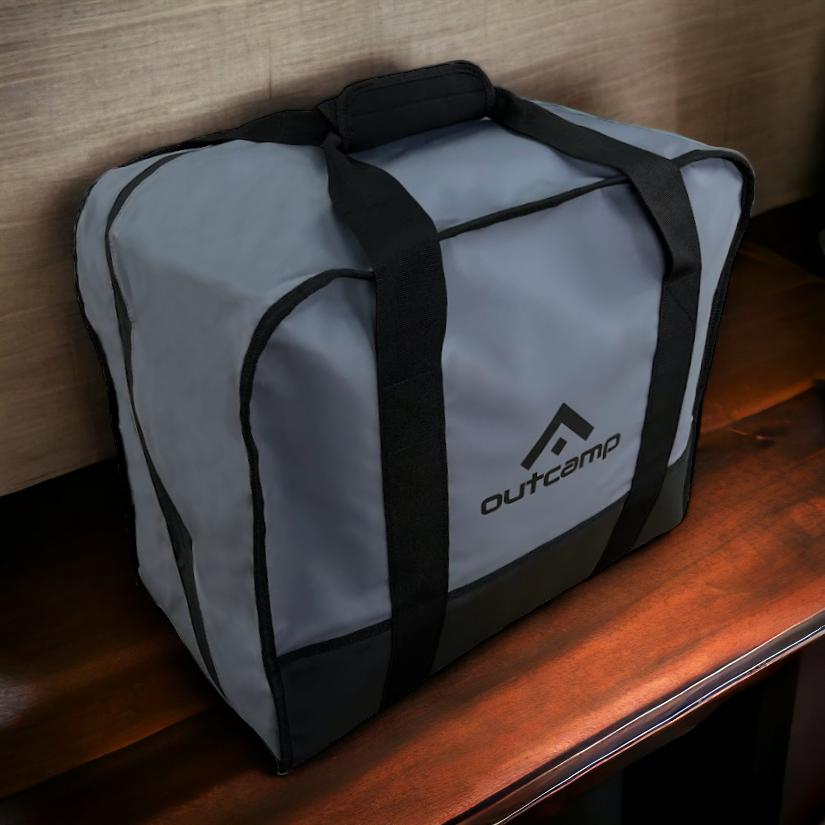
This capability allows a fire warden in a metropolitan headquarters to view a live 4K feed of a remote fire-front in the Kimberley, identifying spot-fires and fire-behaviour changes as they happen. It also enables the use of AI-driven thermal analysis in the field, where the video feed is processed in real-time to identify hot-spots that are invisible to the naked eye through smoke. By integrating the Starlink Mini into the drone pilot’s field kit—protected by a rugged Starlink Mini Hard Protective Travel Case—agencies can ensure that their aerial intelligence is truly "actionable" and available to decision-makers across the country instantly.
Telemedicine and Field Medical Support
In remote search and rescue or disaster medical response, the time to reach a hospital is often measured in hours. PAR (Primary Access Response) teams and remote paramedics frequently find themselves performing complex clinical procedures in the field with limited specialist support. Starlink Mini enables high-fidelity telemedicine, allowing a trauma specialist in a tertiary hospital to "join" the paramedic at the patient’s side via a high-definition video link. This is not just a phone call; it is the ability to share live vitals, ultrasound images, and high-resolution visuals of the injury.
This level of remote support significantly improves patient outcomes in "pre-hospital" environments. A surgeon can guide a paramedic through a life-saving intervention or help interpret the readings from a portable ECG monitor. Knowing that professional medical advice is only a button press away also provides a significant psychological boost to responders working in high-stress, isolated environments. By utilizing the Starlink Mini as a medical data hub, agencies can effectively "extend" the walls of the hospital to the most remote corners of the Australian outback.
The Hardware Redundancy Stack: Preparing for Monsoon and Fire
An emergency response tool is only useful if it is ready to go the moment the call comes in. In a disaster zone, there is no time for troubleshooting flaky connections or searching for a missing cable. "Professional hardening" of the Starlink Mini setup is mandatory for emergency services. This means moving away from consumer-grade accessories and investing in a hardware redundancy stack that is designed for high-vibration, high-heat, and high-moisture environments. The goal is to create a "deployment-ready" kit that can be grabbed from a gear locker and put into operation by an operator wearing heavy gloves in a high-stress environment.
Environmental durability is the first priority. Emergency events in Australia rarely happen in mild weather; they occur during 45°C heatwaves, tropical monsoons, or intense dust storms. A Starlink Mini that suffers from thermal shutdown or ingest dust during a mission is a safety risk. When outfitting an emergency fleet, you must ensure that every component—from the mount to the power supply—meets or exceeds the industrial requirements of the task. This involves using professional-grade mounting systems and independent power sources that do not rely on the vehicle’s primary starter battery.
Secure Mounting for Fast-Deployment Vehicles
In a rapid deployment scenario, speed of setup is everything. A field unit needs to be able to establish a data link the moment they arrive on-site, and often while the vehicle is still moving to a secondary position. Traditional bolted mounts are too permanent for a multi-role response vehicle, while temporary suction mounts are prone to failure on dusty or corrugated surfaces. The industry standard for emergency fleet integration is a high-strength magnetic system.
The Starlink Mini Magnetic Mount from Outcamp uses professional-grade neodymium magnets that provide hundreds of kilograms of pull force. This allows the dish to be securely attached to the roof of a command ute or the flat steel surface of a service truck in seconds. The lateral grip is immense, ensuring the hardware remains stable even during high-speed travel on unsealed roads or when operating in high-wind environments like a fire-front. For agencies managing a "pool" of Starlink units, the magnetic system also allows the hardware to be quickly swapped between vehicles as operational needs change, without the need for tools or permanent modifications to the machine.
Independent Power and Always-Ready UPS
Power management is the most frequent point of failure for field communications. Relying on a vehicle’s cigarette lighter plug is insufficient for emergency use; these plugs can vibrate loose or fail under high heat. A professional install involves hardwiring the system using high-quality adapters like the Starlink Mini 12V to 24V Power Supply (Anderson Plug). This provides a secure, vibration-proof connection that can handle the current demands of the Mini without overheating.
More importantly, emergency services require an "Uninterruptible" data link. If a vehicle’s engine is turned off to save fuel or if the vehicle suffers an electrical failure, the communication link must stay online. The Starlink Mini Portable UPS Power Supply (7-10 Hours) acts as a dedicated safety buffer. It sits between the vehicle's power source and the Starlink unit, charging while the engine is running and automatically providing a guaranteed 7-10 hours of runtime if the primary power is cut. For a site commander, this provides the "peace of mind" that their command-and-control link is independent of the vehicle's health, allowing them to coordinate a response even if the transport is disabled.
"In an emergency, the communication link is as safety-critical as a fire-extinguisher or a first-aid kit. It must have its own dedicated power and a mount that survives the most violent terrain."
Site Compliance and the Future of Disaster Logistics
The transition to high-speed satellite connectivity is also changing the logistics of disaster management. Modern WHS (Work Health and Safety) regulations require that businesses and government agencies provide an "effective means of communication" for workers in isolated areas. In the context of a 2026 legal landscape, relying on a patchy radio network when high-speed satellite links are available can create a significant compliance risk for the organization. By implementing a standardized Starlink deployment protocol, agencies can ensure they are meeting their moral and legal obligations to their staff.
This compliance also extends to "Active Supervision." Safety managers can now perform virtual site audits and hazard assessments from a thousand kilometres away. By utilizing the Starlink Mini's consistent bandwidth, they can review field documentation, check-in on solo workers via video, and provide real-time guidance on safety protocols. In the event of a regulatory investigation, having a time-stamped, geotagged record of all field communications and hazard identifies is an invaluable asset. The Starlink Mini is not just a connectivity tool; it is a vital part of a modern, data-driven safety management system.
Secure Network Integration and VOIP
Network security is often overlooked in the chaos of a disaster response, but it is a critical concern for agencies handling sensitive personal or operational data. A Digital Base Camp must be integrated with secure, enterprise-grade networking gear. This involves using the Starlink Mini in conjunction with hardware-based VPNs and firewalls to ensure that all data transmitted from the field is encrypted and protected from interception.
Wired Ethernet integration is the preferred method for site office cabins, as it provides a more secure and stable connection than public-facing WiFi. By hardwiring the primary command laptop and VOIP phone system, you eliminate the risk of wireless congestion and signal jamming. This "hardened" network ensures that the mission-critical data loops—such as patient records or fire-line coordinates—are prioritized and delivered without jitter or lag, regardless of how many mobile workers are using the secondary wireless access points.
Maintaining IP67 Integrity in Extreme Weather
The Starlink Mini is rated at IP67, meaning it is designed to withstand 30 minutes of immersion in one metre of water. However, this industrial rating is only valid if the cabling and connectors are also properly sealed. Many field failures occur not because the dish failed, but because moisture entered the RJ45 port or the power cable. In a monsoon or during high-pressure hose-downs on a fire-ground, "near-enough" weatherproofing is not enough.
A professional emergency response setup uses sealed, screw-down connectors and waterproof passthroughs to maintain the integrity of the system from end-to-end. At Outcamp, we specialize in the waterproofing kits and shielded cables that ensure your Starlink Mini survives a tropical downpour or a dusty summer in the Mallee. This commitment to "total weatherproofing" is what separates a amateur setup from a mission-critical tool that a site commander can rely on when the weather turns.
FAQ: Starlink Mini for Emergency Services
Can the Starlink Mini magnets interfere with vehicle electronics or sirens?
Modern emergency response vehicles use high-precision GPS (GNSS) systems and shielded radio electronics. Neodymium magnets, like those used in the Starlink Mini Magnetic Mount, have a highly localized magnetic field. When the mount is attached to a steel roof, the steel acts as a magnetic shield (a flux return path), significantly reducing the field inside the cabin. As long as the mount is placed at least 30cm away from high-precision GNSS antennas, there is typically no measurable interference with the vehicle’s electronics or sirens.
Is the Starlink Mini fast enough for live-streaming fire fronts?
Yes. The Starlink Mini typically delivers upload speeds between 10Mbps and 25Mbps, which is more than sufficient for high-definition (1080p or even 4K) video streaming. Unlike legacy satellite systems that struggle with the high latency of geostationary orbits, the Starlink LEO constellation provides the low-latency response needed for smooth, real-time video feeds from drones or handheld cameras.
What is the setup time for a Digital Base Camp?
A trained operator can have a Starlink Mini Digital Base Camp online in under two minutes. This involves attaching the dish to the vehicle using the magnetic mount, connecting the Starlink Mini 12V to 24V Power Supply (Anderson Plug), and waiting for the phased-array antenna to lock onto the satellites. This rapid "power-on-to-online" time is one of the Mini's greatest advantages for rapid response teams who need to establish comms immediately upon arrival.
Conclusion: Future-Proofing Disaster Management
The arrival of the Starlink Mini represents the most significant advancement in remote emergency communications since the introduction of the digital UHF radio. By providing high-speed, reliable data in a form factor that survives the tracks, it has finally closed the "Intelligence Gap" that has plagued remote disaster management for decades. Field units are no longer isolated nodes; they are connected components of a national safety network.
However, the technology is only the first step. To truly fulfill the promise of a "Digital Command Post," agencies must commit to professional integration. This means moving beyond consumer-grade suction mounts and unreliable power plugs, and investing in high-strength magnetic systems, dedicated UPS power, and industrial weatherproofing. At Outcamp, we provide the hardware that hardens the Starlink Mini for the real-world challenges of the Australian outback. Whether you are managing a local SES unit or a national disaster response fleet, we have the gear that helps you stay connected, stay compliant, and stay safe under the most extreme conditions.
Explore the full range of Starlink Mini Professional Accessories and Heavy-Duty Mounting Solutions at Outcamp today. We build hardware that survives the bush, so your team can thrive in the field.




Leave a comment (all fields required)