


Starlink Mini vs Mobile Hotspots: An Honest Cost and Performance Comparison for Remote Australian Worksites
Establishing a reliable communications link on a remote Australian worksite has historically been a choice between two compromises. On one hand, operators have relied on standard cellular mobile hotspots, which are compact and cheap but suffer from severe coverage limitations the moment you drive past the regional township boundary. On the other hand, heavy-duty satellite domes have offered global coverage but required massive capital expenditure, complex permanent vehicle installations, and high ongoing data fees.
The introduction of the Starlink Mini has fundamentally redefined this landscape. By packing a complete low-Earth orbit satellite transceiver and an integrated WiFi router into a compact, battery-friendly unit about the size of a laptop, it promises to deliver high-speed, low-latency broadband anywhere under the open sky. For project managers, fleet operators, and contractors in civil construction, mining, and agriculture, deciding whether to outfit crews with traditional 4G or 5G mobile hotspots or invest in a fleet of Starlink Mini terminals requires a thorough, data-driven analysis of coverage, hardware, performance, power, and total cost of ownership.
The Reality of Remote Worksite Connectivity in Australia
To understand the business case for each technology, it is essential to first analyze the geographical and technical environment of remote Australian commercial operations. Australia’s landmass is vast, and despite significant infrastructure investments by major carriers, terrestrial cellular networks cover less than thirty percent of the continent's physical area.
For businesses operating in regional and remote sectors, this coverage gap is a constant bottleneck. It affects everything from real-time data synchronization and safety compliance to the daily welfare of the remote workforce, making the selection of a communications backhaul system a business-critical decision.
The Terrestrial Black Spot: Why 4G and 5G Fall Short
Terrestrial cellular networks operate on a line-of-sight basis from ground-based towers, which are heavily concentrated in metropolitan corridors and major regional centers. The moment your crew travels into a remote valley, a rolling paddock, or a deep civil excavation site, the physical topography blocks these high-frequency cellular signals, creating immediate communication black spots.
Furthermore, mobile hotspots and pocket routers rely on small, integrated internal antennas that lack the signal-gaining power required to latch onto weak, distant towers. While a vehicle-mounted external cellular booster can marginally extend this range, it cannot conjure a signal where no coverage exists, leaving your crew completely isolated when operating in true remote paddocks or unserviced road corridors.
Low-Earth Orbit Satellite Technology: The LEO Advantage
Unlike traditional geostationary satellites that sit in fixed orbits over thirty-five thousand kilometres above the Earth—introducing massive signal latency and requiring large, high-power dishes—low-Earth orbit networks operate in a dynamic constellation just five hundred and fifty kilometres above the surface.
This proximity reduces the physical distance the radio waves must travel, allowing the Starlink Mini to establish a stable, high-bandwidth connection with round-trip latency that rivals terrestrial broadband. Because the satellite constellation is constantly in motion overhead, the Mini can acquire a direct, unobstructed line-of-sight link from anywhere in Australia, completely bypassing the terrestrial towers and terrain blockages that render cellular hotspots useless.
Workforce Efficiency and Safety Compliance
Operating without reliable internet on a remote site is no longer just an inconvenience; it is a major financial risk and a compliance liability under modern workplace health and safety laws. Crews operating in black spots cannot access real-time project management portals, upload critical geotechnical data, or run mandatory safety monitoring systems.
When a breakdown or an accident occurs in a cellular dead zone, workers are forced to drive kilometres back to the nearest ridge just to establish a voice call or send a text message. By ensuring continuous, high-bandwidth connectivity at the working face of the project, you protect your staff, streamline operations, and eliminate the expensive delays caused by disconnected crews.
Head-to-Head: Hardware, Speeds, and Latency
Evaluating these two connectivity options for commercial deployment requires looking past marketing claims and analyzing real-world performance metrics under harsh field conditions.
A worksite-ready device must be evaluated on its physical ruggedness, its ability to maintain consistent data throughput, and its suitability for real-time applications such as video calls, cloud databases, and VPN connections.
Hardware Comparison: Ruggedness and Durability
Standard pocket mobile hotspots are consumer-grade electronics designed to sit in a briefcase or a vehicle glovebox. They are constructed from lightweight, fragile plastics, have very low ingress protection ratings, and are highly prone to overheating when left on a vehicle dashboard under the hot Australian sun.
The Starlink Mini, by contrast, is engineered from the ground up for harsh outdoor environments. It features an IP67 dust and water resistance rating, allowing it to survive heavy downpours, dusty paddocks, and extreme operating temperatures ranging from minus thirty to fifty degrees Celsius. It has no moving parts to clog with dust or vibrate loose on rough corrugated tracks, making it a significantly more robust hardware investment for commercial vehicle fleets.
Bandwidth and Data Speeds in the Field
Under ideal conditions in a major regional center, a 5G mobile hotspot can deliver impressive download speeds of up to three hundred megabits per second. However, these speeds degrade rapidly as you move away from the tower, or when the local network becomes congested with peak agricultural or tourist traffic.
The Starlink Mini delivers highly consistent performance regardless of how remote the location is. In field tests across outback Australia, the Mini consistently achieves download speeds between one hundred and two hundred megabits per second, and upload speeds between ten and twenty-five megabits per second. This provides ample bandwidth to run multiple concurrent video streams, upload large drone mapping datasets, or synchronize heavy BIM databases without choking the network.
Latency and Real-Time Application Performance
The biggest differentiator between LEO satellite internet and legacy satellite systems is latency. While older satellite systems suffer from latency spikes of over six hundred milliseconds—making real-time cloud collaboration, VoIP voice calls, and secure corporate VPN connections impossible—the Starlink Mini operates with a responsive latency profile of thirty to forty-five milliseconds.
This ultra-low latency closely matches the performance of a high-quality 4G cellular connection. It allows your remote staff to run smooth, lag-free Microsoft Teams video calls, connect securely to corporate servers via remote desktop protocols, and operate cloud-synchronized industrial software exactly as if they were sitting in the metropolitan head office.
"In the modern outback, data connectivity is no longer a luxury—it is an essential tool of the trade. Choosing a communications platform that operates reliably beyond the cellular boundary is the single most effective way to eliminate remote site downtime and protect your field workforce."
Power Management and Off-Grid Deployment Tradeoffs
For mobile workforces operating out of utility vehicles, service trucks, and remote site sheds, power management is a primary consideration when selecting communications hardware.
Every watt drawn by your communications gear must be supplied by the vehicle’s dual-battery system or a portable power pack, making energy efficiency and mounting versatility critical factors in long-term deployment success.
Power Consumption and Operating Draw
A consumer pocket hotspot has an incredibly small power footprint, drawing less than five watts when charging and running off its internal lithium battery for six to eight hours. While this makes it highly portable, it is a self-contained device that cannot be easily integrated into a vehicle's permanent electrical charging circuits without constant battery degradation.
The Starlink Mini draws an average of twenty-five to forty watts during active satellite tracking and data transfer, which is incredibly efficient for a complete satellite ground station. Because it operates on a DC voltage range of twelve to thirty volts, it can be hardwired directly into a vehicle's accessory circuit using a Starlink Mini Hardwire Power Cable (3.0M) or connected to a dual-battery system via a wide-voltage Starlink Mini 12V to 24V Power Supply (Anderson Plug). This eliminates the need for power-hungry 240V inverters and ensures continuous, reliable operation throughout the working day without draining the vehicle's starting battery.
Off-Grid Deployment and Vehicle Mounting Systems
Deploying a mobile hotspot in a vehicle typically involves leaving it loose on the dashboard or console, where the internal antennas are easily shielded by the vehicle's metal cabin, leading to dropped connections and reduced speeds.
To achieve optimal performance with the Starlink Mini, the transceiver dish must have a clear, unobstructed view of the sky. This is achieved by utilizing heavy-duty, commercial-grade mounting solutions that attach securely to the vehicle's exterior. Hardening your setup with a high-strength Starlink Mini Magnetic Mount or a zero-drill Starlink Mini Roof Rack Mount allows you to permanently install the dish on a ute canopy, bull bar, or roof rack. This keeps the dish positioned at the perfect angle for satellite acquisition, protects it from heavy corrugations and paddock hazards, and ensures your mobile office is online the instant you park at the job site.
Total Cost of Ownership and Plan Structures
To make an informed commercial decision, let us break down the real-world cost structures of both systems in Australia for 2026.
| Cost Element | Telstra 5G Mobile Hotspot (Commercial Plan) | Starlink Mini (Mobile 50GB / Regional Roam) |
|---|---|---|
| Hardware Cost | A$300 to A$600 (Upfront) | A$399 (Upfront purchase) |
| Monthly Plan Cost | A$59/month (85GB) to A$89/month (150GB) | A$80/month (50GB) to A$174/month (Unlimited) |
| Out-of-Plan Data | Throttled to 1.5 Mbps (No extra cost) | A$3.00 per Gigabyte (Extra data on 50GB plan) |
| Physical Coverage | Under 30% of Australian landmass | 100% of Australian landmass (Clear sky view) |
| Plan Flexibility | 24-month lock-in contract or month-to-month | No contract, pause and resume service instantly |
While a mobile hotspot has lower ongoing monthly costs within cellular coverage, it becomes an incredibly expensive liability the second your crew drives into a black spot and loses productivity. The ability to pause the Starlink Mini service during off-peak months or between projects means you only pay for data when your crews are actively in the field, making the total cost of ownership highly competitive over a twelve-month commercial cycle.
FAQ: Worksite Connectivity and Starlink Mini Integration
Can I run the Starlink Mini natively off my vehicle's 12V dual-battery system?
Yes. The Starlink Mini features a wide input voltage range of twelve to thirty volts DC. By utilizing a high-efficiency power supply like the Starlink Mini 12V to 24V Power Supply (Anderson Plug), you can connect the dish directly to your vehicle's auxiliary battery, bypass the need for a 240V inverter, and eliminate power conversion losses.Does the Starlink Mini replace my need for a mobile hotspot entirely?
For teams operating strictly in metropolitan areas or along major highways, a mobile hotspot remains a highly cost-effective option. However, for any business operating in regional, agricultural, or remote outback sectors, the Starlink Mini is the only reliable way to ensure constant, uninterrupted connectivity. Many commercial fleets utilize the Starlink Mini as their primary remote link, while keeping a basic cellular hotspot as a low-cost backup when operating near major towns.How do I protect the Starlink Mini dish from dust and damage on rough tracks?
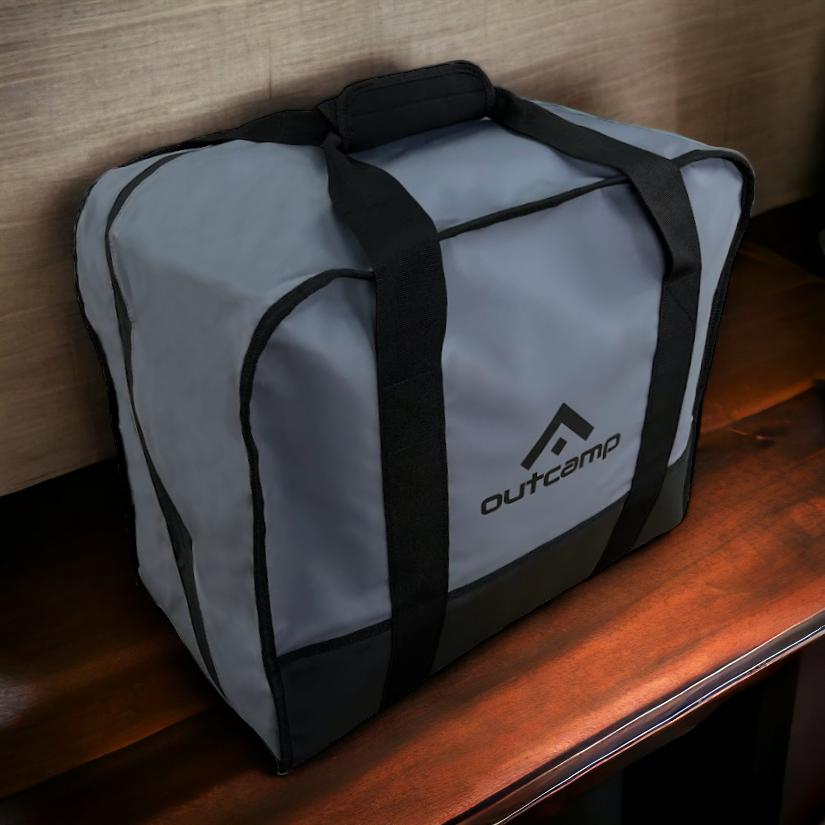
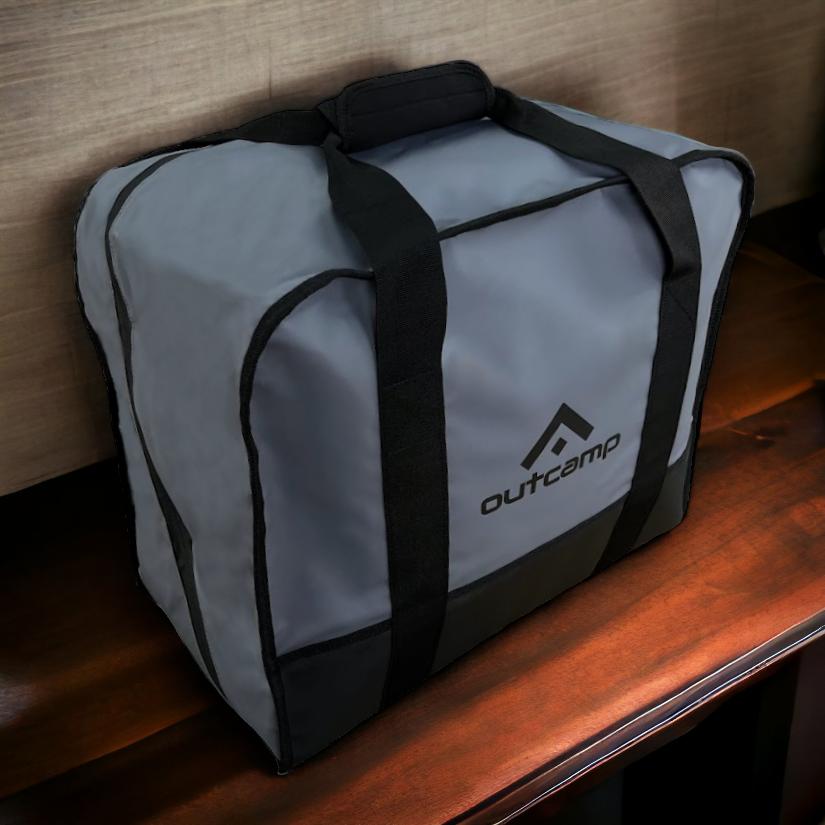
A dusty, open paddock is a harsh environment for electronics. To protect your hardware, store the dish inside a padded Starlink Mini Carry Bag when in transit, and fit a clear protective cover over the face of the dish when deployed. This shields the sensitive phased-array surface from abrasive dust, sand, and stone strikes without affecting your satellite connection or internet speeds.Conclusion: Securing the Digital Frontier
Terrestrial mobile hotspots have played a vital role in keeping mobile workforces connected along our coastal fringes and metropolitan highways. But for professional operators in civil construction, mining, agriculture, and remote transport, relying on patchy 4G and 5G networks in the back paddocks is a compromise that introduces massive operational risk, expensive project delays, and safety compliance concerns.
The Starlink Mini represents a fundamental shift in remote communications technology, offering high-speed, low-latency broadband that operates with absolute reliability across every square kilometre of the Australian outback. By outfitting your commercial fleet with a ruggedized, off-grid satellite system—and securing it with heavy-duty mounting hardware like the Starlink Mini Roof Rack Mount or the high-strength Starlink Mini Magnetic Mount—you eliminate remote black spots, protect your field staff, and ensure your business stays connected, no matter how far off the grid you travel.
Explore our complete catalog of ruggedized commercial mounting brackets, hardwired power cables, and protective carry gear at Outcamp today. We build hardware designed to survive the toughest conditions, so your business can thrive in the field.




Leave a comment (all fields required)