There are few things that compare to pulling the lid off a camp oven after hours of slow cooking to find a lamb shoulder so tender it falls apart at the touch of a fork. The aroma alone — rosemary, garlic, and rendered fat mingling with woodsmoke — is enough to draw in everyone within a hundred metres of your campsite. This is the kind of meal that turns a good camping trip into one people talk about for years.
Camp oven cooking suits lamb shoulder perfectly. The heavy cast iron distributes heat evenly from both the coals underneath and the lid on top, creating an environment not unlike a commercial kitchen's combi oven. The result is meat that braises in its own juices alongside root vegetables that soak up every bit of flavour. Best of all, once it is in the camp oven, you can walk away and enjoy the afternoon while dinner takes care of itself.
Why Lamb Shoulder Works So Well in a Camp Oven
Lamb shoulder is one of the most forgiving cuts you can cook over coals. Unlike a leg or a rack, shoulder is loaded with connective tissue and marbling that breaks down slowly during a long braise. That collagen converts to gelatin, which gives the meat its characteristic silky texture and rich mouthfeel. You cannot rush this process, but you also cannot really overcook it — within reason.
For campers and tourers, lamb shoulder has practical advantages too. It is widely available at supermarkets and butchers across regional Australia, it stores well in a quality camping fridge for several days, and a single bone-in shoulder weighing around 1.5 to 2 kilograms will comfortably feed four to six adults with leftovers for sandwiches the next day.
Choosing Your Cut
A bone-in lamb shoulder is the preferred option for camp oven cooking. The bone conducts heat into the centre of the meat and adds body to the braising liquid. Ask your butcher for a shoulder that still has a good fat cap — that layer of fat bastes the meat as it renders down, keeping everything moist even if your temperature control is not perfect.
If you cannot find bone-in, a boneless rolled shoulder works too, though you may want to reduce the cooking time by about 30 minutes. Some butchers sell half shoulders, which are ideal if you are cooking for two or three people rather than a larger group.
Whichever cut you choose, bring it to something approaching room temperature before it goes into the camp oven. Taking it out of the fridge an hour before cooking helps it cook more evenly and reduces the overall time needed.
The Role of Bush Herbs
Native Australian herbs add a distinctive character to this dish that you simply cannot replicate with European herbs alone. Lemon myrtle contributes a bright, citrusy note that cuts through the richness of the lamb. Mountain pepper delivers a warm, lingering heat quite different from black pepper. If you can source them, dried bush tomato adds a smoky, caramelised sweetness that pairs beautifully with roasted root vegetables.
That said, this recipe works perfectly well with conventional herbs if native ingredients are not available. Fresh rosemary and thyme are the classic pairing with lamb, and dried oregano makes a reliable substitute. The important thing is to use robust, woody herbs that can withstand hours of braising without turning bitter.
If you are interested in foraging, many parts of Australia have wild rosemary and native thyme growing in bushland. Always ensure you can positively identify any plant before cooking with it, and never forage in national parks or protected areas.
Prep-Ahead for Travellers
This recipe lends itself well to prep-ahead strategies. At home before your trip, combine the dry rub ingredients in a small zip-lock bag and label it. Peel and chop the root vegetables, then store them in a container or vacuum-sealed bag in your camping fridge. You can even brown the lamb at home, cool it, wrap it tightly, and refrigerate it so that at camp all you need to do is assemble everything in the camp oven and let the coals do the work.
Pre-mixing the rub and pre-cutting the vegetables saves about 20 minutes of prep time at camp, which makes a real difference when you have rolled into a new site after a long day on the road and just want to get dinner going.
Vacuum sealing the prepped vegetables extends their fridge life considerably — they will hold well for four or five days, giving you flexibility to cook this meal later in a multi-day trip rather than on the first night.
Ingredients
For the lamb:
- 1.5–2 kg bone-in lamb shoulder
- 2 tablespoons olive oil
- 1 tablespoon dried lemon myrtle (or zest of 1 lemon plus 1 teaspoon dried thyme)
- 1 teaspoon mountain pepper (or 1 teaspoon coarsely ground black pepper)
- 1 teaspoon dried bush tomato, ground (optional)
- 4 cloves garlic, peeled and halved
- 3 sprigs fresh rosemary
- 1 tablespoon sea salt flakes
For the vegetables:
- 4 medium potatoes, quartered (Sebago or Desiree work well)
- 3 large carrots, peeled and cut into thick rounds
- 2 parsnips, peeled and cut into chunks
- 1 large brown onion, cut into wedges
- 4 cloves garlic, whole and unpeeled
- 2 tablespoons olive oil
- Salt and pepper to taste
For the braising liquid:
- 1 cup beef or vegetable stock (a stock pot dissolved in hot water works fine at camp)
- 1 cup red wine (or substitute extra stock)
- 2 tablespoons tomato paste
- 1 tablespoon Worcestershire sauce
Step-by-Step Instructions
Step 1 — Prepare Your Fire and Camp Oven
Build a solid hardwood fire at least 45 minutes before you plan to start cooking. You need a generous bed of hot coals, not flames. Ironbark, red gum, or any dense hardwood produces coals that hold their heat for hours. Avoid softwoods like pine — they burn too fast and leave resinous deposits on your camp oven.
While the fire burns down, prepare your camp oven. A 12-quart (approximately 10-litre) camp oven is the ideal size for this recipe. If your camp oven is new or has not been used recently, give it a light coat of vegetable oil inside. Place the camp oven on a trivet or a small mound of coals to preheat it gently — you want it warm, not smoking hot.
For temperature management throughout the cook, you are aiming for roughly 160 to 170 degrees Celsius inside the camp oven. A rough guide: place about 8 coals underneath and 14 to 16 on the lid for a 12-quart oven. Rotate the lid a quarter turn every 30 minutes and rotate the base the opposite direction to prevent hot spots.
Step 2 — Season and Brown the Lamb
While the fire is burning down, prepare the lamb. Pat the shoulder dry with paper towel — this is essential for getting a good sear. Combine the sea salt, lemon myrtle (or lemon zest and thyme), mountain pepper, and bush tomato in a small bowl. Rub this mixture all over the lamb, pressing it into the fat cap and any crevices.
Make 8 small incisions in the lamb with a sharp knife and push a halved garlic clove into each one. Lay the rosemary sprigs across the top of the shoulder.
Add two tablespoons of olive oil to the preheated camp oven and place the lamb fat-side down. Let it sear without moving for about 4 to 5 minutes until the fat cap is golden and has rendered some of its fat. Flip and sear the other side for another 3 minutes. Remove the lamb and set it aside on a plate or cutting board.
Step 3 — Build the Braising Base
With the lamb out of the camp oven, add the onion wedges to the rendered fat and stir them around for 2 to 3 minutes until they soften. Add the tomato paste and stir for another minute — this caramelises the paste and deepens the colour of your sauce.
Pour in the red wine (or extra stock) and use a wooden spoon to scrape up any browned bits stuck to the bottom of the camp oven. These fond bits are packed with flavour. Add the beef stock and Worcestershire sauce, then stir to combine.
Arrange the potatoes, carrots, and parsnips around the base of the camp oven, creating a bed for the lamb to sit on. Tuck the whole garlic cloves among the vegetables. Place the lamb back in, fat-side up, nestling it on top of the vegetables so it sits above the liquid line. The exposed fat cap will crisp in the dry heat above the braising liquid.
Step 4 — Slow Cook
Place the lid on the camp oven and arrange coals on top and underneath as described in Step 1. The total cooking time is approximately 3 to 3.5 hours. During this time, your main job is maintaining a steady temperature.
Every 30 to 45 minutes, rotate the lid and base as mentioned earlier. Check the coal levels — you will likely need to replenish them from your fire every 45 minutes or so. Add 3 to 4 fresh coals at a time rather than a large batch, which can spike the temperature.
After about 2.5 hours, carefully lift the lid and check the progress. The lamb should be visibly pulling back from the bone, and a fork inserted into the thickest part should slide in with almost no resistance. If it still feels tight, replace the lid and continue for another 30 minutes. The vegetables should be soft and golden around the edges.
Step 5 — Rest and Serve
When the lamb is done, remove the camp oven from the coals entirely and let it rest with the lid on for 15 to 20 minutes. This resting period allows the juices to redistribute through the meat and the braising liquid to settle into a rich, concentrated sauce.
To serve, use two forks to pull the lamb apart directly in the camp oven, or transfer it to a board and shred it there. The meat should fall apart with minimal effort. Spoon the vegetables and braising liquid alongside.
This dish pairs well with a simple green salad if you have the supplies, or just eat it straight from the camp oven with some crusty bread to mop up the sauce. Leftovers make an exceptional filling for wraps or toasted sandwiches the next day.
Temperature Management Tips
Getting the temperature right is the single most important factor in camp oven cooking, and it takes practice. The coal placement ratio of roughly one-third underneath and two-thirds on the lid works well for braising, where you want gentle, even heat rather than aggressive bottom heat that can scorch the base.
Wind is the enemy of consistent temperature. If you are cooking in exposed conditions, position your camp oven behind a windbreak — your vehicle, a camp table, or a purpose-built wind shield all work. Wind strips heat from the coals rapidly and can create uneven cooking.
Reading Your Coals
Learn to read the colour and state of your coals. Bright orange coals with a thin layer of white ash are at their hottest — roughly 300 degrees Celsius at the surface. For this recipe, you want coals that have developed a thicker grey ash coating, which indicates they have settled to a more moderate 200 to 250 degrees. The heavy cast iron of the camp oven buffers temperature fluctuations, but starting too hot risks burning the base of your braise.
If you are unsure about temperature, hold your hand about 10 centimetres above the lid. If you can hold it there for 3 to 4 seconds before it becomes uncomfortable, you are in the right range. Less than 2 seconds means it is too hot — remove a few coals from the lid.
Investing in a camp oven thermometer that clips to the lid rim takes the guesswork out entirely. They are inexpensive, light, and take up almost no space in your camp kitchen kit.
Maintaining Heat Over a Long Cook
A 3-hour cook requires planning your fuel supply. Keep a small fire burning alongside your camp oven throughout the cook — its sole purpose is to generate fresh coals for replenishment. A few pieces of hardwood, stacked loosely so air circulates well, will produce the steady supply of coals you need.
When replenishing, use long-handled tongs or a coal shovel to transfer coals. Avoid opening the lid more than necessary — each time you lift it, you lose heat and extend the cooking time. A quick visual check every 45 minutes is sufficient.
In cold or windy conditions, you may need to increase the coal count by 2 to 3 on both top and bottom to compensate for heat loss. In very hot conditions, such as a summer afternoon in northern Australia, you may actually need fewer coals than the standard ratio suggests.
Cleaning and Caring for Your Camp Oven
After cooking, let the camp oven cool naturally. Never pour cold water into a hot camp oven — the thermal shock can crack the cast iron. Once it is cool enough to handle, scrape out any stuck-on food with a plastic scraper or a ball of aluminium foil. Rinse with warm water and a stiff brush. Avoid soap unless absolutely necessary, as it strips the seasoning.
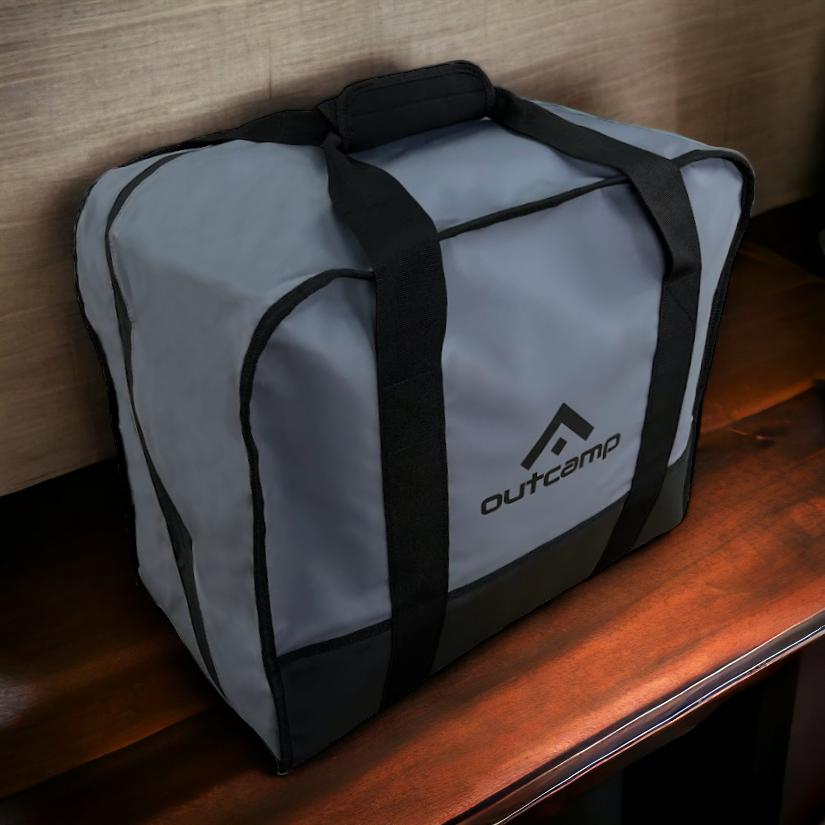
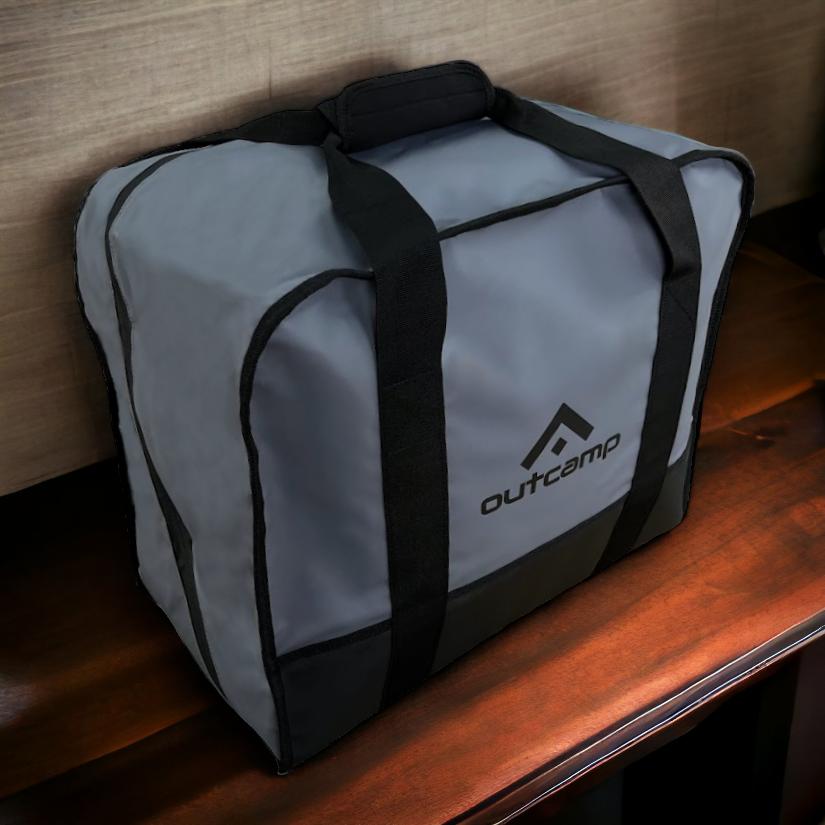
Dry the camp oven thoroughly over low heat or wipe it down completely, then apply a thin coat of vegetable oil to all surfaces, including the lid. Store it in a breathable cotton or canvas bag — never in a sealed plastic bag, which traps moisture and promotes rust.
A well-maintained camp oven will last decades and improve with every cook. The seasoning builds over time, creating a natural non-stick surface that makes both cooking and cleaning progressively easier.
If you are looking to round out your camp kitchen setup, browse our full range of camping accessories at outcamp.com.au. From carry bags to connectivity solutions that keep you in touch while you are off the grid, we stock gear designed for the way Australians actually travel.