Smart Sonar and AI-Powered Fishing Electronics: A Guide for Australian Anglers in 2026
Fishing electronics have come a long way from the flickering green screens of old. In 2026, Australian anglers have access to a new generation of smart sonar devices, AI-enhanced chartplotters, and connected systems that turn raw data into actionable intelligence on the water. Whether you are chasing flathead in a shallow estuary, jigging for snapper offshore, or trolling for tuna in blue water, the right electronics setup can mean the difference between a slow session and a cracker of a day.
The biggest shift this year is connectivity. Devices no longer operate in isolation — they talk to your phone, sync with cloud-based maps, share waypoints across your crew, and even integrate with satellite internet via Starlink for real-time weather and chart updates well beyond mobile coverage. This guide breaks down the smart sonar and AI fishing electronics landscape for Australian conditions, helping you choose gear that actually makes a difference on the water.
Castable Smart Sonar: Fishing Intelligence from the Bank or Kayak
Castable smart sonar devices have matured significantly since their early days as novelty gadgets. In 2026, units like the Deeper CHIRP+ 2 and Garmin Striker Cast GPS deliver genuine CHIRP sonar performance in a package you can clip to your line and cast from shore, a kayak, or a small tinny. For Australian anglers who fish estuaries, rivers, and lakes without the real estate for a transom-mounted unit, these devices open up a completely new way to read the water.
The appeal goes beyond portability. Castable sonar connects directly to your smartphone via Wi-Fi, turning your phone into a full-featured sonar display with depth contours, fish arches, bottom hardness, vegetation mapping, and water temperature. The GPS-enabled models build bathymetric maps as you cast, giving you a detailed picture of underwater structure that you can save and revisit on future trips.
How CHIRP Technology Works in a Castable Format
Traditional sonar sends a single-frequency pulse and listens for the return. CHIRP (Compressed High-Intensity Radiated Pulse) sweeps through a range of frequencies in each ping, producing far greater target separation and detail. In a castable unit, this means you can distinguish individual fish from structure, identify baitfish schools, and read thermoclines — all from a device the size of a tennis ball.
The Deeper CHIRP+ 2, for instance, operates across three beam frequencies: a wide beam for scanning large areas, a medium beam for general use, and a narrow beam for precise deep-water targeting. At around $350 to $450 AUD, it represents serious capability for bank anglers, kayak fishos, and anyone who fishes spots where a full sonar install is impractical.
For Australian conditions, the castable format is particularly useful in locations like the Murray River system, coastal rock platforms, and remote billabongs where you are fishing on foot. Cast the sonar out, let it drift or retrieve it slowly, and build a real-time map of what is beneath the surface. It is a genuine edge, especially when targeting species like Murray cod, bass, and bream that relate tightly to specific structure.
GPS Mapping and Bathymetric Charts
The GPS-equipped castable units create bathymetric maps on the fly. Each cast logs depth, GPS coordinates, and bottom composition, and the companion app stitches this data into a contour map that reveals drop-offs, channels, humps, and flats. Over a few sessions, you build a personal chart of your favourite fishing spots that no one else has access to.
This is especially valuable in Australian waters where detailed charts do not exist for many inland waterways, small impoundments, and tidal creek systems. The data syncs to the cloud, so you can review your maps at home, plan your next session, and share waypoints with mates. Some apps also support community mapping, where anglers contribute data to build crowd-sourced charts of popular fisheries.
One practical tip: when mapping a new area, work methodically in a grid pattern rather than casting randomly. You will build a more complete and accurate picture of the bottom, which pays dividends on return visits when you know exactly where the fish-holding structure sits.
Limitations to Consider
Castable sonar is not a replacement for a proper hull-mounted unit on a powered boat. The wireless range tops out at around 80 to 100 metres, battery life runs three to six hours depending on usage, and you are limited to the area you can physically cast to. In rough water or strong current, maintaining a stable sonar picture can be challenging as the unit bobs and drifts.
Connectivity can also be affected by phone case thickness, ambient Wi-Fi interference, and the age of your phone's Wi-Fi chipset. If you are relying on castable sonar as your primary fish-finding tool, carry a portable phone charger and consider a waterproof phone mount to keep your screen visible and accessible while you fish.
That said, for the price point and the sheer versatility of being able to sonar any body of water you can reach on foot, castable smart sonar is one of the best value propositions in fishing electronics right now.
AI-Enhanced Chartplotters and Fish Finders: Smarter Screens on the Helm
The traditional chartplotter has evolved into something far more capable in 2026. Leading manufacturers including Garmin, Lowrance, Simrad, and Raymarine have all integrated machine learning and AI features into their flagship units, turning passive displays into active fishing assistants. These systems do not just show you what is beneath the boat — they interpret it, highlight it, and in some cases, predict where the fish are likely to be.
For Australian boaters running offshore or working complex inshore systems like Moreton Bay, the Gippsland Lakes, or the Kimberley coast, AI-enhanced electronics reduce the cognitive load of interpreting sonar returns and chart data. You spend less time staring at the screen and more time with a rod in your hand.
Real-Time Fish and Structure Identification
One of the most practical AI features in 2026 chartplotters is automatic target identification. Garmin's latest ECHOMAP Ultra 2 series and Lowrance's ActiveTarget 2 use machine learning algorithms trained on millions of sonar returns to automatically distinguish between fish, baitfish schools, structure, vegetation, and bottom type. Instead of interpreting raw sonar arches yourself, the screen highlights and labels targets with a confidence rating.
This technology is particularly useful for anglers who are still developing their sonar reading skills, but even experienced fishos benefit from the speed at which AI can process and classify returns. When you are drifting over a reef complex at pace or scanning a long stretch of coastline, having the system flag fish-holding structure automatically means you miss fewer spots.
Lowrance's ActiveTarget 2 forward-scan sonar deserves special mention. It provides a real-time, video-like view of what is ahead of and beneath the boat, showing fish and structure as they actually appear rather than as traditional sonar arches. Watching a school of snapper scatter as your jig drops into frame is genuinely addictive — and it changes how you fish, because you can see exactly how fish respond to your presentation.
Predictive Mapping and Fishing Hotspot Algorithms
Some 2026 chartplotters now include predictive fishing features that analyse water temperature, tide data, moon phase, barometric pressure, and historical catch data to suggest likely fishing hotspots. Garmin's Fish Activity forecast and Navionics' SonarChart Live are two examples that overlay predicted fish activity on your chart, giving you a data-driven starting point for each session.
These predictions are not infallible — fish are living creatures and do not always read the algorithm — but they provide a useful baseline, especially when you are fishing unfamiliar water. In Australian conditions, where tidal flows, seasonal migrations, and weather patterns play such a dominant role, having a system that synthesises multiple data inputs into a simple heat map of likely activity is a genuine time saver.
The integration with Navionics' community-sourced SonarChart data is also worth noting. As more Australian anglers contribute sonar logs, the charts become more detailed and accurate, particularly in areas that official hydrographic surveys have not covered in decades. Popular spots like the Broadwater on the Gold Coast, Westernport Bay, and the Spencer Gulf already have excellent community coverage.
Touchscreen Performance and Interface Design
AI features are only useful if the interface is fast enough to keep up with real-time fishing. The 2026 generation of chartplotters has addressed this with faster processors, brighter IPS displays visible in direct sunlight, and more intuitive menu structures. Units like the Simrad NSX and Garmin ECHOMAP Ultra 2 feature responsive touchscreens that work reliably with wet hands — a basic requirement that older units often failed at.
Screen size matters for readability, especially when running split-screen views with chart, sonar, and forward-scan simultaneously. For most Australian boat setups, a nine to twelve-inch unit strikes the right balance between screen real estate and dash space. If you are running a centre console or a larger cabin cruiser, consider a twelve-inch or larger unit mounted at eye level for comfortable viewing during long sessions.
Wireless connectivity is now standard across all major brands, allowing you to mirror your chartplotter display to a phone or tablet, share waypoints with other boats, and receive automatic software updates when connected to Wi-Fi. Some units also support wireless sonar networking, so you can add a second transducer at the bow without running cables.
Connected Boat Systems and Satellite Internet on the Water
The concept of the connected boat is no longer aspirational — it is practical and increasingly affordable. In 2026, the combination of marine electronics integration, smartphone apps, and satellite internet means your boat can stay connected to weather services, chart updates, and even your crew on shore, regardless of how far offshore you venture. For Australian anglers who regularly fish beyond mobile coverage, this changes the safety equation as much as the convenience factor.
Starlink has been the catalyst for much of this shift. The Starlink Mini, in particular, has found a natural home on boats thanks to its compact size, relatively low power draw, and ability to deliver high-speed internet in locations where nothing else works. Paired with the right mounting and power setup, it gives you access to real-time weather radar, satellite imagery, chart updates, and communication tools while anchored in a remote bay or drifting offshore.
Starlink Mini for Marine Use: Mounting and Power Considerations
Running Starlink on a boat introduces specific challenges around mounting stability, salt exposure, and 12V power supply. The Starlink Mini needs a clear view of the sky and a stable, secure mount that can handle boat movement without losing signal. Purpose-built marine mounts — including suction, magnetic, and rail-clamp options — are essential for reliable performance afloat.
Power-wise, the Starlink Mini draws around 25 to 40 watts depending on conditions, which is manageable for most marine battery setups. If you are running a dual battery system with a lithium house bank, Starlink can run all day without significantly impacting your reserve. For smaller boats with limited battery capacity, consider running Starlink only when anchored or during specific windows when you need connectivity, rather than leaving it on continuously while underway.
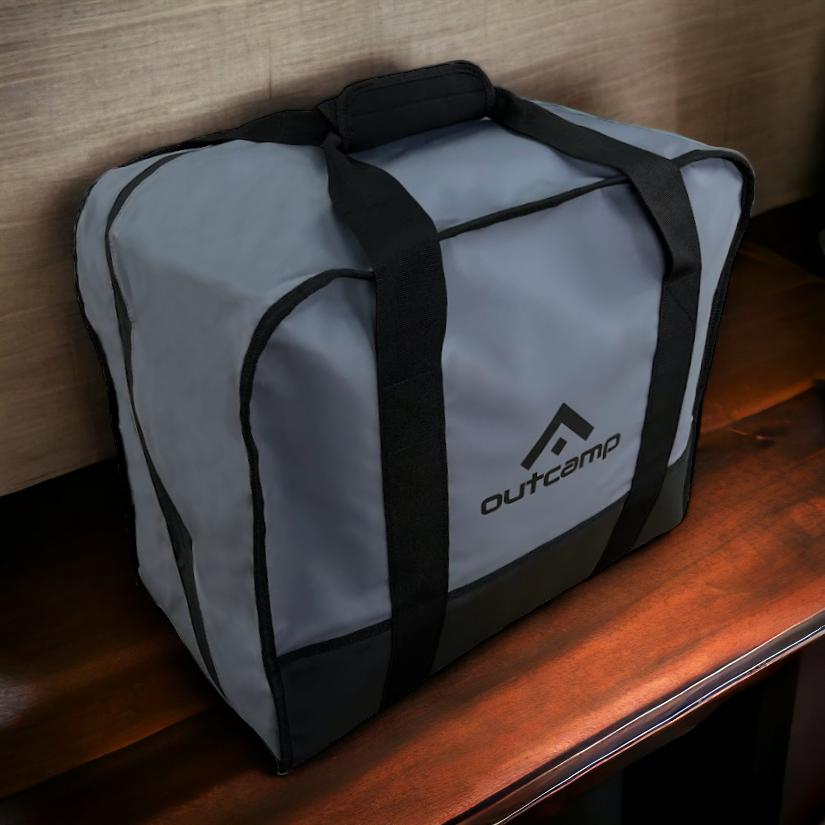
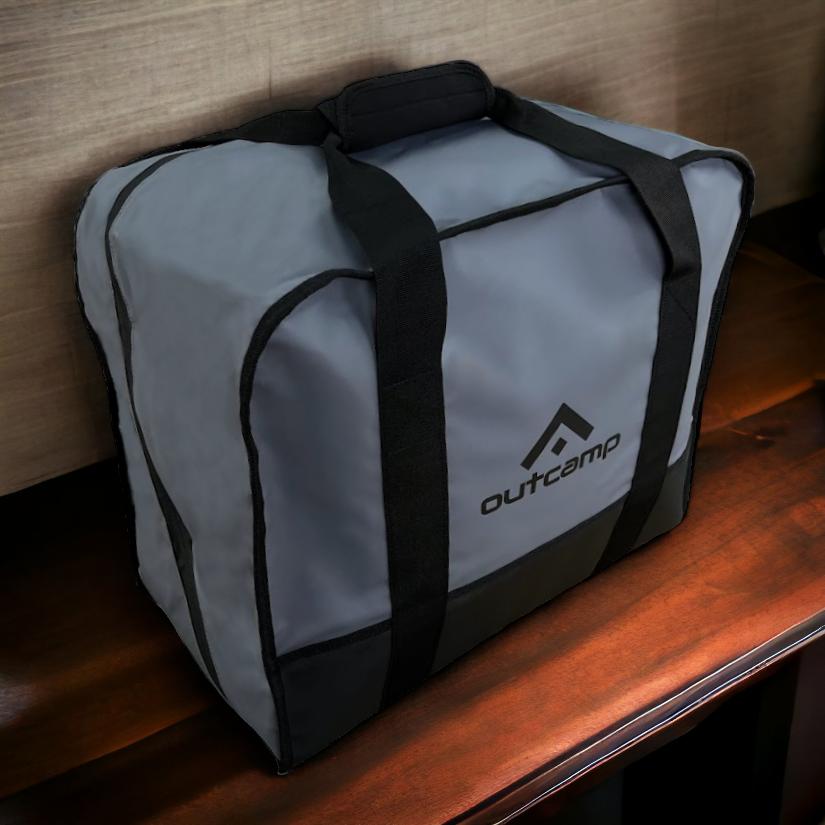
Outcamp stocks a range of Starlink mounting solutions and protective carry bags specifically designed for the conditions Australian boaters face — salt spray, UV exposure, and the vibration that comes with running across open water. A proper carry bag also makes it easy to transport the unit between your vehicle and the boat, which is the reality for most trailer boat owners.
Real-Time Weather and Safety Data Offshore
Access to real-time weather data offshore is arguably the single most valuable benefit of connected boat technology for Australian anglers. The Bureau of Meteorology's coastal and offshore forecasts are excellent, but conditions can change rapidly — particularly in tropical waters, the Bass Strait, and along the exposed southern coastline. Having the ability to pull up live radar imagery, wind observations, and updated forecasts while you are on the water gives you better information to make decisions about whether to stay out, move to sheltered water, or head for port.
Beyond weather, satellite internet enables real-time communication via messaging apps, voice calls, and even video. If you are fishing solo or in a small group well offshore, the safety value of being able to contact someone instantly — rather than relying solely on VHF radio or an EPIRB — is significant. It does not replace mandatory safety equipment, but it adds a layer of communication capability that was simply not available to recreational boaters a few years ago.
Some chartplotter manufacturers are now building direct satellite connectivity features into their units, but for most Australian boaters, the combination of a standalone Starlink Mini and a tablet or phone provides more flexibility and better value than an integrated solution.
Integrating Electronics into a Unified System
Modern marine electronics are designed to work together via NMEA 2000 networking, Wi-Fi, and Bluetooth. A well-integrated setup might include a chartplotter at the helm, a forward-scan sonar at the bow, a Starlink Mini for internet, a VHF radio with DSC, and a smartphone running companion apps — all sharing data seamlessly. Waypoints marked on your phone sync to the chartplotter. Sonar data from the bow display mirrors on the helm screen. Weather updates from Starlink feed directly into your navigation planning.
For the average Australian trailer boat owner, full NMEA 2000 integration might be overkill. A more practical approach is to build your system around a quality chartplotter with built-in Wi-Fi, add a castable or transom-mounted sonar that connects to your phone as a secondary display, and use Starlink for internet when needed. This gives you the benefits of connectivity without the complexity and cost of a fully networked marine installation.
The key is to start with the electronics that solve your most pressing problems — whether that is finding fish, navigating safely, or staying connected — and expand from there. Australian waters are diverse enough that the ideal setup for an estuary bream angler looks very different from what a bluewater game fisher needs, so invest where it matters most for the fishing you actually do.
Choosing the Right Smart Electronics for Your Fishing Style
The range of fishing electronics available in 2026 can be overwhelming, but the decision becomes clearer when you start with your fishing style, your boat (or lack of one), and your budget. Australian anglers fish everything from remote freshwater impoundments to deep offshore reefs, and the electronics that make sense vary enormously across those scenarios.
For bank and kayak anglers, a castable smart sonar paired with a good smartphone is hard to beat for value and portability. For trailer boat owners fishing inshore and nearshore waters, a mid-range chartplotter with CHIRP sonar and Wi-Fi connectivity covers most needs. For serious offshore anglers, a large-screen chartplotter with forward-scan sonar, AI fish identification, and satellite internet delivers the full package — at a price that reflects the capability.
Whatever your setup, the common thread in 2026 is connectivity. The days of fishing electronics as isolated, standalone devices are ending. The systems that deliver the most value are those that connect to your phone, sync with the cloud, and integrate with the broader ecosystem of weather, mapping, and communication tools. Paired with reliable satellite internet from a Starlink setup and the right accessories from Outcamp, you can build a fishing electronics system that keeps you informed, connected, and catching fish — no matter how far from shore you roam.