


It is May. The mornings down south are starting to bite, the Top End is dry and warm, and half the country's caravans are pointed at the Stuart Highway. If yours is one of them, this is the checklist worth running before you actually hitch up.
The Big Lap, the dry season run to the Kimberley, the long Cape York haul — they all start the same way. With a list. The bits people forget are never the obvious ones. Nobody forgets the awning. People forget the wheel chocks, the gas bottle test certificate, the spare key for the storage box, the second tyre gauge.
The thirty second TL;DR
Run through six categories before you leave. Tick them off in this order — vehicle, van, weight, power and water, comms and nav, paperwork. The whole pre-trip should take a relaxed afternoon if you are organised, or an unhappy three days if you are not. Print this one off and keep it in the glovebox.
1. The tow vehicle
Service-out before you leave. If your last service was more than 5,000 km ago, get it done. Outback servicing in remote towns is slow and expensive, and most workshops will not have parts for the unusual stuff.
- Engine oil and filter, fuel filter, air filter — replace, do not just check
- Coolant level and condition — and check the radiator core for bug build up
- Brake fluid, brake pads, brake lines (front and rear)
- Diff and transfer case oils — fresh fluid before remote travel
- Drive belts and hoses — anything older than five years gets replaced
- Battery terminals clean, cranking battery load tested at an auto electrician
- Wheel bearings — front and rear, repacked or replaced if marginal
- All five tyres (including the spare) checked for age (look at the DOT date code), tread, sidewall cracking
- Tow ball, hitch and trailer wiring plug — physically test before loading
Vehicle spares to carry
You do not need to carry the workshop. You do need: 5 L of engine oil, 1 L of coolant, a full set of fuses, two serpentine belts (or one, if old style), a spare upper and lower radiator hose, a spare fuel filter, a tube of cyanoacrylate and gasket goo, electrical tape, cable ties, and a roll of self amalgamating tape. About twenty kilos of insurance.
2. The caravan
The van itself is usually in better shape than the tow vehicle because it sits in a shed for half the year. That means rodents, perished rubber, and tyres that have aged out without being driven on.
- All four tyres pressure-checked AND age-checked (caravan tyres often look fine and are eight years old)
- Spare tyre pressure-checked and accessible (not buried under the back box)
- Wheel bearings inspected and re-greased — non negotiable before a long trip
- Brake controller calibrated with the actual loaded van weight
- Lights all working — running, indicators, brake, reverse — and the trailer plug not corroded
- Door seal, window seals, awning seal — check for splits and rodent chew
- Awning extends and retracts cleanly, all arms tighten
- Stabiliser legs and corner steadies — wind down freely, no rust seizure
- Water hatch, grey water, gas locker — all latching, all sealing
Inside the van
Test every appliance under power before you leave. Fridge — leave it running on 240V for 24 hours and check it gets to temperature, then swap to gas and check again. Hot water — fire it on gas and electric. Stove — every burner. Sink and basin pumps. Toilet flush. Shower head not perished. Internal lights, fans, USB outlets — all of them.
3. Weight and balance
This is the one most people skip and the one that bites the hardest. Caravans do not handle badly because Australia has bad roads. They handle badly because they are loaded wrong.
- Weigh the loaded van at a public weighbridge — actual ATM, not the sticker
- Weigh the tow vehicle loaded with the van attached and people on board — not over GVM and not over GCM
- Tow ball download is around 8 to 10 percent of loaded van weight
- Heavy gear (water tanks, batteries, tools) low and over the axles, never at the rear
- Weight distribution hitch tensioned for actual loaded ball weight, not factory spec
If you have never towed at the loaded weight before, do a 50 km shakedown drive on a quiet road before committing to the highway. Listen for sway, check that the van tracks straight, and pull up at a rest area to check tyre temperatures.
4. Power, water and gas
Off grid for two weeks needs more system than off grid for two nights. Test it at home before you leave.
- House battery state of charge fully topped — and a battery monitor showing real numbers
- Solar panels clean, MPPT controller logging input, all wiring tight
- DC-DC charger receiving alternator input — confirm it actually charges while driving
- 240V mains lead in good condition, RCD test passes
- Both gas bottles full, in-date test certificate (every ten years), regulator hose not perished
- Water tanks flushed and refilled with fresh water before departure
- Pump primes and runs without air, no leaks under the van
Carry a 12V to USB-C charger, a multimeter and a spare 30 A fuse. The cost of running out of power three days into a free camp is a long detour to the nearest powered site.
5. Communications and navigation
You will lose Telstra coverage roughly 80 km outside any town once you cross the border. Plan for it.
- UHF radio fitted to tow vehicle and tested — channel 18 (caravanners), channel 40 (highway)
- UHF handheld charged for spotters and around camp
- Hema HX2 or paper Hema atlas — back up to your phone navigation
- PLB or satellite messenger registered with AMSA, batteries fresh, in-date
- Starlink or satellite phone for genuine remote travel
- Trip plan filed with someone at home — broad route, expected check in days
6. Paperwork — boring but essential
- Vehicle and van registration current — and renewable online while you are away
- Driver's licence (and HR or equivalent if needed)
- Comprehensive insurance for both vehicle and van — confirm cover applies on dirt roads
- Roadside assistance membership active and includes caravan
- Medicare card, private health, prescription scripts photocopied, GP details written down
- National park passes (NT Parks Pass, Northern Territory Border Pass if applicable, WA Holiday Park Pass)
- Credit card with a high limit reserved for emergencies, plus a backup card stored separately
Real world tips from people who have done the trip
- Leave a week earlier than you planned. Something will go wrong in the first three days. Start near home so you can fix it without losing your trip.
- Do a single night shakedown camp 50 km from home. Use every system. Find what does not work BEFORE you are in the middle of nowhere.
- Carry one good quality tool kit instead of two cheap ones. A 1/2 inch breaker bar and a quality socket set has fixed more roadside problems than any specialist tool.
- Photograph the van inside and out before you leave. Insurance claims are easier with proof of condition. Same for any factory mod.
- Tell the grey nomad at the next free camp what you are doing. They have done it twice already and will share the bit you forgot.
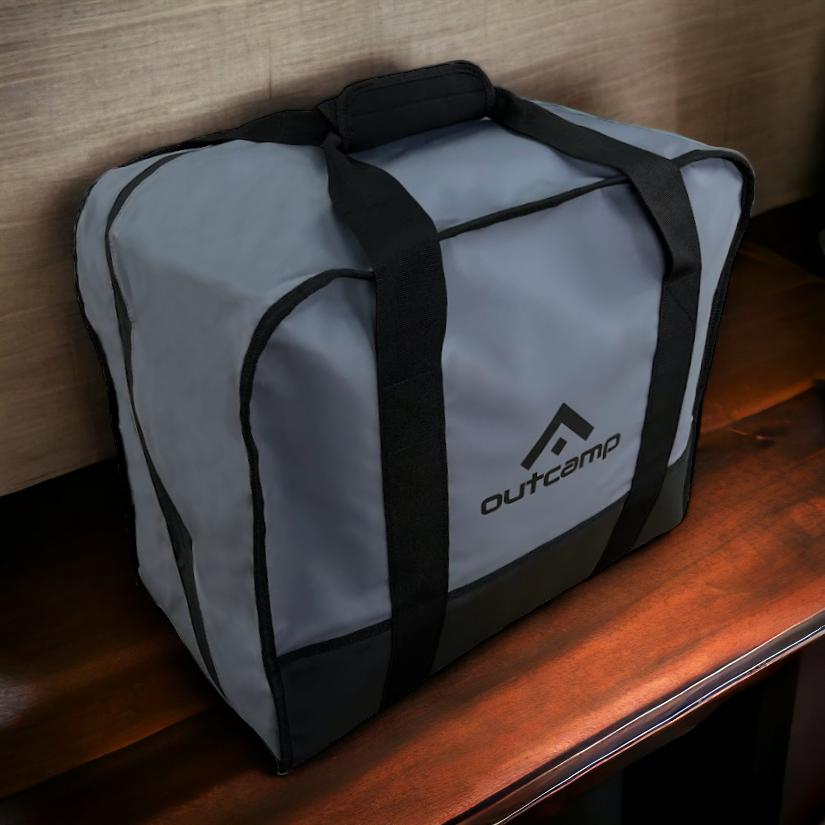
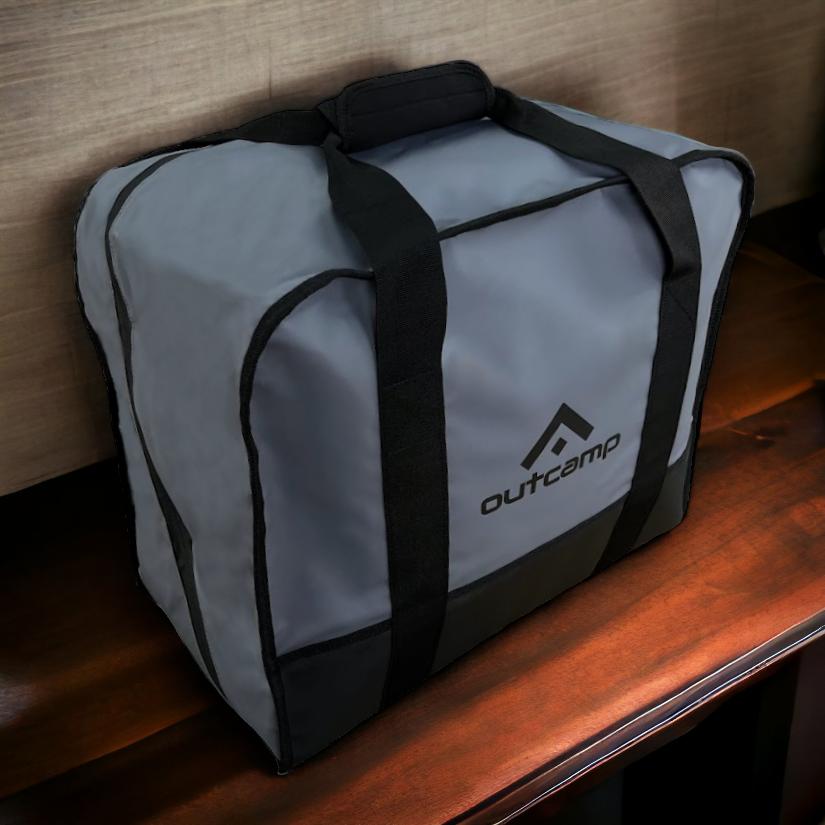
Outcamp gear that actually helps
Two of the most common pre-trip failures we hear about are the battery system and the comms. A decent battery monitor in the 12V accessories range stops you guessing what your house battery is doing — guessing is what kills off-grid trips. And if you are committing to the dry season run, the Starlink Mini accessories range covers the cabling, mounts and shielding that makes a Starlink work cleanly off the van's 12V system without melting wiring or tripping fuses.
Last thing
If you tick everything on this list and something still goes sideways at the Daly Waters Pub, that is just touring. Welcome to the dry season. Drop a comment with the one thing you always remember to pack that nobody else does — the longer the list of weird wisdom we collect here, the better the next bloke prepping for the trip will get to start.
---




Leave a comment (all fields required)