


Modular Mount Systems for Starlink Mini and Mobile Workplaces: An Australian Guide
Anyone who has spent time fitting out a work vehicle, marine helm, or remote operations base knows the frustration of single-purpose mounts. You buy a bracket for a tablet, another for a phone holder, another for a Starlink Mini, and within months your dashboard or console looks like a forest of plastic arms — most of them poorly aligned, half of them rattling loose on a corrugated road. A modular mount system built around a standard ball and socket fixes that. It treats every device on your setup as a node in the same ecosystem, so a single base on the bull bar can hold a Starlink dish today, a fish finder next weekend, and a tablet running paddock-mapping software the week after.
For Australian workers in mining, agriculture, construction, marine and emergency services — and for serious recreational users running a 4x4 or caravan as a mobile office — the case for a modular system is straightforward. You only have so much real estate on a vehicle, and you need every component to survive heat, dust and corrugations. The 1.5-inch ball mount standard, sometimes called the B-size socket, is the closest thing the industry has to a universal connector. This guide walks through how the system works, what bases and arms make sense for different Australian environments, and how to build a setup that scales as your needs change.
Why a Modular Mount System Beats Single-Purpose Mounts
The modular mount idea is not new — heavy-vehicle fitters and marine electronics installers have used the 1.5-inch ball socket standard for over two decades. What is new is the variety of devices that now need mounting on a single work vehicle: a Starlink Mini for connectivity, a tablet for telemetry or job management, sometimes a second screen for camera feeds, plus the usual phones and radios. A modular approach turns those needs into a coherent system instead of a tangle of one-offs.
The principle is simple. Every base in the system terminates in the same 1.5-inch rubber-coated metal ball. Every device cradle terminates in a matching socket. A double socket arm with a single thumb screw connects the two, locks both balls in place, and lets you re-aim the device with a thirty-second adjustment. Add another base elsewhere on the vehicle and the same cradle can move there. Add a different cradle and the same base can hold a different device. The savings in cost, weight and dashboard real estate add up quickly.
The Problem With One-Off Mounts
Proprietary mounts feel cheap until you start counting them. A dedicated tablet bracket, a dedicated phone cradle, a dedicated Starlink Mini mount — each one consumes a fixed location and cannot be repurposed. When you sell the tablet or upgrade to a different device, the bracket goes in the bin. When the job changes and you no longer need the tablet on the dashboard but instead need it on the passenger A-pillar, you start over.
One-off mounts also struggle on Australian roads. The vibration profile of a corrugated outback track will work loose any joint that depends on a single weak point. Most consumer-grade mounts use plastic threads or shallow ball joints that creep under load, leaving your tablet drifting downward over the course of a long drive. By the time you reach the mine gate or the back paddock, your screen is pointing at the floor.
The deeper issue is alignment. Putting two or three independent mounts side by side rarely produces a result that looks or works well. Each mount has its own geometry, its own sight lines and its own failure modes. The result is a cluttered, busy workspace that fights you every time you reach for something.
How a 1.5-Inch Ball System Works
A 1.5-inch ball mount system has three parts: a base with a ball, a connecting arm with two sockets, and a device cradle with a ball of its own. The arm is the key piece. It clamps both balls between rubber-lined cups, and a single knob or thumb screw tightens the whole assembly. When loose, the entire assembly articulates freely. When tight, both balls lock in place and stay there. Vibration cannot work the joint loose because the rubber lining grips the ball over its full surface, not just at a single contact point.
Outcamp stocks Double Socket Arms in three lengths — 8.7cm, 15cm and 23cm — which cover almost every situation you will encounter. The shortest arm is ideal when the base and the device need to sit close together, such as a phone or compact tablet near a roof rack-mounted Starlink. The longer arms come into their own when you need to reach across a dashboard, around an A-pillar, or up to a roll cage from a base mounted lower down.
The geometry is forgiving. Because both balls are free to rotate in any direction, you can mount the base at almost any angle and still bring the device to the orientation you need. That is what makes the system survive the move from one vehicle to another. A base that worked on a flat dashboard in a Hilux will still work on a curved dashboard in a Land Cruiser, because the arm absorbs the difference.
Building a Setup That Grows With Your Needs
The advantage of a modular system reveals itself over time. Most operators start with one device — usually a Starlink Mini or a navigation tablet — and add more later as they discover new uses. With a 1.5-inch ball system, every addition is incremental. You buy one new base, or one new cradle, and clip it into the existing arms.
This matters in industries where capability requirements shift. A construction site supervisor might begin with a Starlink Mini for video calls and progress reporting, then add a tablet running BIM software, then add a phone cradle for field calls. An agricultural contractor might start with a tablet for spray records and add a Starlink dish when the property goes to direct-uploaded yield monitoring. In both cases, the modular base on the vehicle is the constant.
The same logic applies when you change vehicles. The cradles, arms and devices move across; only the base needs to be re-fitted. Compared to throwing out a vehicle's worth of proprietary mounts every time you upgrade the ute, the lifetime cost of a modular system is dramatically lower.
Mount Bases for Every Australian Work Vehicle and Site
The base is where the modular system meets the real world. It is the part that bolts, clamps, sticks or screws to the vehicle, and it determines how secure the rest of the assembly will be. Outcamp's range of 1.5-inch ball mount bases is wide enough to cover almost every Australian work environment, from a heavy-duty mining ute to a marine helm to a quick-deploy emergency response vehicle.
Choosing the right base is mostly a question of how permanent the installation needs to be, and what surface you have to work with. Permanent installations on metal panels favour drilled bases. Quick-attach setups for shared vehicles favour clamps and suction. Marine and agricultural rail-mounted setups favour U-bolts and clamp bases sized for round tubing.
AMPS, Drill-Down and Diamond Bases for Permanent Installations
The AMPS pattern is the heavy-vehicle standard for permanent device mounting. It uses a four-hole rectangular bolt pattern that has been adopted across the trucking, two-way radio and mobile data terminal industries. An AMPS base in the modular system gives you a 1.5-inch ball on top of a known, supported bolt pattern — which means it bolts straight into any factory or aftermarket mounting plate that follows the same standard.
Drill-down bases are the right choice when you are committing to a single fixed location. They use either two or four screws to attach directly to a flat metal or composite surface, and they sit lower than most clamp-style alternatives. For a workspace where the device location will not change for the life of the vehicle — a fleet ute, a permanent marine console, a fixed control room operator station — the drill-down approach is hard to beat.
Diamond bases sit between the two. They share the AMPS-style fixed bolt pattern but in a more compact diamond shape, useful when you need to anchor a ball into a smaller area. They are popular for retrofits where a previous mount has been removed and the existing screw holes are not on the AMPS rectangle.
Suction, Clamp and U-Bolt Bases for Quick Attachment
Not every workplace tolerates drilled holes. Hire vehicles, leased fleet utes, shared mining light vehicles and marine vessels with strict no-drill policies all need a clamp or suction approach. The good news is that modern clamp and suction bases, when correctly sized, hold a Starlink Mini or tablet just as well as a bolted base for everyday use.
Suction bases work best on glass and smooth painted panels. They use a twist-lock cam to pull the cup tight against the surface, creating a vacuum that holds for days under most conditions. For Australian summer heat, where dashboard temperatures can climb past sixty degrees, look for suction bases with a heat-resistant rubber cup and a metal locking arm — cheaper plastic versions can creep in extreme conditions.
Clamp bases attach to round tubing of various sizes. They are the right choice for roll cages, light bars, marine rails, agricultural rails and roof rack tubing. U-bolt bases are similar but use a metal U-bracket and two nuts, giving a stronger hold for heavy devices on larger tubing. A grab bar mount, designed for the smaller-diameter handles found in some 4x4s and tractors, is the lightest version of the same idea.
Marine, Grab Bar and Specialty Bases
Marine environments need bases built for salt and corrosion. The combination of constant moisture, UV and salt spray will destroy any base built around standard mild steel or untreated aluminium within a season. Stainless steel hardware and properly sealed rubber gaskets are non-negotiable. The Starlink Mini Marine Rail Mount, sized for 25-32mm tubing, is one example of the marine-specific approach — it secures to the standard rail diameter found on most Australian recreational and commercial vessels.
Grab bar bases serve a different niche. They attach to the smaller-diameter handles found in the cabs of tractors, quad bikes, and some 4x4s, providing a base for a tablet or phone in environments where a dashboard mount is impractical. For an agricultural contractor moving between tractor and ute on a single day, a grab bar base in each cab plus a single tablet cradle in the kit bag means the same device works in both vehicles.
Specialty bases extend the system in unusual directions. Fish finder plate adapters convert the standard ball mount system to the bolt pattern used by sounders and chartplotters, useful when you want to repurpose an old fish finder mounting hole. VESA adapters give you a 1.5-inch ball on the back of any monitor that follows the 75x75mm or 100x100mm VESA pattern, which opens the door to mounting larger displays for camera feeds, heads-up displays or supervisor dashboards.
Connecting Devices: Arms, Adapters and Accessories
The arm and adapter ecosystem is where the modular system earns its name. A small set of arms and adapters covers almost every device you might want to mount, and the cost of expanding the system once the base is in place is low. This is also where modular mounts pull ahead of any single-purpose alternative — once you have a base, adding a second device is just an arm and a cradle.
The arm is the structural piece. The adapters convert the standard ball into whatever the device requires. Together they let a single base support a Starlink Mini one minute, a tablet the next, and a camera or sounder the week after.
Double Socket Arms in Three Lengths
The 8.7cm arm is the workhorse for compact installations. When the base sits within reach of the device — a phone cradle close to the dashboard ball, or a tablet near a windscreen suction base — the short arm gives you a rigid, low-profile connection that does not sway under vibration. Most light-duty installations end here.
The 15cm arm is the most flexible all-rounder. It gives enough reach to clear most obstructions, raise a tablet to a comfortable viewing angle, or move a Starlink dish past a roof rack rail. For most operators building their first modular setup, the 15cm arm is the one to start with — it works in more situations than either of the other two.
The 23cm arm is the heavy-reach option. It is the right choice when the base has to sit far from the device, such as a Starlink Mini mounted on a bull bar with the cable run feeding into the cabin. The longer the arm, the more torque any device weight creates on the ball joints, so this is the version that benefits most from a high-quality stainless thumb screw and properly machined sockets. The arm also pays off when you need to position a tablet over a centre console without it interfering with the gear selector or hand brake.
VESA, Camera and Fish Finder Adapters
The VESA 75x75 adapter unlocks an entire category of mounting options. Any monitor, screen or all-in-one display following the standard VESA pattern can now sit on the modular system. For a film production unit running a remote location shoot, that means a director's monitor on the same arm system as the Starlink Mini. For a security or site supervisor monitoring multiple cameras, it means a screen on the dashboard that travels between vehicles.
The camera thread adapter takes the standard 1/4-20 thread used by every photographic camera, action camera mount and tripod head and converts it to a 1.5-inch ball. Every action camera, every dashcam with a tripod thread, every photographic camera and most lighting accessories now drop into the modular system. The same adapter is invaluable for emergency services and field assessors who need a steady camera position for documentation.
The fish finder plate adapter is built for the marine and recreational fishing market, but it has wider uses. Any device with the four-hole bolt pattern of a fish finder or compact chartplotter mount drops onto a 1.5-inch ball. Combined with the modular system, a marine operator can move a sounder between vessels, between the helm and a kayak rod holder, or onto an entirely different vehicle for inland use.
The Triple Connector for Multi-Device Setups
The triple connector is one of those parts you do not think you need until you have one. It is a single piece of metal with three sockets instead of two, letting you branch a single arm into two devices. A typical use case is a tablet plus a phone on the same dashboard ball, both held independently but supported by a single base.
For a Starlink Mini installation, the triple connector lets you piggyback another device on the same base. A Mini on the bull bar with a small router or signal repeater alongside it. A Mini on a roof rack ball with a UHF antenna mount on the same point. The branching design means you do not need a second drilled or clamped base when one will do.
The downside of the triple connector is the extra mass on the base. Two devices cantilevered off a single ball put more torque on the base than a single device, so it works best on bolted or U-bolt bases rather than suction. Plan the geometry before drilling — running a quick mock-up with cardboard cutouts of the device sizes is worth the five minutes it takes.
Real-World Setups for Australian Workplaces
Theory is one thing; what does this actually look like on a working vehicle or vessel in Australia? The following three setups are typical across Outcamp's customer base and illustrate how the modular system comes together in different environments. Each one starts from a single Starlink Mini base and grows from there.
The patterns are deliberately conservative. Every component listed is something Outcamp stocks, and the part counts are the actual minimum needed to make each setup work. Real installations often add one or two extra arms or cradles for tablets, phones or radios — but the core stays the same.
The Mining Ute or Light Vehicle
A typical mining light vehicle starts with a Starlink Mini BullBar/Railing Mount at the front for the dish, then adds an interior modular base for tablets and phones. The dish base is fixed; everything else lives on the ball mount system. A 15cm arm and a tablet cradle on the dashboard cover most operator needs, with the option to add a phone holder on a 8.7cm arm to a second small base on the A-pillar.
The reason mining sites favour modular is shared-vehicle policy. Light vehicles often rotate between operators across a roster, so what works for the day shift driver needs to also work for the night shift. With modular cradles, each operator can re-aim and re-tension the arms without any tools, but the base layout stays consistent across the fleet.
Power management completes the picture. A Starlink Mini 12V to 24V Power Supply (Anderson Plug) draws from the vehicle's accessory circuit, and the modular tablet cradles can incorporate USB-C charging. The result is a vehicle that operators step into, plug in, and immediately have everything they need running — pit-to-office video calls, telemetry uploads, tablet-based safety reporting — without fiddling with mounts every shift.
The Agricultural Quad or Tractor Cab
An agricultural setup looks different because the vehicle does. Tractor cabs have less flat dashboard area, more glass, and more rail and grab handle real estate. The modular system suits this perfectly. A grab bar base on the cab handle holds the tablet for paddock mapping or spray records. A second base, often a U-bolt base on a roof or fender rail, holds a Starlink Mini.
For a contractor moving between tractor, header and ute on a single day, the same tablet cradle moves between three grab bar bases — one in each cab. The cradle is the expensive part; the bases are inexpensive enough to leave one in each vehicle. The tablet itself spends its day moving between machines, never spending more than a few seconds being mounted or unmounted.
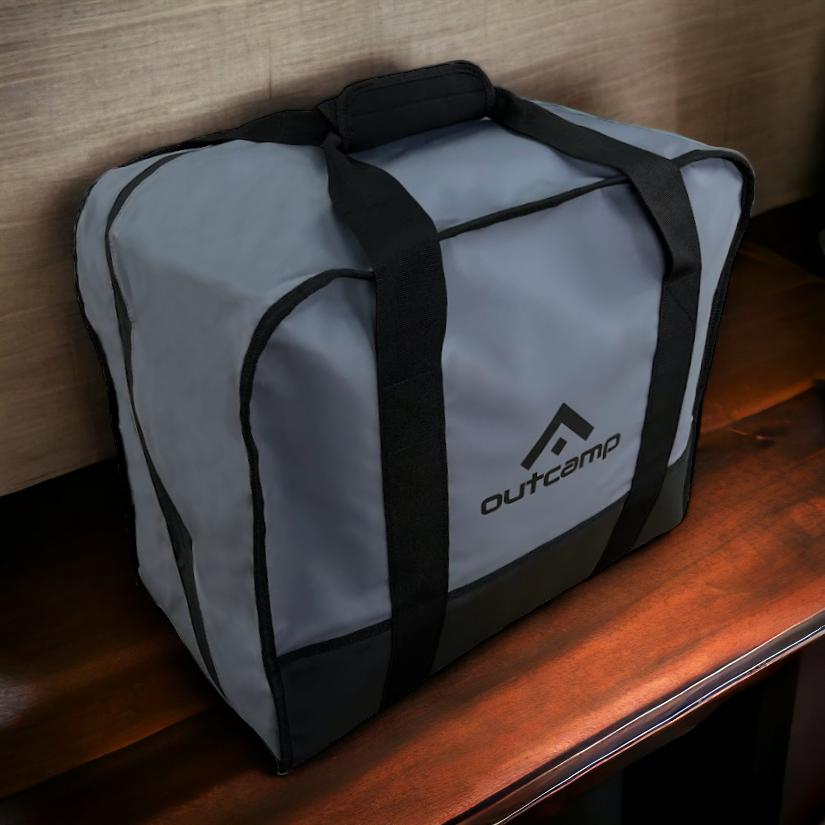
For larger properties running cattle on remote paddocks, the same setup extends to the quad bike or side-by-side. A small base on the front rack or roll cage, a Starlink Mini in a Starlink Mini Carry Bag for the trip out, and a tablet cradle for stock data entry. The modular system is the connecting tissue that lets one set of devices work across an entire property's vehicle fleet.
The Marine Helm or Fishing Boat
Marine setups demand the most from any mounting system because saltwater is unforgiving. Stainless steel hardware, sealed sockets and corrosion-resistant clamps are essential, and any compromise in materials shows up within a season. The Starlink Mini Marine Rail Mount for the dish itself is the typical starting point, with a separate clamp base on the helm rail for a tablet running navigation or a sounder.
The fish finder plate adapter is particularly useful here. Many vessels already have a fish finder mounting plate from a previous installation; rather than drilling new holes, the plate adapter lets the modular system drop into the existing pattern. The result is a clean, low-profile base that does not advertise itself when the boat is parked at the marina.
For commercial fishing or aquaculture vessels, the modular system extends to the cabin or wheelhouse. A Starlink Mini on the rail provides the connectivity, and tablets at the helm and below decks share a single set of cradles that move where they are needed. For a small fleet, standardising on the modular system across boats means a single inventory of arms and cradles serves the whole operation.
Building Your Modular System the Right Way
The temptation when starting out is to buy too much at once. Resist it. Begin with one base, one arm and one cradle for the device you most need to mount. Live with that setup for a few weeks. You will quickly discover where you actually want a second device, what arm length suits your geometry, and whether you need a stronger or a more flexible base. Then add the second component, and so on.
This incremental approach saves money and produces a setup that actually works for your job. It also gives you time to understand the system, which matters because the modular world has a lot of small accessories — cable clips, ball spacers, wider sockets, adapter plates — that you only know you need once you start using it. The Outcamp range covers all of these, and the staff are used to talking customers through what makes sense for a particular vehicle or vessel.
If you are running a Starlink Mini and any kind of mobile office or remote workplace, the modular mount system is the foundation that makes the rest of the kit cohere. Start with a base, an arm and a cradle. Add power and protection from the Starlink Mini Explorer Bundle Pack or the carry bag and case range. Build out from there as your work changes. The system was designed to grow with you, and across Australian mining, agriculture, marine and trades, that is exactly what it does.




Leave a comment (all fields required)