


Telemedicine for Remote Australian Workforces: How Starlink Mini Bridges the Healthcare Gap
When a station hand takes a fall on a property three hours from the nearest town, or a FIFO worker on a remote mine site develops chest pain at 2am, the next decision can shape an entire week. Evacuate, wait it out, or make a call. For decades, that decision has been made with limited information and even more limited communication, often relying on a satellite phone, a paper triage chart and a long drive to the nearest clinic. Reliable internet changes that calculus completely, and Starlink Mini has put high-bandwidth telemedicine within reach of even the most isolated Australian workplaces.
This shift matters far beyond mining camps and pastoral stations. Construction crews on greenfield highway projects, forestry teams in old-growth coupes, oil and gas crews on remote leases, and emergency services running disaster recovery base camps all face the same fundamental problem: workers far from clinical care, with health needs that do not pause for distance. The growing maturity of Starlink Mini hardware, combined with purpose-built power and mounting accessories, means a properly configured telemedicine kit can now travel anywhere a tradie or technician can. This article looks at how it works, what it changes, and how to put a kit together that holds up in the field.
The Healthcare Challenge for Remote Australian Workforces
Remote work in Australia is not simply work that happens far from a city. It is work that happens at the operational edge of national health infrastructure, where the closest hospital might be hundreds of kilometres away and the nearest GP might rotate through a community once a fortnight. For employers, that distance translates directly into risk, cost and worker welfare obligations that conventional health and safety systems were never designed to handle.
The result is that a quiet but serious gap has opened between the safety expectations of modern Australian workplaces and the practical realities of delivering healthcare to the people in them. Telemedicine is the most credible tool for closing that gap, but it depends entirely on something remote sites have always struggled with: reliable, high-quality internet.
The Tyranny of Distance in Modern Australian Workplaces
Australia has roughly seven million square kilometres of land and most of its population clustered along a thin coastal strip. The remaining interior is where much of the country's primary economic activity actually happens. Mines, cattle stations, irrigation farms, gas fields, ports, ranger stations, transmission corridors and forestry operations all sit deep inside that interior, often hours from a regional centre and a full day from a tertiary hospital.
For workers in those locations, the consequences are not abstract. A fencing contractor in the Pilbara might be eight hours from a town with a doctor. A horticultural worker in the Riverina could be two hours from the nearest GP, and that GP might already be running a four-week wait list. A linesman repairing a remote substation could be the only person on site, with no way to escalate a non-life-threatening but worrying symptom in the moment.
The legacy response to this distance has been triage by phone, with limited data and high stakes for the person making the call. Telemedicine flips that, but only if the connection is strong enough to actually carry a video consultation, share images and audio of the patient, and let the clinician on the other end see and hear what is happening in real time.
Why Conventional Connectivity Falls Short
Mobile networks in Australia are excellent in metropolitan and regional centres and patchy almost everywhere else. Coverage maps look impressive on operator websites, but anyone who has driven beyond the Black Stump knows the reality is closer to "good in town, gone within five kilometres". 4G and 5G are simply not engineered for the population densities of remote Australia, and the economics of building more towers in low-population country have not changed.
Older satellite services filled some of the gap but came with significant compromises. Latency on geostationary satellite links was often more than 600 milliseconds, which is workable for email but extremely uncomfortable for a real-time video consultation. Bandwidth was usually metered, costs were high, and equipment was bulky enough that it rarely moved with the workforce. The connection might exist somewhere on site, but it was almost never in the place a worker actually needed it.
Starlink's low-Earth-orbit constellation has rewritten that equation. Latency on a Starlink Mini link typically sits around 30 to 60 milliseconds, which is comparable to a metropolitan fixed-line broadband connection. Throughput is more than enough for HD video, and the hardware itself is small enough to live in a vehicle or a tradie's pack. That combination is what finally makes meaningful telemedicine possible in places it previously was not.
The Real Cost of Healthcare Access Failures
The costs of poor healthcare access on remote sites are easy to underestimate because they are spread across so many ledgers. Direct medical evacuation costs are obvious. A Royal Flying Doctor Service evacuation can run into tens of thousands of dollars per event, and a road evacuation pulls a vehicle, a driver and often a supervisor away from productive work for the better part of a day.
Less visible costs sit in productivity, retention and morale. Workers who cannot get access to a GP for routine issues let those issues grow until they require emergency care, often at the worst possible time for a project schedule. Mental health concerns are particularly affected, with workers reluctant to raise them because they feel doing so requires a long trip to town. Companies that solve the access problem report higher retention, fewer unplanned departures and better engagement scores during long swings.
The most serious costs are human. Delayed diagnoses, missed warning signs and avoidable deteriorations are documented across remote industries in Australia. None of these are inevitable, and most of them are within reach of being prevented by a properly equipped telemedicine setup that travels with the workforce rather than waiting for them to come back to base.
How Starlink Mini Enables Practical Telemedicine on Remote Sites
Starlink Mini is not a medical device, and it does not need to be. What it does is provide a stable, low-latency, reasonably high-bandwidth internet link in places that previously had nothing comparable. That is the foundation telemedicine has been waiting for in remote Australia, and it is enough to enable the full range of consultation, monitoring and triage workflows that already work well in connected environments.
The interesting part is not the technology in isolation, but the way it lets clinicians, employers and workers interact differently with healthcare risk. A doctor who can see a wound, a rash or a worker's colour and breathing pattern in real time is making a fundamentally different decision to one who is hearing a description over a crackly satphone. Once that capability exists in the field, the medical playbook on remote sites changes quickly.
Bandwidth and Latency Requirements for Video Consultations
A standard HD video consultation needs roughly 1.5 to 3 Mbps of stable upload and download bandwidth, with latency below about 200 milliseconds for the experience to feel natural. Starlink Mini comfortably exceeds those thresholds on a clear sky view, with download speeds frequently above 100 Mbps and upload speeds typically in the 5 to 20 Mbps range depending on conditions.
Latency is where Starlink really separates itself from older satellite services. The constellation's low-Earth-orbit satellites are roughly 550 kilometres up, compared with around 36,000 kilometres for geostationary services, and that geometric difference translates directly into a much faster round trip. Conversations on a Starlink Mini link feel like ordinary video calls rather than the awkward, half-duplex experience clinicians remember from older satellite systems.
The practical impact is that consultations can use familiar consumer-grade tools. Telehealth platforms, GP video booking services, mental health apps and hospital outreach programs all work over Starlink Mini without special engineering. That matters because it means clinicians do not need to learn a new system to consult with remote workers, and workers do not need to be talked through anything unusual to start a call.
Real-Time Diagnostic Tools and Connected Medical Devices
Beyond simple video, modern telemedicine increasingly involves connected diagnostic devices. Digital stethoscopes, otoscopes, dermatoscopes, blood pressure monitors and pulse oximeters can all stream data to a clinician during a consultation. Each of these devices is comparatively undemanding individually, but they need the connection to be reliable for the duration of a call rather than just average speed over a long window.
Starlink Mini's consistency is what makes those workflows realistic on a remote site. With a clear sky view and a stable mount, the link holds throughout a typical 20 to 40 minute consultation without the drops that would force a clinician to fall back to descriptions over voice. That consistency is also what makes it possible to share imaging in the moment, send a photograph of an injury at sufficient resolution for a doctor to assess it, or transmit ECG output from a worksite first-aid kit to a hospital cardiologist for review.
The same setup also supports remote patient monitoring outside of acute consultations. A worker recovering from a minor injury can wear a connected vital signs monitor for a few days, with their data streaming back to the company doctor or occupational health team. That kind of low-touch ongoing oversight reduces the need for travel, builds trust, and lets clinicians spot deterioration early.
Mental Health Support Through Reliable Video Connection
Mental health is one of the most pressing issues in remote Australian industries. FIFO workers, long-haul drivers, fly camp staff and isolated farm workers all carry elevated risk profiles, and the structural barriers to accessing support are substantial. Cost, distance, perceived stigma and fatigue at the end of a long shift all combine to make formal services harder to use than they should be.
A reliable telemedicine link does not solve that culture problem on its own, but it removes one of the largest practical obstacles to engagement. A worker who can have a proper video session with a psychologist or counsellor in the dongas at the end of a swing, without flying out or driving into town, is more likely to actually do it. Confidentiality is preserved, the experience feels normal, and the session can fit around work patterns that conventional clinic hours never accommodate.
Companies that have invested in this capability often pair it with internal mental health programs, peer support networks and occupational health services. Starlink Mini becomes the connective tissue that makes those programs work in the field rather than only in the head office. The flow-on effects, in retention, lost time injury rates and general wellbeing, are difficult to attribute precisely but are consistently reported as positive across operators that have made the shift.
Building a Field-Ready Telemedicine Setup with Outcamp
The technology behind a workable remote telemedicine setup is straightforward in principle and surprisingly fiddly in practice. A Starlink Mini dish is the core, but everything around it, the power, the mounting, the protection of the hardware as it moves between sites, has to hold up in conditions that punish equipment quickly. Outcamp's product range is designed around exactly those conditions, and a few well-chosen accessories make a substantial difference to how reliably the kit performs when it is actually needed.
The goal is a setup that someone can take from a vehicle to a smoko shed, position quickly, power for the duration of a consultation and pack down again without thinking about it. That requires deliberate choices in three areas: power, mounting and protection. Each is worth thinking through before the kit is needed in anger.
Reliable Power: Keeping the Connection Alive for Critical Calls
Telemedicine consultations are not casual browsing. A connection that drops in the middle of a clinical decision is more than an inconvenience, and worker confidence in the system depends heavily on it not happening. Power resilience matters as much as the dish itself, particularly on sites without permanent mains supply.
For vehicle-based setups, the Starlink Mini 12V to 30V Power Supply (Anderson Plug) and the Starlink Mini 12V to 24V Power Supply (Anderson Plug) are the workhorses, taking dual-battery or auxiliary power and feeding it cleanly to the dish over an Anderson SB50 connection. The Starlink Mini Cigarette Lighter Power Supply (165W USB-C) covers situations where Anderson plugs are not wired in, and the Starlink Mini Car Power Adapter (12V/24V to 20V DC) is the simplest option for a quick hookup. Each pairs cleanly with cables like the Starlink Mini Anderson Plug to DC Power Cable (5.0M) for clean routing in vehicles and shipping containers.
Battery backup is where a setup goes from "usually works" to "works when it matters". The Starlink Mini Portable UPS Power Supply (7-10 Hours) is purpose built to carry a Mini through a long shift or an extended consultation if a vehicle has to move, while the PeakDo LinkPower 2 Portable Power Bank (99Wh) is small enough to live in a medical kit. For tradies, the Starlink Mini Makita 18V Battery Connector and the Starlink Mini Milwaukee 18V Battery Adapter let standard power tool batteries become an emergency power source, which is often exactly what is on hand at a remote worksite.
Mounting and Positioning for Consistent Signal
A Starlink Mini link is only as good as the dish's view of the sky. Trees, vehicle bodywork, even the side of a shipping container can degrade an otherwise excellent connection. Mounting choices need to put the dish where it can see the sky reliably, and they need to do that quickly enough that nobody is fighting hardware during a stressful situation.
For vehicle-based telemedicine kits, the Starlink Mini Roof Rack Mount and the Starlink Mini Magnetic Mount are usually the right starting points, with the MagLock Pro Magnetic Vehicle Mount adding extra security for high-vibration situations. The Starlink Mini Bull Bar/Railing Mount is useful on dedicated work vehicles where a permanent fitting is acceptable, and the Starlink Mini Sports Bar Ute Mount handles the Australian-specific case of a tray-back ute with a sports bar already in place.
When the consultation is happening in a fly camp or temporary base rather than in a vehicle, the Starlink Mini Tripod Mount comes into its own. It lets a kit deploy on grass, gravel or a packed dirt pad in under a minute, with no need for permanent fixings. For agricultural settings, the Starlink Mini Agricultural Mount (25-32mm rail) adapts cleanly to common stock yard and machinery rails, and the Starlink Mini Clamp on Universal Mount handles a surprising number of awkward attachment points without modification.
Protection and Portability for Field Medical Kits
Telemedicine hardware has to live in vehicles, sheds and pack racks for long stretches, often in conditions of dust, heat and vibration that consumer electronics were not designed for. Protection and portability are not optional extras, they are the difference between a kit that holds up over a swing and one that fails in the third week.
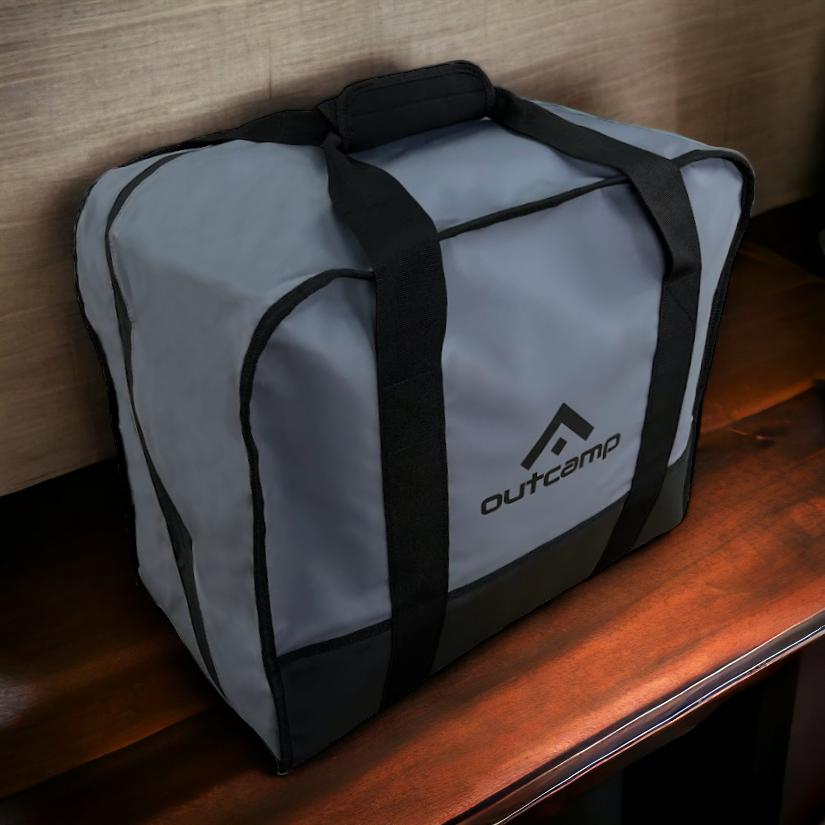
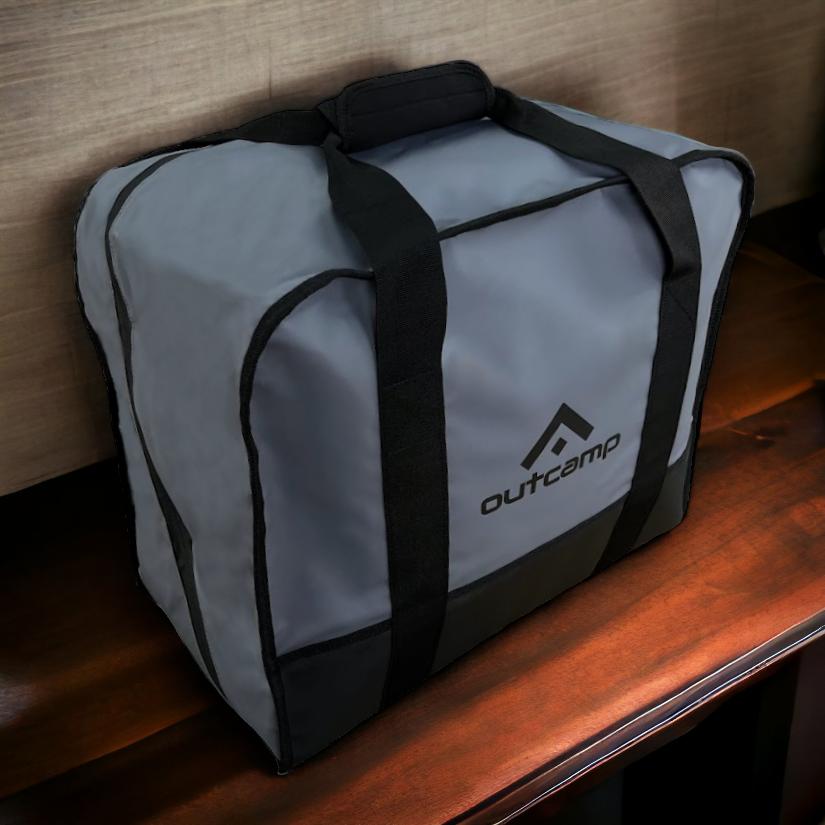
The Starlink Mini Hard Protective Travel Case is the right choice for kits that travel by air, vehicle or boat between sites, with custom-cut foam that keeps the dish, cables and small accessories together. The Starlink Mini Travel Backpack (USB Charging Port & TSA Lock) suits remote area health workers and FIFO supervisors who need to carry the kit on foot, while the Starlink Mini Carry Bag is the everyday option for vehicle-based kits that come in and out daily.
For long-term protection of a deployed dish, the Starlink Mini Silicone Cover and the Starlink Mini Clear Protective Cover handle the day-to-day work of keeping dust, light rain and UV off the hardware. The Starlink Mini Dish Protector Shield is worth considering on sites with significant flying debris risk, particularly in mining and construction. The Starlink Mini Explorer Bundle Pack rolls up the most useful field protection items into a single starter kit, which is often the simplest way to equip a new vehicle or fly camp.
Closing the Healthcare Gap, One Worksite at a Time
Telemedicine in remote Australia has been technically possible for years, but practically constrained by the gap between what clinicians could do over the available connection and what workers actually needed. Starlink Mini closes that gap. Combined with thoughtful power, mounting and protection choices, it puts genuine telemedicine within reach of mining crews, farms, construction sites, forestry teams and emergency services in places where it was previously a polite fiction.
The shift this enables is bigger than any single product. Remote workforces become safer, healthcare becomes more equitable, mental health support becomes accessible at the moment of need rather than at the next town visit, and employers gain a tool that genuinely improves their duty of care obligations. None of that happens automatically, and the kit has to be put together with some care, but the components exist now and the cost is well within reach of any operator that takes worker health seriously.
If you are putting together a remote telemedicine setup for a mine, station, forestry crew, construction site or emergency services unit, you can build the full kit from Outcamp, from power and mounting through to the carry case that holds it all together. Talk to the team if you want help speccing a setup for a specific site or vehicle, or browse the Starlink Mini accessory range to put one together yourself.




Leave a comment (all fields required)