


For most of the last two decades, "out of range" was just the cost of doing business in regional Australia. Stations, contractors, fencers, bore mechanics, mining services, ag pilots, surveyors, remote tradies — the whole working backbone of rural Australia — built their day around the unspoken rule that the moment you crossed the last 4G tower, the office shut.
That rule has been quietly broken in the last 18 months, and most blokes still haven't worked out how much money it's putting back in their pocket.

The thing that actually changed
The hardware part is well known. Starlink Roam brought low-earth-orbit satellite internet to anyone with a few hundred dollars and a clear view of the sky. The release of the Starlink Mini in mid-2024 made it portable enough to actually live in a vehicle full-time — about the size of a laptop, runs off 12V, draws around 25–40W on average, throws out wifi from the back of the ute.
The less-talked-about part is the mount. The Mini is light enough that you can flop it on the roof of a paddock-basher and pretend it's going to stay there, but anyone who's done a few hundred kilometres of corrugations knows what happens next. The dish slides off in the first hour, lands in the spinifex, and you find it three days later.
That's the gap a proper magnetic roof mount fills. A cast-alloy cradle with rare-earth magnets at the corners clamps onto a steel roof or bonnet hard enough to stay there through corrugations and creek crossings, and you can pull it off in two seconds when you swap vehicles or pack up. No drilling. No permanent install. No paying a sparky to put a hole in the roof of a $90,000 ute.

The catch with most magnetic mounts is the dish itself is still completely exposed up there. Stones flicked up by the front tyres on a corrugated track, low branches across a shortcut, hail in a summer storm, the occasional bird strike in cattle country — any one of them can crack the housing on a $599 piece of kit that you need working tomorrow. The MagLock Pro solves that with a bolt-on polycarbonate shield that wraps the dish in 360-degree protection without affecting signal performance. That's the bit that turns a magnetic mount from "fine for a trip to the caravan park" into "trust it on a week-long Kimberley run."

What it means for the working day
Talk to a station manager in central Queensland or a fencing contractor west of Cobar and you'll hear the same set of stories.
- Quotes go out the day they're asked for. A grazier in mustering yards 40 km from the homestead can take a photo of a busted gate latch, send it to the engineer, and have a quote back before lunch. The job that used to wait until Friday gets booked Tuesday.
- Crew check-ins actually happen. A two-man fencing team can fire a quick voice message to base every couple of hours instead of relying on a sat phone they hope still has battery. The sole-trader fencer working a 30-day stretch in the Channel Country can WhatsApp the kids before bedtime.
- Bookings, banking, BAS — done from the swag. The bookkeeper sends through invoices that need approving and they get cleared from a camp chair instead of piling up for a week until the bloke gets back to town.
- Diagnostics from the manufacturer. A bore mechanic with a Grundfos pump that won't start can video-call the technical line, hold the phone over the controller, and walk through the fault tree in 20 minutes. Used to be a four-hour drive back to a town with reception, then a four-hour drive back the next day.
None of this is glamorous. It's the unsexy operational margin that decides whether a small rural business limps or runs.
The safety side nobody puts on a brochure
The other half of the story is the one that doesn't sell as well as the productivity numbers but matters more.
According to the Australian Institute of Health and Welfare, people in remote and very remote areas are 1.4 times more likely to die from injury than those in major cities, with road crashes and workplace incidents on stations and farms a significant contributor. Communications gaps are part of the picture — a station hand who comes off a quad bike in a paddock with no reception is a different problem than one who can hit a wifi-calling SOS the moment they get back on their feet.
The Personal Locator Beacon (PLB) is still the gold standard for life-or-death emergencies and absolutely should be in the vehicle. But the gap between "I'm fine, just running late" and "I'm hurt, send help" is the gap that mobile reception used to cover for everyone in town and abandoned everyone the moment they hit dirt. A satellite dish on the roof closes most of that gap for a few hundred bucks of kit and around $50 a month for the data plan.
For a sole trader working alone, that's the difference between a partner who sleeps and a partner who lies awake watching the driveway.
The setup that actually works on a working ute
For a ute, troopy, mine-spec LandCruiser or station Hilux that earns a living, the practical setup is three pieces of kit:
- Starlink Mini. Around $599 for the dish, plus a Roam plan starting at $50/month for 50GB or $190/month unlimited.
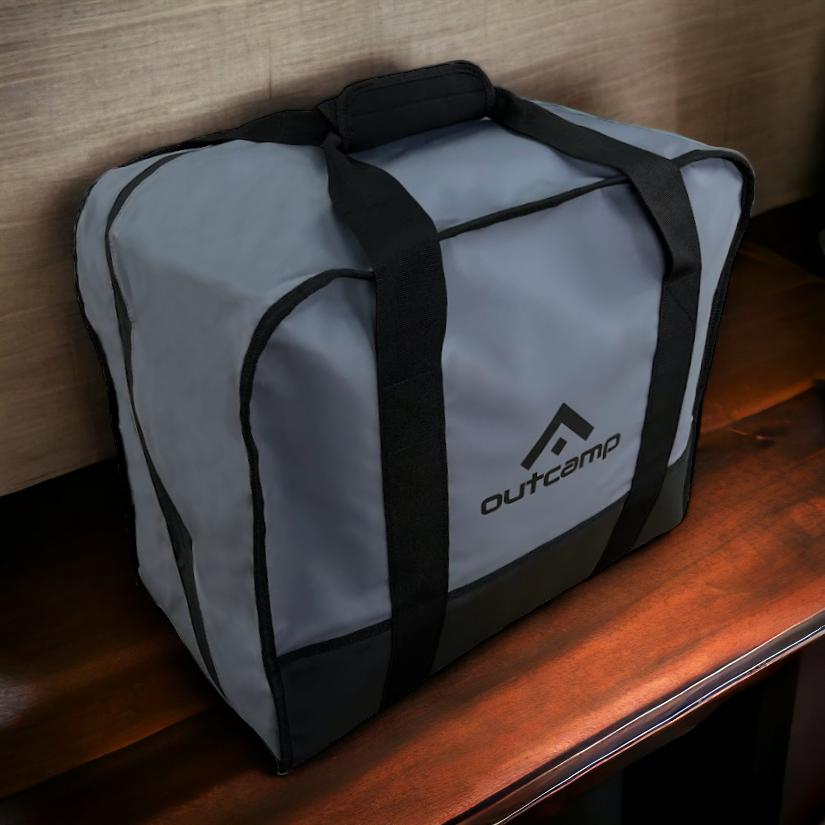
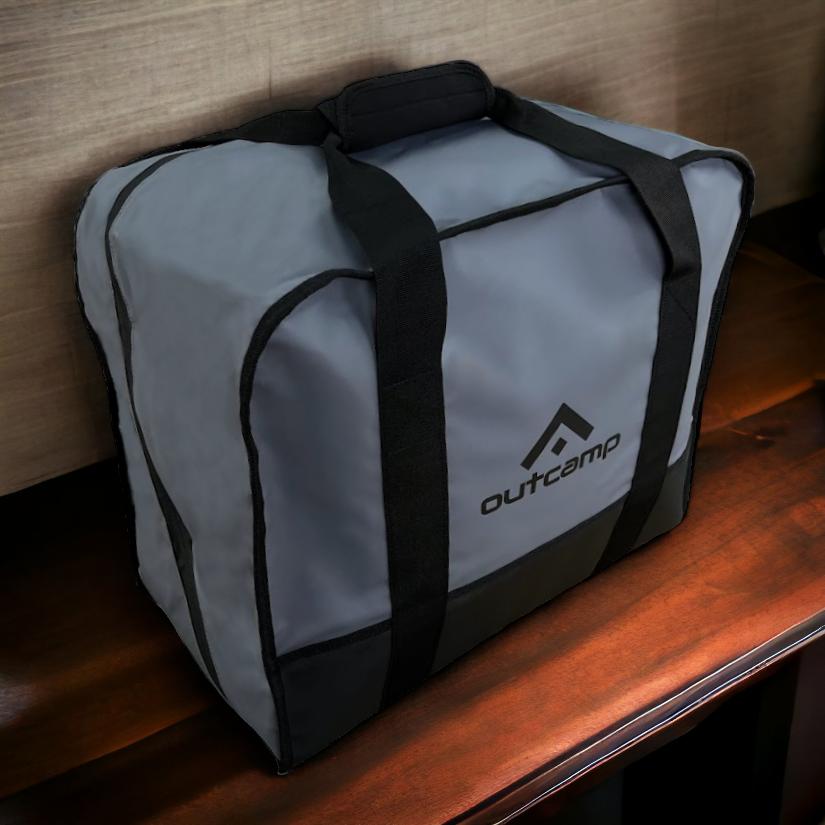
- A magnetic roof mount built for working trucks, not weekenders. The MagLock Pro Magnetic Vehicle Mount is purpose-built for this exact use case — cast-alloy cradle, four rubber-coated neodymium magnets that grip steel without scratching paint, and the bolt-on polycarbonate shield that protects the dish from stones, branches, hail and bird strikes at highway speed. Magnets unscrew individually if you'd rather bolt it down permanently to a toolbox or fleet vehicle. Available in grey or white, with bundles that range from $180 for the mount only through $335 fully kitted with the carry bag and Anderson power supply with 7m cable — pick the version that arrives ready to install for your setup.
Total hardware spend lands between roughly $780 and $940 depending on which MagLock Pro bundle you choose, plus the monthly Starlink data plan. Compared to the cost of one cancelled job, one missed quote, or one safety incident that turned into a real one because nobody could call for help, the maths is short.

What it isn't
Worth being honest about what this setup doesn't do.
- It needs sky. Heavy tree canopy, deep gorges and fully enclosed sheds will block the signal. The dish needs a clear view of most of the sky to work properly.
- It needs power. 25–40W on average isn't a lot, but if your vehicle is parked up for days with the dish running, you need a battery system that can handle it. A second battery and a small solar panel is the standard fix.
- It's not a replacement for a PLB. When something goes seriously wrong and you need search and rescue to find you with no power, no signal and no consciousness, a registered PLB is what saves you. Starlink is the layer between "all good" and "press the panic button."
- The Mini draws more in cold weather. The internal heater kicks in below freezing and bumps power draw into the 50–70W range. Worth knowing if you're winter mustering in the high country.
The bigger picture
Mobile coverage in regional Australia isn't going to materially improve in the next decade. The Federal Mobile Black Spot Program has spent over $400 million across more than ten rounds and the coverage maps still look the way they did a decade ago — a thin ribbon along the highways with great empty paddocks of nothing in between. The economics of putting a 4G tower on a hill that serves 12 properties don't work for the carriers and never will.
What's changed is that rural and remote businesses no longer have to wait for a tower to be built. The infrastructure is overhead, the kit fits in a glovebox, and a magnetic mount is what turns "I had Starlink in the camp" into "I had Starlink everywhere I worked today."
For the bloke running a small contracting business out of a single-cab ute, that's not a gadget. That's a quietly transformative piece of business equipment that pays for itself the first month it stops a job from being missed.

If you're putting the setup together, our full Starlink Mini accessories range covers the mounts, power leads, cable protection and carry bags built specifically for vehicles that work for a living.




Leave a comment (all fields required)