


Starlink Mini for Lone Worker Safety: Protecting Australia's Isolated Workforce with Reliable Remote Connectivity
Every day, thousands of Australians head out to work in places where help is hours away. Fence line contractors, stock inspectors, solo tradies on bush blocks, rangers, remote maintenance crews, geologists, surveyors, pest controllers, and mobile mechanics all spend long stretches of time beyond reliable mobile coverage. When something goes wrong in those locations, the difference between a near miss and a fatality often comes down to one thing: whether the worker can get a signal out.
Lone worker safety is one of the most serious compliance and moral obligations faced by Australian businesses, and traditional solutions have always struggled with the same weakness. Satellite phones are voice-only, personal locator beacons are emergency-only, and mobile-based check-in apps are useless outside a coverage footprint. Starlink Mini changes the equation. For the price of a mid-range tablet, a lone worker can carry genuine broadband with them into the most remote parts of the country, unlocking an entire generation of digital safety tools that were previously impossible to deploy beyond the city limits.
Why Lone Worker Safety Demands Reliable Remote Connectivity
Australian workplace safety legislation, including the model WHS Act adopted in most jurisdictions, places a positive duty on businesses to eliminate or minimise risk to lone workers so far as is reasonably practicable. That duty extends to communications. A worker who cannot raise the alarm, confirm their welfare, or receive critical information is a worker who is not adequately supported, and the regulator's view on what is reasonably practicable has shifted substantially now that portable satellite internet is available.
The deeper issue is that modern safety systems have outgrown voice-only communication. Digital safety platforms rely on data. Geo-fenced check-ins, fall detection, automated welfare prompts, video verification, biometric monitoring, man-down alerts, and two-way messaging all require an internet connection. Starlink Mini is the only portable broadband service currently capable of delivering that connection reliably across the entire Australian continent, including the interior, the ranges, and the coastal fringes where crews routinely operate.
The Limitations of Traditional Lone Worker Communications
Satellite phones remain a staple in many remote industries, but they are a blunt instrument. Call costs add up quickly, voice-only workflows cannot integrate with modern safety software, and coverage windows on low-earth-orbit voice services are often short. For routine welfare checks and digital reporting, a sat phone is an awkward fit. It works for a single emergency call, but it cannot support the continuous, low-friction check-in model that reduces risk before an emergency occurs.
Personal locator beacons solve the worst-case scenario and nothing else. Once a PLB is activated, rescue is coordinated through AMSA, which is exactly the outcome you want when someone is critically injured, but it offers no help for the thousand smaller incidents that never reach that threshold. A dehydrated worker, a vehicle bogged in mud, a contractor running behind schedule, a twisted ankle that still allows self-recovery — none of these warrant a PLB activation, yet all of them are situations where the ability to send a message or make a data call could prevent a much worse outcome.
Mobile-network-based lone worker apps are excellent when they work, but across much of regional and remote Australia they simply do not. Carrier coverage maps overstate real-world signal quality, and in gullies, valleys, deep cut lines, and behind infrastructure, mobile service drops out entirely. Relying on mobile connectivity for safety in the bush has always been a gamble, and one that reasonable employers are no longer willing to take when a better option exists.
How Starlink Mini Changes the Safety Equation
Starlink Mini brings low-latency broadband to any location with a clear view of the sky, and it does so from a unit small enough to throw in a backpack. That single capability enables an entirely different operating model for lone worker safety. Instead of treating remote communications as an emergency-only tool, you can treat it as always-on infrastructure. Welfare check-ins become continuous rather than scheduled, supervisors gain live visibility of field teams, and workers gain immediate access to help across a spectrum of situations.
Response times also shift dramatically. A satellite phone call routed through a duress centre takes minutes to escalate. A geo-tagged alert from a data-connected app, including a live location and context from the worker's device, can trigger the appropriate response in seconds. That time compression matters enormously in medical emergencies, hazardous exposures, and vehicle incidents in remote country.
Perhaps most importantly, Starlink Mini supports the full suite of modern safety technology at once. A single data connection can carry voice calls over VoIP, video conferencing with supervisors or medics, photo documentation of incidents, real-time vehicle telemetry, wearable health monitoring, and automated check-ins all simultaneously. That convergence is simply not possible over any other portable communications technology available in Australia today.
Digital Safety Systems That Rely on Satellite Internet
The value of Starlink Mini for lone worker safety comes not from the hardware itself but from the safety platforms it enables. Over the past few years a mature ecosystem of digital safety software has emerged, and each of these tools becomes dramatically more useful when it can operate continuously in the field rather than only when a worker happens to drift back into mobile coverage.
Understanding which systems your team will use — and how they behave under different network conditions — is the first step in designing a genuinely protective safety package. The good news is that virtually every major lone worker safety platform now supports data-first workflows, which is precisely the model Starlink Mini was built for.
Man-Down Detection and Automated Welfare Check-Ins
Man-down detection uses the accelerometer and gyroscope in a smartphone or dedicated wearable to detect falls, impacts, and periods of unusual stillness. When an event is detected the device prompts the worker to confirm they are safe, and if no response is received within a set window, an alert is escalated to a monitoring centre or designated supervisor. This technology has existed for years, but it was historically hamstrung by patchy coverage. With Starlink Mini running in the vehicle or campsite, the worker's device can report events instantly regardless of how remote the location is.
Automated welfare check-ins follow a similar logic. A schedule is configured — every hour, every two hours, before and after a task — and the app sends a quiet notification that the worker dismisses to confirm they are okay. Missed check-ins trigger escalation through a pre-defined call tree. The simplicity of the interaction is the entire point. It takes a few seconds and demands almost no attention, which means workers actually use it consistently, rather than abandoning it out of frustration as often happens with voice-based procedures.
Both of these systems demand consistent connectivity. A check-in that cannot be submitted is functionally identical to a missed check-in, and chasing false alarms burns supervisor time and credibility fast. Starlink Mini, running off a vehicle-mounted setup such as the Starlink Mini Magnetic Mount or Starlink Mini BullBar/Railing Mount, gives those apps the always-on pipe they need to work the way they were designed.
Live GPS Tracking and Geo-Fencing
Live tracking gives supervisors a real-time map view of every field worker and vehicle in their care. When workers enter hazardous zones — blast areas, flood extents, exclusion zones around heavy machinery — geo-fencing rules can trigger automatic warnings, welfare checks, or lockouts. When workers fail to leave a zone within an expected window, escalation begins automatically. For organisations with distributed field teams, this is the closest thing to being everywhere at once.
Unlike basic GPS beacons that ping a location every few minutes, modern live tracking runs at a resolution of seconds, which is precise enough to reconstruct vehicle behaviour after an incident and to identify near-miss events for later review. Insurers and regulators increasingly expect this level of visibility on remote operations, and satellite internet is what makes it continuously available rather than available only near towns.
A Starlink Mini setup in a field vehicle, powered from the auxiliary system through a Starlink Mini 12V to 24V Power Supply (Anderson Plug) or Starlink Mini Car Power Adapter, can host a local Wi-Fi network that the worker's phone automatically connects to whenever they are within range of the vehicle. That arrangement gives you continuous tracking without draining the phone's battery through carrier searches, and it remains active even when the vehicle is parked and the worker is moving around on foot nearby.
Video Verification and Remote Medical Support
Video changes the character of remote safety support entirely. A supervisor looking through a worker's phone camera can verify an incident, assess an injury, coach a response, or simply confirm the scene is under control. Remote telehealth services can bring a doctor or paramedic into the moment, providing guidance far beyond what a voice-only call can achieve. Early deployment of advice has, in multiple documented cases in Australian mining and agriculture, been the difference between an on-site recovery and a medevac.
Video is bandwidth-hungry, which is why it has historically been off-limits for remote operations. Starlink Mini delivers enough throughput to sustain a clear video stream even when the connection is shared with other devices, and latency is low enough for real conversation rather than the awkward delays that plague older satellite services.
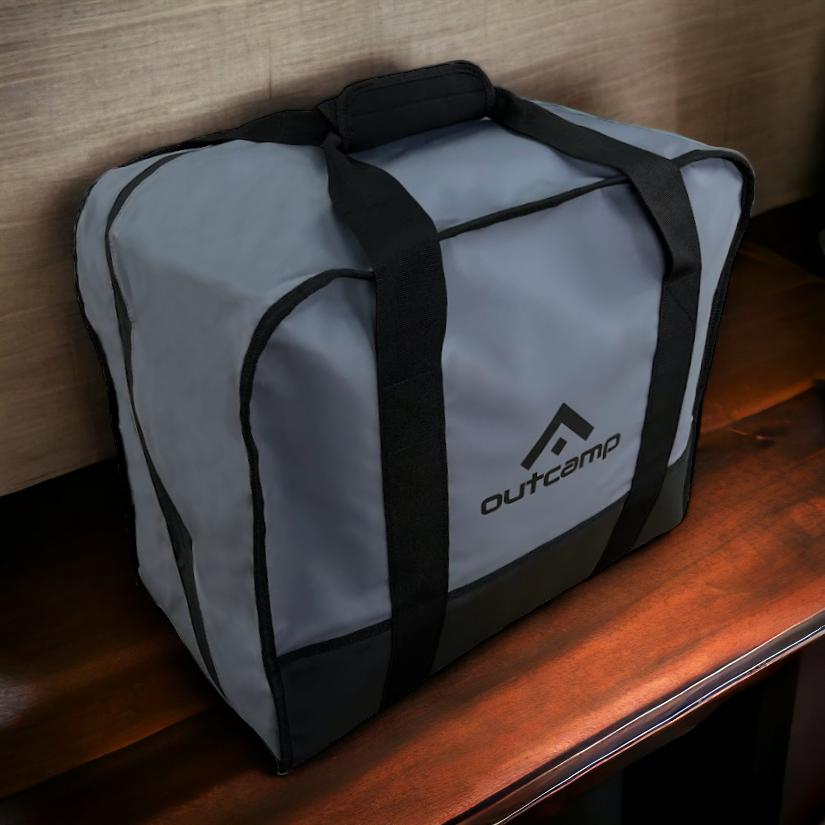
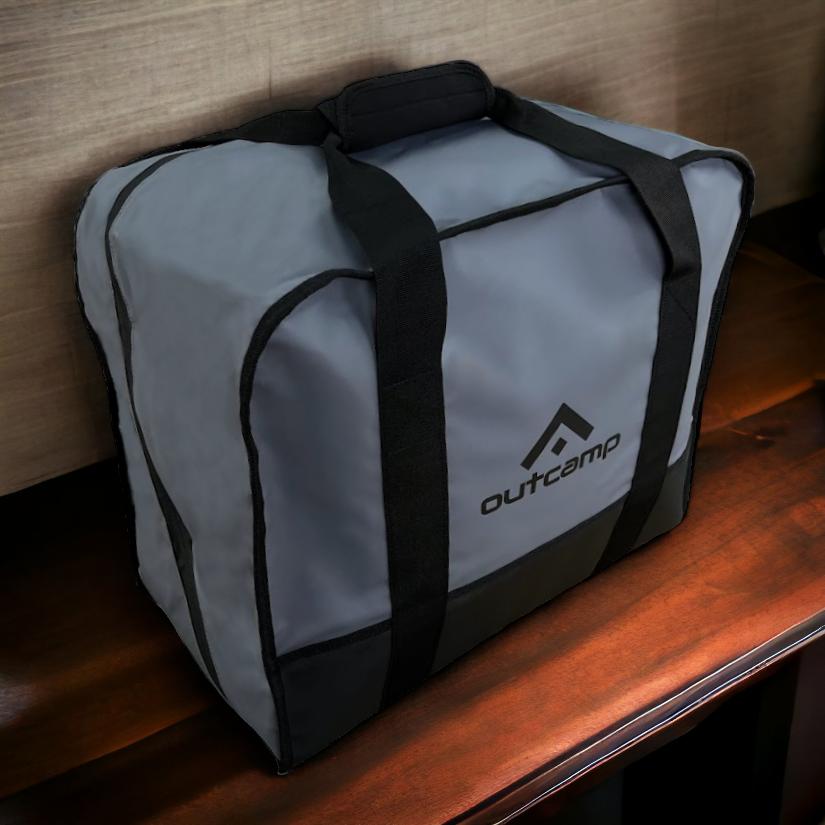
For serious welfare applications, storing the Starlink Mini in a protective case when not in use extends its operational life. The Starlink Mini Hard Protective Travel Case and Starlink Mini Carry Bag are designed to cushion the unit against the constant vibration, dust, and impact of ute tray or trailer transport. A working safety system is one that is still functional when you need it on day 300 of the year, not just on day one.
Designing a Lone Worker Setup That Actually Gets Used
The best safety technology in the world is worthless if workers bypass it, and the single biggest predictor of whether safety tools get used is how much friction they introduce. A good remote connectivity setup disappears into the background. It powers up automatically, connects reliably, and requires no thought from the worker beyond the occasional tap to confirm a welfare prompt.
Achieving that invisibility requires thinking carefully about installation, power, and protection. A Starlink Mini that needs to be manually unpacked, aimed, and plugged in every morning will be left in the toolbox most days. A Starlink Mini that lives on a permanent mount, draws power from the vehicle, and boots the moment the ignition turns will be part of every job.
Choosing a Mounting Solution for Work Vehicles
Mount selection comes down to vehicle type and mission profile. For utes, 4WDs and service vehicles with roof racks, the Starlink Mini Roof Rack Mount offers a clean permanent fit that keeps the dish high and clear of obstructions. For crews who swap vehicles or want to redeploy quickly, a magnetic solution like the Starlink Mini Portable Magnetic Roof Mount or MagLock Pro Magnetic Vehicle Mount takes seconds to install and strips off just as fast when the vehicle is needed for other duties.
Specialised worksites and vehicles have their own mounting needs. For ag contractors and station workers running bar-mounted setups, the Starlink Mini Agricultural Mount (25-32mm rail) pairs with standard railing found on ute canopies and farm equipment. Marine operators and rangers patrolling waterways can use the Starlink Mini Marine Rail Mount (25-32mm) on rails and biminis. For construction crews that want a dish on an elevated position above a temporary office pod, the Starlink Mini Tripod Mount provides a self-contained setup that can be deployed in minutes and relocated as the site evolves.
Operators who need to move between multiple vehicles during a single shift often benefit from the Starlink Mini 2-in-1 Magnetic Mount and Hard Cover, which doubles as a transport case and a magnetic roof mount. That flexibility is particularly valuable for inspectors, vets, agronomists, and other professionals whose jobs involve hopping between several vehicles on a single station or site in a single day.
Power Planning for Continuous Safety Coverage
A lone worker safety system that relies on Starlink Mini must have a power plan that keeps the dish online for the full duration of the shift, including parked breaks and overnight stops when workers are camped on site. The simplest arrangement is a direct feed from the vehicle's auxiliary battery through the Starlink Mini 12V to 24V Power Supply (Anderson Plug) or Starlink Mini DC Power Converter (Anderson SB50), both of which are designed to handle the current draw of the dish without stressing the vehicle electrical system.
For workers operating out of campers, service bodies, or temporary site offices, the Starlink Mini Portable UPS Power Supply (7-10 Hours) adds a buffer that keeps the dish running through engine off periods without flattening the starter battery. This is particularly important on long observation tasks, overnight stays in remote country, and emergency standbys where the worker might need to remain contactable for many hours after the vehicle is switched off.
For tradies and maintenance contractors who already carry cordless power tool batteries, the Starlink Mini Makita 18V Battery Connector and Starlink Mini Milwaukee 18V Battery Adapter turn those batteries into an instant backup power source for the dish. The PeakDo LinkPower 2 Portable Power Bank (99Wh) is another strong option, offering purpose-built power with enough capacity to run Starlink Mini for several hours of active use and small enough to fit in a backpack when the worker leaves the vehicle for an extended walk.
Protecting the Gear From the Australian Environment
Remote Australian work is unforgiving on equipment. Red dust, salt spray, thirty-degree temperature swings, corrugated dirt tracks, and direct summer sun all conspire to destroy sensitive electronics within months. The Starlink Mini is a robust unit, but it is not indestructible, and the peripheral equipment around it is usually more vulnerable than the dish itself.
A protective stack typically starts with the Starlink Mini Silicone Cover or Starlink Mini Clear Protective Cover, both of which shield the dish from abrasion and minor impacts while allowing the unit to remain mounted. The Starlink Mini Dish Protector Shield adds another layer of mechanical protection for high-exposure installations. For transport and storage, the Starlink Mini Hard Protective Travel Case or Starlink Mini Travel Backpack (USB Charging Port & TSA Lock) handles the dust, vibration, and knocks of a working vehicle better than any generic padded bag.
Cables are the most commonly overlooked failure point. The Starlink Mini Hardwire Power Cable (3.0M) and Starlink Mini DC Extension Cable run cleanly through vehicle cable runs and stand up to real-world conditions far better than consumer-grade extensions. For environments where cables must pass through exterior walls, the Waterproof DC Wall Socket Passthrough ensures you are not compromising the weather seal of the vehicle or building to get power to the dish.
Building a Culture of Remote Safety
Technology alone will not protect a workforce. Culture, training, and process design matter at least as much, and the organisations that get the most out of remote connectivity are the ones that integrate it thoughtfully into the way people actually work. A worker who trusts that their welfare is genuinely being watched over will check in without being asked. A worker who feels that safety systems are a tick-box exercise will find ways around them, no matter how sophisticated the underlying platform.
Starlink Mini is the enabling layer. What sits on top of it — the check-in app, the video platform, the monitoring dashboard, the escalation protocols — is where the cultural work happens. Treating remote connectivity as a strategic investment rather than a line item on the fleet spec tends to produce visibly safer operations within a few months of deployment.
If you are building out a lone worker safety programme for a team of field technicians, remote operators, or isolated specialists, Outcamp stocks the full range of mounts, power solutions, cables, and protective cases needed to make Starlink Mini a permanent part of your safety stack. The Starlink Mini Explorer Bundle Pack brings together the most commonly requested accessories in one package for new deployments, and individual components are available for custom configurations built around specific vehicles and operating conditions. Browse the full range at outcamp.com.au and set your team up with communications infrastructure worthy of the work they do.




Leave a comment (all fields required)