


Starlink Mini for Australian Forestry and Conservation
Forestry crews, park rangers and environmental scientists work in some of the most isolated country on the continent. Mobile coverage maps look like Swiss cheese the moment you cross into a state forest, a national park or a working timber lease, and that has been the operating reality for decades. Crews learned to plan around dead zones, schedule reporting around patchy signal, and carry sat phones for the genuine emergencies. None of that goes away because the work has gotten harder over time, with more compliance reporting, more sensor data, and more pressure to make timely decisions.
Starlink Mini changes the equation. A unit small enough to fit in a backpack, light enough to throw on a tray-top, and capable of delivering broadband speeds anywhere with a clear view of the sky has become a practical tool for forestry and environmental work. Whether you are running a fire tower roster, a wildlife survey, or a multi-week carbon plot survey deep in the bush, reliable satellite internet is no longer a luxury reserved for HQ. This guide walks through why Starlink Mini is reshaping forestry and conservation work in Australia, where it adds the most value, and how to build a setup that survives the conditions our environmental sector actually faces.
Why Forestry and Environmental Work Demands Reliable Satellite Internet
The forestry and conservation sector has changed faster than people outside it appreciate. Two decades ago a ranger logged observations on paper, a forester carried a clipboard, and a wildlife researcher ran cassette recorders against a generator. Today every part of that workflow has digital equivalents that either improve outcomes or unlock entirely new methods, and most of those tools assume connectivity. Without it, the gap between what is theoretically possible and what actually gets done in the field grows wider each year.
That is the central tension. Field teams are sent deeper and asked to do more with the time they have on site. Reliable satellite internet through Starlink Mini closes that gap, turning isolated work locations into functional digital workplaces without compromising the field-first nature of the job.
The remoteness of Australian forestry operations
Australia has roughly 134 million hectares of forest, and the working footprint of forestry, conservation and parks management touches almost all of it. State forests in Tasmania, native forest harvest zones in Victoria, plantation country across the Green Triangle, the vast national park estate from Cape York to the Kimberley, and the patchwork of conservation reserves through the Top End all have one thing in common: mobile coverage was never built for them. Telco priorities follow population density, and population density is exactly what these landscapes lack.
For crews working these areas, the practical effect is constant context-switching between connected and disconnected modes. You drive in, you cover ground for hours or days with no signal, and you only catch up on emails, reports and approvals once you are back in town. That model works when the workload is light and the day rate forgives slow turnarounds. It stops working when compliance audits, hazard reduction programs and environmental impact assessments all want real-time data and same-day responses.
Starlink Mini gives crews a reliable fallback that does not depend on towers, repeaters or terrain. As long as the unit can see open sky, it works. That single fact transforms a fire spotter tower, a temporary camp at a research plot, or a remote ranger station from a connectivity black hole into a fully functional outpost.
The data-heavy nature of modern conservation
Modern conservation runs on data. LiDAR forest inventories, satellite imagery cross-referenced with ground-truthing surveys, eDNA samples uploaded to processing labs, drone-captured aerial maps, acoustic recordings of frog populations, motion-triggered camera trap networks — every one of these tools generates files that need to move from the field to the cloud, often in the gigabytes per session. Trying to push that volume through a 4G repeater on a hilltop, or wait until you get back to a regional office, kills momentum and risks data loss.
The same applies on the production forestry side. Harvest planning increasingly relies on GIS layers, soil moisture sensors, machine telemetry from harvesters and forwarders, and live updates to coupe boundaries based on environmental triggers. Field supervisors who can pull the latest plan, mark up changes and push them back to the planners in the same shift run safer, more compliant operations than crews still working from paper printouts.
Starlink Mini delivers the kind of speed these workflows assume. Real-world performance in remote Australia commonly sits in the 50 to 200 Mbps range, with low enough latency for video calls, GIS edits and cloud sync. That is enough to upload a half-day's drone imagery during a smoko break, run a Teams call with a regional office, and keep a sensor dashboard live, all from a quiet siding 200 kilometres from the nearest town.
Safety and compliance pressures
Workplace health and safety obligations in forestry have tightened significantly. Lone worker check-ins, fatigue management protocols, real-time incident reporting and live position monitoring are increasingly the baseline expectation across both government agencies and private operators. None of that works reliably without connectivity. A check-in app that cannot upload until you reach a service area is just a logbook with extra steps.
Environmental compliance carries a similar pressure. Threatened species sightings, weed and pathogen reports, cultural heritage observations, water quality samples and fire behaviour notes all need to be logged accurately, ideally with timestamps and GPS metadata while the observation is fresh. Connectivity in the field means data integrity in the field, not memory-based reconstruction at the end of a long shift.
For supervisors, the calculation is straightforward. The cost of a Starlink Mini and a sensible accessory kit is trivial against the cost of a single near-miss that should have been caught by a real-time check-in, or a compliance breach that traces back to a missed report. Reliable connectivity is now a safety control in its own right.
Real-World Applications of Starlink Mini in Forestry and Conservation
Pulling Starlink Mini out of the bag for the first time on a forestry job is a small revelation. Crews who have spent years working around connectivity gaps notice immediately how much friction quietly disappears. The applications below are the ones we hear about most often from customers in the sector, and each one represents a workflow that simply could not be run reliably with previous-generation satellite or 4G solutions.
The pattern across all of them is the same. Starlink Mini does not replace specialised field tools, it makes them dramatically more effective by removing the connectivity bottleneck between the field and everywhere else.
Remote weather stations and environmental sensors
Automatic weather stations, soil moisture probes, water quality loggers and air quality monitors are the unglamorous workhorses of environmental science. Most of them generate small data packets at low frequencies, which used to be a job for 3G modems and basic telemetry. As 3G shutdowns roll through and 4G coverage fails to fill the gaps in remote country, operators are increasingly looking for replacements that will still be working in five years.
Starlink Mini fits this role surprisingly well. Paired with a low-draw power setup, it can keep a sensor cluster online indefinitely at a site that has no grid power and no realistic line-of-sight to a tower. The Starlink Mini Portable UPS Power Supply (7-10 Hours) handles short outages, while the PeakDo LinkPower 2 Portable Power Bank (99Wh) extends runtime for monitoring stations that need a longer buffer between solar charge cycles.
For permanent installations, the Starlink Mini 12V to 24V Power Supply (Anderson Plug) and Starlink Mini Hardwire Power Cable (3.0M) let researchers tie the unit cleanly into an existing solar and battery system. Add a Starlink Mini Tripod Mount or a Starlink Mini Flat Mount to a sensor cabinet roof and you have a self-contained data uplink that takes minutes to commission and survives years in the field.
Wildlife monitoring and camera trap networks
Modern camera trap programs run hundreds of devices across complex grids. Until recently the workflow was punishing: drive out, swap SD cards, drive back, copy data, repeat every few weeks. Acoustic monitoring for nocturnal species, bird call surveys and frog census work followed the same model. Field hours were lost to data logistics rather than science.
With Starlink Mini at a central hub, that workflow flips. A field laptop or compact NAS aggregates data from a wireless mesh of nearby devices, then pushes it directly to cloud storage. A research crew can run a week-long deployment, watch terabytes of imagery and audio sync overnight, and walk out with the science already done rather than the work just starting.
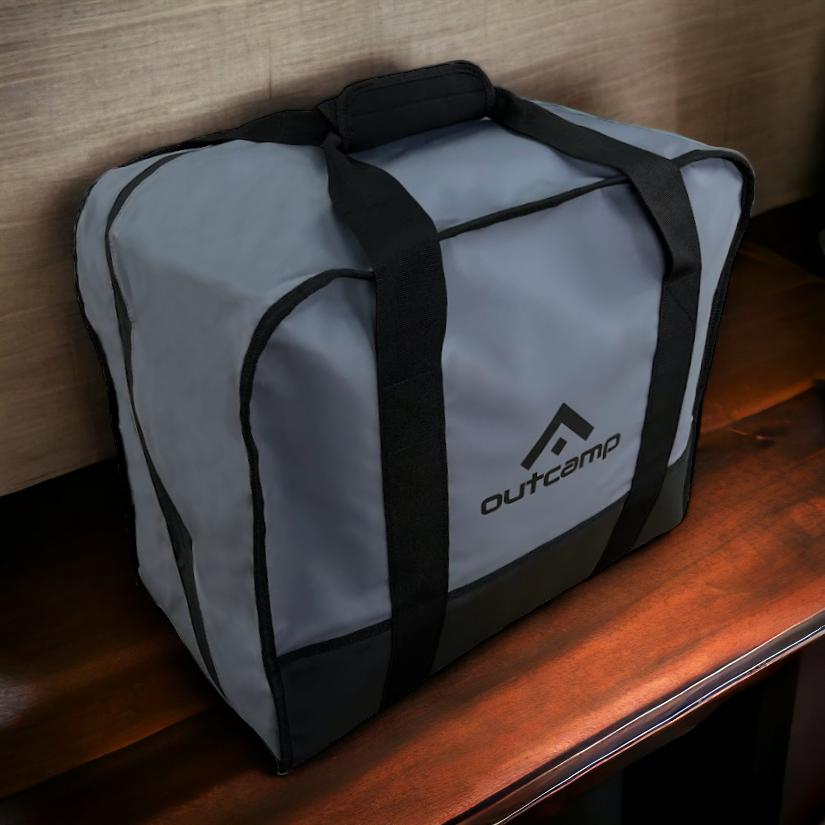
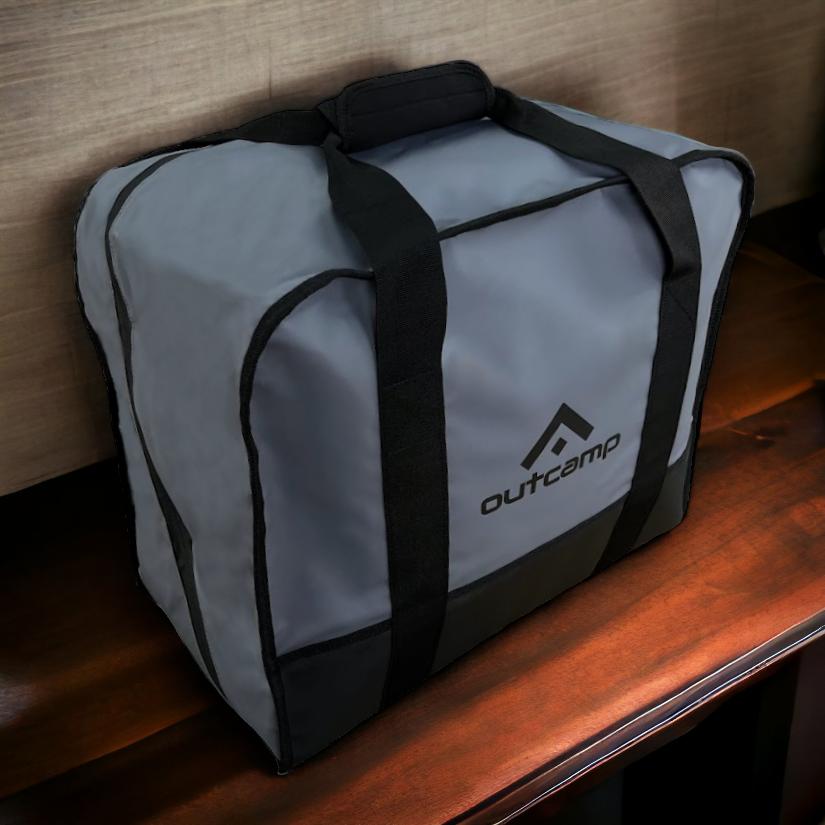
For mobile use across multiple study sites in a single trip, the Starlink Mini Carry Bag and Starlink Mini Hard Protective Travel Case are essential. They protect the unit during transport in 4WD trays and helicopter bags, and let crews redeploy in minutes when they reach a new plot. The Starlink Mini Travel Backpack (USB Charging Port & TSA Lock) is also popular with researchers who fly between regions and want a single bag that handles both transit and field deployment.
Park ranger communications and patrol coordination
Ranger work in remote national parks combines law enforcement, search and rescue, fire management, visitor services and ecological work, often inside the same shift. Coordination across that mix relies heavily on radio for immediacy, but radio cannot move the documents, photos, GPS files and case notes that modern operations generate. Rangers need both, ideally without dragging back to a base station every time they want to file a report.
A Starlink Mini in a ranger vehicle turns the vehicle itself into a forward operating base. Patrol logs upload as they are written, photographic evidence syncs to secure cloud storage in the field, and incident command can pull live situational awareness from a remote section of the park. Crews running multi-day fire patrols or extended search operations can keep families and command informed without the satellite phone shuffle.
The right mounting solution matters here. The Starlink Mini Roof Rack Mount works well on Hilux and Land Cruiser fleet vehicles, while the Starlink Mini BullBar/Railing Mount suits utes with bull bars or sports bars. For the LandCruiser-based 79 Series and 200 Series fleets common in parks work, the Starlink Mini ARB Baserack Compatible Mount provides a clean integration. Power flows reliably through a Starlink Mini DC Power Converter (Anderson SB50) tied to the vehicle's auxiliary battery, leaving the unit ready to deploy the moment the engine starts.
Building a Reliable Starlink Mini Setup for Forestry Work
The Starlink Mini is built well, but the conditions forestry and conservation work throw at gear are not gentle. Dust, mud, salt spray near the coast, sub-zero alpine starts, 45-degree summer days, sap, pollen, kangaroo strikes, branch hits and the occasional roll-over event all factor in. A setup that survives a season in this work is one that has been thought through end to end, not just clipped together at the start.
The breakdown below covers the three areas where most forestry and conservation users either get the configuration right or pay for it later: how the unit is mounted, how it is powered, and how it is protected when it is not in use.
Vehicle and field mounting solutions
For vehicle-based work, the choice of mount comes down to the platform. Roof rack mounts give the cleanest sky view and keep the unit out of the way of equipment loaded in the tray. The Starlink Mini Roof Rack Mount and Starlink Mini Sports Bar Ute Mount are both popular with parks and forestry fleets. Where the vehicle has an ARB Baserack or similar platform, the Starlink Mini ARB Baserack Compatible Mount integrates without adding extra crossbars or hardware.
For crews who switch between vehicles or want to redeploy quickly to a temporary camp, magnetic mounts are a serious time-saver. The Starlink Mini Stainless Steel Magnetic Mount and the MagLock Pro Magnetic Vehicle Mount both hold securely on bonnets and steel surfaces while allowing rapid removal. The Starlink Mini Portable Magnetic Roof Mount is particularly useful for environmental survey teams running multiple short-stay deployments across a large project area.
For static deployments — research camps, sensor station hubs, or temporary fire control points — the Starlink Mini Tripod Mount and Starlink Mini Clamp on Universal Mount cover most use cases. The Starlink Mini Agricultural Mount (25-32mm rail) is also worth knowing about for forestry plot work, since it clamps cleanly to railings, scaffold tubes and many existing field structures without drilling.
Off-grid power for extended deployments
Power planning is where forestry setups quietly fail. The Mini draws around 25-40W in normal operation, which is manageable, but the assumption that any 12V outlet will run it indefinitely catches people out. Voltage drop on long cable runs, accessory loads on a single battery, and overnight idle draw all matter when you are 200 kilometres from a recharge.
For vehicle-based use, the cleanest solution is a dedicated Anderson plug feed from the auxiliary battery. The Starlink Mini 12V to 24V Power Supply (Anderson Plug) and Starlink Mini Anderson Plug to DC Power Cable (5.0M) form a reliable backbone, with the Starlink Mini DC Power Cable with Anderson SB50 & 10A Fuse adding fuse protection for permanent installations. The Starlink Mini Cigarette Lighter Power Supply (165W USB-C) is a useful fallback for hire vehicles or short-term jobs where a hardwire is not practical.
For off-vehicle field use, battery options have expanded significantly. The PeakDo Power Dock for Makita and Starlink Mini Makita 18V Battery Connector let crews running Makita tool ecosystems power the dish from the same batteries already on the truck. Milwaukee operators have the equivalent in the Starlink Mini Milwaukee 18V Battery Adapter. For longer sessions, the PeakDo LinkPower 2 Portable Power Bank (99Wh) and Starlink Mini Portable UPS Power Supply (7-10 Hours) provide quiet, sustained runtime for sensor hubs and overnight monitoring.
Protection from harsh forest environments
The dish itself is rated for outdoor use, but transport, storage and incidental impacts are where damage happens. Forest tracks shake gear loose in compartments, helicopter slings rattle for hours, and a Mini left loose in the back of a ute will eventually find a sharp edge.
The Starlink Mini Hard Protective Travel Case is the standout option for forestry use. It handles rough handling in vehicle storage, survives helicopter bag conditions, and lets gear stewards account for the unit at the start and end of every job. The Starlink Mini Carry Bag suits crews who deploy and pack down daily and want a softer, faster option.
For deployed dishes that stay outside for weeks at a time, the Starlink Mini Silicone Cover and Starlink Mini Clear Protective Cover protect against sap, dust and minor scratches without affecting performance. The Starlink Mini Dish Protector Shield adds a layer for installations close to overhanging branches or in areas with bird strike risk. None of these accessories are expensive, but they extend service life significantly in the conditions our sector actually works in.
Bringing It Together
Forestry, conservation and environmental monitoring are all going through the same shift: the work has gotten more data-intensive, the compliance load has grown, and the operational areas have not gotten any less remote. Starlink Mini answers a problem that field crews have been working around for decades, and it answers it with hardware small enough to keep on the seat next to the lunchbox. That combination — practical size, real broadband speeds, anywhere coverage — is what makes it useful rather than just impressive on paper.
The accessory choices matter. A bare Mini on a job site is fragile, awkwardly powered and slow to deploy. The same unit with the right mount, a clean power feed and proper protection becomes a tool that crews trust enough to plan around. That is the difference between gear that gets used and gear that gets left in the truck.
If you are scoping a Starlink Mini setup for forestry, ranger, environmental survey or research work, the Outcamp catalogue is built around exactly this kind of professional use. The Starlink Mini Explorer Bundle Pack pulls together the most commonly requested combination for field deployment, and the broader range of mounts, cables, power supplies and protective cases lets you tune the configuration to your specific platforms, vehicles and conditions. Take a look at the range at outcamp.com.au, and reach out if you need a hand matching kit to a specific operation.




Leave a comment (all fields required)