


Starlink Mini for Australian Transport and Logistics Fleets
Australian freight routes cover some of the longest and loneliest roads on the planet. A single linehaul between Perth and Darwin covers more kilometres than most European countries are wide, and for substantial stretches of that journey, the nearest mobile tower may as well be on another continent. For transport and logistics operators, those gaps in coverage used to be an accepted cost of doing business. That is no longer the case.
Modern freight operations run on a dense layer of connected software: telematics, electronic work diaries, temperature loggers, cold chain alarms, dispatch platforms, proof-of-delivery apps, dashcam uploads and driver welfare check-ins. When the connection drops, the data does not simply pause — operations begin to cascade. Starlink Mini, paired with the right mounts and power gear, has become the quiet backbone holding modern Australian fleets together across the kilometres where the carrier network cannot reach.
Why Fleet Connectivity Matters Beyond the Mobile Network Edge
Most transport managers already know their vehicles spend significant time outside reliable mobile coverage. What surprises operators when they first audit it honestly is the sheer financial weight of that downtime. Every hour a truck is offline is an hour of delayed data, stalled dispatching, missed compliance deadlines and driver frustration. Multiply that across a fleet of thirty or fifty vehicles and the annual numbers become difficult to ignore.
Satellite connectivity has existed in the heavy vehicle sector for years, but it used to mean expensive proprietary units, rigid hardware and month-long install windows. Starlink Mini changes the equation entirely. It is compact, low-draw, quick to deploy and affordable enough that it can sit in every prime mover, service ute and yard shed without a business case headache.
The real cost of connectivity dropouts on long-haul routes
When a fleet app loses connection mid-route, drivers lose access to live job updates, rerouting instructions and customer contact information. That means wasted kilometres, missed delivery windows and unhappy customers calling the dispatch team for answers no one can give in real time.
Behind the scenes, the telematics platform stops receiving location pings, harsh-event data, fatigue timers and fuel burn statistics. When the truck eventually reconnects, a flood of queued data hits the servers at once. Safety exceptions that should have triggered in real time are only visible after the fact, which undermines the entire purpose of live monitoring.
Then there is the compliance angle. Electronic work diaries, chain of responsibility reporting and mass management logs all rely on a trustworthy chain of data. Gaps in that chain create audit headaches and, in the worst case, regulatory exposure. A consistent, high-bandwidth connection removes those gaps from the equation entirely.
Dead zones on Australia's freight corridors
The Stuart Highway, the Eyre Highway, the Great Northern Highway and the Gibb River Road all have stretches of hundreds of kilometres with patchy to non-existent mobile coverage. Even well-travelled routes like the Newell Highway have dead zones long enough to break any session-based software. These are not exotic side routes — these are core arteries of Australian freight.
Regional pickups and drop-offs compound the problem. A mine site turnoff, a grain receival point or a cattle station gate can be dozens of kilometres from the last bar of signal. Drivers arrive, complete a task and then sit waiting for a queued upload to go through later, often costing the fleet a slot on the next job.
Fleet managers who have mapped their telematics data against mobile coverage maps are often alarmed at how much of their own operation happens outside reliable signal. Starlink Mini fills those gaps with low-latency broadband almost everywhere the sky is visible, which on an Australian highway is very nearly always.
What modern telematics and driver apps actually need
Contemporary fleet software is surprisingly bandwidth-hungry. Dashcam uploads can be gigabytes per vehicle per day. Live tracking, video-based safety coaching, driver-facing messaging and electronic proof-of-delivery with photos and signatures all demand steady upstream data. Even static text-based apps assume a stable session that 3G backhaul in fringe areas cannot always deliver.
Driver welfare apps — including the ones now mandatory under some heavy vehicle fatigue rules — rely on responsive connectivity for check-ins, biometric scans and real-time alerting. When the app cannot reach the server, the driver either cannot log the event or has to repeat it later, which adds cognitive load to an already demanding role.
Starlink Mini delivers typical speeds of 50 to 200 Mbps down and 10 to 30 Mbps up with latency in the tens of milliseconds. Those numbers are not a luxury for transport operators — they are the baseline a modern cab needs to run every safety and compliance platform simultaneously without compromise.
Mounting and Powering Starlink Mini on Prime Movers, Trailers and Service Vehicles
The fleet use case is not about a single Starlink dish in a single vehicle. It is about a mounting and power strategy that works across a mixed fleet — prime movers, B-double trailers, service utes, crew cabs and yard vehicles — without bespoke engineering for every asset. That is where the Outcamp catalogue earns its place in a fleet workshop.
The right mount has to survive hundreds of thousands of corrugated kilometres, the right power supply has to hold stable voltage from a cranking battery to a deep cycle to a 24V truck system, and the cabling has to stay clean enough that drivers are not dealing with a tangle every shift. None of that is negotiable in a commercial context.
Cab-mounted solutions for prime movers
For prime movers, the most reliable mounting points are the cab roof, the air dam, the bullbar and the chassis rail behind the cab. The Starlink Mini Roof Rack Mount is a good fit where a truck already runs a rack for lights or spares, and the Starlink Mini BullBar/Railing Mount covers the common setup where a heavy-duty bullbar with auxiliary lights is the obvious real estate.
Fleets that want a semi-permanent install without drilling into bodywork lean on the MagLock Pro Magnetic Vehicle Mount or the Starlink Mini Stainless Steel Magnetic Mount. Both hold firm at highway speeds on a steel cab panel, and both are quick to transfer between vehicles when a truck is pulled in for service. That portability matters when workshop downtime means swapping Starlinks between assets rather than waiting on a replacement.
For service vehicles and crew cabs the Starlink Mini Sports Bar Ute Mount and Starlink Mini ARB Baserack Compatible Mount are strong picks. They integrate with fitouts the fleet already runs, which keeps the Starlink install consistent with the rest of the vehicle specification and easy to audit for WHS compliance.
Magnetic and roof-rack options for light commercial fleets
Smaller vans, utes and light trucks often do not have the real estate for a permanent mount, and many are leased or on fixed replacement cycles where any drilling or modification is off the table. For those vehicles the Starlink Mini Magnetic Mount and the Starlink Mini Alloy Magnetic Mount With Shield are purpose-built — they go on and come off without a trace, and the shield protects paintwork over years of transfers.
Drivers who move between vehicles — for example, relief drivers, depot swing crews or fleet managers with multiple sites — can carry the Starlink Mini Portable Magnetic Roof Mount and have it deployed in under a minute on any suitable vehicle they step into. That flexibility is hard to replicate with any other mounting approach.
For boats, barges and harbour craft that handle freight over water — think commercial ferries, coastal freighters and port support vessels — the Starlink Mini Marine Rail Mount fits standard 25-32mm railings and stands up to saltwater exposure far better than a landlubber mount ever would.
Power draws and 12V/24V fleet integration
Starlink Mini is specified to run from a nominal 12–20V DC input and draws around 25–40W under load. That is modest, but it still requires a clean, regulated supply — not a spike-prone accessory socket on an older cab. The Starlink Mini 12V to 24V Power Supply (Anderson Plug) and Starlink Mini 12V to 30V Power Supply (Anderson Plug) are the go-to choices for trucks running 24V systems, and they work cleanly with existing Anderson plug standards that most fleet workshops already have in stock.
For quicker, less permanent installs, the Starlink Mini Cigarette Lighter Power Supply (165W USB-C) plugs into a standard accessory socket and delivers stable voltage without a workshop visit. The Starlink Mini 3-in-1 DC Power Cable (USB-C/DC/Cigarette Lighter) is similarly useful for drivers who move between vehicles with different accessory outputs.
Where a truck sits overnight in a yard with the engine off but the driver still needs connectivity in the sleeper, the Starlink Mini Portable UPS Power Supply (7-10 Hours) or the PeakDo LinkPower 2 Portable Power Bank (99Wh) keep the dish running without pulling the starting battery flat. For crews that already carry cordless power tools, the Starlink Mini Makita 18V Battery Connector and Starlink Mini Milwaukee 18V Battery Adapter turn existing tool batteries into a ready power supply — a neat trick when a driver is away from the cab at a rest stop or loading bay.
Remote Depots, Yards and Transfer Stations
Transport is not just trucks on highways. A huge share of the connectivity problem sits in fixed locations that happen to be in the wrong place for NBN and mobile broadband — rural depots, intermodal yards in regional centres, grain receivers, mine gate laydown areas and container transfer sites. These facilities operate on tight cost bases and often cannot justify a fixed line install even when one is technically available.
Starlink Mini on a semi-permanent mount at a depot delivers office-grade connectivity without the install delay or the ongoing line rental of a traditional fixed service. For businesses standing up temporary logistics hubs — harvest season grain depots, construction material staging, emergency relief bases — it is often the only realistic option.
Pop-up depot connectivity in mining and construction logistics
Mining and construction logistics routinely require a new depot to appear in weeks rather than months. Heavy haulage fleets running project freight to a new wind farm, solar site or mining development need a yard, an office, a fuel point and, increasingly, a connected operations centre on day one.
The Starlink Mini Tripod Mount paired with the Starlink Mini Flat Mount lets a crew stand up a reliable connection on a shed roof, a container or even a portable generator trailer in minutes. Cabling can run back to the office via the Starlink Mini/Gen 3 Ethernet Adapter (4 Ports) and the Gen 3/Mini Waterproof Connector Ethernet Cables for a clean, weatherproof install.
When the project wraps up, the kit packs into the Starlink Mini Hard Protective Travel Case and relocates to the next site without the lengthy disconnection process a fixed line would demand. That reusability means the same gear can support multiple project lifecycles, which is the sort of return on equipment that finance teams notice.
Backup and redundancy for rural logistics hubs
Even depots that do have NBN or fibre benefit from a Starlink Mini as a backup. Rural fixed services are prone to outages from storms, tower faults and simple distance-related degradation. In transport, any outage at the depot cascades to every vehicle that depends on the central dispatch system, which in turn cascades to every customer expecting a delivery update.
A Starlink Mini configured as failover connectivity — either manually or via a dual-WAN router — means the depot keeps running while the primary service is restored. For small depots this might be a single unit serving the office and the yard camera system. For larger facilities it might be several units handling different zones.
The Waterproof DC Wall Socket Passthrough and the Waterproof Ethernet Port RJ45 make it straightforward to run a Starlink installation through the wall of a demountable office or a shipping container conversion without compromising the weather seal. Small fittings like these are what separate a tidy commercial install from a temporary lash-up.
Cold chain and perishable freight monitoring
Cold chain freight depends on continuous temperature logging, real-time alerts for compressor faults and, increasingly, live customer visibility into the condition of a shipment. None of that works reliably without connectivity at both ends of the journey.
At the chiller, the freezer and the reefer container, Starlink Mini provides the uplink for temperature sensors, door-open alarms and compressor telemetry. On the road, it does the same job from the refrigerated trailer itself, ideally mounted via the Starlink Mini Agricultural Mount (25-32mm rail) on a trailer rail or the Starlink Mini Clamp on Universal Mount where the geometry suits.
Protecting the dish itself from weather, road grime and occasional impact becomes crucial in these applications. The Starlink Mini Silicone Cover and the Starlink Mini Dish Protector Shield add a meaningful layer of robustness for a fleet-scale deployment where even a small percentage of unit failures creates an operational headache.
Driver Welfare, Compliance and Fatigue Management
The human side of transport is the part that makes this more than just another technology upgrade. Australian drivers run some of the longest and most isolated routes in the world, and the quality of their connection to friends, family and support services has a direct bearing on their wellbeing, their job satisfaction and their safety behind the wheel.
Operators that invest in driver welfare consistently see lower turnover, fewer incidents and better retention of experienced drivers — all of which translate directly to the bottom line. Starlink Mini is a surprisingly powerful lever in that equation because it addresses one of the most widely reported driver frustrations: not being able to stay in touch when out on the road.
Why online downtime matters for drivers on extended trips
A driver on a multi-day trip across the Nullarbor or up the Tanami spends their off-duty hours in the sleeper cab. Video calls with family, streaming for entertainment, online banking, telehealth appointments and further education all depend on connectivity that the mobile network simply cannot provide across significant portions of these routes.
When drivers can reliably reach home from wherever they stop, the psychological weight of being away lifts noticeably. Operators that have deployed Starlink Mini across long-haul fleets report anecdotally that recruitment and retention conversations often centre on this single capability as much as on pay or rostering.
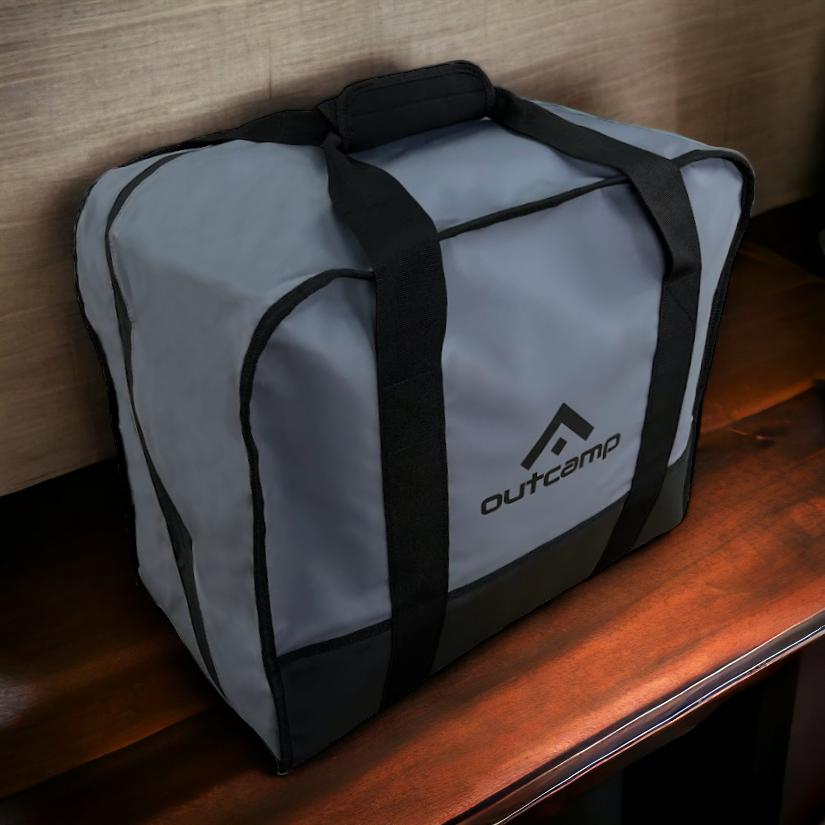
In practical terms, a driver using the Starlink Mini Carry Bag can set up the dish at any rest area or overnight stop within a minute or two, run it from the PeakDo LinkPower 2 Portable Power Bank (99Wh) or directly off the cab via a Starlink Mini Anderson Plug to DC Power Cable (5.0M), and reliably connect without draining the cranking battery.
Chain of Responsibility and electronic work diaries
Chain of Responsibility obligations extend beyond the driver to everyone in the logistics chain — schedulers, loaders, consignors and the business itself. Meeting those obligations increasingly depends on electronic records: fatigue timers, mass declarations, speed monitoring and incident reporting. Paper-backed processes are still legal in some contexts but are rapidly being replaced.
Electronic work diaries, accredited under the Heavy Vehicle National Law framework, work best when they have a live connection to their backend. Real-time upload of work and rest data protects drivers from disputes, protects operators from compliance gaps, and gives schedulers accurate visibility into who is actually available for the next shift. Starlink Mini makes that live connection possible everywhere, not just within tower range.
The same applies to incident reporting, near-miss logging and safety observations. The faster the data lands in the central system, the faster the business can respond. Encouraging in-cab reporting with reliable connectivity creates a safety culture loop that simply cannot exist when drivers know the app will only sync hours later when they hit the next town.
Getting Started: Choosing the Right Starlink Mini Setup for Your Fleet
Fleets rarely need a single standard kit across every vehicle. The most effective deployments match mounts, power and accessories to the realities of each asset class — prime movers with their own considerations, light commercial with theirs, and depot installs with a third set entirely. The trade-off between a slick permanent install and a portable kit is usually decided by how often the vehicle changes hands and how much workshop time is available.
For operators who want a proven all-in-one starting point, the Starlink Mini Explorer Bundle Pack is the most straightforward way to get a single vehicle up and running with the core essentials — mount, power and protective carry — without sourcing every piece separately. It is a good template to test the approach before standardising across a larger fleet.
Beyond the hardware, the change management piece matters too. Drivers need a short briefing on how to power the unit up at a stop, how to pack it away, and how to report any issues. Workshop crews need a simple install and swap-out procedure. Once those basics are in place, the fleet often wonders how it ever operated without reliable connectivity across every kilometre of every job.
If you run a transport or logistics operation in Australia and are ready to put reliable connectivity into every cab and every depot, the full Outcamp range of Starlink Mini mounts, power and accessories is the place to build that spec from. Every item is designed for Australian conditions, stocked in Australia and backed by local support that understands what a working fleet actually needs.




Leave a comment (all fields required)