

Pop-up weddings in the Flinders Ranges. Glamping lodges hidden in Tasmanian wilderness. Three-day music festivals on leased farmland two hours from the nearest exchange. Australia's events and eco-tourism industries live and die on atmosphere, and atmosphere almost always means distance from infrastructure. The trouble is that modern guests, performers, vendors and organisers all expect the same thing — fast, reliable internet — regardless of how far they are from a tower.
For years, remote venues have stitched together a patchwork of 4G repeaters, microwave links and borrowed hotspots, hoping the signal holds long enough to process card payments and stream a ceremony back to relatives overseas. Starlink Mini has changed the conversation. A unit that fits in a carry bag, draws power from a work battery, and delivers broadband speeds from almost anywhere in the country gives operators something they have never had before: confidence. This guide walks through how Australian events and eco-tourism businesses are using Starlink Mini, which Outcamp accessories make the deployment stick, and what to think about before your next remote build.
Why Starlink Mini Suits Events and Eco-Tourism
Events and eco-tourism share a connectivity profile that traditional ISPs struggle to serve. Sites are often temporary, seasonal, or geographically scattered across private properties, national park peripheries, coastal reserves and pastoral leases. Permanent fixed-line solutions rarely make financial sense, and mobile networks offer patchy coverage that collapses the moment a few hundred guests arrive with phones in hand.
Starlink Mini addresses both problems at once. Its low-earth-orbit architecture delivers usable bandwidth almost anywhere with a clear sky, and its small form factor — roughly the size of a laptop — means a single operator can deploy, reposition and pack down a complete internet solution without a truck, a tower, or a technician. For businesses that build and rebuild their venue every weekend, or that serve guests who paid handsomely for a taste of remote Australia, that portability is the product.
The guest experience demands connectivity
Modern travellers will pay a premium for seclusion, but they still want to share it. Guests at a $900-a-night eco-lodge expect to post photos in real time, stream a show on their tablet, and upload a work email while they sip coffee on the deck. A bride and groom who chose a remote property for their ceremony still want their overseas family watching the livestream without buffering. The emotional payoff of a remote venue collapses the moment a guest loses the ability to share it.
Reliable internet has become part of the package, not an optional extra. Reviews on Airbnb, Google and TripAdvisor frequently mention WiFi quality as a deciding factor, and a single bad experience can drop a property's ranking for months. For event organisers, connectivity affects everything from ticket scanning at the gate to bar tab payments, meaning a single dropout can cost thousands in lost sales in under an hour. Starlink Mini, properly deployed, takes this risk off the table.
Staff and operations need the same backbone
Behind the guest-facing layer, there is a parallel operation that depends on connectivity just as heavily. Point-of-sale terminals, booking platforms, payroll systems, security cameras, staff communications and emergency alerts all route through the internet. On a remote site, a connectivity failure is not just a guest complaint — it is a stop-work event.
Event crews need to push artist rider updates to production teams, share stage plots with lighting operators, and reconcile ticket sales as the night progresses. Eco-tourism operators need to sync their booking engine, run background checks on new arrivals, and push safety broadcasts if conditions change. A Starlink Mini, powered by a Starlink Mini 12V to 24V Power Supply (Anderson Plug) and mounted on a Starlink Mini Tripod Mount, gives the operations tent its own independent link that does not share a congested guest network.
Deployment speed matters for temporary sites
A festival crew might have 36 hours to turn an empty paddock into a production-grade venue. A pop-up wedding planner might arrive at 7am and have ceremony guests walking in by 3pm. There is no time for cable pulls, tower commissioning or ISP truck rolls. Connectivity has to go live in minutes, not days.
This is where Starlink Mini's portability pays off. A single crew member can pull the unit from a Starlink Mini Hard Protective Travel Case, plug it into a PeakDo LinkPower 2 Portable Power Bank (99Wh), sit it on a Starlink Mini Tripod Mount clear of foliage, and have a working link within three to five minutes. Repositioning as the site grows is equally quick. When packdown comes, the whole connectivity layer collapses back into a carry bag, ready for the next build.
Use Cases Across Australian Events and Eco-Tourism
The scenarios are more varied than they first appear. A glamping operator with six permanent tents has very different needs from a festival production company with 8,000 patrons, yet both benefit from the same core device. The following sections walk through the patterns we see most often among Outcamp customers in this industry.
Understanding which pattern you fit shapes everything that follows — which power solution to choose, how to mount the dish, whether to run a mesh WiFi network, and what backup you need for the worst-case weekend. Get the pattern right and the rest of the deployment almost designs itself.
Glamping lodges and remote accommodation
Permanent remote accommodation — glamping tents, eco-cabins, safari lodges, tiny houses on leased land — typically runs with a fixed Starlink install, but Starlink Mini is increasingly chosen for properties with between one and twelve rooms where cost, portability and simplicity matter. The Mini can be mounted to a building exterior, a pole, or a tree-adjacent structure, with minimal civil works.
A common setup pairs a Starlink Mini Roof Rack Mount repurposed as a wall bracket, a Starlink Mini 20V Hardwired Power Socket with Integrated Voltage Booster wired into the property's 12V solar system, and a weatherproof mesh WiFi network distributing signal to guest accommodations. The Waterproof DC Wall Socket Passthrough keeps the install tidy where the cable enters the main building, and a Starlink Mini Silicone Cover adds a layer of UV protection for units exposed to full sun.
The operational benefit beyond guest WiFi is significant. Cleaners can sync schedules, maintenance can receive fault notifications, and the property can run cloud-based locks, cameras and smart thermostats without relying on a 4G signal that drops every time the weather changes. For smaller operators, a single Mini often outperforms a dedicated NBN fixed-wireless service that the postcode is theoretically entitled to.
Pop-up events, weddings and private functions
The pop-up event market is where Starlink Mini's portability pays off most dramatically. A wedding planner running five remote ceremonies a month can carry a single Starlink Mini Explorer Bundle Pack from booking to booking, setting up in minutes at each venue. Power comes from a Starlink Mini Portable UPS Power Supply (7-10 Hours) that keeps running through a full evening reception without tripping when a generator cycles.
At the ceremony itself, livestream quality is non-negotiable. A Starlink Mini sitting on a Starlink Mini Tripod Mount at the back of the site, with a hardwired connection to the videographer's encoder via a Starlink Mini Hardwire Power Cable (3.0M) and a Starlink Mini/Gen 3 Ethernet Adapter (4 Ports), produces upload speeds that comfortably handle 1080p streams to Facebook, YouTube and private platforms. Guests who could not attend in person see the ceremony without jitter, and the couple does not have to negotiate with a remote property owner's WiFi password.
For private functions — birthday parties, corporate retreats, launch events at rural vineyards — the same kit doubles as a backup for the venue's existing connection. When a venue's standard internet fails mid-event, the event company's Starlink Mini can be switched on in three minutes, preventing the disaster of a non-functional bar or failed entertainment system.
Festivals and multi-day productions
At the larger end of the scale, festival production companies use Starlink Mini not as the venue's primary connection, but as a dedicated production link. The main event WiFi is often served by a fibre pull or multiple bonded mobile connections, but the production office, the ticketing gates, and the artist compound all benefit from their own independent backhaul that does not compete with 8,000 patrons streaming simultaneously.
A typical festival deployment sees three to five Starlink Mini units spread across the site — one at the production tent on a Starlink Mini Clamp on Universal Mount attached to a scaffold pole, one at the front gate on a Starlink Mini ARB Baserack Compatible Mount fitted to the ticketing truck, and one in the artist compound providing rider-spec WiFi to green rooms. Each unit runs off a dedicated power solution — typically a PeakDo Power Dock for Makita paired with swappable battery packs — so a generator failure does not take connectivity down with it.
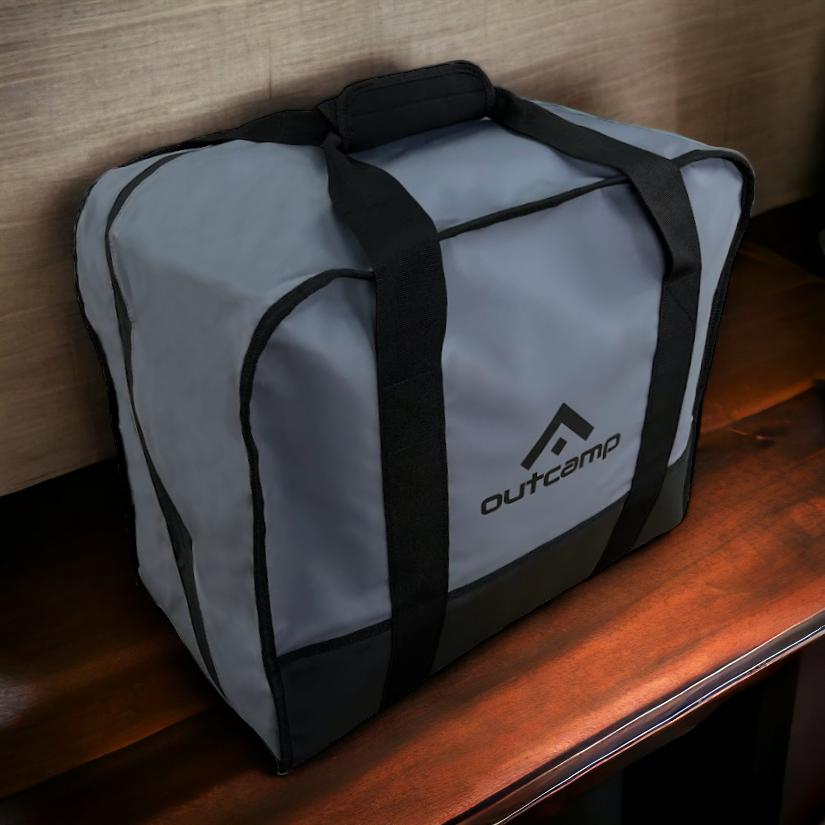
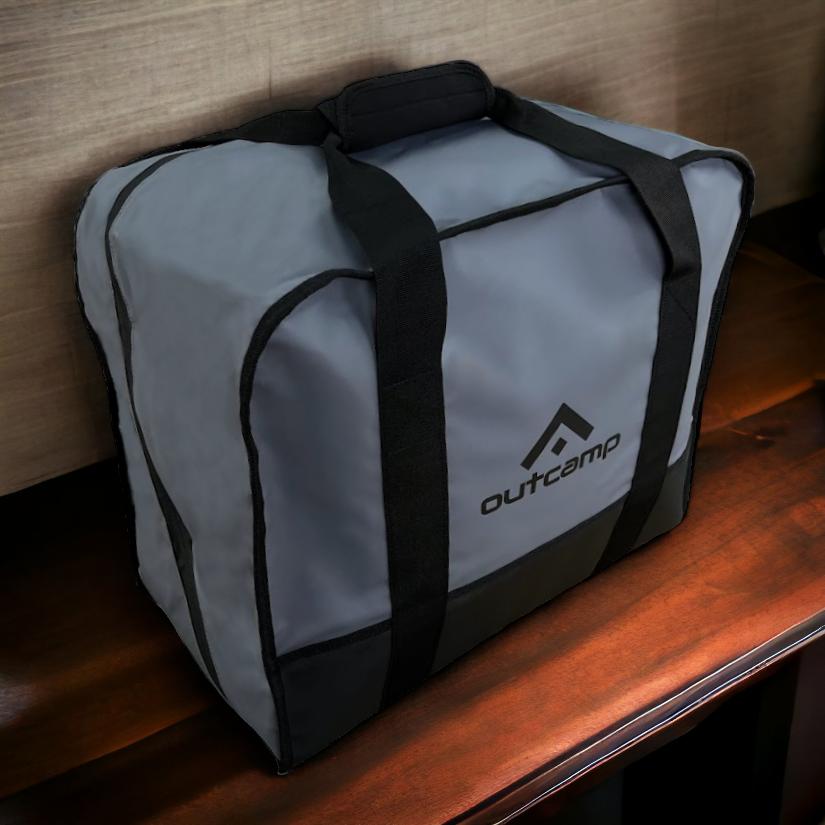
The Starlink Mini Travel Backpack (USB Charging Port & TSA Lock) becomes the production assistant's best friend for moving units between zones during build week, and the Starlink Mini Dish Protector Shield keeps mud and dust off the unit when it spends a week sitting in a paddock. When the festival ends, everything packs down into roadcases alongside the lighting and audio gear.
Building a Reliable Remote Venue Connectivity Stack
Once you have decided Starlink Mini is the right approach, the deployment details determine whether it works brilliantly or adequately. The gear that sits around the Mini matters as much as the Mini itself. Power, mounting, weather protection and network distribution all need to be thought through before the first guest arrives.
The following sections outline the decisions that separate a polished deployment from a rushed one. Most of the choices are one-off — made once when you first set up — and the payoff is years of trouble-free operation. Outcamp customers frequently report that their total cost of ownership over five years is a fraction of what they previously spent on unreliable 4G repeaters, mobile hotspots and frustrated staff hours.
Power planning for continuous operation
Starlink Mini is efficient, drawing between 20W and 40W depending on load, but a full day of continuous operation still adds up to roughly 500Wh of energy. For venues running off grid power, this needs to be planned properly rather than bolted on as an afterthought. A rushed power solution is the most common reason Starlink Mini deployments fail in the field.
For lodges and permanent installations, the Starlink Mini 20V Hardwired Power Socket with Integrated Voltage Booster wired directly into the property's 12V or 24V battery bank is the cleanest option. It avoids inverter losses, keeps the unit running through brief outages, and integrates with existing solar management systems. For staff who work across multiple sites, a Starlink Mini 12V to 30V Power Supply (Anderson Plug) ready-plugged into a portable battery delivers the same reliability in a transportable form.
For pop-up events, a Starlink Mini Portable UPS Power Supply (7-10 Hours) or a PeakDo LinkPower 2 Portable Power Bank (99Wh) gives a full day of autonomous operation without any cables leaving the production area. Crews running generators should add the PeakDo power bank or UPS anyway, because the inrush when a generator cycles can cause the Mini to reboot — five seconds of downtime is all it takes to drop a livestream.
Mounting for optimal sky view and security
Starlink Mini needs a clear view of the sky to perform at its best. In practice, this means getting it up off the ground and away from overhanging trees, marquees or canvas. The right mount makes the difference between consistent 150 Mbps and frustrating reconnections as the constellation shifts.
For permanent installations, the Starlink Mini Roof Rack Mount or a wall-mounted Starlink Mini Flat Mount with an unobstructed north-facing aspect works well. On vehicles serving as mobile venues — catering trucks, bar trucks, ticket booths — the Starlink Mini Magnetic Mount or MagLock Pro Magnetic Vehicle Mount provides fast attach-and-detach capability, letting the unit come inside overnight for security. For festival and event crews, the Starlink Mini Tripod Mount offers quick deployment on any flat ground, while the Starlink Mini Clamp on Universal Mount handles scaffold poles, fence rails and temporary truss work.
Security deserves thought too. A Starlink Mini left unattended in an event setting is a target. The Starlink Mini Stainless Steel Magnetic Mount offers strong retention that discourages opportunistic removal, and for high-risk urban pop-up events, keeping the Mini locked inside a vehicle with the Dashboard/Windscreen Starlink Mini Mount or Starlink Mini Suction Mount for Sunroofs and Windows gives workable sky view without exposure.
Weather protection and equipment longevity
Australian weather punishes equipment. Summer UV cracks plastics, coastal salt corrodes exposed metal, and tropical downpours test the waterproof rating of every connector. A Starlink Mini that lives outdoors needs more protection than it ships with, particularly at permanent lodge installations where the unit will see thousands of hours of exposure.
The Starlink Mini Silicone Cover reduces UV exposure significantly, extending the expected lifespan of a unit mounted in full sun. The Starlink Mini Dish Protector Shield adds physical protection against falling branches, hail and airborne debris at festival sites, and the Starlink Mini Clear Protective Cover keeps dust out of ventilation paths in arid venues. For any hardwired installation, the Gen 3/Mini SPX to RJ45 Waterproof Ethernet Adapter Kit and Gen 3/Mini Waterproof Connector Ethernet Cables seal the data path against moisture ingress — a small investment that prevents the most common failure mode for field-installed units.
For operators moving Minis between sites, the Starlink Mini Hard Protective Travel Case or Starlink Mini Travel Backpack (USB Charging Port & TSA Lock) is non-negotiable. A unit that gets dropped from a truck bed once can fail immediately or, more insidiously, develop intermittent faults that only show up when a site is full of guests. Good transport protection pays for itself the first time it prevents a write-off.
Conclusion
Events and eco-tourism in Australia have always traded proximity to infrastructure for proximity to experience. That trade used to come with an unspoken penalty — patchy connectivity that guests tolerated and operators apologised for. Starlink Mini has removed the penalty without touching the experience, letting businesses deliver genuine remoteness alongside genuine broadband.
The gear you pair with the Mini determines whether that promise survives contact with a real site. Power solutions that ride through generator cycles, mounts that survive a festival build, weather protection that handles a tropical summer, and transport cases that keep units intact between jobs all contribute to a system that is reliable enough to bet your reviews on. The Outcamp catalogue — from the Starlink Mini Explorer Bundle Pack right through to the Waterproof DC Wall Socket Passthrough — covers every layer of that stack.
Whether you are running a single remote cabin or a 30-unit festival production, the underlying question is the same: when a guest asks whether the WiFi works out here, do you want to say "usually", or do you want to say "always"? If the answer is the second one, have a look at the Starlink Mini accessories at outcamp.com.au and start planning the deployment that will keep your venue connected for the next decade.




Leave a comment (all fields required)