


Starlink Mini for Australian Maritime and Commercial Fishing: Reliable Connectivity from Port to Open Water
Australia's commercial fishing industry operates across some of the most remote and demanding waters on Earth. From prawn trawlers working the Gulf of Carpentaria to rock lobster boats off the Western Australian coast, these vessels spend days or weeks at sea with limited access to reliable communications. Traditional satellite phones and HF radio have long been the only options, and neither delivers the kind of bandwidth needed for modern fleet management, electronic reporting, or crew welfare.
Starlink Mini is changing that equation. Compact enough to mount on a vessel's cabin roof or radar arch, and capable of delivering high-speed internet across vast stretches of open water, the Starlink Mini gives commercial fishing operators and maritime businesses the connectivity they have been missing. Combined with the right mounting, power, and protection accessories from Outcamp, it becomes a genuinely practical solution for life and work at sea.
Why Maritime Operations Need Better Connectivity
The Australian maritime sector has operated with a significant connectivity gap for decades. While land-based industries have steadily improved their internet access, vessels operating beyond coastal mobile coverage have been stuck with expensive, low-bandwidth satellite services or unreliable radio links. This gap affects everything from safety reporting to business efficiency, and it has real consequences for both operators and crew.
Understanding why better connectivity matters at sea requires looking at how the industry has evolved and what modern maritime operations actually demand from their communications infrastructure.
The Limitations of Legacy Marine Communications
Traditional maritime communications revolve around VHF and HF radio, satellite phones, and legacy VSAT systems. VHF radio is reliable for short-range voice communication but offers nothing in the way of data transfer. HF radio extends that range but remains voice-only for practical purposes, and both are subject to atmospheric interference that can make critical communications unreliable at the worst possible times.
Satellite phones such as Iridium and Inmarsat units provide global coverage, but the data speeds are measured in kilobits per second. Sending a single high-resolution photograph can take minutes. Uploading electronic catch reports, downloading weather data, or making a video call to a marine biologist for species identification are either painfully slow or simply impossible. The cost per megabyte is also punishing, which means crews tend to ration their usage rather than communicating freely.
Legacy VSAT systems offer better bandwidth but come with equipment costs that run into tens of thousands of dollars, require professional installation, and demand significant deck space and power. For larger commercial vessels, VSAT can make sense. For the majority of Australia's commercial fishing fleet — which consists of smaller owner-operated boats — it has never been a realistic option. Starlink Mini fills this gap by delivering broadband-class speeds in a package that weighs under 1.1 kilograms and draws modest power.
Electronic Reporting and Compliance Requirements
Australian fisheries management has been moving steadily toward electronic reporting systems. The Australian Fisheries Management Authority and various state fisheries agencies now require or strongly encourage electronic logbooks, vessel monitoring systems, and catch documentation that needs to be transmitted digitally. These systems generate data that must be uploaded reliably and in a timely manner.
Without adequate connectivity, skippers face a difficult choice: store data locally and upload it when they return to port, which can mean delays of days or weeks, or attempt to transmit using slow satellite links that frequently time out mid-transfer. Neither approach serves the intent of real-time fisheries management, and both create compliance headaches. Reliable broadband at sea means electronic catch reports can be submitted as they happen, quota balances can be checked in real time, and regulatory communications flow smoothly in both directions.
Beyond basic compliance, better connectivity supports the kind of traceability and provenance documentation that premium seafood markets increasingly demand. Buyers in Japan, China, and Europe want to see chain-of-custody records, catch location data, and handling documentation that follows the product from ocean to plate. Being able to upload this information while the fish is still on ice — rather than days later in port — adds genuine commercial value.
Crew Welfare and Retention
Finding and keeping skilled crew is one of the biggest challenges facing the Australian commercial fishing industry. The work is physically demanding, the hours are long, and weeks spent at sea with no contact with family or friends take a genuine toll on mental health. Younger workers in particular expect to be able to stay connected, and the complete communications blackout that comes with most fishing trips is a significant deterrent to entering the industry.
Reliable internet access at sea changes the crew welfare equation fundamentally. Video calls home, streaming entertainment during downtime, and the ability to stay in touch with the outside world make extended trips more bearable. It sounds simple, but operators who have added Starlink connectivity to their vessels consistently report that crew morale improves and retention rates increase. In an industry facing chronic labour shortages, that is a meaningful competitive advantage.
There is also a safety dimension to crew welfare. Workers who are fatigued, isolated, or mentally struggling are more likely to make mistakes in a high-risk environment. Keeping crews connected is not just a comfort issue — it is a workplace health and safety consideration that responsible operators take seriously.
Mounting and Protecting Starlink Mini on Vessels
Marine environments are harsh on electronics. Salt spray, constant vibration, UV exposure, and the possibility of green water over the deck all present challenges that do not exist in land-based installations. Getting Starlink Mini mounted securely and protected properly is essential for reliable operation at sea.
Outcamp offers a range of mounting and protection solutions specifically suited to the demands of marine installations, from magnetic mounts for steel-hulled vessels to rail-clamp mounts for aluminium boats and protective covers that shield the dish from salt and impact damage.
Choosing the Right Marine Mount
The choice of mount depends on the vessel type, where you want to position the dish, and how permanent the installation needs to be. For steel-hulled commercial vessels, the Starlink Mini Magnetic Mount or the MagLock Pro Magnetic Vehicle Mount provide a strong, tool-free attachment that can be repositioned as needed. Magnetic mounts work well on cabin roofs, engine room hatches, and other flat steel surfaces where the dish has a clear view of the sky.
For aluminium vessels — which make up a large portion of Australia's commercial fishing fleet — magnetic mounts will not work. The Starlink Mini Marine Rail Mount (25-32mm) is designed exactly for this scenario, clamping securely to the stainless steel or aluminium rails, radar arches, and grab bars commonly found on fishing boats. It provides a secure attachment point that keeps the dish above the deck level where it gets the best satellite signal and stays clear of working areas where lines, nets, and catch are being handled.
Operators who want a more permanent installation can use the Starlink Mini Flat Mount, which bolts directly to any flat surface on the vessel. This works well on cabin roofs or purpose-built mounting platforms. For vessels that already have a radar arch or T-top, the Starlink Mini BullBar/Railing Mount or the Starlink Mini Clamp on Universal Mount provide secure attachment to existing structural elements without drilling or modification. Whichever mount you choose, the key consideration at sea is ensuring the dish has an unobstructed view of as much sky as possible while being positioned away from areas where it could be damaged by fishing gear or heavy seas.
Protecting Against Salt and Weather
Salt spray is the single biggest environmental threat to electronics at sea. Even when the Starlink Mini is not being hit by solid water, the constant mist of salt-laden air that pervades the marine environment will corrode connections and degrade equipment over time if left unprotected. Regular freshwater rinse-downs help, but additional protection makes a significant difference to equipment longevity.
The Starlink Mini Clear Protective Cover shields the dish from direct spray and impact while allowing the signal to pass through unimpeded. For rougher conditions, the Starlink Mini Silicone Cover provides a tighter-fitting protective layer that resists both salt and UV degradation. The Starlink Mini Dish Protector Shield adds impact protection for vessels operating in conditions where gear, ropes, or other equipment might strike the dish during heavy weather or active fishing operations.
Cable connections are another vulnerability point in marine installations. The Waterproof DC Wall Socket Passthrough allows you to run power cables through bulkheads and cabin walls while maintaining a watertight seal. For vessels with ethernet requirements — running a wired connection from the Starlink Mini to a chart plotter, onboard computer, or bridge workstation — the Gen 3/Mini SPX to RJ45 Waterproof Ethernet Adapter Kit and Gen 3/Mini Waterproof Connector Ethernet Cables ensure that data connections remain secure and corrosion-free even in the harshest marine conditions.
Portable Setups for Multi-Vessel Operations
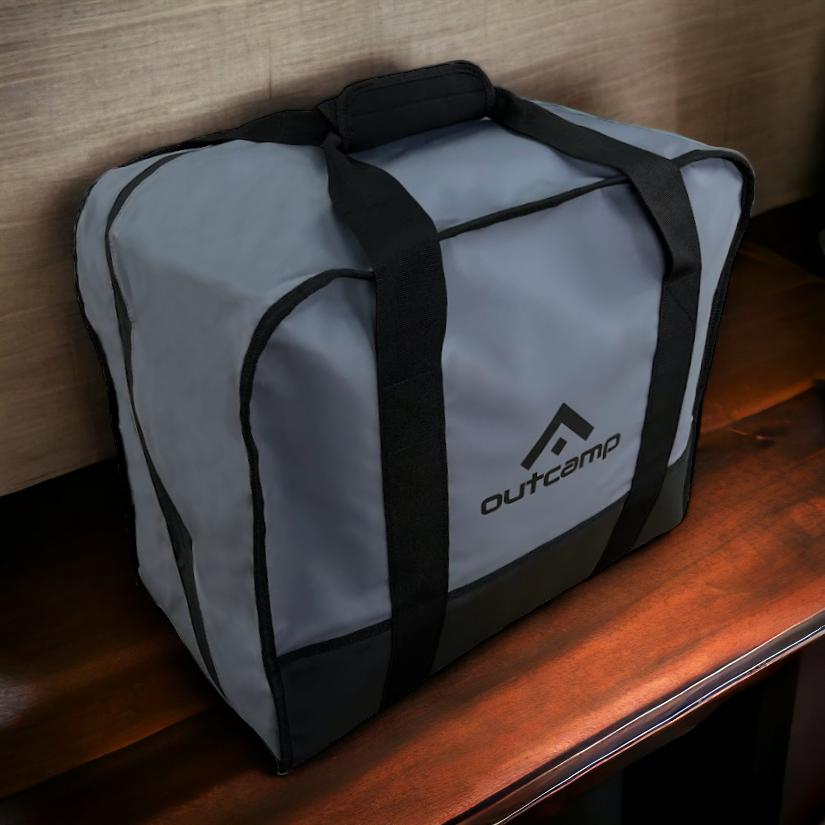
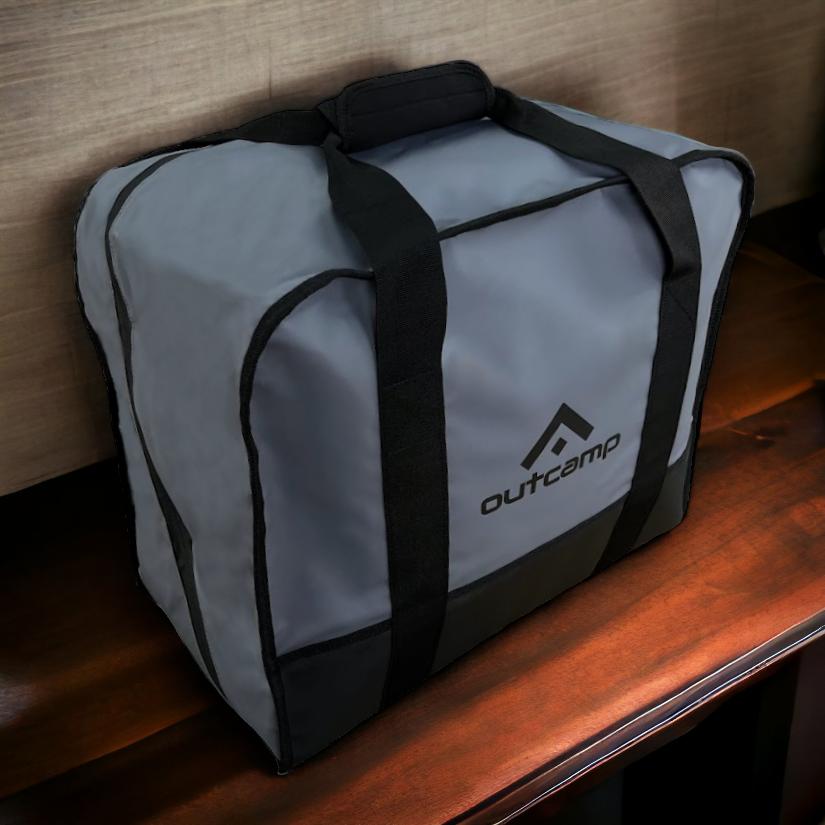
Many commercial fishing operators run more than one vessel, or alternate between different boats depending on the season and target species. In these cases, a portable Starlink Mini setup that can be moved between vessels is far more cost-effective than fitting dedicated equipment to each boat. The Starlink Mini Carry Bag provides padded protection for transport between vessels, while the Starlink Mini Hard Protective Travel Case offers rigid protection for rougher handling or storage in vehicle trays and tinnie floors.
The Starlink Mini Travel Backpack (USB Charging Port and TSA Lock) is another option for operators who fly between ports or travel commercially to meet their vessels. It keeps the entire Starlink Mini kit — dish, cables, and power supply — organised and protected in a single carry-on-compatible package. This kind of portability means a single Starlink Mini subscription can serve an operator who works across multiple vessels throughout the year.
For the quickest deployment on arrival, the Starlink Mini Explorer Bundle Pack includes everything needed for a complete portable setup. Paired with a magnetic or rail mount from Outcamp, an operator can have broadband internet running on any vessel within minutes of stepping aboard.
Powering Starlink Mini on Commercial Vessels
Power management on fishing boats is always a consideration. Vessels run their electronics off 12V or 24V DC systems, and adding another piece of equipment means understanding the power draw and ensuring the vessel's electrical system can handle it. Starlink Mini draws between 25 and 40 watts during normal operation, which is modest by marine electronics standards — roughly equivalent to a VHF radio on standby.
Outcamp's range of power solutions makes it straightforward to integrate Starlink Mini into virtually any vessel electrical system, whether you are working from a 12V tinnie or a 24V commercial trawler.
Hardwired 12V and 24V Solutions
For permanent or semi-permanent installations, a hardwired power connection is the most reliable approach. The Starlink Mini 12V to 24V Power Supply (Anderson Plug) converts standard 12V vessel power to the voltage Starlink Mini requires, and the Anderson Plug connection is a standard that most marine electricians and vessel operators already work with. For 24V vessels, the Starlink Mini 12V to 30V Power Supply (Anderson Plug) handles the higher input voltage.
The Starlink Mini Hardwire Power Cable (3.0M) provides a clean, direct connection that can be routed through cable conduits alongside existing wiring. For longer runs from the battery bank to the mounting position — common on larger vessels where the dish is mounted on a radar arch well above the engine room — the Starlink Mini DC Extension Cable extends the reach without voltage drop issues. The Starlink Mini 20V Hardwired Power Socket with Integrated Voltage Booster offers another permanent installation option, providing a dedicated power point that the Starlink Mini plugs into directly.
Cable management matters on working vessels. Loose cables are a trip hazard and a snagging risk around fishing gear. The Starlink Mini Anderson Plug to DC Power Cable (5.0M) provides enough length for most installations, while the Starlink Mini DC Power Cable with Anderson SB50 and 10A Fuse adds inline fuse protection — a sensible precaution on any marine electrical installation. Magnetic Cable Tie Mounts from Outcamp allow you to secure cables neatly to steel surfaces without drilling, which is particularly useful on vessels where you want to avoid penetrating the hull or cabin structure.
Portable Power for Smaller Vessels and Tinnies
Not every vessel has a robust electrical system or the space for a permanent installation. Smaller aluminium boats, tinnies, and runabouts used for inshore commercial fishing, aquaculture work, or port logistics often have minimal electrical systems beyond a basic cranking battery. For these vessels, portable power solutions make more sense.
The Starlink Mini Portable UPS Power Supply (7-10 Hours) provides enough runtime for a full day on the water without drawing from the vessel's starting battery. It charges overnight from shore power or a generator and provides clean, regulated power that protects the Starlink Mini from the voltage fluctuations common on smaller boat electrical systems. The PeakDo LinkPower 2 Portable Power Bank (99Wh) is a more compact option for shorter trips, fitting easily into a console storage compartment or tackle box.
For operators who already carry Makita or Milwaukee power tool batteries — common in the aquaculture and maritime maintenance sectors — the Starlink Mini Makita 18V Battery Connector and Starlink Mini Milwaukee 18V Battery Adapter let you power the dish directly from batteries you already own and carry. The PeakDo Power Dock for Makita takes this further by turning Makita batteries into a dedicated Starlink Mini power station. This approach eliminates the need for a separate battery or power supply entirely, using the tool batteries that are already part of your daily kit.
Vehicle-to-Vessel Power Transfer
Many commercial fishers drive to the boat ramp, launch their vessel, and fish within range of the ramp for the day before returning. In these scenarios, the Starlink Mini might serve double duty — providing internet in the work vehicle during the drive and then transferring to the vessel for the day on the water. The Starlink Mini Car Power Adapter (12V/24V to 20V DC) works in both the vehicle's cigarette lighter socket and a vessel's 12V accessory outlet, making the transition seamless.
The Starlink Mini Cigarette Lighter Power Supply (165W USB-C) provides another option that works across vehicles and vessels. The Starlink Mini 3-in-1 DC Power Cable (USB-C/DC/Cigarette Lighter) gives you maximum flexibility with three different connection options in a single cable, so you always have a way to power the dish regardless of what power outlets are available on the vessel you are boarding that day.
For operators running the Starlink Mini alongside other electronics — a tablet for electronic reporting, a phone for communications, and possibly a portable chart plotter — the 180W Fast Multi-Port Car Charger handles everything from a single 12V outlet. Keeping all your devices charged and running from one power point simplifies the electrical setup considerably, especially on smaller vessels with limited outlets.
Maritime Applications Beyond Fishing
While commercial fishing is the most obvious maritime application for Starlink Mini in Australia, the broader maritime industry presents equally compelling use cases. Aquaculture operations, port logistics, marine construction, charter services, and maritime research all benefit from reliable broadband connectivity on the water.
These sectors share the same fundamental challenge — the need for reliable data transfer in locations where traditional connectivity either does not exist or cannot deliver adequate bandwidth for modern operational requirements.
Aquaculture and Marine Farming
Australia's aquaculture industry is growing rapidly, with operations spanning salmon farming in Tasmania, prawn farming in Queensland, pearl farming in Western Australia, and oyster cultivation across multiple states. Many of these operations involve infrastructure anchored in remote coastal waters — sea cages, long lines, and floating platforms that need constant monitoring but sit well beyond mobile coverage.
Starlink Mini mounted on a farm tender vessel or service barge provides the connectivity needed to support remote monitoring systems, underwater camera feeds, environmental sensor data, and real-time stock management. Water quality parameters like temperature, dissolved oxygen, and salinity can be streamed to shore-based management teams continuously rather than being collected manually during periodic site visits. This kind of real-time data access improves stock health outcomes and enables faster response to environmental events like algal blooms or temperature spikes.
The Starlink Mini Marine Rail Mount (25-32mm) clamps securely to the rails and frames commonly found on aquaculture service vessels and feed barges. For floating platforms and pontoons, the Starlink Mini Flat Mount provides a permanent attachment point. The combination of a robust mount, a protective cover to handle the constant salt exposure, and a reliable power supply creates a low-maintenance connectivity solution that operates unattended for extended periods between service visits.
Port and Harbour Logistics
Even within port environments, connectivity can be patchy. Wharves, loading docks, and container yards often sit in mobile coverage black spots, particularly in regional ports. Work boats, tugs, pilot vessels, and harbour craft that operate across large port areas need reliable communications for coordination, safety reporting, and operational data transfer.
Starlink Mini provides port operators with a mobile connectivity solution that goes wherever the vessel goes, without depending on the port's fixed communications infrastructure. This is particularly valuable during peak loading periods, emergency responses, or when operating in areas of the port that are poorly served by existing WiFi or mobile networks. The Starlink Mini Suction Mount works well on the glass or smooth fibreglass surfaces common on modern harbour craft, providing a temporary but secure mounting option for vessels that do not need a permanent installation.
For port logistics companies managing multiple small vessels and work boats, the portability of Starlink Mini — especially when paired with the Starlink Mini Carry Bag — means a single unit can be deployed to whichever vessel needs it on any given day. This flexibility reduces the total cost of connectivity across a fleet of vessels that may not all be in service simultaneously.
Marine Research and Environmental Monitoring
Research vessels operating in Australian waters — from university survey boats to government fisheries research ships — generate enormous volumes of data. Acoustic survey data, water sampling results, species identification records, and oceanographic measurements all need to be transmitted to shore-based teams for analysis. Historically, this data has been stored on local drives and uploaded in bulk when the vessel returns to port, creating delays of days or weeks between data collection and analysis.
With Starlink Mini, research teams can stream data in near real-time, enabling shore-based analysts to review preliminary results and adjust the survey plan while the vessel is still at sea. This iterative approach to marine research is far more efficient than the traditional collect-and-return model. It also enables video consultation with specialists who can assist with species identification, equipment troubleshooting, or methodology adjustments without waiting for the vessel to return.
Environmental monitoring programs that deploy autonomous sensors, buoys, and underwater instruments also benefit from Starlink Mini connectivity on their service vessels. Being able to download data from instruments, reprogram sensors, and upload results during a single service visit — rather than making multiple trips — reduces operational costs and vessel time significantly. The Starlink Mini/Gen 3 Ethernet Adapter (4 Ports) allows direct wired connections to onboard scientific instruments and data loggers, providing the reliable, high-bandwidth link that these applications demand.
Getting Started with Starlink Mini at Sea
Setting up Starlink Mini for maritime use follows the same basic process as any other installation, with a few additional considerations specific to the marine environment. The key factors are choosing a mount that suits your vessel, protecting the equipment from salt and weather, and ensuring you have a reliable power connection that integrates cleanly with your vessel's electrical system.
Outcamp's range of marine-compatible mounts, protective covers, power supplies, and cables covers every common vessel configuration. Whether you are fitting out a 20-metre prawn trawler or adding connectivity to a 5-metre aluminium tender, the right combination of accessories ensures a reliable, low-maintenance installation.
For operators looking for the simplest possible setup, the combination of a Starlink Mini Explorer Bundle Pack with a Marine Rail Mount and a portable power supply gets you from unboxing to connected in under fifteen minutes. For permanent installations on larger vessels, a hardwired power supply, flat mount, and waterproof ethernet connections provide a robust, professional-grade setup that integrates seamlessly with existing marine electronics.
Australia's maritime industries deserve the same connectivity that land-based businesses take for granted. Starlink Mini, paired with the right accessories from Outcamp, finally makes that a reality — from the harbour to the horizon and everywhere in between. Browse the full range of Starlink Mini marine-compatible mounts, power solutions, and protective accessories at outcamp.com.au.




Leave a comment (all fields required)