


Smart Caravan Accessories for Long-Term Australian Travel: Power, Water and Comfort
Long-term caravanning across Australia is a different proposition to a weekend trip to a local campground. When you are travelling for weeks or months at a time — whether you are a grey nomad working your way around the country, a family doing a lap, or a couple chasing warm weather through the winter — the accessories you carry and how well they work together determines how comfortable and stress-free the experience is going to be.
The caravan accessories market has evolved enormously over the past decade, driven by travellers spending longer periods off-grid and demanding more from their setups. Solar, lithium power, smart water management, satellite connectivity and ergonomic living solutions have all improved dramatically. This guide covers the most impactful categories and what to look for in each, so you can build a setup that genuinely supports long-term travel rather than just getting through a weekend.
Caravan Solar and Power Management: The Foundation of Off-Grid Living
Nothing shapes the quality of your off-grid caravan experience more than your power system. A well-designed solar and battery setup means you wake up to fully charged batteries every morning, run your fridge, lighting, and devices all day without anxiety, and never need to rely on a noisy generator for basic power needs. Getting it wrong means rationing power, running generators at inconvenient hours, and constant concern about battery state.
For long-term Australian travel, a properly sized system typically includes rooftop solar, a quality MPPT charge controller, a lithium battery bank, and a battery management system that monitors and protects the whole setup. The good news is that Australia's solar resource is among the best in the world — even in winter, most parts of the country receive enough daily sun to keep a well-designed system comfortably topped up.
How Much Solar Do You Actually Need
The honest answer depends on your power consumption, but a useful starting point for a full-time travelling caravan is 300 to 600 watts of rooftop solar combined with 100 to 200 amp-hours of usable lithium capacity. A 12V compressor fridge running continuously in Australian summer temperatures is your biggest draw — typically 40 to 60 amp-hours per day. Add lighting, device charging, a CPAP machine, occasional microwave use, and you are probably looking at 80 to 120 amp-hours of daily consumption.
400 watts of solar on a well-oriented caravan roof will comfortably generate 150 to 200 amp-hours of charge on a good Australian winter day, and significantly more in summer. Panel tilt matters: a fixed flat-mounted panel loses efficiency compared to one that can be angled toward the sun, so some travellers invest in tilting solar frames or portable folding panels they can position optimally at camp.
MPPT Charge Controllers: The Brains of Your Solar Setup
An MPPT (Maximum Power Point Tracking) charge controller extracts significantly more energy from your solar panels than an older PWM controller — typically 20 to 30 percent more in real-world conditions. For a 400-watt solar system, that difference adds up to meaningful additional capacity every day. Victron Energy, Renogy, and Enerdrive all offer well-regarded MPPT controllers suitable for Australian caravan setups, with Bluetooth monitoring capability that lets you check your system performance from your phone.
Size your controller to handle at least 20 percent more than your current panel wattage, so you have room to expand the system without replacing the controller. A 40A MPPT unit gives you comfortable headroom for most caravan installations up to around 600 watts of panels.
Lithium vs AGM: Making the Right Battery Choice
If you are serious about long-term caravanning, lithium LiFePO4 batteries are now the clear choice over AGM for most travellers. They weigh roughly half as much as equivalent AGM capacity, can be discharged to 20 percent state of charge without damage (compared to 50 percent for AGM), charge faster, and last significantly longer — typically 3,000 to 5,000 charge cycles versus 300 to 500 for AGM. The higher upfront cost is offset by a much longer service life and the reduced weight, which matters enormously in a caravan context where payload is limited and tow vehicle fuel efficiency is affected by every kilogram.
Caravan Water Systems: Managing Your Most Critical Resource
Water management is one of the most practical challenges of long-term caravan travel, particularly in remote Australia where refilling opportunities can be hours apart. Most caravans come with standard fresh water tanks in the 80 to 120-litre range — adequate for a weekend trip, but tight for extended bush camping when you factor in cooking, drinking, washing, and basic hygiene.
Upgrading your water system for long-term travel involves thinking carefully about storage capacity, filtration, water pressure, and grey water management. Each of these elements can be improved with the right accessories, and together they transform the caravanning experience from something that requires constant logistical management into something that mostly just works.
Expanding Fresh Water Storage
An auxiliary water tank — either an underslung bladder-style tank fitted to the caravan chassis or a purpose-built rigid tank — can more than double your onboard water capacity. Many long-term travellers carry 200 to 300 litres of fresh water, which provides comfortable self-sufficiency for five to seven days of conservative use. When planning tank placement, weight distribution matters enormously — water weighs one kilogram per litre, so 200 litres adds 200 kg to your caravan. Work with your caravan manufacturer or a specialist to ensure any additional tanks are positioned within your payload limits and do not adversely affect tow ball weight or caravan stability.
Water transfer pumps and quick-connect fittings make it straightforward to fill your tanks from a tap, creek (filtered), or a portable water bladder when you find a good source. Reece Plumbing and specialist caravan accessory suppliers stock everything you need to plumb an auxiliary tank into your existing system.
Filtration: Drinking Safely on the Road
Town water quality varies enormously across Australia, and if you are collecting water from remote bore outlets or natural sources, filtration is not optional — it is essential. A quality inline filter system mounted inside the caravan, combined with a UV steriliser for biological treatment, gives you confidence in your drinking water regardless of source. The Millipore and Puretec ranges have good representation in Australian caravan and plumbing stores, and inline filter systems can usually be retrofitted without major modifications to your existing plumbing.
12V Pressure Pumps and Grey Water
A good 12V pressure pump is the quiet workhorse of any caravan water system. The right pump delivers consistent pressure for showers, kitchen use, and dish washing without hunting or surging. Jabsco, Shurflo, and Flojet are the brands most commonly fitted to Australian caravans and found in spare parts across the country — an important consideration when choosing a brand for long-term travel where serviceability matters.
Grey water management is an increasingly important consideration as more camping areas restrict or prohibit grey water discharge directly onto the ground. A grey water tank — either purpose-built or a removable portable unit — allows you to collect and carry grey water to designated dump points. This is now mandatory in some national parks and conservation areas, and caravanners who manage their grey water responsibly are welcomed at more sites.
Connectivity and Communication: Staying in Touch from Anywhere
One of the most significant changes in the long-term caravan travel experience over the past few years has been the dramatic improvement in connectivity options. Reliable high-speed internet is now accessible in remote parts of Australia that were previously limited to patchy 3G coverage at best, opening up remote work, video calls with family, streaming entertainment, and real-time weather and navigation data even in the outback.
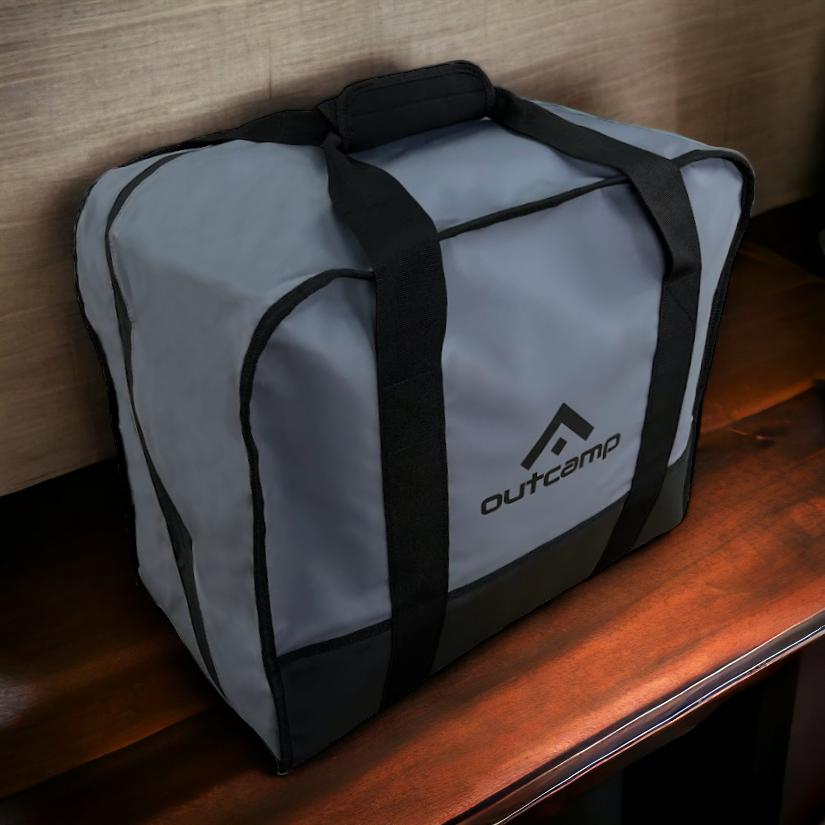
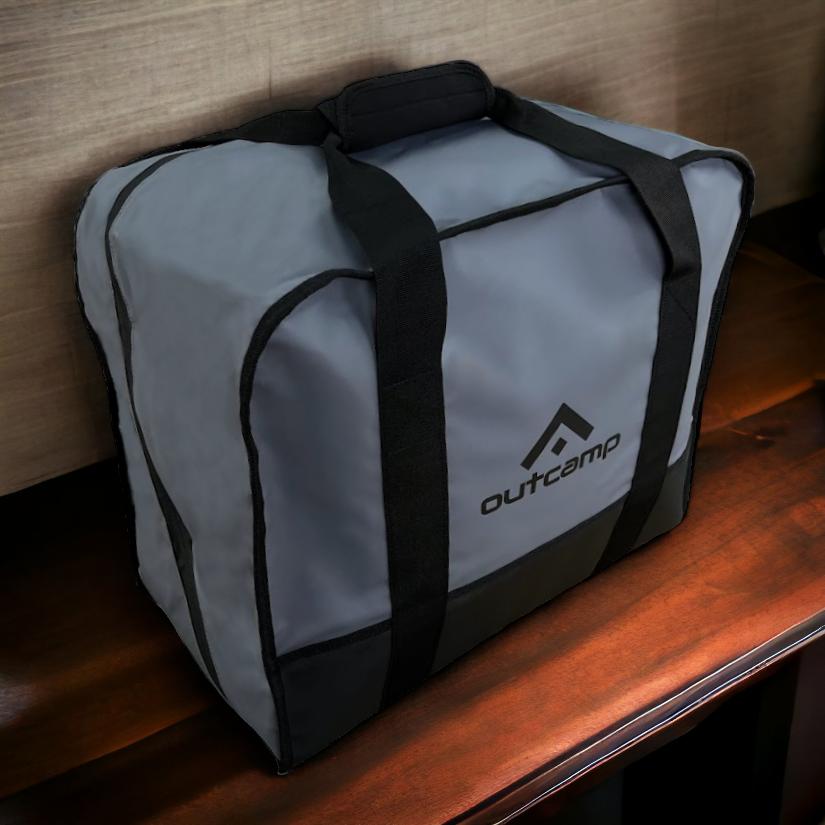
The two primary connectivity tools for serious caravanners are a Starlink satellite internet system and a 4G/5G mobile router with multiple carrier SIM support. Used together intelligently, these two technologies provide reliable connectivity across virtually all of Australia. Outcamp specialises in Starlink accessories and mounting solutions designed specifically for caravan and 4x4 use — from carry bags that protect your dish during travel to mounting systems that make setup and packdown fast and secure.
Satellite Internet for Caravans
Starlink Roam (formerly Starlink Portability) has transformed what is possible for long-term travelling Australians. With latency that supports video calls and speeds that handle streaming comfortably, Starlink brings genuine broadband connectivity to bush campsites, outback stations, and remote coastlines. The dish is compact, setup takes a few minutes once you have a good mounting solution, and the subscription cost, while not trivial, is manageable for travellers who would otherwise spend significant money accessing expensive remote area mobile data.
A good mounting solution — whether that is a roof rack mount, a free-standing tripod, or a purpose-built caravan pole mount — makes the difference between a system you use enthusiastically and one that sits in the boot because setup is too cumbersome. Outcamp's range of Starlink mounting accessories includes options for virtually every caravan configuration.
UHF CB Radio and Emergency Communication
A UHF CB radio remains essential for outback travel, particularly on unsealed tracks where two-way communication with other vehicles is a critical safety layer. Most road trains operating on outback highways monitor channel 40, and organised convoys use UHF for coordination. A quality in-vehicle UHF radio — not a handheld unit — provides significantly better range and clarity. GME, Uniden, and Oricom all manufacture reliable UHF CB radios well-supported across Australia.
Caravan Comfort Accessories: Making the Interior Work for Long-Term Living
A caravan that is comfortable for a week becomes less forgiving over months of full-time travel. The accessories that make the biggest difference to day-to-day comfort are often the least glamorous: good lighting, effective temperature management, quality bedding, and smart storage solutions that make organisation effortless rather than a daily battle.
LED strip lighting inside the caravan transforms the ambience of evenings in camp — warm white lighting in the living area combined with cooler functional lighting in the kitchen makes the space feel like a home rather than a vehicle. Dimmable LED strips are a relatively inexpensive upgrade with a significant impact on livability. Similarly, a quality 12V fan for hot nights — or a small portable air conditioner where power allows — is worth its weight on the Australian summer circuit.
Awnings and Outdoor Living Extensions
A full-length roll-out awning is arguably the single best livability upgrade for a caravan. It extends your usable living space, provides shade from the Australian sun, and creates shelter from light rain. Quality awnings from brands like Aussie Traveller, Dometic, and Fiamma are worth the investment for long-term travellers — cheaper awnings rarely cope well with extended use and variable conditions. Add a wind-out side wall and you have a proper outdoor room that can be used comfortably in most weather conditions.
An annexe — a fabric enclosure that attaches to your awning and caravan — takes this further, creating a shaded and enclosed space suitable for an extra sleeping area, a camp kitchen, or a workshop space. Grey nomads who spend weeks at a time in one location often set up a full annexe for the duration, transforming their campsite into something genuinely comfortable for extended stays.
Camp Kitchen and Outdoor Cooking
Outdoor cooking is central to the caravan experience, and the right camp kitchen setup makes it genuinely enjoyable rather than a compromise. A roll-out or slide-out camp kitchen — either factory-fitted or retrofitted in an external storage bay — provides a proper bench surface, storage for cooking equipment, and sometimes a built-in sink with its own water connection. Brands like PMX and Tentworld offer well-designed aftermarket options that suit most caravan storage bay configurations.
A quality portable BBQ or camp oven setup completes the picture. Whether you prefer a Weber Baby Q for its simplicity and consistent results, a Ziggy twin-burner for flexibility, or a traditional camp oven for slow cooking over coals, the caravan lifestyle is genuinely enriched by good outdoor cooking capability. Outcamp stocks a range of accessories and gear suited to the Australian caravanning lifestyle — worth exploring as you plan or refine your setup for the road ahead.




Leave a comment (all fields required)