


Starlink Mini Agriculture: Livestock Monitoring for Remote Australian Farms
Australia's agricultural sector operates across some of the most remote and demanding terrain on earth. From the vast cattle stations of the Kimberley to the sheep properties of the Riverina, reliable communications have always been a fundamental challenge for rural operations. When your livestock are spread across paddocks that can take hours to drive across and your nearest town is 200 kilometres away, getting timely data — from animal health alerts to weather station readings — used to mean waiting until someone physically visited the site.
Starlink Mini has changed the equation for Australian farmers and station managers. A compact, portable satellite internet terminal that can be powered from a 12-volt farm vehicle or solar installation, the Starlink Mini delivers broadband-quality connectivity wherever it can see the sky. For the agricultural sector, that means real-time access to livestock monitoring platforms, precision farming dashboards, remote weather stations, and digital record-keeping — all from locations that previously had no practical connectivity at all.
Why Livestock Monitoring Needs More Than a Phone Signal
Australia's major livestock-producing regions are notoriously patchy for mobile coverage. While carriers have expanded their rural footprints, the economics of providing 4G or 5G across millions of hectares of sparse pastoral land will never fully stack up. Many properties rely on unreliable 3G coverage that drops out when weather conditions change or demand in regional towns peaks. For livestock operations that depend on real-time sensor data, a dropped connection at the wrong moment can mean missed alerts about cattle in distress, water trough failures, or broken fences letting stock onto public roads.
The consequences are not just financial. When a mob of cattle loses access to water due to a pump failure and no alert reaches the station manager because the local mobile tower is congested, the welfare implications are serious. Satellite connectivity, with its independence from terrestrial infrastructure, eliminates this single point of failure. Starlink Mini, with its low-profile form factor and proven performance across regional Australia, has become the connectivity solution of choice for stations that need reliable uptime without the engineering complexity of fixed satellite dishes.
The Rise of IoT in Remote Livestock Management
Internet of Things (IoT) sensors for livestock management have matured significantly over the past five years. Modern livestock operations can now deploy ear-tag transponders that track individual animal locations, water trough level sensors that trigger pump controls remotely, and in-shed camera systems that feed into AI-based health monitoring platforms. The problem has never been sensor availability — it has been the backhaul connectivity needed to move data from the property to cloud platforms where farm managers and vets can act on it.
Starlink Mini solves the backhaul problem with a single terminal that can be mounted semi-permanently on a machinery shed, portable site office, or on a farm vehicle that patrols paddocks. With download speeds averaging 50–200 Mbps and upload speeds sufficient for streaming sensor data from dozens of simultaneous devices, the Starlink Mini handles the data loads that modern precision livestock management generates without breaking a sweat.
The practical benefit is immediate. A station manager overseeing 5,000 head of cattle across 300,000 hectares can review individual animal movement data, water point status, and pasture condition readings from a dashboard on their phone or laptop — whether they are at the homestead, in the paddock, or at a saleyards two hours away. That level of operational visibility was simply not achievable without reliable property-wide connectivity.
Water Infrastructure Monitoring Across Vast Properties
Water is the most critical asset on any Australian pastoral property. Remote water points — bores, tanks, and troughs spread across paddocks — are the difference between a productive season and a livestock welfare crisis. Until reliable connectivity arrived, many properties relied on weekly or fortnightly physical checks of these assets, often by helicopter or motorbike. A tank that ran dry between visits could cost thousands of dollars in stock losses and significant animal welfare consequences.
With a Starlink Mini connected to a LoRa gateway at the main homestead or a solar-powered remote site, stations can receive real-time level readings from water infrastructure across the entire property. When a solar pump fails or a trough depletes faster than expected during mustering, the alert reaches the manager's phone within seconds — not days. Maintenance crews can be dispatched with the right parts before losses occur.
For properties where solar power at the homestead is already established, connecting the Starlink Mini to the existing 12-volt system is straightforward using the Starlink Mini 12V to 24V Power Supply (Anderson Plug), which uses the Anderson plug connectors already standard on most Australian farm vehicles and solar installations. The result is a permanent, low-maintenance connectivity hub that keeps the property's monitoring network online around the clock without requiring generator fuel or grid power.
Connecting Remote Boundary Riders and Seasonal Workers
Large pastoral operations often run teams of boundary riders, mustering contractors, and seasonal workers who may be camped dozens of kilometres from the homestead for days at a stretch. Welfare and safety obligations for these workers have become a significant focus for large agricultural employers, particularly given increasing regulatory attention on mental health and lone worker safety in remote environments.
A Starlink Mini in the boundary rider's camp gives workers access to the same quality of internet connectivity as the homestead — video calls home, access to safety reporting apps, telemedicine consultations if needed, and the ability to receive updated mustering plans or weather forecasts in real time. For employers, it provides confidence that remote workers are connected and can summon help in an emergency without relying on a satellite messenger device alone.
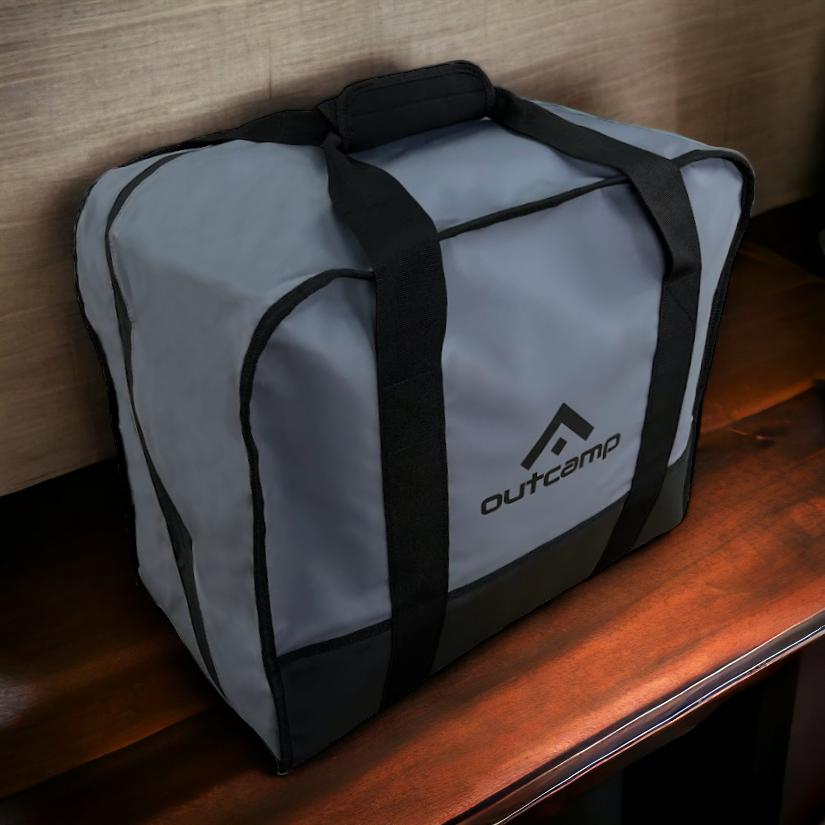
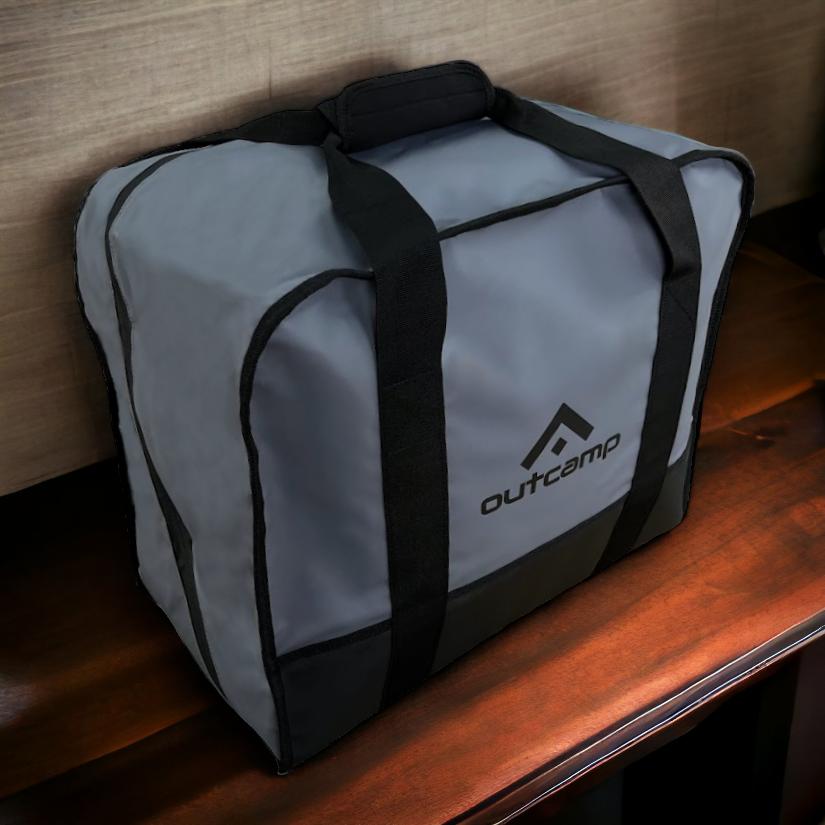
The Starlink Mini Portable UPS Power Supply (7-10 Hours) makes extended off-grid camp operation straightforward, providing all-night connectivity from a single charge without needing the camp's vehicle running. The Starlink Mini Carry Bag protects the terminal during transit in utes, on motorbikes, and in helicopter freight — the kind of rough handling that camp setups on working stations inevitably encounter.
Mounting Starlink Mini on Agricultural Vehicles and Infrastructure
Getting Starlink Mini deployed across a working property requires more than pulling the terminal out of its box. Agricultural environments are demanding — dust, vibration, rough terrain, and UV exposure challenge equipment not designed for the task. Choosing the right mounting solution determines whether the terminal performs reliably through a full working day or gets damaged at the first creek crossing.
Outcamp has developed a range of mounting solutions specifically suited to the agricultural context, designed for the vehicle types and installation environments most commonly found on working properties across Australia.
Rail Mounting for Tractors, Headers, and Agricultural Machinery
The most common mounting requirement on large properties is attaching a Starlink Mini terminal to the roll-over protection structure (ROPS), front loader frames, or auxiliary bars of agricultural machinery. These structures typically use round tubing in the 25–32mm diameter range — exactly what the Starlink Mini Agricultural Mount (25-32mm rail) is engineered for.
This mount clamps securely to round rail structures without drilling, meaning it can be transferred between machines as needed — from the tractor during seeding to the header at harvest to the farm ute during mustering season. The clamp design handles the vibration loads that agricultural machinery generates, and the pivot angle allows the dish to be positioned optimally regardless of how the rail is oriented on the machine.
For properties with multiple high-value machines that each need connectivity at different times of year, a single Starlink Mini terminal with the agricultural rail mount becomes a cost-effective shared connectivity solution. Rather than purchasing multiple fixed terminals, the mount allows the dish to move with the workflow — where the work is happening, the connectivity follows.
Powering Starlink Mini from Farm Vehicle Electrical Systems
Agricultural vehicles typically run 12-volt or 24-volt electrical systems. The Starlink Mini requires a 20-volt DC supply, which means a converter is needed when running from farm vehicle power. The Starlink Mini 12V to 30V Power Supply (Anderson Plug) is designed for exactly this purpose, with Anderson plug connectors that are already the standard connection format on most Australian farm vehicles, trailers, and portable power setups.
For semi-permanent installations on machinery sheds or irrigation pump stations, the Starlink Mini Hardwire Power Cable (3.0M) allows the terminal to be connected directly to the site's 12-volt supply with a clean, weatherproof installation. The cable provides sufficient reach to route from a junction box to a roof or wall-mounted dish without awkward cable runs. For stations that already run Makita batteries across their tool fleet — extremely common in agricultural and station settings — the Starlink Mini Makita 18V Battery Connector provides a useful portable power option that uses battery infrastructure already on the property.
For the most demanding mobile applications, where the Starlink Mini needs to operate continuously from a vehicle on long paddock runs, the Starlink Mini DC Extension Cable provides the additional cable reach needed to route the power connection cleanly around the vehicle without straining the terminal's built-in cable. Combined with the agricultural rail mount, the result is a fully integrated vehicle connectivity solution that can operate reliably for a full working day on farm vehicle power.
Protecting Equipment in Harsh Australian Conditions
Agricultural environments expose equipment to dust, mud, moisture, and impact in quantities that exceed what most electronics are designed to handle. The Starlink Mini's standard form factor provides reasonable weather resistance, but additional protection is worthwhile on working properties. The Starlink Mini Silicone Cover provides a layer of impact and abrasion resistance without impeding the dish's function, while the Starlink Mini Dish Protector Shield guards against direct debris impact during transport or when the terminal is parked between uses.
For situations where the terminal needs to travel between multiple sites — carried in a ute toolbox, a helicopter freight pod, or on a motorbike — the Starlink Mini Hard Protective Travel Case provides the most comprehensive protection. The rigid case allows the terminal to be transported alongside farm equipment without risk of damage, and the moulded interior keeps the dish, power supply, and cables organised and ready to deploy quickly when needed on site.
Protecting the terminal is not just about avoiding the cost of replacement hardware. A Starlink Mini that is out of service because of physical damage takes the property's entire connected monitoring network offline with it. Investing in appropriate protective equipment is part of treating the Starlink Mini as the critical infrastructure it has become on forward-thinking agricultural operations.
Precision Farming Data Connectivity Beyond Animal Monitoring
The connectivity that Starlink Mini provides to remote agricultural locations extends well beyond livestock monitoring. The same terminal that streams livestock sensor data can simultaneously host the connectivity needed for precision farming applications that are increasingly being adopted across Australian broadacre operations.
Precision agriculture tools — drone survey platforms, variable rate application systems, and yield mapping headers — generate large volumes of data that need fast, reliable upload paths to cloud processing platforms. Without on-property broadband connectivity, managing this data requires physically transporting storage media back to town, adding days of delay between data collection and actionable insight.
Uploading Drone Survey Data from Remote Paddocks
Drone surveys for crop health mapping, irrigation efficiency analysis, and vegetation monitoring are now standard practice on forward-thinking Australian agricultural operations. The raw data from agricultural drone surveys — typically large multispectral or LiDAR datasets — needs to be transferred to cloud processing platforms quickly to deliver timely insights. Without on-property connectivity, this has meant driving storage drives hours back to the homestead or nearest town before processing can begin.
With Starlink Mini providing upload speeds of 10–50 Mbps from remote paddock locations, survey data can be uploaded directly to processing platforms immediately after a flight — while still in the field. This reduces the time between survey and actionable insight from days to hours, which is critical during fast-moving crop disease outbreaks or irrigation failures where early intervention determines the financial outcome.
The same Starlink Mini that handles drone data uploads during the day can host video calls between the farm manager and a remote agronomist reviewing the results, sharing maps and annotations in real time. The ability to bring specialist expertise onto the property virtually — without the cost and delay of a physical site visit — is one of the most underrated benefits of reliable remote connectivity.
Remote Management of Irrigation Infrastructure
Irrigation management is one of the highest-value applications for real-time connectivity on irrigated properties. Modern irrigation management platforms can adjust valve positions, pump speeds, and irrigation schedules remotely based on soil moisture readings, weather data, and crop water use models. These platforms need a reliable data connection to the field sensors and control hardware to function — and that connection has historically been the weakest link in the system.
Starlink Mini provides the backhaul connectivity for irrigation control systems on properties where mobile coverage is insufficient or nonexistent. The terminal can be installed at a pump station or irrigation control point and connected to the site's local control network via wired Ethernet using the Gen 3/Mini SPX to RJ45 Waterproof Ethernet Adapter Kit, ensuring that critical irrigation infrastructure remains connected regardless of mobile coverage conditions.
For properties that run automated irrigation across multiple paddocks simultaneously, the ability to monitor and adjust from a laptop or tablet anywhere on the property — or from home when checking conditions overnight — reduces the labour cost of irrigation management significantly. Fewer manual site visits, faster response to equipment faults, and the ability to fine-tune application rates based on real-time data all contribute to better water use efficiency and crop outcomes.
The Financial Case for Starlink Mini in Australian Agriculture
Agricultural businesses operate on tight margins with significant exposure to weather, commodity prices, and input costs. The cost of any connectivity solution needs to be justified against measurable operational benefits — and for Starlink Mini, the business case in agriculture is compelling when examined honestly.
A single livestock welfare event — a mob of cattle lost to dehydration due to a bore pump failure discovered too late — can cost more than the annual plan cost of a Starlink Mini subscription combined with the Outcamp accessories needed to deploy it properly. Real-time monitoring of critical water infrastructure effectively pays for itself the first time it prevents such an event. For crop operations, the ability to upload drone data from the field and sync machinery data in real-time reduces the skilled labour hours required to manage data logistics — time better spent on decision-making than on driving storage drives to town.
The Starlink Mini Explorer Bundle Pack from Outcamp provides a practical starting point for properties looking to deploy a complete mobile connectivity solution — terminal protection, power cabling, and mounting hardware in a single package suited to the demands of working agricultural environments. For properties with more specific requirements, individual components from Outcamp's agricultural accessory range can be combined to build a setup tailored to the specific vehicles and infrastructure already on the property.
Conclusion: Satellite Connectivity Is Now Agricultural Infrastructure
Starlink Mini agriculture applications are proving transformative for Australian livestock and crop operations. The ability to deploy broadband-quality satellite internet to any point on a remote property — from the homestead to a remote bore site to a boundary rider's camp — changes the economics and practicality of precision livestock management, precision farming data workflows, and remote workforce connectivity fundamentally.
The shift from periodic manual inspection to continuous digital monitoring is not just a technology upgrade — it is a structural change in how Australian agricultural businesses can operate. Stations that previously needed large workforces to physically monitor water points, livestock movements, and machinery performance can now achieve comparable oversight with fewer people and better information. In an environment of persistent rural labour shortages, that operational leverage matters.
For Australian farmers and station managers exploring how to integrate Starlink Mini into livestock monitoring setups, precision farming operations, or remote site connectivity, Outcamp's range of agricultural mounts, Anderson plug power adapters, protective cases, and cabling solutions provides everything needed to deploy with confidence. The right accessories make the difference between a terminal that performs reliably in the field and one that ends up back in the shed after the first wet-season run. Explore the full Outcamp Starlink Mini agricultural accessory range to find the configuration suited to your property and machinery.




Leave a comment (all fields required)