


If you've ever lost mobile coverage halfway down the Gibb River Road or somewhere deep in the Flinders Ranges, you know the particular helplessness of a silent phone screen in the middle of nowhere. Australia has more remote land than almost any other country on earth, and despite billions spent on tower infrastructure, the cellular dead zone problem isn't going away any time soon — at least not through ground-based means.
That's about to change in a significant way. Starlink's Direct to Cell technology is now live in Australia through Telstra, with Optus not far behind, and the roadmap ahead includes voice calling and data services that could fundamentally reshape how Australians connect in the bush. Here's what's actually happening, what it means for your next camping trip or caravan adventure, and how it compares to the Starlink dish setup you might already be running on your 4WD or caravan.
What Is Starlink Direct to Cell and How Does It Work in Australia?
Starlink Direct to Cell is a satellite-to-mobile technology developed by SpaceX that allows standard LTE smartphones to connect directly to Starlink satellites orbiting roughly 550 kilometres above the earth — no dish, no additional hardware, no new subscription required. The satellites act as floating mobile towers in the sky, broadcasting signal to compatible handsets just as a ground-based tower would, except the coverage spans the entire continent rather than a 15-kilometre radius around a rural town.
The technology is built into Starlink's second-generation satellites, which carry additional payloads designed to communicate with the LTE band frequencies your existing smartphone already uses. SpaceX launched enough of these satellites throughout 2024 to reach operational coverage across Australia, making the country one of the first in the world to see commercial deployment.
How your phone connects without any new hardware
Your phone doesn't know the difference between a terrestrial tower and a Starlink satellite — both broadcast LTE signals on frequencies your handset already understands. When you're out of range of every ground-based tower, the Starlink constellation overhead picks up the gap. The satellite identifies your carrier, routes your message through the SpaceX ground network, and delivers it to the recipient just like any other text would.
The key point is compatibility. If you're running an iPhone 14 or later, a Samsung Galaxy S21 or newer, a Google Pixel 9, or most other modern Android flagships, your phone is already capable of connecting to the service. Activation happens through your carrier — there's nothing to configure on your end. Telstra is currently live in Australia with Optus following, and the service works on mainland Australia and Tasmania, excluding the Australian Radio Quiet Zone in the mid-west of Western Australia near the Murchison Radio-astronomy Observatory.
What's available now and what's on the roadmap
As of mid-2025, Telstra launched Australia's first commercial satellite-to-mobile product, with SMS messaging available to customers on compatible Samsung Galaxy S25 handsets initially, followed by broader device rollout including iPhones and other Android devices. Telstra's trial phase saw more than 55,000 test messages sent successfully before the commercial launch, validating the technology's reliability across Australian conditions.
Voice calling and data services are the next two phases. Voice is expected to arrive eventually but will likely take until 2027 given the additional engineering complexity. Low-speed data — enough for weather updates, messaging apps, and basic mapping — follows after that. The trajectory is clear: this technology is going to get significantly more capable over the next two to three years, and Australian campers and remote travellers are among those best placed to benefit.
What Starlink Direct to Cell Means for Off-Grid Camping and 4WD Travel
Australia's remote areas have always been the ultimate test of any communication system. Telstra's mobile network is the most extensive in the country, yet the vast majority of the continent by area remains uncovered. Venture more than 50 kilometres off the main highways in most states and you're operating without a phone signal. For camping and 4WD drivers, that's been a fact of life for as long as people have been heading bush.
Direct to Cell changes that equation materially. For the first time, a standard smartphone in your pocket becomes a satellite communicator without any additional gear — no separate PLB, no dedicated satellite messenger device, and no dish to set up. The implications for everyday remote travel are significant, even if the current capabilities are still limited to text messaging.
Safety in genuine dead zones across remote Australia
Being able to send an SMS when you're bogged in a dry creek bed 200 kilometres from the nearest town — without needing a separate device — is a real improvement over the current situation. If someone in your party is injured, you can get a message out. If a storm rolls in and you need to change your planned route, you can let your contact person know. If a vehicle problem means you're going to be late reaching your next point, a simple text prevents an unnecessary callout.
Direct to Cell won't replace a registered PLB for life-threatening emergencies where you need emergency services to locate you precisely. But it fills a large gap in the middle ground — situations that are serious enough to need communication but not quite at the level of a distress beacon activation. That middle ground describes the majority of remote travel incidents in Australia.
Direct to Cell versus your dish-based Starlink setup
If you're already running a Starlink Flat High Performance dish, a Starlink Mini, or a Roam plan from your caravan or 4WD, Direct to Cell is a very different product and the two are not competing with each other. Your dish-based setup delivers genuine broadband — measured in tens or hundreds of megabits per second, with latency low enough for video calls, remote work, live streaming, and everything else you'd expect from a home internet connection. Direct to Cell, in its current form, provides SMS messaging as a communication and safety layer.
Think of them as complementary rather than interchangeable. Your Outcamp-mounted Starlink setup handles the heavy lifting when you're set up at camp or driving with power available. Direct to Cell keeps your phone connected at a basic level even when the dish is packed away, your battery bank is running low, or you've stopped somewhere unexpectedly. For serious remote travellers, both together is the most robust connectivity configuration available today.
How caravan travel changes as the service evolves
When voice calling arrives via Direct to Cell, the everyday experience of extended caravan travel changes considerably. Grey nomads doing a lap of Australia will be able to make and receive calls from places that previously required an expensive satellite phone or going without. Families travelling with kids will be able to stay properly connected with people back home. Tradies working on remote mine sites or rural properties will have a genuine phone fallback rather than relying solely on radio or PLBs.
Low-speed data extends this further — weather radar updates before a river crossing, emergency flood alerts, messaging apps while driving between campsites, and the ability to check whether that campsite at the end of a rough track has space before you drive three hours to find out. None of that requires high-speed broadband. It just requires a data connection that exists somewhere in the outback, and Direct to Cell will eventually provide exactly that.
The Australian Carrier Landscape: Telstra, Optus, and What Comes Next
Starlink's Direct to Cell reaches Australians through their existing mobile carriers rather than as a direct SpaceX product. The satellite infrastructure is SpaceX's, but the service appears on your Telstra or Optus plan just like any other coverage extension.
Telstra moved first, launching commercially in 2025 after an extended testing period. The initial rollout focused on Samsung Galaxy S25 devices, with Apple and other Android handsets following in subsequent months. Telstra's coverage for satellite messaging extends across mainland Australia and Tasmania, with the single exclusion zone in Western Australia's radio-quiet zone around Murchison.
Optus and the delayed rollout
Optus signed its Direct to Cell agreement with SpaceX in 2023 with plans for a 2024 launch. That timeline was pushed back after SpaceX encountered regulatory hurdles in the United States that affected the broader international carrier deployment schedule. Optus has confirmed the partnership remains active, though a specific launch date has not been publicly confirmed.
For most Australian remote travellers, Telstra is the practical first choice given its existing regional network superiority. But Optus's eventual arrival will give the substantial share of Australians on Optus plans access to the same satellite messaging capability, and competition between the two is likely to keep the service accessible rather than expensive.
The broader global picture and what it means locally
SpaceX has signed Direct to Cell carrier agreements with more than 60 operators globally, including T-Mobile in the United States, Rogers in Canada, KDDI in Japan, and a growing list across Europe, Latin America, and Asia-Pacific. Australia is one of the leading markets by meaningful coverage extension given the size of the country relative to its terrestrial network.
TPG Telecom, which operates the Vodafone brand in Australia, has not yet announced a Direct to Cell partnership with SpaceX. Given the global momentum, it would be a reasonable expectation that additional Australian carriers will join the program within the next few years, eventually making satellite-to-phone connectivity a standard feature of any Australian mobile plan.
Conclusion
The arrival of Starlink Direct to Cell in Australia marks the beginning of a genuine transformation in how Australians stay connected in remote areas. For the first time, a standard smartphone can reach the outside world from almost anywhere on the continent — no separate satellite communicator required, no new hardware to purchase, and no additional subscription beyond your existing mobile plan. For campers, caravanners, and 4WD drivers who spend time beyond the reach of terrestrial towers, that's a meaningful shift.
The technology is still in early stages, and it will be a while before voice calling and data services become available here. But the direction is clear: satellite connectivity is becoming an integrated feature of mainstream mobile networks rather than a specialist product for a niche audience. Australia, with its vast outback and persistent coverage challenges, stands to benefit more from this shift than almost any other country.
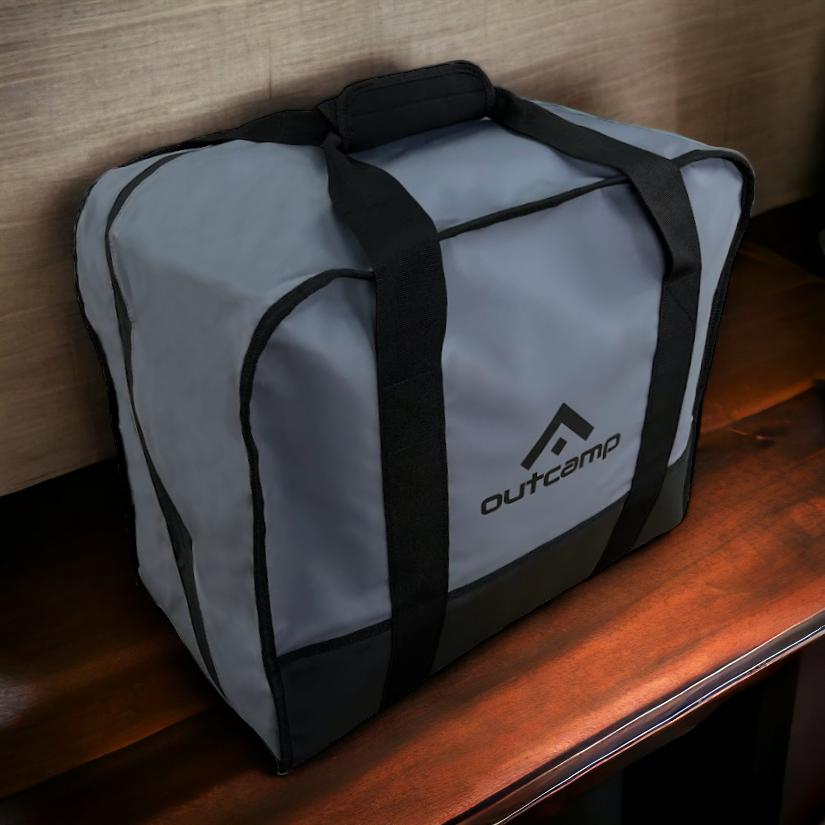
For anyone heading into remote country now, a dish-based Starlink setup remains the right choice for reliable broadband — and Outcamp's range of carry bags, vehicle mounts, cables, and power solutions makes it straightforward to run Starlink properly from a 4WD or caravan. As Direct to Cell matures and adds voice and data capability over the coming years, the two systems together will give Australian adventurers a level of connectivity that simply wasn't achievable before.




Leave a comment (all fields required)