


Powering Starlink Mini Off-Grid: 12V, Battery and Portable Power Solutions for Remote Australian Worksites
Reliable satellite internet means nothing if you cannot keep the dish running. For thousands of Australian workers operating in locations where mains power is a distant luxury — remote mine camps, pastoral stations, construction laydowns, forestry coupes, and emergency staging areas — the challenge is not whether Starlink Mini can deliver usable internet. It clearly can. The real question is how you keep it powered, consistently and safely, using whatever energy source the worksite already provides.
Starlink Mini draws roughly 25–40 watts under normal operating conditions, which is modest by modern electronics standards but still enough to flatten a poorly managed auxiliary battery in a matter of hours. Choosing the right power solution means matching your energy source — whether that is a vehicle's 12V system, a portable lithium battery, a tool battery you already carry, or a dedicated UPS — to the duty cycle your work demands. Get this right, and Starlink Mini becomes a set-and-forget connectivity backbone. Get it wrong, and you are left with a flat battery, no internet, and a long drive back to town.
Understanding Starlink Mini Power Requirements on the Worksite
Before selecting a power solution, it pays to understand what Starlink Mini actually needs. The dish operates on a USB-C Power Delivery input and requires a stable voltage supply — typically around 20V at up to 2A — to function correctly. Standard 5V USB chargers will not work. This is where purpose-built power converters and cables become essential, particularly on worksites where the available power source is a vehicle battery, a generator output, or a portable power station.
Ambient temperature also plays a role. In the Australian outback, summer surface temperatures regularly exceed 45 degrees Celsius, and Starlink Mini will draw additional power to manage its internal thermals. Winter mornings in alpine forestry areas or southern construction sites can see the dish pulling extra wattage during its boot-up heating cycle. A power solution that works perfectly in mild conditions may struggle at the extremes, so building in headroom is always the smart approach.
Typical Power Draw Across Work Scenarios
In a stationary deployment — say, a site office demountable on a remote construction project — Starlink Mini will settle into a steady draw of around 25 to 30 watts once it has acquired satellites and stabilised. This is a manageable load for most 12V auxiliary battery systems, provided the battery has reasonable capacity and is being topped up by solar, a DC-DC charger from the vehicle alternator, or a generator.
Mobile deployments are different. If you are running Starlink Mini from a ute tray while moving between paddocks on a grazing property, or powering it from a survey vehicle parked at a new location each day, the power draw pattern becomes more intermittent. Each time the dish restarts, it goes through a boot and satellite acquisition phase that can spike draw above 40 watts for several minutes. Frequent moves mean frequent restarts, so your power supply needs to handle these spikes without voltage sag.
For extended off-grid deployments — emergency response camps, week-long environmental monitoring stations, or fly-in mine exploration camps — the total energy budget over 24 hours matters more than peak draw. At an average of 30 watts, Starlink Mini consumes roughly 720 watt-hours per day. That is the number your battery bank, solar array, or generator runtime needs to cover with margin to spare.
Why Voltage Conversion Matters
Most Australian work vehicles run a 12V electrical system, though many heavy vehicles, mining trucks, and some agricultural machinery use 24V. Starlink Mini needs approximately 20V delivered via USB-C PD or a DC barrel connector. Feeding it raw 12V will not work — the voltage is too low. Feeding it unregulated 24V risks damage. A quality voltage converter that accepts a range of input voltages and delivers a clean, stable output is not optional; it is the foundation of any reliable off-grid Starlink installation.
The Outcamp Starlink Mini 12V to 24V Power Supply (Anderson Plug) handles this conversion cleanly, accepting 12V input from a standard auxiliary battery and stepping it up to the voltage Starlink Mini requires. For vehicles running 24V systems, the Starlink Mini 12V to 30V Power Supply (Anderson Plug) provides a wider input range that accommodates both 12V and 24V platforms without swapping hardware. Both units use Anderson Plug connectors, which are the de facto standard on Australian work vehicles and portable power systems.
For operators who prefer a direct connection without Anderson Plugs, the Starlink Mini Car Power Adapter (12V/24V to 20V DC) offers a compact converter that plugs into the vehicle's accessory circuit. It is a clean solution for utes and 4x4s where the Starlink Mini is a semi-permanent fixture rather than a daily setup-and-pack routine.
Vehicle-Based Power Solutions for Mobile Workforces
The majority of remote Australian workers already have a capable power source sitting right under the bonnet. A running vehicle alternator can comfortably supply the modest draw Starlink Mini demands, and even a stationary vehicle with a well-maintained dual-battery system can keep the dish running for a full workday without breaking a sweat. The key is connecting Starlink Mini to that power source efficiently and safely.
Outcamp's range of vehicle power products is designed specifically for this use case — getting clean, regulated power from a vehicle's electrical system to Starlink Mini with minimal fuss and maximum reliability. Whether you are hardwiring into an auxiliary battery, tapping into an Anderson Plug outlet on the tray, or simply using the cigarette lighter socket, there is a purpose-built solution that avoids the bodgy adapters and voltage issues that plague improvised setups.
Anderson Plug and Hardwire Solutions
On well-equipped work vehicles — mining light vehicles, agricultural utes, emergency service trucks — Anderson Plug outlets are standard. The Starlink Mini Anderson Plug to DC Power Cable (5.0M) provides a direct, five-metre run from the Anderson outlet to the dish, which is enough length to route through a canopy, along a roof rack, or down from a bull bar mount without cable tension. Paired with the appropriate voltage converter, this is the cleanest vehicle-based power setup available.
For permanent installations where Starlink Mini lives on the vehicle full-time, the Starlink Mini Hardwire Power Cable (3.0M) allows direct connection to the vehicle's wiring loom. This approach eliminates plug-and-unplug cycles, reduces connection points that can corrode or vibrate loose on rough tracks, and keeps the installation looking professional. It is the preferred approach for fleet vehicles where the dish stays mounted and operational whenever the vehicle is in use.
Heavy-duty applications — think mine site light vehicles that cop serious vibration and dust — benefit from the Starlink Mini DC Power Cable with Anderson SB50 & 10A Fuse. The SB50 connector is rated for higher current applications and provides a more secure mechanical connection than standard Anderson Plugs, while the integrated fuse protects both the vehicle's electrical system and the dish from fault conditions. For operators managing a fleet of vehicles with Starlink Mini installations, the Starlink Mini Dual DC to DC Power Cable offers a split output that can power the dish and charge a secondary device simultaneously from a single power source.
Cigarette Lighter and USB-C Options
Not every vehicle has Anderson Plug outlets fitted, and not every operator wants to commit to a hardwired installation. For these situations, the Starlink Mini Cigarette Lighter Power Supply (165W USB-C) provides a plug-and-play solution that works in any vehicle with a standard 12V accessory socket. At 165 watts, it delivers more than enough power for Starlink Mini with headroom for charging a laptop or phone simultaneously.
The Starlink Mini 3-in-1 DC Power Cable (USB-C/DC/Cigarette Lighter) takes versatility further by providing three connection options in a single cable. This is particularly useful for contractors who move between different vehicles — a personal ute during the week and a company truck on weekends, for example — without needing to carry multiple cables and adapters. One cable covers every common vehicle power outlet.
For operators who want a dashboard-friendly setup with voltage monitoring, the Starlink Mini Dual USB Car Charger with DC Cable & Voltmeter adds real-time voltage readout so you can keep an eye on your auxiliary battery health while Starlink Mini is drawing power. This is a small but valuable feature on worksites where battery management is critical — nobody wants to discover their starting battery is flat at the end of a long shift in a remote paddock.
Portable and Battery-Based Power for Maximum Flexibility
Vehicle-based power works brilliantly when the vehicle is nearby, but many remote work scenarios require Starlink Mini to operate independently — set up on a tripod at a survey point, mounted on a temporary mast at a bushfire staging area, or positioned on the roof of a demountable site office that has no vehicle parked alongside it. For these deployments, portable battery power is the answer.
The portable power category has matured rapidly, and there are now purpose-built solutions that pair specifically with Starlink Mini's power requirements. These range from compact power banks that give you a few hours of runtime to dedicated UPS units that can keep the dish running overnight without intervention.
Dedicated UPS and Power Bank Solutions
The Starlink Mini Portable UPS Power Supply (7-10 Hours) is purpose-built for extended off-grid Starlink operation. With seven to ten hours of runtime depending on conditions and draw, it covers a full workday of satellite internet without needing any other power source. For emergency services personnel setting up a forward command post, or environmental researchers running a remote monitoring station, this unit means Starlink Mini keeps working from dawn until well after dark on a single charge.
The PeakDo LinkPower 2 Portable Power Bank (99Wh) offers a more compact option at 99 watt-hours — just under the airline carry-on limit, which matters for FIFO workers and consultants who fly to remote sites. At Starlink Mini's typical 30-watt draw, the LinkPower 2 delivers roughly three hours of runtime, enough for a focused work session uploading data, conducting video calls, or syncing project files before recharging from a vehicle or generator.
Both solutions charge via USB-C or DC input, meaning they can be topped up from a vehicle while driving between sites and then deployed independently at the work location. This charge-on-the-move, deploy-on-arrival workflow is how many field workers get the most out of portable power without carrying oversized battery banks.
Tool Battery Adapters: Use What You Already Carry
Here is a practical insight that many remote workers overlook: if your crew already carries Makita or Milwaukee cordless tool batteries — and on most Australian construction, mining, and agricultural sites, they do — you are already carrying a capable power source for Starlink Mini. Outcamp's tool battery adapters turn these ubiquitous 18V packs into a ready-made Starlink Mini power supply.
The Starlink Mini Makita 18V Battery Connector accepts any standard Makita 18V battery and converts its output to the voltage and connector type Starlink Mini requires. A typical 5.0Ah Makita battery holds 90 watt-hours, good for roughly two and a half to three hours of Starlink Mini runtime. Most trade crews carry multiple batteries as a matter of course, so rotating through them across a workday is straightforward.
Milwaukee users get the same capability with the Starlink Mini Milwaukee 18V Battery Adapter. The PeakDo Power Dock for Makita takes the concept further by providing a docking station that accepts Makita batteries and delivers regulated output suitable for both Starlink Mini and other USB-C devices. For crews that already have a shelf full of charged tool batteries in the back of the ute, this approach adds satellite internet capability without purchasing any new battery chemistry at all.
Remote-Controlled and Specialised Power Options
Some worksite configurations benefit from power supplies that can be switched on and off remotely — for instance, a Starlink Mini dish mounted on a mast that is not easily accessible, or a deployment where the dish needs to be powered down during specific hours to conserve battery. The Remote Control Operated 12V-24V Power Supply provides exactly this capability, allowing operators to power-cycle Starlink Mini from a distance using a wireless remote.
For semi-permanent installations where Starlink Mini is hardwired into a building or structure, the Starlink Mini 20V Hardwired Power Socket with Integrated Voltage Booster provides a clean, wall-mounted power point that accepts 12V input and delivers boosted voltage directly to the dish. This is ideal for demountable site offices, shipping container workshops, and remote telecommunications huts where Starlink Mini serves as the primary internet connection.
The Starlink Mini DC Power Converter (Anderson SB50) rounds out the specialised options by providing a heavy-duty converter for high-vibration, high-dust environments. Its SB50 connector is mechanically robust and widely used in mining and heavy industry, making it a natural fit for worksites where standard consumer-grade connectors would shake loose or corrode within weeks.
Building a Complete Off-Grid Power System
The best off-grid Starlink Mini power setups combine multiple elements into a layered system that provides redundancy and flexibility. A single point of failure — one cable, one battery, one converter — is a risk that remote workers cannot afford when satellite internet is their only link to safety systems, project management tools, and the outside world.
A practical approach is to build around a primary vehicle-based power supply supplemented by a portable backup. For example, a mining exploration geologist might run Starlink Mini from the vehicle's auxiliary battery via the Starlink Mini Anderson Plug to DC Power Cable (5.0M) during the day, then switch to the Starlink Mini Portable UPS Power Supply (7-10 Hours) in the evening when the vehicle is parked and the engine is off. The UPS recharges from the vehicle the following morning during the drive to the next sampling site.
Cable Management and Protection
Power cables on a worksite take punishment — UV exposure, dust, vibration, foot traffic, and the occasional encounter with a ute door. Using the right cable for the run length and environment prevents nuisance failures. The Starlink Mini DC Extension Cable allows you to extend runs where the standard cable length falls short, while the Waterproof DC Wall Socket Passthrough provides a sealed entry point where cables pass through a vehicle canopy wall, demountable panel, or equipment enclosure.
The Starlink Mini 2-in-1 DC Power Cable + RJ45 Data deserves special mention for installations where both power and a hardwired ethernet connection need to run to the dish location. Combining both in a single cable run reduces clutter and simplifies routing through tight spaces. For sites that need hardwired network reliability alongside the wireless connection, pairing this cable with a Starlink Mini/Gen 3 Ethernet Adapter (4 Ports) creates a proper wired network backbone powered from a single clean cable run.
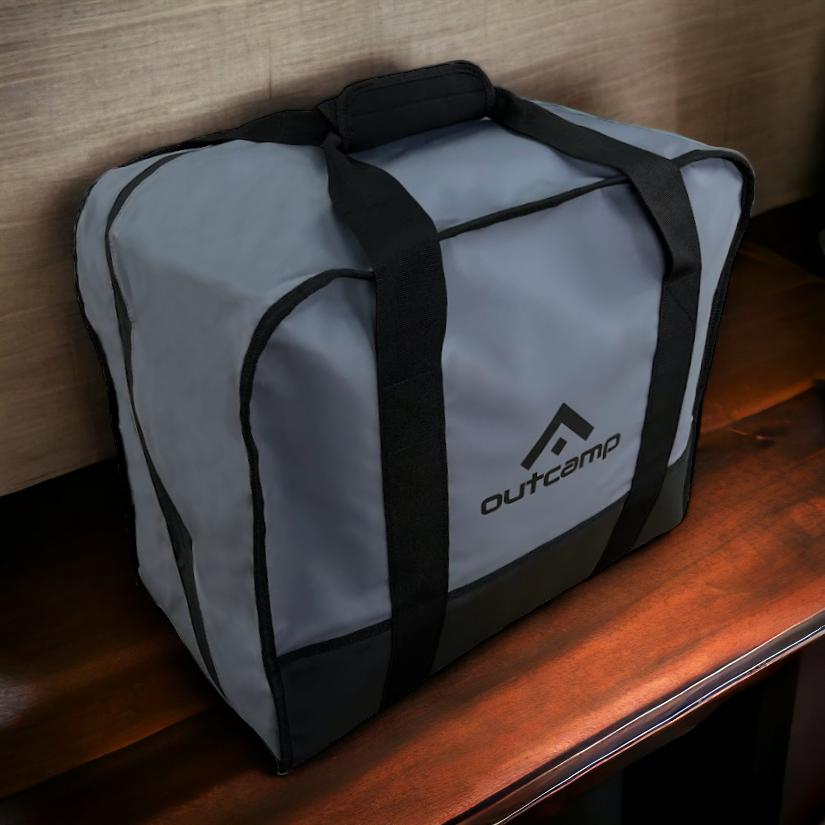
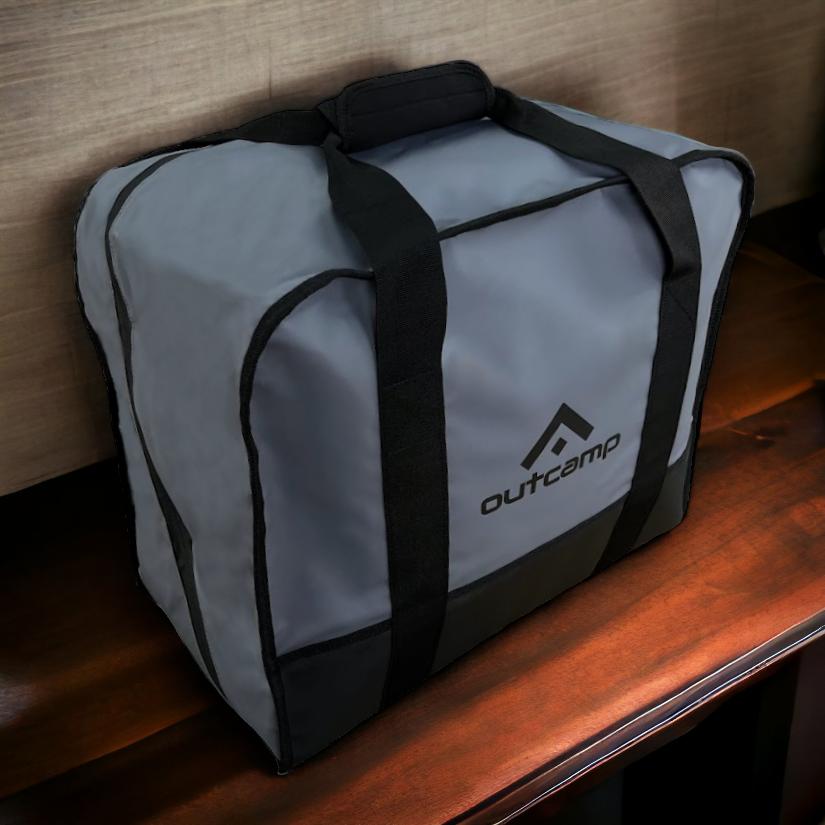
Protecting the dish itself during transport between sites is just as important as the power system. The Starlink Mini Carry Bag or Starlink Mini Hard Protective Travel Case keeps the dish, cables, and power converter together and protected in transit. For workers who fly between sites, the Starlink Mini Travel Backpack (USB Charging Port & TSA Lock) provides a purpose-designed carry solution that meets airline requirements and keeps all components organised.
Choosing the Right Power Setup for Your Industry
The ideal power configuration depends on how your team works. A static site office has different needs from a roving survey crew, and a week-long emergency deployment differs from a daily commute to a fixed worksite. Here is how the options map to common Australian remote work scenarios.
Mining and resources operations typically favour hardwired solutions with Anderson SB50 connectors and heavy-duty cables. The vehicles are already set up with robust auxiliary electrical systems, the duty cycles are long, and reliability in extreme heat and dust is non-negotiable. The Starlink Mini DC Power Converter (Anderson SB50) paired with the Starlink Mini Hardwire Power Cable (3.0M) is a natural fit.
Agriculture and Pastoral
Farmers and station managers often need Starlink Mini to work across multiple locations on a single property — the homestead, the shearing shed, the yards, the bore pump. A vehicle-mounted setup with the Starlink Mini Car Power Adapter (12V/24V to 20V DC) and a Starlink Mini Magnetic Mount provides grab-and-go connectivity that moves with the operator. When the ute parks at the yards for the day, Starlink Mini powers up and provides internet for livestock management apps, weather monitoring, and communication.
For longer deployments away from the vehicle — mustering camps, remote water point monitoring — carrying a PeakDo LinkPower 2 Portable Power Bank (99Wh) or a couple of Makita batteries with the Starlink Mini Makita 18V Battery Connector extends connectivity well beyond the vehicle's reach.
The Starlink Mini Explorer Bundle Pack is worth considering for agricultural operations that want a complete, ready-to-deploy kit. It packages the dish with essential mounting and power accessories, reducing the time spent sourcing and matching individual components.
Emergency Services and Disaster Response
When a bushfire, flood, or cyclone knocks out conventional communications infrastructure, the speed and reliability of the Starlink Mini deployment matters. Emergency services teams need power solutions that work immediately, without fiddling with settings or adapters. The Starlink Mini Portable UPS Power Supply (7-10 Hours) is the standout here — fully charged and ready to deploy, it provides a full operational shift of satellite internet without needing a vehicle or generator nearby.
For longer emergency operations, pairing the UPS with vehicle charging during crew changeovers creates a sustainable rotation. The Starlink Mini Cigarette Lighter Power Supply (165W USB-C) in each response vehicle ensures that any team member can charge the UPS or run Starlink Mini directly from whatever vehicle they are assigned to, regardless of whether it has Anderson Plug outlets fitted.
Cable resilience matters in emergency deployments where setups happen fast and conditions are harsh. The Starlink Mini Direct Connection Cable minimises connection points between the power source and the dish, reducing potential failure points when equipment is being set up under pressure in rain, smoke, or darkness.
Getting Your Off-Grid Power Right
Powering Starlink Mini in remote Australia is a solved problem — but only if you match the right power solution to your specific work pattern and environment. The common thread across every successful deployment is purpose-built hardware that accounts for voltage conversion, connector compatibility, and the realities of Australian conditions. Improvised solutions using generic USB cables, consumer power banks, and electrical tape might work in a backyard, but they have no place on a professional worksite where connectivity is a safety and productivity requirement.
Outcamp's full range of Starlink Mini power supplies, cables, and portable power solutions is designed by Australians who understand remote work. Whether you need a simple cigarette lighter adapter for occasional use or a complete hardwired system with UPS backup for a permanent remote installation, the right combination of products will keep your Starlink Mini running reliably, day after day, in conditions that would defeat off-the-shelf consumer gear.
Browse the complete range of Starlink Mini power and cable accessories at outcamp.com.au and build a power setup that matches the way your team actually works in the field.




Peter Colliver
May 27, 2026
In your very interesting information you state that “feeding it raw 12V will not work” when it states in the specs on the Start Link Mini that I have seen that it is 12Vdc @ 2A. Or is this thinking a way of taking care of any voltage drop that may be built in by using long thin cable. Cheers.