


The Dirty Power Challenge in Australian Heavy Industry
In the remote pits of the Pilbara or the vast earthmoving projects of regional Queensland, 'power' is a relative term. On a modern mine site or construction zone, the electrical environment inside a heavy machine cab is a chaotic landscape of high-frequency noise, transient voltage spikes, and significant voltage drops. When a 400-tonne haul truck fires its engine or a D11 dozer engages a heavy hydraulic load, the onboard 24V system can momentarily surge well beyond its nominal rating. For the rugged machinery itself, this is business as usual. For sensitive satellite communications equipment like the Starlink Mini, these electrical 'shocks' are a death sentence. Standard consumer-grade power cables are simply not designed to filter the electrical filth generated by a working industrial fleet.
As we move deeper into 2026, the reliance on Starlink Mini for pit-to-office telemetry, BIM syncing, and lone worker safety has transformed it from a convenience into a mission-critical asset. In this context, power-driven downtime isn't just an IT headache—it is a production bottleneck that costs thousands of dollars per hour. To bridge the gap between fragile consumer electronics and the brutal reality of Australian heavy industry, professionals are standardising on a technical floor: the wide-voltage, regulated power interface. Specifically, the Starlink Mini 12V to 30V Power Supply (Anderson Plug) has emerged as the industrial benchmark, providing the electrical hardening required to keep remote comms alive when the heavy gear gets to work.
The Engineering Logic of Wide-Voltage Regulation
The primary technical vulnerability of the Starlink Mini is its specific voltage requirement. While the dish is incredibly efficient, drawing between 25 and 40 Watts on average, it expects a stable DC input. If the voltage drops too low (common during winching or heavy winching or low-battery situations), the dish will reboot. If the voltage spikes too high (common during alternator surges), internal components can be compromised. The '12V to 30V' designation of the industrial supply refers to its ability to take a wide, unstable input range and 'clean' it into a perfect 20V DC output. This isn't just a cable; it is an active power conditioner.
Buffering the 24V Alternator Spike
In a 24V heavy machine, the 'nominal' voltage is rarely 24V. With the alternator running, it is closer to 28V, and during high-load switching, it can easily exceed 30V for several milliseconds. A standard DC cable provides no protection against these transients. The Outcamp industrial power supply utilises high-speed switching regulators that can detect an over-voltage event and clamp the output in nanoseconds. This technical buffer ensures that the Starlink Mini never 'sees' the chaos of the machine's electrical system, significantly extending the lifespan of the dish in high-duty cycle environments.
Solving the Voltage Drop on Long Leads
On large-scale earthmoving equipment, the Starlink Mini is often mounted high on a ROPS (Roll Over Protective Structure) or a dedicated mounting rail, while the power source is deep within the cab or a battery locker. Over a 5-metre or 10-metre run, voltage drop becomes a significant issue, especially on 12V systems. If the input voltage at the battery is 12.6V, it might only be 11.4V by the time it reaches the dish. This is below the Starlink's reliable operating threshold. By using a wide-voltage regulator positioned close to the dish (or integrated into a high-quality lead), you ensure the dish receives a consistent 20V regardless of the drop on the input side.
The Anderson Plug: Vibration-Proof Connectivity
In the world of Australian 4WD touring and mining, the standard 'cigarette lighter' plug is a known point of failure. It is held in place by friction alone, and on a corrugated track or inside a vibrating machine cab, it will eventually wiggle loose. When it wiggles, it arcs; when it arcs, it creates heat and intermittent power loss. The Starlink Mini 12V to 30V Power Supply utilises the 50A Anderson plug standard for a reason. It is a locking, high-current connection that is virtually immune to vibration. It provides a massive contact surface area and a self-cleaning action every time it is connected, making it the only acceptable choice for permanent industrial installs.
\"We used to lose at least one dish a month to 'mystery' reboots or board failures on the headers. Since we standardised on the wide-voltage Anderson supplies, that failure rate has dropped to zero. It turns out the Starlink wasn't the problem; our tractors' dirty power was.\"
Integrating Power into the Industrial Fleet
A resilient power strategy involves more than just picking the right cable. It requires a technical approach to how that power is delivered across a diverse fleet. On a modern regional project, a single Starlink Mini might need to move from a 24V excavator to a 12V service ute and then to a standalone solar-powered monitoring post. The beauty of the wide-voltage Anderson system is its 'cross-fleet' compatibility. Because the supply handles any input from 12V to 30V, the mounting and power interfaces can be standardised across the entire organisation, reducing spare-parts inventory and simplifying technician training.
Hardwired vs. Portable Deployment
For permanent machine installs, a hardwired approach is preferred. This involve running a fused, dedicated DC line from the machine's primary power distribution block to an Anderson port in the cab or on the exterior rail. By using the Starlink Mini 20V Hardwired Power Socket with Integrated Voltage Booster, you create a permanent 'power port' for the dish. For service crews or project managers who move between vehicles, the portable Anderson lead allows them to plug into any existing machine power point and be online in seconds. This flexibility is critical for maintaining connectivity during rapid site mobilisations.
Bypassing the Inverter: The Efficiency Win
A common mistake in early Starlink deployments was relying on a 240V inverter to run the standard AC brick. In an industrial or off-grid context, this is a technical disaster. Inverters are notoriously inefficient, often losing 15-20% of their energy to heat. They also represent a significant point of failure; an inverter fan clogged with Pilbara dust will quickly overheat and shut down. By moving to a direct-DC supply like the Starlink Mini 12V to 24V Power Supply (Anderson Plug), you eliminate the inverter entirely. This not only improves reliability but also significantly reduces the draw on the vehicle's house battery, allowing for longer 'engine-off' operation during site inspections or late-night admin sessions.
Protection in the Regional Environment
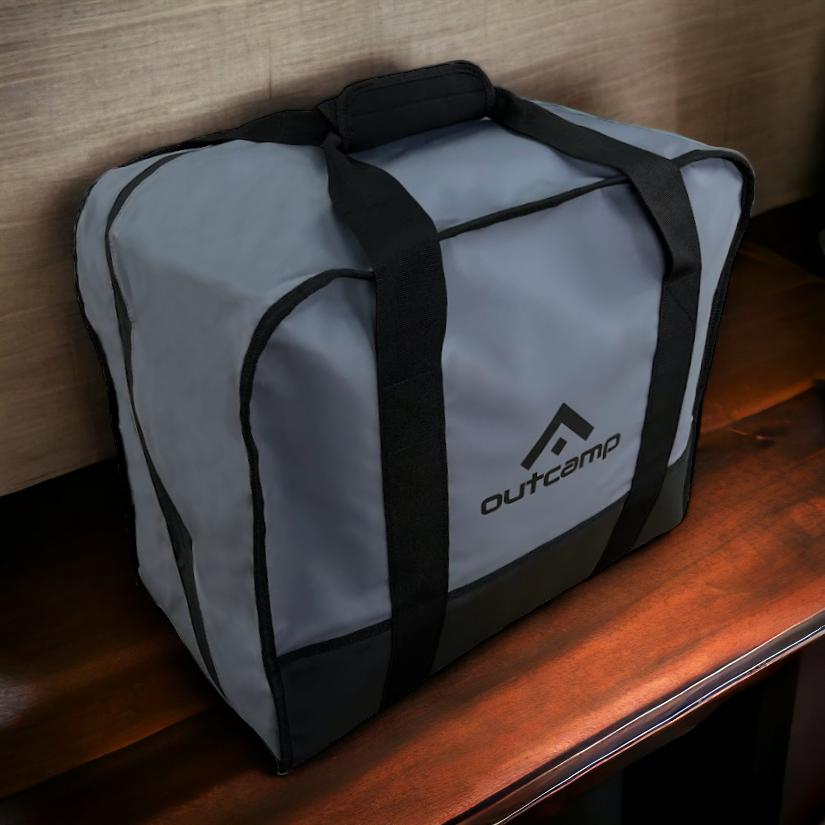
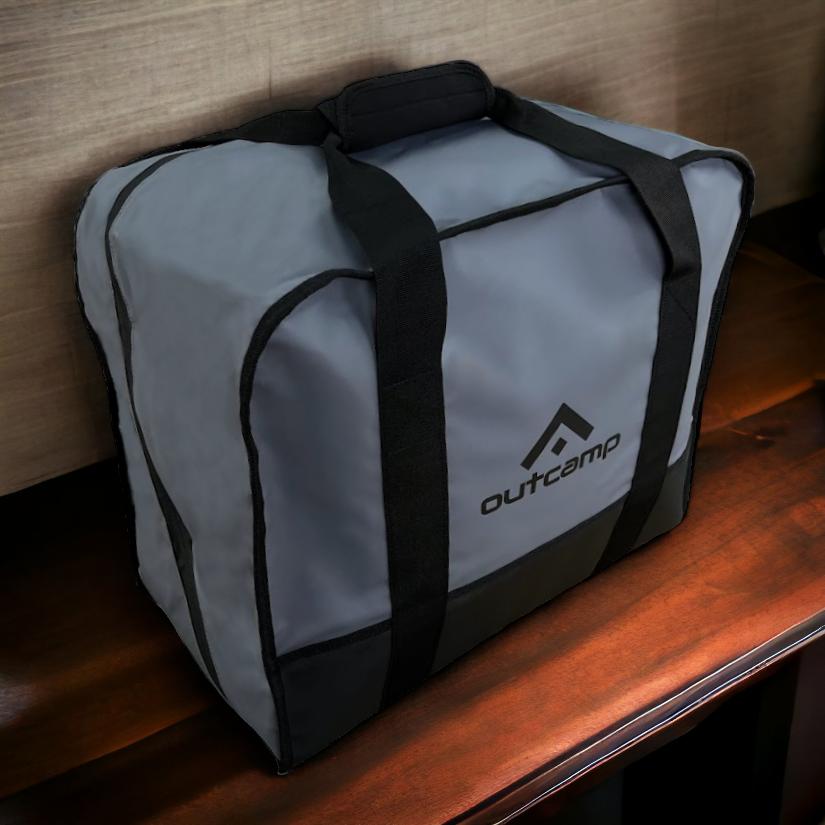
Power leads in the field are subjected to more than just electrical stress. They are trodden on, pinched in doors, and exposed to caustic cleaning chemicals and intense UV. The industrial-grade supplies from Outcamp feature heavy-duty jacketed cabling and sealed connectors designed for the Australian regional environment. When paired with a Starlink Mini Carry Bag or a Starlink Mini Hard Protective Travel Case, the entire power system remains protected from the dust and moisture that define remote worksites. Standardising on waterproof DC wall socket passthroughs for canopy installs further ensures that the integrity of the vehicle's seal isn't compromised by 'shonky' cable routing.
The Future of Mission-Critical Comms
As we look toward the remainder of 2026 and into 2027, the role of high-speed satellite internet in Australian heavy industry will only grow. We are moving toward a 'connected machine' model where every piece of gear on a project is a data node. But this digital future is built on a foundation of stable, reliable power. The companies that are winning in this space are those that recognise comms as a technical utility, not a consumer accessory. They are investing in the 'hardening' of their setups, starting with the power supply.
For the fleet manager or site supervisor, the choice is clear. You can rely on the thin, consumer-grade cables that came in the box and risk a production-stopping comms failure, or you can standardise on an industrial-grade wide-voltage system. The Starlink Mini 12V to 30V Power Supply (Anderson Plug) is the cornerstone of that resilient strategy. It bridges the gap between the satellite and the machine, ensuring your data link stays as solid as the steel it is mounted to.
FAQ: Industrial Starlink Mini Power
Why do I need a 12V to 30V power supply instead of the standard cable?
Australian heavy machinery and 24V mining fleets often experience significant voltage spikes during engine starts or heavy hydraulic load. A 12V to 30V wide-voltage power supply acts as a technical buffer, regulating input voltage to a steady 20V DC output, protecting the sensitive Starlink Mini hardware from over-voltage damage.
Can I use an Anderson plug connection for a permanent vehicle mount?
Yes, the Anderson plug is the industry standard for high-current, vibration-proof connections in Australian mining and earthmoving. Unlike standard 'cigarette lighter' plugs, an Anderson connection won't wiggle loose on corrugated tracks, ensuring your Starlink Mini stays powered through the most intense mechanical vibration.
Does this power supply work with both 12V and 24V vehicle systems?
Absolutely. The Starlink Mini 12V to 30V Power Supply is engineered to accept any DC input within that range. This makes it the perfect cross-fleet solution, allowing a single Starlink Mini unit to be moved between a 12V service ute and a 24V excavator or dump truck without hardware changes.
Conclusion
The era of 'good enough' connectivity on remote Australian sites is over. With the Work Health and Safety (WHS) and production demands of 2026, a resilient communications link is a non-negotiable requirement. By technical standardising on industrial-grade power solutions like the Starlink Mini 12V to 30V Power Supply (Anderson Plug) and efficient DC-to-DC converters, Australian heavy industry operators can ensure their teams remain connected, safe, and productive, regardless of the electrical environment.
Investing in these rugged, purpose-built accessories is the most cost-effective way to future-proof your remote comms deployment. It removes the 'dirty power' variable from your risk-management plan and ensures that your investment in Starlink hardware delivers the 24/7 uptime your project demands. If you are ready to harden your fleet's comms setup and eliminate power-driven downtime, explore the full range of Outcamp Starlink power solutions today. Your production schedule—and your crew—will thank you for it.




Leave a comment (all fields required)