


Starlink Mini for Australian Mining Sites: Connectivity for FIFO Workers and Remote Operations
Remote mining sites across Australia have long struggled with one fundamental problem: staying connected. Whether it's the Pilbara in Western Australia, the mining corridors of Queensland, or South Australia's copper belt, the challenge is the same — traditional telecommunications infrastructure simply doesn't reach far enough, and when it does, it rarely delivers the bandwidth that modern operations demand. Starlink Mini has changed this equation in a meaningful way, and the mining sector is beginning to take notice.
Its compact form factor, satellite-driven connectivity, and compatibility with 12V and 24V vehicle power systems makes Starlink Mini a practical tool for pit crews, FIFO workers, site managers, and safety teams who need reliable internet wherever operations take them. This guide covers how Australian mining operations are deploying Starlink Mini, which mounting and power accessories suit common mine site scenarios, and why worker welfare is now part of the connectivity conversation.
Why Reliable Internet Matters More Than Ever on Australian Mining Sites
Mining has changed. What was once a predominantly manual, paper-based industry has become increasingly data-driven — from real-time equipment telemetry and safety management systems to remote fatigue monitoring and video safety briefings. All of these systems depend on one thing: a reliable internet connection. The shift to digital operations hasn't always been matched by equivalent investment in remote connectivity infrastructure, which leaves many sites running critical systems over connections that are unreliable at best and non-existent at worst.
The costs of connectivity failure on a modern mine site are significant. A single outage can delay shift handovers, disrupt equipment monitoring dashboards, prevent timely safety incident reporting, and cut FIFO workers off from their families during their time on-site. These are not minor inconveniences — they are operational, safety, and human wellbeing issues that directly affect the productivity and culture of a site.
The Traditional Solutions and Their Limitations
For years, remote mining sites have relied on a patchwork of solutions: microwave links, private radio networks, 4G boosters, and legacy VSAT satellite systems. Each comes with significant trade-offs that limit their usefulness in the most remote and demanding environments.
Microwave towers require line-of-sight and permanent infrastructure — expensive to install and inflexible to reposition as operations expand or relocate. 4G boosters depend on carrier towers that may be 100 kilometres or more from a remote pit, offering marginal improvement at best. Legacy VSAT systems deliver connectivity but typically suffer from high latency, expensive data plans, and equipment that requires specialist installation and ongoing maintenance contracts.
Starlink's low Earth orbit satellite constellation eliminates the latency problem that plagued older VSAT systems, delivering round-trip times under 40ms in most conditions. For a mining operation running real-time dashboards, IoT sensor streams, or video conferencing with engineers and management back in the city, this difference is material.
What Starlink Mini Brings to the Mine Site
The Starlink Mini dish is a compact, lightweight satellite terminal designed to be portable and rugged. At roughly 29 x 25 cm and just under 1.1 kg, it fits in a work ute tray, a site cabin, or a portable control room with ease. It connects via USB-C and draws approximately 25–40W of power — modest enough to run from a 12V vehicle system or a portable battery pack for extended periods without straining auxiliary power reserves.
For Australian mining operations, this means you can deploy reliable high-speed internet in locations that previously had no viable connectivity option. A single unit can support multiple users through a connected WiFi router, serve as a data uplink for a remote pit control station, or provide welfare internet access for FIFO workers in accommodation villages during their downtime. The flexibility of the platform is one of its most important attributes for mine site use.
Real-World Performance in Remote Australian Conditions
Starlink Mini performance in regional and remote Australia has been well documented by early adopters across a range of industries. In typical conditions, users report download speeds between 50–200 Mbps and upload speeds of 10–30 Mbps — more than adequate for most operational and welfare applications. Performance can vary based on satellite coverage, weather conditions, and the number of concurrent users on the network, but the consistency represents a significant step up from what was previously achievable at remote Australian sites.
The dish is rated to operate in temperatures from -30°C to 50°C, which covers even the most extreme conditions found at Australian mining sites. For additional protection in particularly harsh or dusty environments, the Starlink Mini Silicone Cover and Starlink Mini Clear Protective Cover provide a layer of physical protection for the dish surface and connectors during transit or when the dish is deployed in exposed conditions.
Mounting Starlink Mini on Mining Vehicles and Site Equipment
One of the key practical challenges on a mine site is getting the Starlink Mini dish mounted securely and in the correct orientation to maintain a clear, unobstructed view of the sky. Mining environments are unforgiving — heavy vibration from haul roads, dust infiltration, extreme temperatures, and the general rough handling that comes with industrial operations all place significant demands on mounting hardware.
Outcamp produces a range of mounts designed for these conditions. Choosing the right mount for your vehicle or equipment type will determine how reliable and hassle-free your deployment is, and how much time your team spends setting up and breaking down connectivity at the start and end of each shift.
Magnetic Mounts for Flat-Bed Vehicles and Dual-Cabs
For dual-cab utes, light vehicles, and flat-top service trucks commonly used across mine sites, magnetic mounting provides a fast, tool-free setup that can be repositioned as needed between locations. The Starlink Mini Magnetic Mount and the MagLock Pro Magnetic Vehicle Mount both use strong neodymium magnet bases to hold the dish securely on any ferrous metal surface.
The Starlink Mini Alloy Magnetic Mount With Shield and the Starlink Mini Stainless Steel Magnetic Mount offer additional durability and corrosion resistance — important considerations in coastal mining regions or high-humidity environments. The Starlink Mini Portable Magnetic Roof Mount provides a low-profile option for vehicles where a permanent roof rack installation isn't practical. These mounts allow the dish to be placed on the roof or tray of a vehicle within seconds, without tools or permanent fixings, making them well suited to mine sites where multiple crews share vehicles across different shifts.
For setups where the dish will be left mounted during driving, the Starlink Mini 2-in-1 Magnetic Mount and Hard Cover provides protection for the dish surface when the unit is not actively in use — a useful feature for sites where vehicles travel long distances on sealed or unsealed mine haul roads before reaching the work area.
Rail and Bull Bar Mounts for Heavy Site Vehicles
Mine site light vehicles — including LandCruisers, Patrols, and purpose-built mine spec 4WDs — are typically fitted with bull bars and railing systems. The Starlink Mini BullBar/Railing Mount and the Starlink Mini Agricultural Mount (25-32mm rail) are designed to clamp onto these existing structures, keeping the dish elevated and clear of obstructions while avoiding the need for any roof penetration or permanent modification.
For vehicles running ARB base racks or similar roof systems, the Starlink Mini ARB Baserack Compatible Mount provides a purpose-designed solution that integrates cleanly with existing rack infrastructure. The Starlink Mini Sports Bar Ute Mount is a good option for dual-cabs running sports bars — common on light fleet vehicles across many Australian mining operations.
For a permanent, clean installation on a roof rack system, the Starlink Mini Roof Rack Mount allows the dish to be cabled through the cabin in a weatherproof configuration that doesn't require removal between shifts. Paired with the Starlink Mini Mounting Arm Alloy, this setup can be adjusted to optimise the dish angle relative to the satellite arc, which may be relevant at high southern latitudes where the Starlink constellation sits relatively low on the horizon.
Tripod and Portable Mounts for Base Camps and Control Stations
When the Starlink Mini needs to serve a fixed location — a site office, a camp kitchen, a field safety station, or a blast zone observation point — the Starlink Mini Tripod Mount provides a stable, ground-based option that can be set up and repositioned without any permanent installation. This is particularly useful during exploration phases or early-stage site development where infrastructure is temporary and the dish may need to move with the operation.
For situations where the dish is deployed indoors or in a semi-enclosed space such as a site container or demountable office, the Dashboard/Windscreen Starlink Mini Mount and the Starlink Mini Suction Mount for Sunroofs and Windows allow the dish to be positioned at a window or skylight while keeping the hardware inside the enclosure. This can be a useful configuration in locations where the dish needs protection from dust storms or driving rain while maintaining connectivity.
Powering Starlink Mini Off-Grid on a Mine Site
Power supply is always a critical consideration on remote mine sites. While many fixed facilities will have generator or grid power available, vehicles and temporary field stations routinely rely on 12V or 24V DC systems. The Starlink Mini is a 20V device, which means it requires a voltage converter when running from vehicle power — and selecting the right power solution for your specific setup will determine how smoothly the deployment runs in practice.
Outcamp's range of power accessories covers all of the common mine site scenarios, from simple Anderson plug connections on dual-cabs through to battery adapter solutions for field workers who carry Makita or Milwaukee power tool batteries as part of their standard kit.
Anderson Plug Power Supplies for Vehicle Integration
The Starlink Mini 12V to 24V Power Supply (Anderson Plug) and the Starlink Mini 12V to 30V Power Supply (Anderson Plug) allow the dish to be run directly from a vehicle's auxiliary battery system using a standard Anderson plug connection — the most common auxiliary power connector on Australian work vehicles. These supplies handle the voltage step-up internally, so no additional converter is required.
The Remote Control Operated 12V-24V Power Supply adds the useful ability to switch the dish on and off remotely from inside the cab — a practical feature when moving between locations where you want to conserve auxiliary battery charge during transit, or when the dish needs to be powered down before entering restricted areas on site. The Starlink Mini DC Power Converter (Anderson SB50) suits applications where the site uses SB50 connectors, which are common in mining and heavy industry power distribution systems.
For a permanent hardwired installation, the Starlink Mini 20V Hardwired Power Socket with Integrated Voltage Booster and the Starlink Mini Hardwire Power Cable (3.0M) allow a clean installation that draws directly from the vehicle's electrical system without requiring any exposed connectors. Combined with the Starlink Mini Anderson Plug to DC Power Cable (5.0M), this gives sufficient cable reach for larger vehicles, tray-mounted installations, or situations where the power source and the dish are some distance apart on the vehicle.
Battery Adapters for Field Teams
For field workers who carry Makita or Milwaukee 18V power tool batteries as standard equipment, the Starlink Mini Makita 18V Battery Connector and the Starlink Mini Milwaukee 18V Battery Adapter transform those existing batteries into a power source for the Starlink Mini. For a FIFO worker or site technician who already maintains a set of charged power tool batteries, this eliminates the need for any additional power hardware and means internet access from the dish with no vehicle or generator required.
The PeakDo Power Dock for Makita provides a stable platform for the battery adapter, keeping the connection secure on rough terrain. For teams that want a self-contained solution without relying on tool batteries, the PeakDo LinkPower 2 Portable Power Bank (99Wh) offers enough capacity to run the Starlink Mini for several hours in the field — suitable for remote field survey work, emergency response deployments, or temporary connectivity stations in areas where vehicle access is limited.
Cable Management for Clean Mine Site Installations
On mine site vehicles, cable management matters. Loose cables in working environments create trip hazards and are subject to damage from equipment, doors, and general site activity. Outcamp's cable range is designed to support clean, professional installations that hold up in industrial conditions.
The Starlink Mini DC Extension Cable extends cable runs where the power source and the dish are not in close proximity. The Starlink Mini 2-in-1 DC Power Cable + RJ45 Data combines power and data in a single run, reducing cable clutter on vehicles where both power and ethernet connectivity are needed simultaneously. The Waterproof DC Wall Socket Passthrough allows cables to be routed through vehicle panels or container walls while maintaining a weatherproof seal — essential in environments where dust and water ingress are constant concerns.
FIFO Worker Welfare: Connectivity as a Duty of Care
Beyond the operational benefits, there is a human dimension to mine site connectivity that is increasingly being recognised by Australian employers, regulators, and industry bodies. FIFO work carries well-documented mental health challenges. Long rosters, physical isolation from family, limited access to health services, and the psychological weight of living and working in the same confined environment for extended periods all contribute to elevated rates of stress, depression, and relationship breakdown among FIFO workers in the Australian mining sector.
Access to reliable internet — to video call family, stream entertainment during downtime, access telehealth services, or simply maintain a sense of connection to the world outside the site — is no longer a discretionary amenity. An increasing number of mining companies treat reliable connectivity in accommodation villages as part of their duty of care obligations under state and federal work health and safety frameworks. Getting this right has measurable effects on worker retention, morale, and the attractiveness of remote site roles to the workforce.
Deploying Welfare Internet in Accommodation Villages
Starlink Mini units can serve as primary or supplementary internet sources in FIFO accommodation villages, particularly on newer or smaller sites where fixed satellite or microwave infrastructure hasn't yet been established. Multiple units can be deployed across a camp and connected to a shared network distribution system to provide coverage across accommodation blocks, mess facilities, and recreation areas.
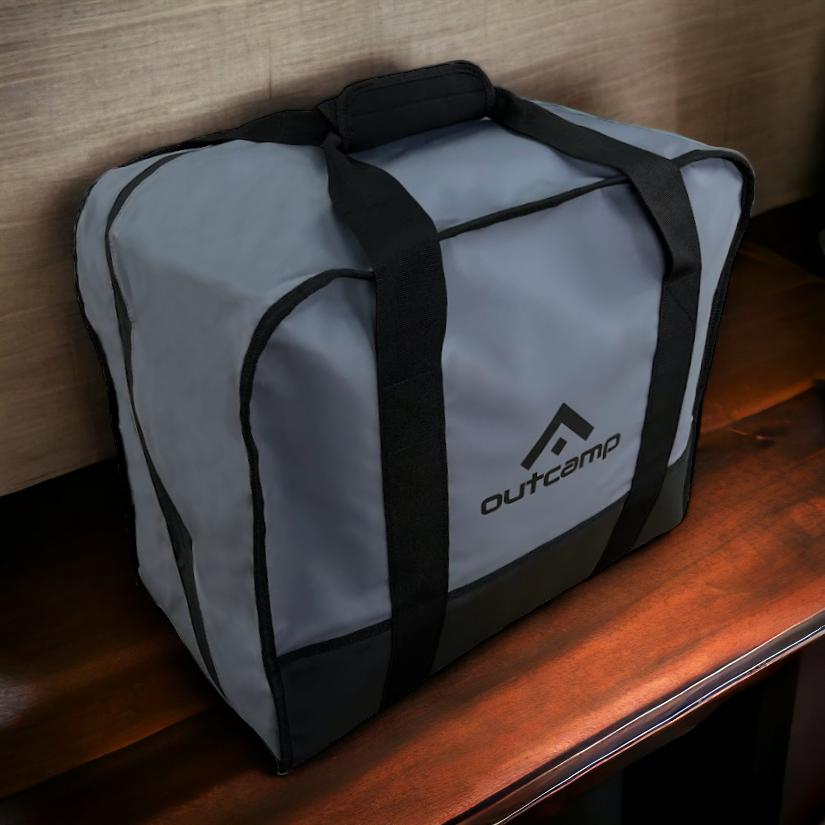
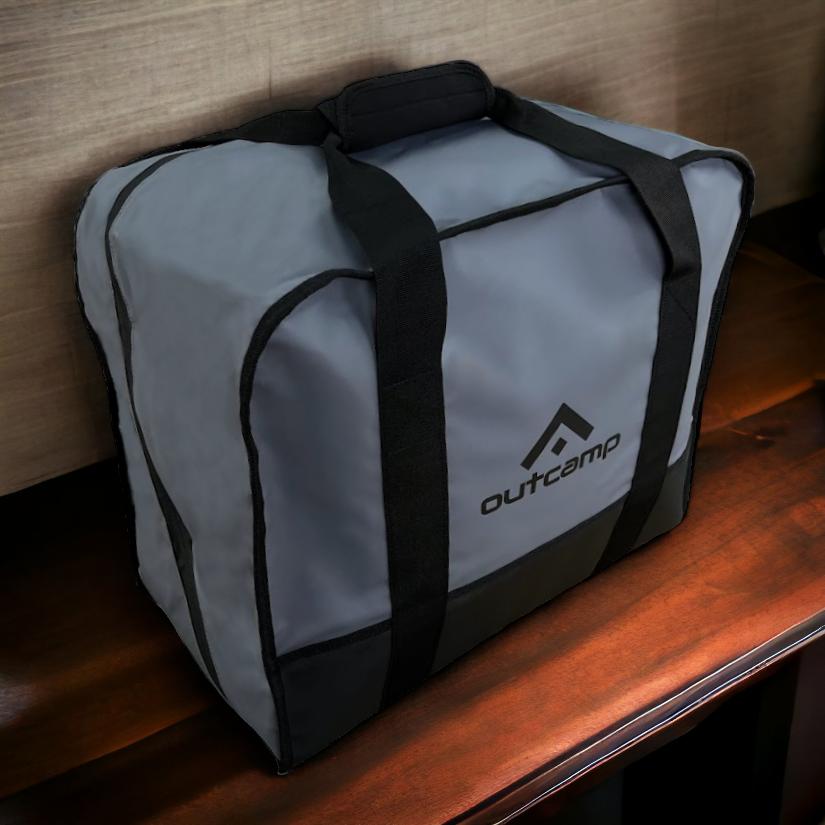
For site operators setting up temporary welfare connectivity, the Starlink Mini Travel Backpack (USB Charging Port and TSA Lock) provides a complete carry solution for transporting the dish, cables, and accessories between site rotations or between multiple camp locations. The Starlink Mini Hard Protective Travel Case and the Starlink Mini Carry Bag offer additional protection options for sites where equipment is subject to rough handling in shared storage or during transport on light aircraft or charter vehicles.
The Starlink Mini Explorer Bundle Pack provides a complete out-of-the-box solution for sites that need to get connectivity running quickly, combining the dish with the carry bag and essential accessories in a single package that can be ordered, received, and deployed with minimal lead time.
Supporting Telehealth and Mental Health Services On-Site
Remote area health practitioners and employer-sponsored employee assistance programmes increasingly rely on video consultation platforms to connect FIFO workers with GPs, psychologists, dietitians, and other health professionals without requiring workers to travel off-site for routine appointments. These telehealth services require stable internet with sufficient bandwidth for clear video — something Starlink Mini delivers reliably from remote locations where previous connectivity options made video calls impractical.
The ability to hold a telehealth consultation from the privacy of a worker's accommodation room, rather than travelling to a regional town or waiting for a fly-in clinician, represents a meaningful improvement in access to care for remote workers. For employers who are actively developing mental health and wellbeing programmes for FIFO workforces, reliable on-site internet is a foundational requirement — not a nice-to-have.
Keeping Site Teams Informed and Trained
Beyond welfare, reliable connectivity enables remote workers to participate in online training, compliance courses, and safety briefings that would otherwise require travel to a training centre or on-site visits from specialist trainers. Video-based safety inductions, refresher training on new equipment, and toolbox talk recordings can all be delivered over Starlink Mini to workers on-site, reducing the cost and logistical complexity of keeping a remote workforce current with their compliance requirements.
For site management, video conferencing with head office, engineers, and external consultants becomes practical rather than aspirational. The ability to share live footage from site cameras, conduct virtual site walks with off-site stakeholders, or collaborate in real time on project management platforms changes the economics of remote project oversight significantly.
Practical Networking Considerations for Mine Site Deployments
Getting a Starlink Mini operational on a mine site is straightforward, but a few practical decisions made during setup will determine how reliable and secure the deployment is over time. Getting these right from the start saves significant troubleshooting effort later.
Hardwiring the dish to a router or network switch via the Starlink Mini/Gen 3 Ethernet Adapter (4 Ports) or the Gen 3/Mini SPX to RJ45 Waterproof Ethernet Adapter Kit is strongly recommended over relying solely on the built-in WiFi for commercial mine site deployments. Wired connections are more reliable for multi-user environments and significantly reduce the security exposure that comes with an open or lightly secured WiFi network on a commercial site. The Gen 3/Mini Waterproof Connector Ethernet Cables and the Waterproof Ethernet Port RJ45 accessories allow the ethernet connection to be maintained through weatherproof conduit runs or panel passthroughs without compromising the IP protection of the installation.
Siting the dish with a clear, unobstructed view of the sky is the single most important factor in sustained performance. On mine sites, heavy machinery, haulage trucks, conveyor structures, and elevated stockpiles can all create obstructions. The Starlink app includes an obstruction detection tool that uses the phone camera to identify potential interference before committing to a permanent mounting location — using it at the start of each new deployment will save significant frustration.
Conclusion
Australian mining operations are among the most remote and demanding work environments in the world. The connectivity challenges that come with that environment are real, and the consequences of poor internet — for operations, for safety systems, and for the people living and working on site — are significant enough that connectivity planning deserves the same rigour as any other piece of critical site infrastructure.
Starlink Mini addresses these challenges in a way that previous satellite and terrestrial solutions could not. Its compact size, low power draw, and genuine broadband performance make it a practical deployment option for everything from a single-vehicle field team to a multi-user FIFO accommodation village. The low latency that distinguishes the Starlink network from legacy VSAT systems makes real-time operational applications viable in a way that wasn't possible before.
Outcamp's range of mounts, power supplies, cables, and carry accessories means that deploying Starlink Mini in a mining context doesn't require custom fabrication, specialist installation, or long lead times on hardware. Whether you're mounting to a bull bar on a mine spec LandCruiser, running from a vehicle's Anderson plug system, or setting up a portable base camp station on a tripod, the right hardware is available and proven in Australian conditions. Explore Outcamp's full range of Starlink Mini accessories at outcamp.com.au and build the connectivity setup your site actually needs.




Leave a comment (all fields required)