


Starlink Mini for Emergency Services: Keeping Australian First Responders Connected in the Field
When a fire front moves faster than anticipated, when a flood cuts off a regional town, or when a search and rescue team pushes deep into country without a single bar of mobile signal, reliable communications become the difference between a coordinated response and a dangerous breakdown in command. Australian emergency services — from rural fire brigades and SES units to ambulance paramedics working remote area deployments — operate in environments where established telecommunications infrastructure is either inadequate or simply absent. The consequences of a communications failure in these settings are not theoretical.
Starlink Mini has emerged as a genuinely useful tool for emergency services and first responders who need portable, satellite-based internet connectivity in the field. Unlike terrestrial solutions that depend on infrastructure remaining intact, Starlink Mini connects directly to low Earth orbit satellites, making it operable almost anywhere in Australia — including locations where bushfires, floods, or cyclones have destroyed mobile towers and landlines. This article covers how Australian emergency services are putting Starlink Mini to work, and what equipment and accessories are needed to deploy it effectively in the field.
Why Connectivity Fails When Australian Emergency Services Need It Most
The challenge for emergency services in Australia is not simply a matter of remote geography, though that is certainly part of it. Bushfires, floods, cyclones, and other major incidents tend to destroy or disable the infrastructure that normal communications depend on — exactly at the moment when that infrastructure is needed most. Mobile towers burn, power lines come down, and the surge in network traffic from evacuees and responders trying to coordinate simultaneously can bring overloaded networks to their knees.
At the same time, the complexity of modern emergency response has increased significantly. Incident controllers need live situational awareness tools, digital mapping, weather feeds, and the ability to upload field reports in real time. Radio alone is no longer sufficient for the data-intensive demands of a major incident, and agencies increasingly rely on internet-connected platforms that simply cannot function without reliable connectivity.
How Infrastructure Gets Overwhelmed or Destroyed
During large-scale events like the 2019–20 Black Summer bushfires, mobile networks in affected regions failed in significant numbers. Towers were burned directly, power to remote base stations was lost, and backhaul connections — typically via fibre or microwave — were severed. Emergency services operating in these zones found themselves relying on ageing HF radio systems and ad hoc satellite voice calls, both of which lack the bandwidth for modern digital incident management tools.
The pattern repeats with floods. When floodwaters inundate a region, mobile network base stations are frequently among the first pieces of infrastructure affected, particularly in low-lying towns and river valleys. SES units conducting flood rescues often find themselves in the anomalous position of being physically surrounded by water while simultaneously unable to transmit anything more than a voice call to incident control.
Planning for communications resilience means anticipating infrastructure failure as a near-certainty during major events, not as an unlikely edge case. Any communications solution that depends on the same physical infrastructure as the incident it is responding to carries an inherent structural vulnerability that Starlink Mini connectivity can directly address.
The Limitations of Traditional Radio in Complex Terrain
HF and VHF radio have served emergency services for decades and remain important tools, particularly for voice communications. However, they carry significant limitations when operating in rugged terrain. Mountain ranges, dense bush, and deep gullies create signal shadows that can completely cut off field teams from incident control. Repeater infrastructure helps, but repeaters need power and maintenance, and in a large-scale incident, they can fail along with everything else.
Even in terrain where radio propagates reasonably well, the bandwidth available over traditional radio systems is narrow. Transmitting a digital photograph of a fire perimeter, uploading a GPS track, or running a live video feed for a command briefing is not feasible over VHF voice radio. The operational gap between what radio can support and what modern incident management systems require has grown steadily wider over the past decade.
Some agencies have moved toward TETRA digital radio networks, which offer data capability alongside voice, but coverage in remote and regional Australia remains limited. TETRA networks are also fixed-infrastructure systems with the same vulnerability to major events as mobile networks, which means they do not solve the fundamental problem of communications failure during the incidents they are most needed for.
Mobile Networks and Why They Are Not Enough
Mobile networks offer more bandwidth than radio and reasonable coverage across populated corridors, but they fail in precisely the situations where emergency services most need them. Coverage maps consistently leave large areas of rural and remote Australia without signal, and the correlation between bushfire-prone and flood-prone regions and poor mobile coverage is not coincidental — these are areas where infrastructure investment has historically been limited.
Even where coverage nominally exists, network congestion during an emergency event can render mobile data unusable in practice. When an entire community is evacuating, everyone is simultaneously reaching for their phone. The network is not designed for that spike in demand, and data speeds that are adequate under normal conditions can drop to effectively nothing when the load increases sharply.
Emergency services cannot plan operational communications around infrastructure that degrades under exactly the conditions they are planning for. Satellite-based connectivity via Starlink Mini sidesteps this dependency entirely, providing a broadband link that is independent of what is happening on the ground below.
How Starlink Mini Is Transforming Field Communications for Australian First Responders
Starlink Mini offers a fundamentally different model for field connectivity because it does not depend on terrestrial infrastructure. The dish connects directly to a constellation of SpaceX Starlink satellites in low Earth orbit and delivers broadband internet speeds — typically 50 to 200+ Mbps download — to a device small enough to fit in a backpack. In an emergency services context, this means that a field team with a Starlink Mini unit can establish a functioning data link from almost any location in Australia, regardless of what has happened to the local mobile and fixed-line networks.
The practical applications for incident management are substantial. Real-time situational awareness tools, cloud-based incident management systems, digital mapping platforms, video briefings, and welfare connectivity for extended deployments all become operational with a working broadband connection. Agencies that have begun trialling satellite internet for field operations consistently report that the ability to share live situational data between field teams and incident control materially improves coordination and reduces decision-making delays.
Real-Time Data Sharing Between Incident Control and Field Teams
Modern incident management systems used by state emergency agencies are web-based and require a broadband connection to function effectively. A Starlink Mini unit deployed at an incident staging area or forward command post brings these platforms within reach, allowing field supervisors to update incident logs, download current weather data, and receive updated operational maps in real time rather than relying on scheduled radio transmissions or delayed telephone updates.
For bushfire operations specifically, the ability to access live satellite imagery, fire behaviour modelling outputs, and aviation tracking tools is operationally significant. Decisions about whether to commit aircraft, adjust containment lines, or initiate community warnings are better made with access to live data than without it. Starlink Mini's low latency — typically under 40 milliseconds — is sufficient for interactive web-based tools that would be unusable over a high-latency geostationary satellite connection.
The combination of bandwidth and low latency also makes video conferencing viable from the field. Command briefings that would previously have required personnel to travel to a fixed location can be conducted with field supervisors joining remotely, reducing transit time and keeping people closer to their operational area during fast-moving incidents where every minute of travel time has an opportunity cost.
Supporting Digital Safety Systems and Lone Worker Applications
Many emergency services and government agencies now require their field personnel to use lone worker safety applications — platforms that track location, provide check-in functionality, and allow a worker to raise a duress alert if they get into difficulty. These applications require a data connection to function, and in areas without mobile coverage, they have traditionally been inoperable — precisely in the environments where the risk to field workers is highest.
Starlink Mini provides the connectivity layer that allows these applications to work in remote field environments. A Starlink Mini unit deployed at a remote base camp or staging area can serve as a WiFi hotspot for a team of workers, allowing their devices to connect to lone worker apps, GPS tracking platforms, and emergency alert systems without requiring individual satellite communication devices for each team member.
For operations that involve personnel working in small teams at dispersed locations — SES searches, remote area medical operations, or environmental emergency responses — the ability to maintain digital welfare monitoring across the team using standard smartphones connected to a Starlink Mini hotspot represents a genuine safety improvement over previous practice, at a fraction of the cost of equipping every individual with a personal satellite device.
Connectivity for Welfare and Mental Health During Extended Deployments
Extended emergency deployments are psychologically demanding, and connection with family, colleagues, and support services plays a meaningful role in the welfare of field personnel. Research on remote and isolated work consistently identifies communications connectivity as one of the most significant factors in worker wellbeing during extended away-from-home deployments, and the emergency services context adds the compounding pressure of exposure to traumatic and high-stress situations.
Starlink Mini can provide the welfare connectivity that makes a practical difference during a multi-week deployment: the ability to make a video call home, access mental health support applications, stream enough content in off-shift hours to decompress, and maintain a sense of connection with ordinary life. These are not trivial considerations — agency welfare programs increasingly recognise connectivity as a component of managing cumulative fatigue and stress in their field workforce.
Providing a Starlink Mini unit at a forward base or incident staging area as part of the standard deployment kit is a relatively low-cost investment in workforce welfare relative to the operational and human costs of psychological injury from poorly supported extended deployments. The hardware cost is modest, the operational benefit is substantial, and the message it sends to field personnel about how their welfare is valued is not insignificant.
Mounting and Powering Starlink Mini for Emergency Response Vehicles and Base Camps
The operational value of Starlink Mini in an emergency services context depends significantly on how it is integrated into vehicles and field setups. A dish that is difficult to deploy quickly, vulnerable to damage during transport, or that runs out of power before the shift ends is only of limited use. Getting the mounting and power configuration right is as important as the device itself, and it is the area where Australian emergency services operators most benefit from using purpose-built accessories rather than improvised solutions.
Outcamp stocks a comprehensive range of mounting and power accessories designed specifically for Starlink Mini. For emergency services applications — where vehicles range from command utes and 4x4 wagons to light trucks and forward command post setups — there are purpose-built solutions for almost every configuration, and the right combination of accessories transforms a consumer satellite terminal into a robust field communications tool.
Vehicle Mounting Options for Emergency Response Vehicles
For command vehicles and rapid response 4x4s, magnetic mounting options provide fast deployment without requiring permanent installation. The Starlink Mini Magnetic Mount and the MagLock Pro Magnetic Vehicle Mount allow the dish to be placed on a vehicle roof in seconds and removed just as quickly, which suits operations where a vehicle may move between locations during a shift. For vehicles that need a more permanent installation, the Starlink Mini Roof Rack Mount is a stable, vibration-resistant option suited to bull-bar equipped command vehicles operating on rough terrain.
Vehicles operating in particularly rugged environments — fire trails, track-crossing operations, flood-affected roads — benefit from mounts that hold the dish firmly against vehicle movement. The Starlink Mini BullBar/Railing Mount and the Starlink Mini ARB Baserack Compatible Mount are designed for this kind of demanding use, providing secure attachment points on existing bull bar and roof rack infrastructure that most emergency services 4x4 vehicles already carry as standard fitment.
For field operations that establish a semi-permanent base camp, the Starlink Mini Tripod Mount allows the dish to be positioned on open ground independently of any vehicle, giving flexibility in staging area setup and allowing the dish to maintain clear sky view even when vehicles are repositioned. The tripod configuration is also useful for operations conducted at structures — sheds, portable buildings, and demountables — where rooftop access is not practical.
Keeping Starlink Mini Running Off-Grid in the Field
Power is the critical constraint for off-grid Starlink Mini operation. The dish requires a 20V DC supply and draws approximately 18–25W under normal operating conditions, which is well within the capability of a standard vehicle electrical system or a portable battery setup. The question in an emergency services context is ensuring power continuity through a full shift, particularly in vehicles where other high-draw equipment may be competing for the same power source.
For vehicle-mounted deployments, the Starlink Mini 12V to 24V Power Supply (Anderson Plug) provides a clean, regulated supply sourced directly from the vehicle's 12V system via a standard Anderson plug connection — the same connector type used across most emergency services and rural fire fleet vehicles for accessories and trailer lighting. This makes integration straightforward without requiring any modification to the vehicle's existing wiring or electrical system.
For forward command posts and base camp setups not adjacent to a running vehicle, the Starlink Mini Portable UPS Power Supply provides 7–10 hours of autonomous operation from a self-contained battery. The PeakDo LinkPower 2 Portable Power Bank (99Wh) is a compact alternative suited to shorter deployments. For operations where Makita 18V batteries are already in circulation — common in SES and rural fire brigade contexts — the Starlink Mini Makita 18V Battery Connector allows the dish to be powered from the same battery ecosystem that runs power tools, lighting, and other site equipment.
Protecting Equipment in Harsh Conditions
Emergency response environments are hard on equipment — dust, heat, water, and physical impact are constants in field operations. Starlink Mini is rated for outdoor use but is a consumer-grade product not specifically designed for sustained exposure to the conditions that emergency services vehicles routinely operate in. Proper storage and protection between deployments significantly extends equipment service life and reduces the risk of arriving on scene with damaged gear.
The Starlink Mini Hard Protective Travel Case provides impact-resistant protection for transport and storage, suitable for a vehicle travelling on corrugated fire trails or being unloaded at pace from a logistics vehicle during a fast-moving incident. For active deployments where the dish is operational but needs protection from blowing embers or water splash, the Starlink Mini Clear Protective Cover and the Starlink Mini Silicone Cover provide weather protection without blocking the dish's signal reception.
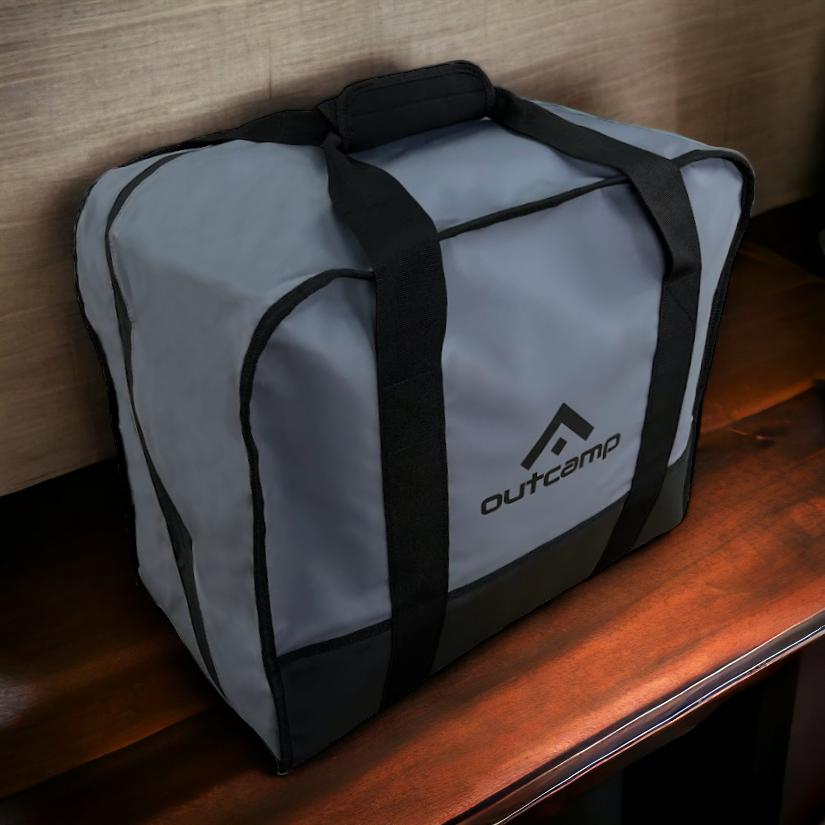
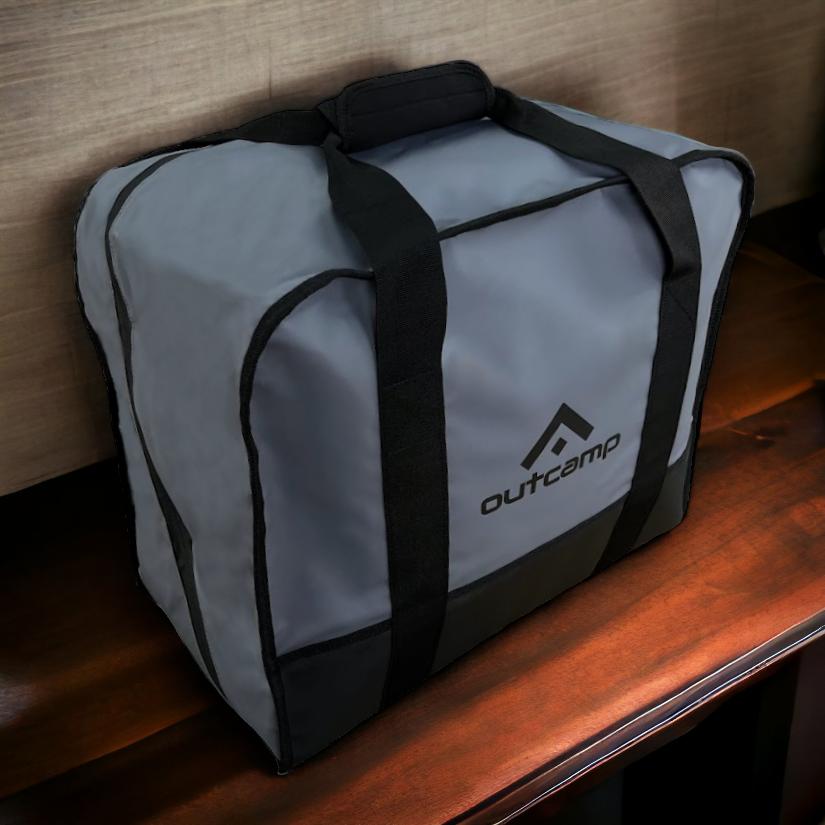
For agencies managing multiple Starlink Mini units across a fleet, the Starlink Mini Travel Backpack — which includes a USB charging port and TSA lock — provides organised carry and storage for the complete kit. Keeping a dedicated pack containing the dish, power supply, cables, and mounting hardware means deployment is faster and the risk of arriving on scene missing a critical component is substantially reduced. Establishing a standard kit list and storage configuration across a fleet of units is a straightforward way to ensure operational readiness.
Putting It Together: Starlink Mini as a Standard Field Communications Asset
Starlink Mini will not replace every tool in an emergency services communications kit, and it is not designed to. Radio remains essential for voice communications in many field scenarios, and purpose-built satellite communication devices serve specific roles that a broadband internet connection does not. But for the data-intensive demands of modern incident management — situational awareness, digital safety systems, welfare connectivity, and remote command briefings — Starlink Mini fills a genuine capability gap that terrestrial and radio-based solutions cannot reliably address during major Australian emergency events.
The cost of a Starlink Mini unit and its associated accessories is modest relative to the operational costs of a field deployment, and the capability uplift for incident command and field coordination is substantial. For agencies reviewing their communications resilience posture ahead of the next bushfire season or major weather event, Starlink Mini is worth serious evaluation as a standard component of field communications equipment alongside radio and personal locator beacons.
Outcamp stocks a comprehensive range of Starlink Mini mounts, power supplies, cables, and protective accessories suited to emergency services and rugged field deployment. Whether you need a magnetic mount for rapid vehicle deployment, an Anderson plug power supply for fleet integration, a portable UPS for off-grid base camps, or a hard case for equipment protection in transit, the full catalogue is available at outcamp.com.au.




Leave a comment (all fields required)