The first sun of the day catches the wet sand and turns 75 Mile Beach into a strip of liquid gold for about ninety seconds. Hard tyre tracks curve away ahead of you, a sea eagle works the line of the dunes, and somewhere out beyond the breakers a humpback breaches the surface and lands hard. This is K'gari in winter, and there is a reason hardened 4WD tourers reckon June through August is the only time to do it.
Why now
K'gari (Fraser Island) is the world's largest sand island and an absolute sand-driving classic, but summer here is hot, humid, fly-ridden and busy. Winter flips every one of those. Day temperatures sit in the low to mid twenties, the air is dry and clear, the sandflies retreat, and Hervey Bay across the channel becomes the most reliable humpback whale watching destination on the east coast — the migration peaks roughly mid-July through October, but pods start showing from late May. The freshwater perched lakes are still warm enough for a dip after a beach run, and the cooler temperatures mean dingoes are more active during daylight hours, which makes them easier to spot from a respectful distance.
Getting there and the paperwork
K'gari is 4WD-only — no exceptions, no high-clearance two-wheel drives. There are two barge access points: River Heads near Hervey Bay (about three and a half hours' drive north of Brisbane) and Inskip Point at Rainbow Beach (about three hours north of Brisbane, plus a short barge across the Great Sandy Strait). Most first-timers go via Hervey Bay because the SeaLink barge lands at Wanggoolba Creek on the protected west side and you avoid the swell at Hook Point. Inskip Point is faster and cheaper if you are coming from the south coast.
Two permits are mandatory and must be sorted before you board:
- Vehicle Access Permit — around fifty-eight dollars for up to a month, available online from Queensland Parks (book.parks.qld.gov.au). Print it or save the PDF — there is no reliable mobile coverage on the barge.
- Camping permit — required for every night you camp, booked per person per night through the same site. Beach camping zones along 75 Mile Beach and the formal campgrounds (Central Station, Dundubara, Waddy Point) all require this.
Bookings open six months ahead and the long weekends sell out fast — Queen's Birthday in early October and the September school holidays are particularly tight. Mid-week dates in June and July are still wide open.
Driving 75 Mile Beach
This is the headline route — a hundred-and-twenty-kilometre stretch of east-coast surf beach that doubles as the island's main highway. Tides rule everything. Aim to drive on either side of low tide (give yourself a window of two hours either side) so you have firm wet sand and avoid the soft dry stuff above the high tide line. Tyres down to around eighteen PSI for the beach, lower again for the inland tracks. Speed limit is 80 km/h on the beach but 60 km/h is sensible — the surface changes constantly and washouts can appear out of nowhere. Watch for inland traffic emerging from the formed tracks, and never turn your back on the surf when stopped.
The must-stops
Lake McKenzie (Boorangoora)
The postcard. A perched freshwater lake sitting in pure white silica sand, water so clear it reads aquamarine in the shallows and ink-blue at depth. About 45 minutes inland from the Eurong store on the eastern beach, all on formed sand tracks. Best in the first hour after the gates open — by mid-morning the day-trip buses have arrived. No campfires, no soaps, no sunscreen in the water (it kills the lake's natural ecosystem).
The Maheno shipwreck
About twenty kilometres north of Eurong on 75 Mile Beach, the rusted hull of the Maheno has been sitting on the sand since a cyclone beached it in 1935. Each year the wreck shrinks as the sand and surf reclaim it. Stop at the high tide line, park well clear and walk the last fifty metres — vehicles are not permitted closer.
Eli Creek
A few kilometres further north, Eli Creek is a freshwater stream that drains directly across the beach into the surf. Park up, grab a tube or a pool noodle and float the kilometre back down to the beach. Twenty minutes of pure holiday. Excellent rinse-off after a sandy morning.
Champagne Pools and Indian Head
Right at the top of the eastern beach, Champagne Pools are a series of natural rock pools that fill with surf foam each high tide — the only safe ocean swimming on the eastern side (the rest of 75 Mile Beach is shark country with serious rips). Indian Head, the rocky headland just south, is the best whale spotting platform on the island. From late May the humpbacks roll past below the cliffs and you can sit up there for an hour and watch four or five different pods.
Dingo safety
K'gari has Australia's most genetically pure dingo population and they are protected. They are also wild predators that have killed and seriously injured people. The rules are simple and non-negotiable. Never feed them. Never approach them. Always stay within arm's reach of children. Lock food and rubbish in your vehicle (not in tents). Walk in groups of two or more. Carry a stout stick if walking the beach away from camp. The Queensland Parks dingo information sessions at Eurong and Dundubara are worth catching when you arrive.
Where to camp
- Central Station — fenced, family-friendly, set in subtropical rainforest near Wanggoolba Creek. Cold showers, no power. Good first-night base.
- Dundubara — fenced, large, beachside on the eastern side. Hot showers (twenty-cent coin operated), best amenities on the island.
- Waddy Point — fenced, top of the island near Indian Head. Smaller, quieter, walking distance to whale viewing.
- Beach camping zones — unfenced, designated stretches along 75 Mile Beach. No facilities, must carry out everything. Dingo-proof food storage essential.
- Eurong Beach Resort and Kingfisher Bay — if you want a powered cabin or hotel room as a base instead of camping.
Practical tips for a winter K'gari run
- Fuel — Servos at Eurong and Cathedral Beach Resort sell unleaded and diesel but at island prices (well above mainland). Top up a 20-litre jerry on the mainland and you will probably get away without paying island prices at all.
- Mobile coverage — Patchy. Telstra works in the developed pockets (Eurong, Kingfisher, Cathedral Beach) and on parts of the eastern beach. Optus and Vodafone are basically nothing. Inland tracks have no coverage.
- Water — Drinking water taps at the formal campgrounds. Carry your own for beach zones. Do not drink from creeks or lakes.
- Recovery — Compulsory kit: tyre deflator, accurate gauge, recovery boards (Maxtrax or equivalent), shovel, snatch strap, rated bow shackles. Bring a spare tyre, not a space-saver.
- Tides — Carry a printed tide chart for both Inskip and Hook Point. Plan all beach driving around low tide.
- Insurance — Check your vehicle insurance covers sand-island driving. Many comprehensive policies do not, and a stranded car on a rising tide gets expensive fast.
Working from the dunes
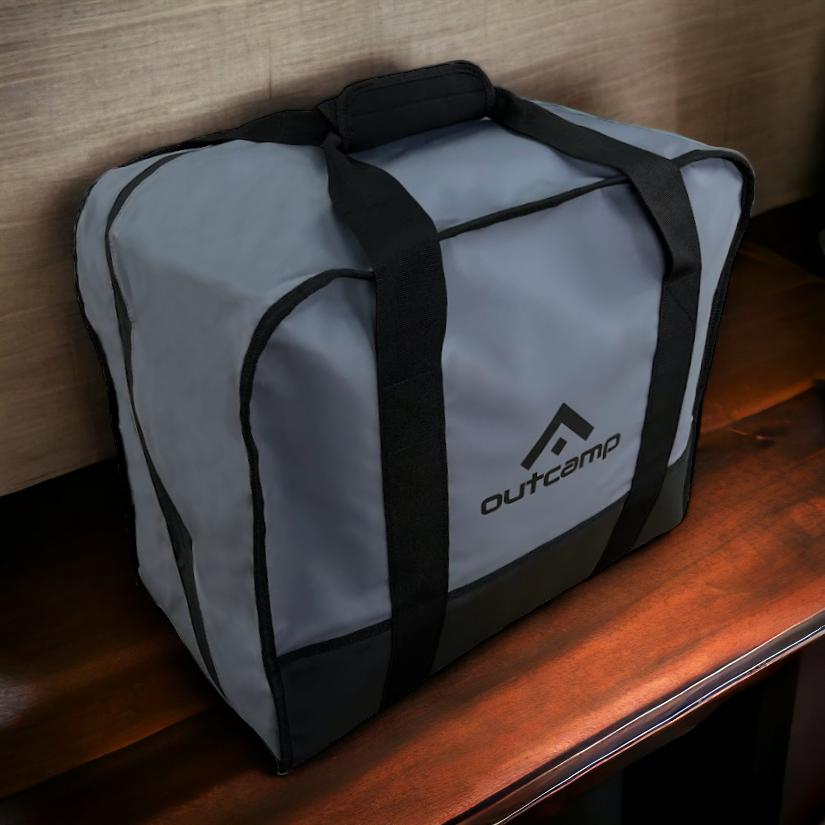
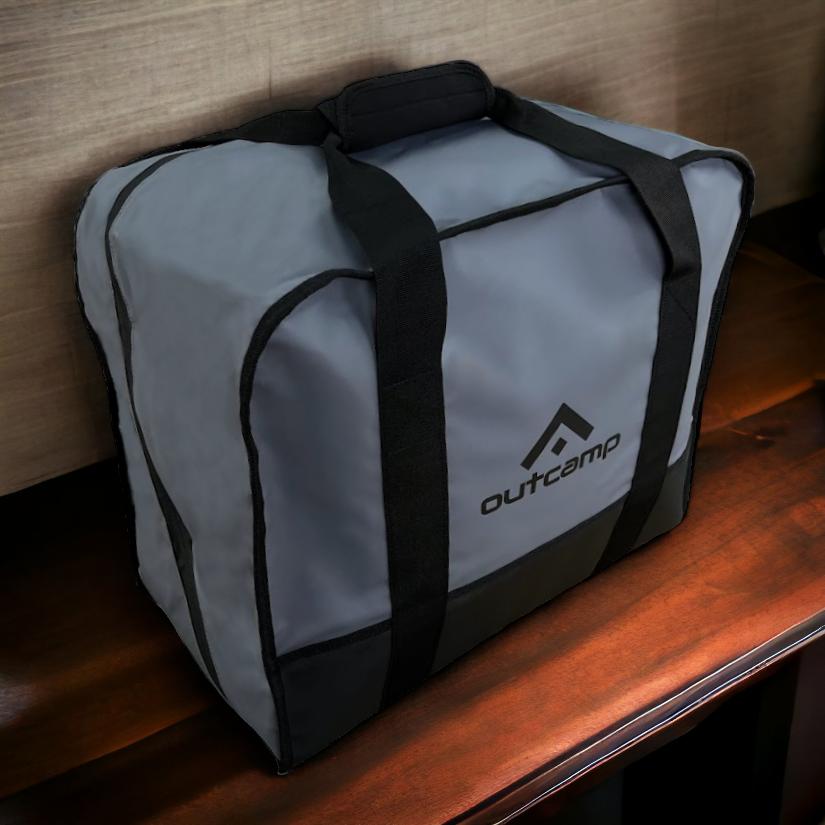
If you are stretching a long weekend into a working week from the island — plenty of small-business owners do, particularly in winter when the trip is comfortable enough to spend a fortnight up there — connectivity becomes the only real issue. Telstra patches are unreliable away from Eurong and Kingfisher. Our Starlink Mini accessories and magnetic mount range are popular with K'gari regulars — magnetic and clamp mounts that suit a roof rack or awning pole, sealed 12V adapters built for dual-battery setups, and protective cases that handle the sand and salt that gets into everything on a sand island. Sets up in two minutes at camp, packs away just as fast for the next beach drive.
Where to next
K'gari is one of those trips that makes you want to do every other Australian sand-driving classic. If you are tossing up your next 4WD week, our Western Australia travel guide covers the WA coastal drives, and the Northern Territory travel guide has dry-season routes from Mataranka up. Either way, drop the tyres, watch the tides and we will see you on the eastern beach at sunrise.