Freycinet National Park: The Complete Camping, Hiking and Caravan Guide for Tasmania
There are few places along the Australian coastline that stop you in your tracks quite like Freycinet National Park. Perched on Tasmania's east coast, this granite peninsula delivers some of the most photographed scenery in the country — from the famous curve of Wineglass Bay to the pink-hued peaks of the Hazards rising sharply from the sea. For campers, hikers, caravanners and anyone chasing a proper outdoor holiday, Freycinet sits in a league of its own.
What makes Freycinet particularly appealing is its accessibility. Unlike many of Tasmania's wilder destinations, you do not need a purpose-built 4WD rig to get here — sealed roads run all the way to the park entrance at Coles Bay. That said, the camping options range from family-friendly powered sites to remote walk-in beach camps, giving everyone from grey nomads towing a van to ultralight hikers carrying a swag something worth pitching up for.
Getting to Freycinet and What to Expect on Arrival
Freycinet National Park sits roughly two and a half hours northeast of Hobart, accessed via the Tasman Highway through the Coal River Valley and along the sweeping east coast. The turnoff at Coles Bay Road takes you the final 30 kilometres into the small township of Coles Bay, which serves as the gateway to the park. Fuel, groceries, a tavern and a handful of cafes are all available here, so it is worth topping up before heading into the park proper.
The Freycinet Visitor Centre is located just inside the main park entrance and operates daily — from 8am to 5pm between November and April, and 9am to 4pm through the cooler months. A Tasmania Parks Pass is required for entry. If you are planning to visit multiple national parks during your trip, the Holiday Pass (valid for eight weeks) or the Annual All Parks Pass offers better value than a daily ticket.
Road Conditions and Vehicle Access
All roads within the park are sealed and well maintained, so any standard vehicle, caravan or motorhome can comfortably make the journey. The only exceptions are sites 51 and 52 at Honeymoon Bay, which have steep and occasionally slippery driveways better suited to vehicles with decent ground clearance or four-wheel drive. If you are towing a large van, stick to the main campground areas at Richardsons Beach or Ranger Creek where access is straightforward.
Parking at the popular trailheads — especially the Wineglass Bay car park — fills quickly during summer and school holidays. Arriving before 9am on peak days is not just recommended, it is practically essential. Overflow parking is available further back along the road, but it adds a decent walk before you have even started the trail.
The road from Coles Bay into the park is winding but scenic, with glimpses of the Hazards framed by eucalypt forest. Take your time on the approach and watch for wildlife — wombats, wallabies and Tasmanian pademelons are regular roadside visitors, particularly at dawn and dusk.
Seasons and Weather
Tasmania's east coast is the driest and warmest part of the state, making Freycinet one of the more reliable camping destinations year-round. Summer (December to February) brings daytime temperatures between 18 and 25 degrees Celsius, long daylight hours and the peak holiday crowd. Autumn (March to May) is arguably the best time to visit — the light turns golden, the crowds thin and the temperatures remain comfortable for hiking.
Winter visitors will find a quieter park with crisp mornings and the chance to spot migrating whales offshore. Spring brings wildflowers and returning birdlife. Regardless of when you visit, pack layers. The Tasmanian weather has a well-earned reputation for changing rapidly, and a sunny morning on the coast can turn to a cold southerly wind within the hour.
Wind is the other factor worth planning for. The exposed eastern coastline and elevated lookout trails can cop a strong breeze, so if you are setting up camp, choose a sheltered site where possible and make sure your tent or awning is properly pegged. Staying connected to weather forecasts is important here — a portable Starlink dish running off 12v power means you can check the Bureau of Meteorology even when mobile reception drops out around the peninsula.
National Park Fees and Passes
Entry to Freycinet requires a valid Tasmania Parks Pass. A 24-hour vehicle pass costs around $40, but if you are spending more than a couple of days in the state, the Holiday Pass at roughly $80 covers all parks for eight weeks and pays for itself quickly. Camping fees are additional and vary by campground and season. Bookings are essential during peak periods — more on that below.
It is worth noting that the popular summer camping period from mid-December through early February, along with Easter, operates under a ballot system. Applications must be submitted by the end of July the previous year, with results drawn in early August. If you miss the ballot window, last-minute cancellations sometimes free up spots, but do not count on it during the busiest weeks.
For those travelling with a caravan or motorhome, the powered sites at Ranger Creek offer the most convenience, with coin-operated showers, grey water disposal points and electric barbecues. These sites fill quickly, so book as far in advance as the system allows.
Camping at Freycinet: Every Option from Powered Sites to Walk-In Beach Camps
Freycinet offers a surprisingly diverse range of camping experiences packed into a compact peninsula. Whether you want powered sites with hot showers or a remote beach with nothing but the sound of waves, there is something here for every style of traveller. Understanding the different camping areas and their facilities will help you choose the right base for your trip.
All campgrounds within the national park are managed by Tasmania Parks and Wildlife Service. Fires are not permitted anywhere in the park — fuel stoves only. This is strictly enforced year-round, so plan your camp cooking setup accordingly. A quality portable stove or a compact gas BBQ is essential kit for any Freycinet camping trip.
Richardsons Beach
Richardsons Beach is the main campground and the one most visitors default to. It sits in a long strip behind the dunes, with sites spread through coastal scrub that provides reasonable shelter from wind. Some sites offer filtered views of the water, and it is a short walk across the dunes to one of the most picturesque beaches in the park. Facilities include non-flush toilets, picnic tables and electric barbecues.
The campground suits tents, camper trailers and smaller campervans, though larger rigs may find some sites tight. There are no powered sites at Richardsons Beach, so if you need shore power for your setup, Ranger Creek is the better option. Water is available but is non-treated, so bring your own drinking supply or a filtration system.
What Richardsons Beach lacks in amenities it makes up for in location. You are within walking distance of the Wineglass Bay trailhead, the Hazards Beach track and Coles Bay township. It is the most practical base if hiking is the main reason for your visit.
Ranger Creek and Honeymoon Bay
Ranger Creek is the campground of choice for caravanners and those who prefer a few more comforts. It offers powered sites on level grass, shaded by towering gum trees, with coin-operated hot showers, a grey water dump point and electric barbecues. The setting is pleasant, tucked into a sheltered valley behind Honeymoon Bay, and the sites are generously spaced compared to many national park campgrounds.
Honeymoon Bay itself is a stunning little cove with granite boulders and crystal-clear water — one of the best spots in the park for a morning swim or a kayak paddle. Camping at Honeymoon Bay is available during summer and Easter only, and the sites are more basic than Ranger Creek. As mentioned, sites 51 and 52 have steep driveways that are better navigated with a vehicle that has some clearance.
Both Ranger Creek and Honeymoon Bay are subject to the summer ballot system during peak season, so plan ahead. Outside ballot dates, bookings can be made through the Parks and Wildlife website. If you are travelling with a caravan and want reliable power for your fridge and charging your gear, Ranger Creek should be your first choice.
Walk-In Wilderness Camps
For hikers tackling the Freycinet Peninsula Circuit or simply wanting a night on a remote beach, the walk-in campsites at Wineglass Bay, Hazards Beach and Cooks Beach offer a completely different experience. These are tent-only sites with composting toilets and no other facilities. You carry everything in and everything out.
Camping at Wineglass Bay requires a moderate hike over the saddle from the main car park — roughly 45 minutes with a full pack. Waking up to that iconic crescent of white sand with virtually no one else around is one of those camping experiences that stays with you. Hazards Beach is accessed from the southern end of the circuit and offers a wilder, more exposed setting backed by the imposing granite walls of the Hazards.
These walk-in camps are free with a valid Parks Pass and do not require booking, but they do have limited space. During peak periods, arriving by early afternoon gives you the best chance of finding a flat spot. Carry a reliable water purification system, a sturdy tent rated for wind, and enough fuel for your stove to cover meals and hot drinks — the evenings can be surprisingly cold even in summer.
The Best Walks and Hikes in Freycinet National Park
Hiking is the main event at Freycinet, and the park delivers walks ranging from gentle 20-minute boardwalk loops to multi-day coastal circuits. The granite peaks of the Hazards provide the dramatic backdrop, while the beaches and headlands offer coastal walking that rivals anything on the mainland. Pack good boots, plenty of water and sun protection — even on overcast days, the UV down here can catch you out.
The trails are well maintained and clearly signposted, but conditions underfoot vary considerably. Some sections involve scrambling over exposed granite, which can be slippery when wet. Others follow soft sand through coastal scrub. Check conditions at the Visitor Centre before heading out, especially if you are planning one of the longer routes.
Wineglass Bay Lookout and Beach
The Wineglass Bay Lookout track is the most popular walk in the park, and for good reason. The 1.5-hour return hike climbs steadily through dry eucalypt forest before reaching the saddle between Mount Amos and Mount Mayson, where the lookout reveals the full sweep of Wineglass Bay below. It is one of those views that genuinely delivers on the hype — a perfect arc of white sand framed by dense green bush and turquoise water.
If you have the time and energy, continue down the other side to the beach itself. The full return trip to the beach and back takes around three to three and a half hours and involves a steeper descent and climb on the bay side. The beach is worth the effort — the sand is impossibly fine, the water is clear and on a weekday outside peak season you may have long stretches to yourself.
Start this walk early in the day during summer. The car park fills by mid-morning, the track gets congested around the lookout and the exposed sections of the climb are best tackled before the heat builds. Carry at least two litres of water per person — there is no drinking water along the trail.
Mount Amos Summit
Mount Amos is the walk that earns its views. This steep, challenging scramble up exposed pink granite takes you to the summit of one of the Hazards peaks, delivering what many consider the finest vantage point over Wineglass Bay in the entire park. On a clear day, the panorama extends across the peninsula, out to the Tasman Sea and down the east coast.
The track is unmarked in places and involves hands-and-feet scrambling over smooth granite slabs. It is not suitable for young children, anyone uncomfortable with heights or anyone without proper footwear. The round trip takes between three and four hours depending on fitness and conditions. Avoid this walk in wet weather — the granite becomes dangerously slippery when wet.
Despite the difficulty, Mount Amos rewards those who make the effort. The summit is a relatively flat expanse of granite with enough room to sit, eat lunch and take in the view without feeling exposed. It is the kind of walk you remember for years, and the photographs from the top are consistently spectacular.
Cape Tourville Lighthouse and Freycinet Peninsula Circuit
For something shorter and more accessible, the Cape Tourville Lighthouse Circuit is a gentle 20-minute loop along a boardwalk that hugs the cliff edge on the eastern side of the peninsula. The views are expansive — out to the Nuggets (four granite islets offshore), along the coast to Wineglass Bay and across to the Hazards. It is one of the best spots in the park for seeing sea eagles, albatross and Australian fur seals basking on the rocks below. During winter, migrating whales are a regular sight offshore.
At the other end of the scale, the Freycinet Peninsula Circuit is a two-to-three-day walk covering roughly 30 kilometres around the peninsula. The route passes through Wineglass Bay, Hazards Beach and Cooks Beach, with overnight camping at the walk-in wilderness sites. The terrain varies from beach sand to rocky headlands to dense coastal forest, and the walk offers a genuine multi-day wilderness experience without the logistical complexity of longer trails like the Overland Track.
The circuit is best walked in autumn or spring when temperatures are moderate and the camping areas are less crowded. You will need to be fully self-sufficient — carry your own water purification, food, shelter and stove. Register your walk at the Visitor Centre before departing and always let someone know your planned route and expected return time.
Staying Connected and Powered Up at Freycinet
Mobile reception around Freycinet is patchy at best. You will generally pick up a signal in Coles Bay township and parts of the main campgrounds, but once you head onto the trails or into the walk-in camping areas, coverage drops away entirely. For travellers who need to stay in touch — whether for safety, weather updates or the occasional work email — this is worth planning for.
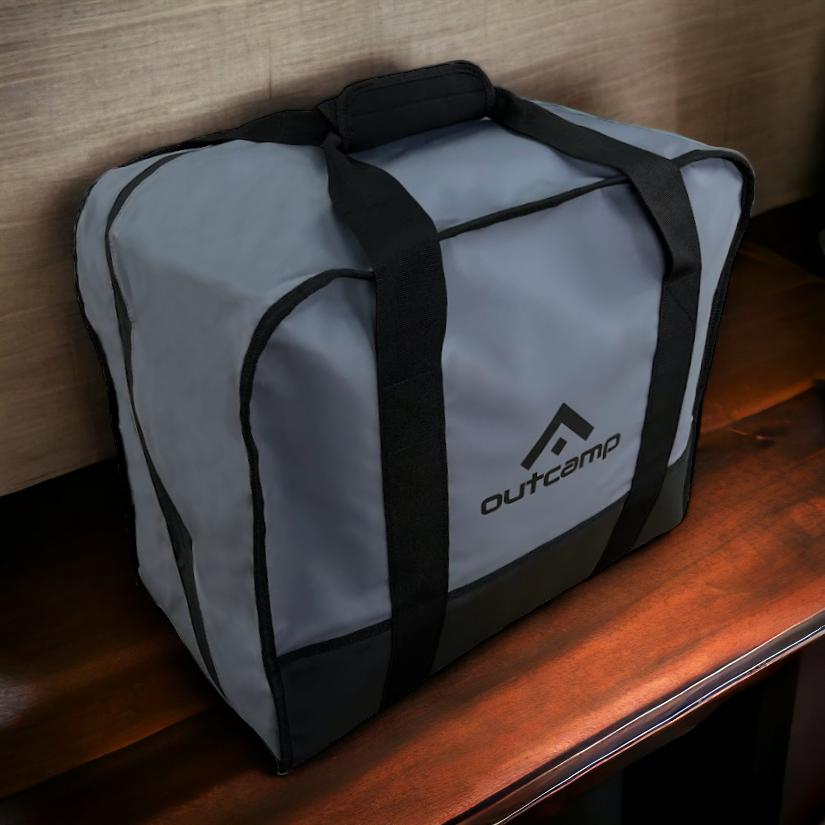
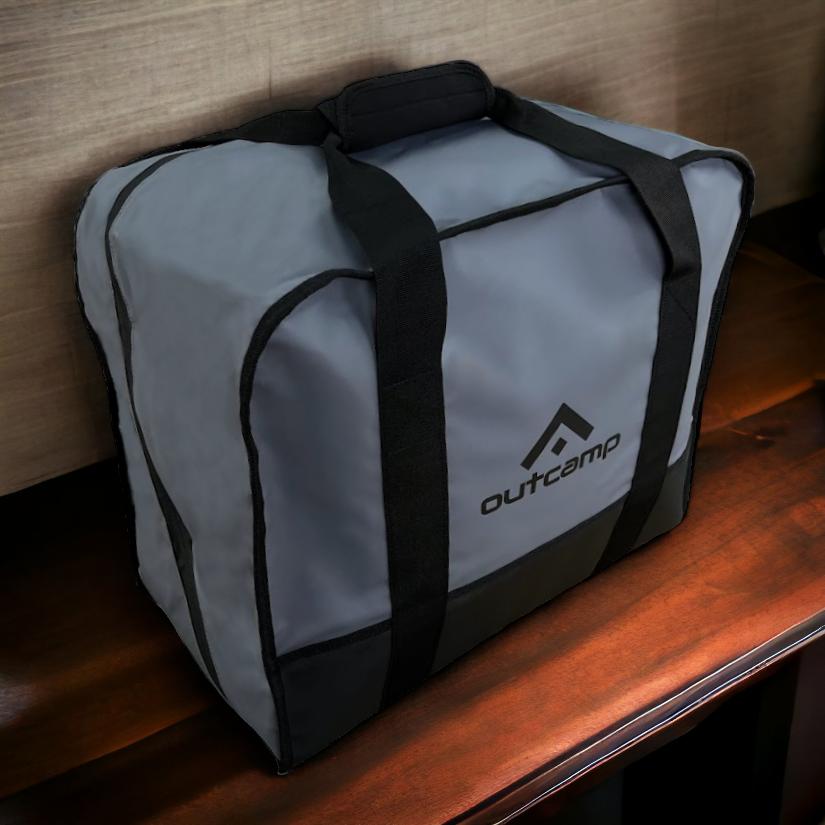
A portable satellite internet setup like a Starlink dish with a 12v power supply gives you reliable connectivity regardless of where you camp. Paired with a compact carry bag for protection during travel, it is a practical addition to any Tasmanian touring rig. Running the unit off your vehicle's dual battery system or a portable power station means you can check forecasts, download trail maps or make a video call even from a beach camp with zero mobile signal.
Power Management for Extended Stays
If you are camping at Ranger Creek on powered sites, keeping your devices and fridge running is straightforward. For unpowered sites at Richardsons Beach or the walk-in camps, you will need to bring your own power solution. A quality portable power station in the 500Wh to 1000Wh range will keep a 12v fridge, phone, camera and lighting sorted for a couple of nights. Pair it with a folding solar panel and you can extend that indefinitely, provided you get a few hours of decent sun each day.
Tasmania's east coast receives more sunshine than the west, making solar a viable charging option through most of the year. Position your panel on the northern side of your campsite with a clear view of the sky and angle it to face the sun during the middle of the day for maximum output. Even in winter, a 120W panel will typically pull enough charge to keep essential gear running.
For hikers heading into the wilderness camps, weight is the limiting factor. A compact power bank in the 20,000mAh to 30,000mAh range will keep a phone and headlamp charged for a three-day circuit. If you are carrying a satellite communicator or personal locator beacon — and you should be — make sure it is fully charged before you leave the trailhead.
Exploring Beyond the Park: Coles Bay and the East Coast
Freycinet does not exist in isolation, and some of the best experiences on Tasmania's east coast sit just outside the park boundaries. Coles Bay township is a relaxed base with enough to keep you entertained on a rest day, while the broader east coast offers excellent day trips that complement a camping stay at Freycinet.
The east coast of Tasmania stretches from the Bay of Fires in the north to the Tasman Peninsula in the south, with Freycinet sitting roughly in the middle. If you are doing a longer road trip, it makes sense to build Freycinet into a broader east coast itinerary that takes in multiple highlights over a week or more.
Coles Bay Township
Coles Bay is small but well equipped for a coastal Tasmanian town. You will find a general store, a tavern, a couple of restaurants and cafes, and a few operators offering kayak tours, boat cruises and fishing charters. The view of the Hazards from the waterfront is one of the most recognisable scenes in Tasmania — a wall of pink granite rising straight from the bay.
Kayaking around the peninsula is a brilliant way to see Freycinet from the water, and several operators run half-day guided tours that paddle along the coast and into secluded bays inaccessible by foot. Fishing from the rocks at Cape Tourville or off the beach at Friendly Beaches (just north of the park) is productive for those chasing Australian salmon, flathead and squid.
If you need to resupply during a longer stay, the general store covers the basics but the range is limited. For a proper shop, the nearest supermarket is in Bicheno, about 45 minutes north. Plan your provisions before arriving at Coles Bay, especially during the quieter winter months when some businesses reduce their hours.
Day Trips: Friendly Beaches, Bicheno and the Great Eastern Drive
Friendly Beaches, a short drive north of the Freycinet turnoff, is a long stretch of wild coastline backed by coastal heath and dunes. It is a designated free camping area within the national park and offers a more rugged, less manicured beach experience than the main Freycinet beaches. The surf can be strong here, making it popular with experienced surfers and beach fishers.
Bicheno, 45 minutes north, is worth a visit for its blowhole, penguin tours (little penguins emerge from the rocks at dusk) and the excellent East Coast Natureworld wildlife park. The town has fuel, a supermarket and several dining options — a useful provisioning stop if you are heading further north to the Bay of Fires or south to the Tasman Peninsula.
The Great Eastern Drive connects Hobart to the Bay of Fires over roughly 250 kilometres of coastal road and passes directly through the Freycinet region. It is one of the best driving routes in Tasmania, winding through vineyards, past oyster farms and along coastline that shifts from sheltered bays to dramatic granite headlands. Take your time on this road — it rewards those who stop often.