


The Connected Pit: Leveraging IoT and Industry 4.0 with Starlink Mini on Remote Australian Sites
The digital transformation of the Australian remote worksite is no longer a future-looking projection; it is a technical reality that is being deployed in the pits of the Pilbara and the pipeline corridors of regional Queensland today. For years, the promise of Industry 4.0—characterised by real-time telemetry, automated asset tracking, and cloud-integrated decision-making—was limited by the physical boundaries of the mobile network. Once a haul truck or a construction crew moved beyond the range of a regional tower, the data link was severed, and the site reverted to a disconnected island of information. In this environment, the "real-time" component of Industry 4.0 was relegated to periodic syncs at the depot or expensive, low-bandwidth satellite links that could barely handle text, let alone the massive data streams required for modern industrial IoT.
In 2026, the arrival of the Starlink Mini has effectively eliminated this connectivity barrier. By providing a portable, high-speed, and low-latency satellite link that can be mounted directly onto heavy machinery or integrated into mobile site offices, Starlink Mini is serving as the communication backbone for a new generation of industrial sensors and automated systems. Thisguide explores how Australian mining, construction, and regional infrastructure providers are leveraging this bandwidth to transition from "offline and reactive" to "online and predictive" site management. We will examine the technical architecture of the connected site, the role of high-bandwidth telemetry in asset protection, and the practical hardware requirements for maintaining a resilient digital perimeter in the most challenging conditions on Earth.
Building the Technical Foundation for Industry 4.0
The successful implementation of IoT (Internet of Things) on a remote site depends on a stable, bidirectional data pipe. In an industrial context, "connectivity" means more than just email access for the site office; it means the continuous transmission of performance data from thousands of individual sensors distributed across vehicles, machinery, and static infrastructure. These sensors monitor everything from hydraulic pressures and tyre temperatures on a loader to the vibration signatures of a conveyor belt or the water levels in a remote tailings dam. Historically, collecting this data was a manual process that required technicians to visit each asset with a laptop. With Starlink Mini, the data is pushed to the cloud in real-time, allowing for a "digital twin" of the entire operation to be maintained thousands of kilometres away.
Standardising the Mobile Gateway
To build a resilient IoT network, the communications hardware must be as rugged as the machines it supports. Relying on a loose satellite dish in a machine cab is a technical liability. Professionals are moving toward a standardised mobile gateway model, where the Starlink Mini is permanently integrated into the vehicle's infrastructure. Using a Starlink Mini Magnetic Mount or a dedicated roof rack mount ensures the hardware remains secure through the high-G vibration of heavy machinery and the relentless corrugations of outback access tracks. This mechanical security is the first step in ensuring that the data stream remains uninterrupted, regardless of the terrain.
Redundant and Efficient Power Architecture
Industry 4.0 systems are only as reliable as their power source. In a remote industrial environment, power is frequently "dirty" and prone to significant voltage spikes and drops. Sensitive satellite electronics require a regulated, filtered supply to avoid hardware fatigue or mystery reboots during engine-start cycles. The technical floor for these setups is a wide-voltage DC interface. Standardising on the Starlink Mini 12V to 30V Power Supply (Anderson Plug) allows the dish to be powered directly from the machine's 24V or 12V system, bypassing the heat and inefficiency of a 240V inverter. This direct-DC approach improves system reliability and ensures the comms link stays active even when the primary engine is powered down for maintenance.
The Role of Edge Computing and Data Compression
Even with the bandwidth of Starlink Mini, the sheer volume of data generated by a fully instrumented mine site can be overwhelming. Modern IoT architectures utilise "edge computing"—processing raw sensor data locally on the machine before transmitting the high-level insights to the cloud. For example, a vibration sensor might sample at thousands of cycles per second, but the edge controller only transmits the "anomaly" alert via the Starlink link. This intelligent data management ensures that the available satellite bandwidth is prioritised for mission-critical alerts and real-time telemetry, rather than being saturated by background noise.
\"The shift to Starlink Mini has turned our remote pits from 'black boxes' into live dashboards. We are no longer waiting for a machine to fail to know there was a problem; we are seeing the telemetry trends in real-time and scheduling maintenance before the downtime happens.\"
Asset Protection through High-Bandwidth Telemetry
The most direct return on investment for Industry 4.0 in remote Australia is found in predictive maintenance and asset protection. A modern haul truck or excavator represents a multi-million-dollar investment. In a mobile-black-spot environment, a catastrophic engine failure or a hydraulic fire can occur because the operator lacked the situational awareness that a real-time monitoring system provides. By maintaining a permanent high-bandwidth link via Starlink Mini, fleet managers can monitor "machine health" indicators across the entire corridor, allowing them to intervene the moment a parameter drifts outside of safe operating limits.
Real-Time Hydraulic and Engine Monitoring
In high-duty-cycle environments like mining and earthmoving, hydraulic systems are under constant stress. High-bandwidth telemetry allows for the continuous streaming of oil viscosity, temperature, and pressure data. When this data is processed by cloud-based AI, it can identify the microscopic signatures of an impending pump failure days before a human operator would notice a change in performance. This transition to predictive maintenance can save hundreds of thousands of dollars in emergency repair costs and lost production time. The Starlink Mini provides the necessary "fat pipe" to move these complex datasets from the machine to the analytical engine in the cloud without the lag associated with older satellite systems.
Precision Asset Tracking and Geofencing
On vast regional projects, knowing where every asset is—and how it is being used—is a significant logistical challenge. IoT-enabled asset tracking, supported by Starlink Mini, provides centimetre-accurate positioning data that is updated in real-time. This allows for automated geofencing, where machines are restricted to specific work zones or speed limits based on their digital profile. In a construction context, this data is used for BIM (Building Information Modelling) syncing, where the physical progress of the earthworks is compared against the digital model in real-time. This level of precision eliminates surveying errors and ensures that the project stays on track and within budget.
Supporting Autonomous and Semi-Autonomous Operations
We are entering the era of the autonomous machine in regional Australia. From remote-controlled water carts to semi-autonomous headers in precision agriculture, these systems require a low-latency comms link to manage the complex interaction between the machine and its environment. While the primary control loops are often managed by local onboard sensors, the high-level coordination and safety overrides are managed via the satellite link. The low latency of the Starlink network—frequently under 40ms—is a critical enabler for these systems, providing the near-instant response time needed to maintain safe operation in a dynamic industrial zone.
Integrating the "Connected Pit" Ecosystem
Creating a connected site involves more than just a single link; it requires an ecosystem of sensors, controllers, and interfaces that work in harmony. This is where the technical configuration of the Starlink Mini becomes paramount. For a site office or a mobile maintenance hub, the ability to distribute the satellite link to multiple wired and wireless devices is essential. This is achieved through industrial-grade networking hardware that is built to handle the environmental and mechanical stresses of the Australian regional project.
Expanding the Perimeter with Waterproof Networking
In a temporary site office or a mobile base camp, the comms hardware is frequently exposed to the elements. Standard consumer-grade networking gear will quickly fail when subjected to dust ingress and tropical moisture. Professionals are standardising on waterproof networking interfaces to ensure the integrity of the data link. Using a Starlink Mini/Gen 3 Ethernet Adapter (4 Ports) combined with waterproof SPX-RJ45 adapter kits allows the satellite link to be distributed to static site cameras, weather stations, and local WiFi access points without compromising the IP67 rating of the primary hardware. This technical hardening ensures the "connected pit" stays online, even during a North Queensland monsoon or a Pilbara dust storm.
Power Resilience for Standalone Monitoring Posts
Many Industry 4.0 applications involve standalone, solar-powered monitoring posts located kilometres from the nearest power grid. These posts monitor environmental compliance, water levels, or site security. Providing high-speed internet to these locations was historically a massive engineering challenge. Today, a Starlink Mini powered by a high-efficiency DC bank provides a "site-in-a-box" solution. The portability of the system means these posts can be redeployed as the project boundary moves, providing a dynamic digital perimeter that follows the work. This agility is a significant operational advantage on linear infrastructure projects like rail corridors or pipelines.
Protecting the Hardware in Transit
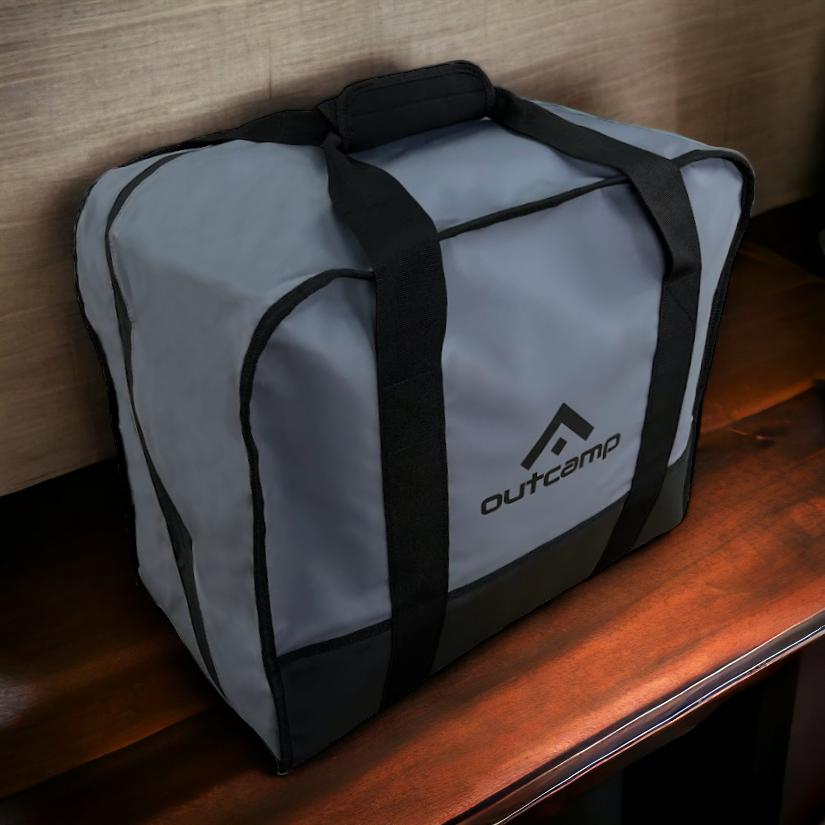
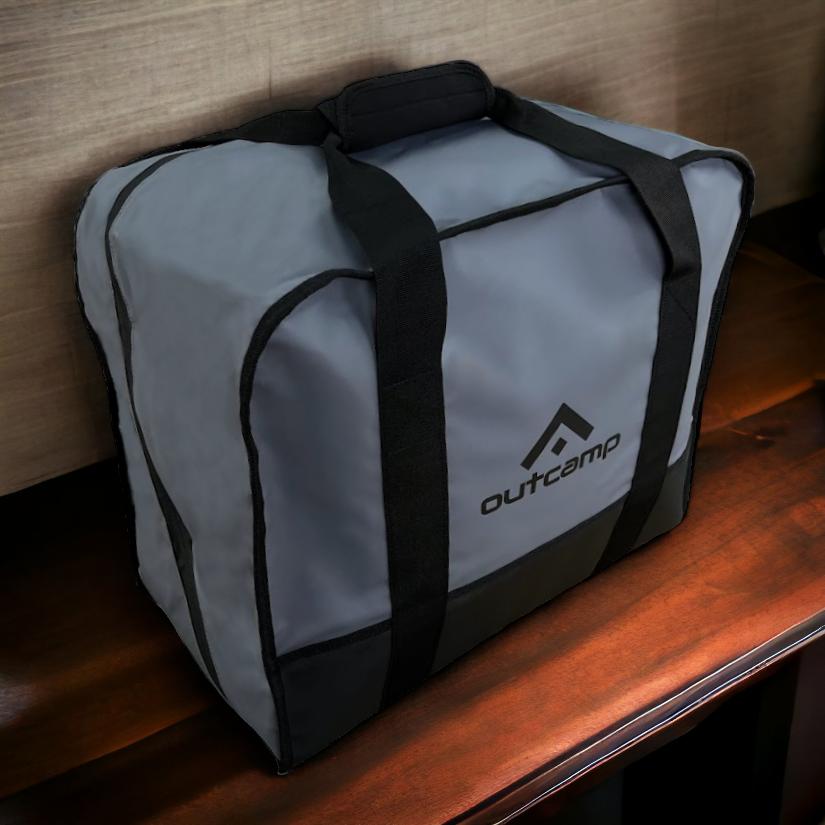
The mobility of the Starlink Mini is its greatest strength, but it is also a vulnerability. On a regional project, a dish might move between half a dozen vehicles and sites in a single week. Each transit is an opportunity for damage. Using a Starlink Mini Hard Protective Travel Case ensures that the sensitive face of the dish and the precision mounting hardware are protected during site mobilisations. This isn't just about luggage; it is about protecting the communications lifeline of the project. A cracked dish face in the middle of a shift is a production-stopping event; the hard case is a low-cost insurance policy for operational continuity.
The Future of Remote Industrial Intelligence
As we move toward the remainder of 2026 and into 2027, the role of IoT and Industry 4.0 in remote Australia will only deepen. We are moving toward a future where the site doesn't just generate data; it generates intelligence. AI-driven systems in the cloud will monitor the "connected pit" and automatically adjust machine duty cycles, optimise fuel consumption, and manage logistics flows with minimal human intervention. But this intelligent future is entirely dependent on the quality and reliability of the data link.
For the Australian mining, construction, and agricultural professional, the adoption of Starlink Mini is the first step in this digital journey. It is the bridge between the isolated asset and the global data network. By investing in the technical hardening of their setups—focusing on industrial power supplies, marine-grade mounting, and waterproof networking—organisations are ensuring that their digital transformation is built on a foundation of resilience. The "connected pit" is the new standard for industrial excellence in Australia, and the path to that standard is powered by the rugged, purpose-built accessories that make the deployment work in the real world.
FAQ: IoT and Starlink Mini Deployment
How does Starlink Mini compare to traditional industrial satellite links for IoT?
Traditional satellite links (like L-Band or VSAT) were often too expensive or too high-latency for real-time Industry 4.0 applications. Starlink Mini provides roughly ten times the bandwidth and one-fifth the latency of older systems, allowing for high-resolution telemetry, live video streaming, and rapid cloud-syncing that was previously impossible in remote zones.
Is the Starlink Mini rugged enough for a mining excavator or a tractor?
The Starlink Mini is IP67 rated, meaning it is sealed against dust and water. however, it requires industrial mounting to handle the extreme vibration of heavy gear. Using a 1.5-inch ball modular mount system or a high-force magnetic mount is essential to ensure the mechanical stresses of the machine don't translate into hardware failure.
Can I run a fleet of Starlink Mini units from a single dashboard?
Yes, the Starlink commercial portal allows fleet managers to monitor the status, location, and data usage of multiple units from a single interface. When integrated with a third-party IoT dashboard, this provides a 360-degree view of site connectivity and asset health across the entire operation.
Conclusion
The isolation that once defined the Australian outback is being dismantled by the technical convergence of high-speed satellite internet and Industry 4.0. The "Connected Pit" is now a reality, enabling regional operators to work with a level of precision, safety, and efficiency that was once the exclusive domain of the metropolitan industrial zone. With Starlink Mini, the comms bottleneck has been removed, allowing the data generated by remote assets to reach the cloud in milliseconds rather than days.
However, the resilience of this digital future depends on the technical integrity of the deployment. By standardising on industrial power solutions like the Starlink Mini 12V to 30V Power Supply (Anderson Plug) and protecting the hardware with a Starlink Mini Hard Protective Travel Case, Australian organisations can ensure their connectivity is as rugged as the terrain they operate in. As we move deeper into 2026, the companies that embrace this connected model will find themselves at the forefront of a more efficient, safer, and more productive Australian industry. If you are ready to modernise your remote site comms, explore the full range of professional Starlink accessories from Outcamp today.




Leave a comment (all fields required)