


The Compliance Challenge in Regional Australia
For the Australian mining, energy, and agricultural sectors, environmental compliance is not a choice; it is a fundamental license to operate. Whether it is monitoring ground water levels in the Galilee Basin, tracking air quality near a Pilbara iron ore pit, or reporting on wildlife activity in a remote conservation zone, the regulatory requirements for real-time oversight are more stringent than ever. Historically, however, the technical reality of "real-time" was anything but. Data from remote sensor arrays frequently had to be logged locally on physical drives and collected by technicians via 4WD or helicopter. This manual collection cycle introduced a data-entry lag that could hide environmental breaches for weeks, increasing the risk of significant fines and ecological damage.
In 2026, the arrival of the Starlink Mini has fundamentally redefined the "reporting floor" for regional environmental oversight. By providing a portable, low-latency, and high-bandwidth satellite link that can be deployed at the sensor face, Starlink Mini is enabling a shift from reactive monitoring to proactive compliance management. We are no longer talking about "checking the levels next Tuesday"; we are talking about live cloud-based dashboards that update every sixty seconds from the most isolated corners of the continent. However, transforming a satellite dish into a resilient compliance tool requires a technical approach to deployment that focuses on environmental hardening, power stability, and secure data integration.
Real-Time Telemetry and Cloud-Integrated Compliance
The shift to high-bandwidth environmental monitoring is driven by the need to move beyond simple "pass/fail" data points. In 2026, compliance reporting often requires massive datasets, including high-resolution video streams from fish passages, LiDAR-captured terrain changes, and continuous chemical analysis from tailings dams. These datasets are too large for traditional low-earth-orbit (LEO) or legacy satellite links. Starlink Mini provides the necessary "fat pipe" to move this data directly from the field to the cloud, allowing for the application of AI-driven anomaly detection and automated alert systems that can identify a potential breach long before it becomes an incident.
Eliminating the Manual Data Gap
The most immediate benefit of a Starlink-enabled monitoring post is the elimination of the site-visit cycle. In regional Australia, the cost of a single helicopter flight to collect data from a remote weather station or water sensor can exceed several thousand dollars. By standardising on Starlink Mini, environmental managers can maintain 24/7 asset visibility without leaving the head office. This "edge-to-office" visibility ensures that compliance records are always current, satisfying the transparency requirements of government regulators and community stakeholders while significantly reducing the operational overhead of data collection.
High-Definition Visual Verification
In many environmental contexts, seeing is believing. Real-time visual verification of site conditions—such as smoke detection in forestry zones or water turbitity in sensitive catchments—is a critical part of a modern compliance strategy. Starlink Mini's bandwidth allows for multiple high-definition security cameras and environmental monitors to share a single link. This allows remote teams to conduct visual site inspections during extreme weather events when physical access is impossible, ensuring that the "eyes on the ground" are never closed by a mobile black spot.
Supporting Multi-Agency Data Sharing
Large-scale regional projects often involve multiple stakeholders, from private developers to state government agencies and First Nations groups. Coordinating environmental data across these groups is a logistical challenge when data is siloed in offline loggers. Starlink Mini enables the creation of shared "common operating pictures," where live environmental telemetry is pushed to a central, secure repository accessible by all authorised parties. This integrated approach improves data integrity and ensures that all stakeholders are working from a single source of truth, reducing the likelihood of reporting disputes and improving the overall quality of environmental management.
\"The ability to see the live water levels on a remote station in the Kimberley from a desk in Sydney has completely changed our risk profile. We are no longer working on yesterday's data; we are working on what's happening right now.\"
Hardening the Monitoring Hub for the Australian Outback
An environmental comms link is only useful if it remains operational when the conditions get rough. For a Starlink Mini deployment to meet industrial compliance standards, it must be integrated into the site infrastructure with technical precision. This involves more than just a stable mount; it requires a redundant power strategy and physical protection against the elements to ensure the hardware survives the rigours of the Australian regional environment across multiple seasons.
Industrial-Grade Mounting for Remote Assets
For standalone monitoring posts, the dish must be positioned for a 360-degree clear view of the sky, often above surrounding vegetation or machinery. Standard consumer mounts are rarely sufficient for the high wind loads and mechanical stresses of a remote site. Standardising on high-force mounting solutions is essential. The Starlink Mini Stainless Steel Magnetic Mount or an alloy mounting arm allows the dish to be securely attached to a pylon, equipment shed, or a dedicated monitoring mast. This mechanical security ensures the dish doesn't shift during a winter storm or a regional cyclone, maintaining the data link when it is needed most.
Redundant Power: The standalone Site-in-a-Box
Power reliability is the primary failure point for remote environmental monitors. In a standalone setup, the system must survive for days or weeks without maintenance. While solar-integrated battery banks are common, they must be architected for the specific draw of the Starlink hardware. For mobile monitoring crews or temporary site setups, the PeakDo LinkPower 2 Portable Power Bank (99Wh) is the professional choice, providing 7-10 hours of standalone runtime for the Starlink Mini. For permanent installs, using a direct-DC connection via the Starlink Mini 12V to 24V Power Supply (Anderson Plug) ensures the most efficient draw, bypassing the heat and inefficiency of a 240V inverter and extending the site's overall power autonomy.
Physical Protection from Dust and Impact
Australian regional environments are characterised by fine, abrasive dust and the risk of physical impact from wildlife or falling debris. To maintain a resilient link, the hardware must be protected. A Starlink Mini Silicone Cover or a Starlink Mini Clear Protective Cover adds a vital layer of defence against dust ingress and impact. These covers are an inexpensive insurance policy for a piece of equipment that serves as a compliance lifeline. Furthermore, ensuring that all ethernet connections are sealed with a Waterproof Ethernet Port RJ45 prevents moisture and dust from compromising the data link at the connectors during tropical monsoons or outback dust storms.
The Future of Connected Conservation
As we move further into 2026, the role of high-speed satellite internet in regional environmental management will only continue to expand. We are already seeing the integration of AI-driven wildlife tracking systems and automated soil health analysis that run in the cloud, fed by live data links from the field. These technologies share one common requirement: a reliable, high-bandwidth connection. Starlink Mini is that connection. By eliminating the regional comms gap, it is enabling Australian conservation and environmental compliance to work smarter, safer, and more sustainably.
For the environmental professional, the transition to Starlink isn't just about "getting better internet"; it is about modernising the entire compliance lifecycle. The organisations that embrace this connectivity now will be the ones best positioned to manage the increasingly complex and distributed networks of the future. The technical path to a connected outback is clear. It starts with the right satellite hardware and is sustained by the rugged, purpose-built accessories that make the deployment work in the real world.
FAQ: Environmental Telemetry with Starlink Mini
How does Starlink Mini improve environmental data collection on remote sites?
Starlink Mini provides a high-bandwidth, low-latency link that allows for the continuous transmission of massive datasets from remote sensors (water levels, air quality, wildlife cameras) directly to cloud-based monitoring platforms. This eliminates the need for manual site visits and data-entry lag.
Can Starlink Mini be used for long-term standalone monitoring in the outback?
Yes, when paired with a high-efficiency DC power system like the PeakDo LinkPower 2 or a solar-integrated battery bank, Starlink Mini provides a 'site-in-a-box' connectivity solution. Its IP67 rating and rugged build make it suitable for permanent installation in harsh outback environments.
What accessories are needed to protect environmental monitoring hardware?
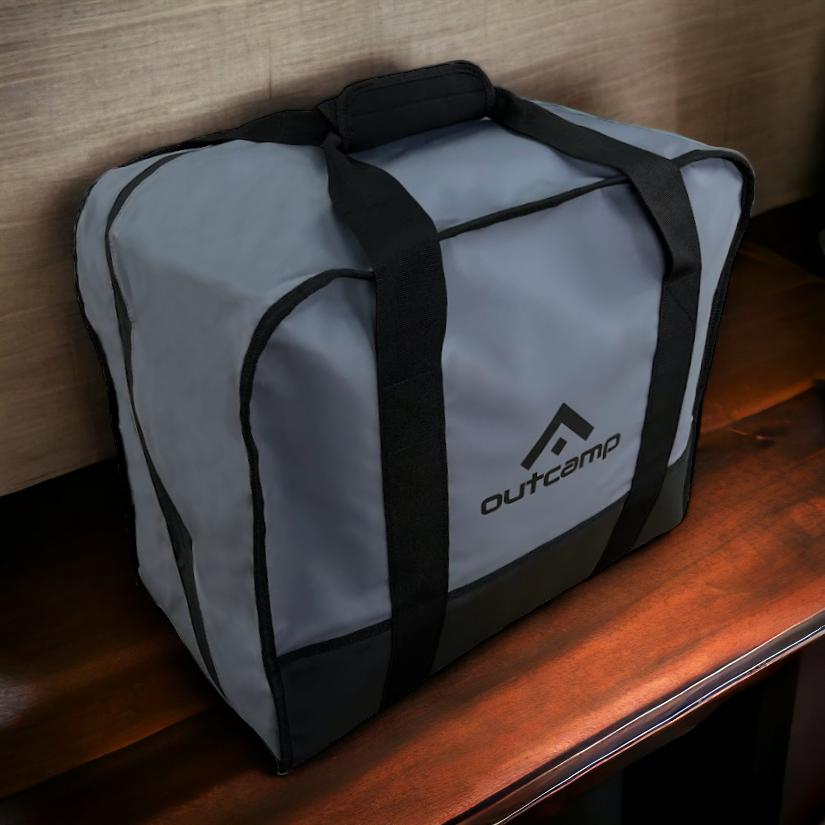
To ensure long-term resilience, we recommend using a Starlink Mini Stainless Steel Magnetic Mount or alloy mounting arm for secure positioning, combined with a silicone cover to protect against dust ingress and a hard protective travel case for safe transport during site redeployments.
Conclusion
The mobile black spot has been a persistent and dangerous variable in Australian environmental compliance for too long. In 2026, the technology exists to remove that variable entirely. The Starlink Mini, when deployed with technical rigour, provides the permanent, high-speed connectivity required to meet the highest standards of regulatory reporting and site safety. It transforms the remote monitoring post from a disconnected data-logger into a live gateway for industrial intelligence.
However, the resilience of that connectivity link is only as strong as its weakest point. By investing in industrial-grade mounting solutions like the Starlink Mini Stainless Steel Magnetic Mount and efficient power options like the PeakDo LinkPower 2 Portable Power Bank (99Wh), Australian environmental managers can ensure their reporting systems are as reliable as the data they collect. As we move forward, those who leverage these technical tools to bridge the regional gap will define the new standard for environmental excellence in remote Australia. If you are ready to eliminate the black spots from your compliance map, explore the full range of professional Starlink accessories from Outcamp today.




Leave a comment (all fields required)