


Starlink Mini for Australian Transport and Logistics: Keeping Long-Haul Fleets Connected
Australia's transport and logistics industry operates across some of the most remote and demanding terrain on the planet. Road trains hauling freight between Darwin and Adelaide, refrigerated trucks running overnight from Broken Hill to Sydney, and supply vehicles servicing remote stations across the Pilbara all share the same problem: reliable internet access disappears the moment they leave a regional town, and it can stay gone for hundreds of kilometres at a stretch.
For fleet operators and logistics managers, that connectivity gap is more than an inconvenience. It cuts drivers off from dispatch systems, blocks electronic work diaries and fatigue monitoring apps, stalls real-time cargo tracking, and leaves workers isolated when something goes wrong. As digital compliance requirements and customer expectations for live shipment visibility keep tightening, the patchwork of mobile network coverage across regional and outback Australia simply isn't good enough anymore. Starlink Mini transport logistics connectivity is changing how Australian fleets operate in remote conditions.
Why Traditional Mobile Coverage Fails Long-Haul Logistics in Australia
Australia's mobile networks have improved significantly in populated corridors, but the hard truth for transport operators is that coverage ends well before the freight does. A road train running the Nullarbor Plain, the Tanami Track, or the Oodnadatta Track will spend the majority of its journey with zero mobile signal. Even on major highways between capital cities, dead zones are common enough to disrupt continuous tracking and communication systems.
This creates real operational problems that compound across a fleet over time. Drivers miss updated routing instructions, fatigue management systems lose connection and generate compliance alerts, cargo sensors stop reporting, and fleet management platforms show vehicles as offline for hours at a stretch. When something goes wrong — a breakdown, a road closure, a medical issue — a driver may be genuinely unreachable via conventional means.
The Cost of Connectivity Gaps for Fleet Operators
Every hour a vehicle runs without connectivity costs a logistics business in ways that aren't always easy to quantify. Live tracking gaps mean customers and dispatch teams can't confirm delivery windows, which drives up call centre volume and erodes confidence in the service. Electronic work diary systems that lose connection during mandatory breaks require manual reconciliation later, adding administrative overhead and potential compliance risk under the Heavy Vehicle National Law.
More seriously, lone worker safety protocols depend on regular check-ins and continuous GPS visibility. A driver who experiences a medical emergency or vehicle fire in a mobile dead zone has no way to call for help through conventional means. That exposure is both a human cost and a significant liability for the operating company — one that's increasingly difficult to justify when a practical alternative exists.
Why Satellite Has Historically Been Impractical for Trucks
Older satellite internet services had the bandwidth and latency characteristics of a slow DSL connection, making them unsuitable for the real-time data exchange that modern fleet management systems demand. They were expensive, bulky, and required professional installation that made them impractical for small to medium transport operators. Most companies wrote them off and accepted connectivity gaps as a cost of doing business in remote Australia.
Starlink Mini changes this calculus entirely. It's a compact, portable satellite internet terminal that delivers low-latency broadband — typically 50 to 200 Mbps downloads — from a dish small enough to mount on a truck cab roof, inside a ute tray, or on a tripod at a remote depot. The hardware is light enough to move between vehicles and the software setup takes minutes rather than days. Combined with the right mounting and power accessories, it gives transport operators continuous coverage that follows the vehicle wherever it travels across Australia.
What Starlink Mini Enables That Mobile Networks Cannot
With a reliable Starlink Mini connection on board, a long-haul vehicle can run electronic work diaries continuously without logging gaps, maintain live GPS tracking for fleet management platforms, upload dashcam footage to cloud storage in the background, and keep drivers connected to dispatch via VoIP and messaging apps. None of this is theoretical — it works in practice on routes where mobile data has never been available.
Real-time cargo condition monitoring, temperature logging for refrigerated loads, and digital proof-of-delivery systems all become viable when a vehicle has consistent broadband regardless of location. The compliance and customer experience benefits are direct and measurable, and the safety improvement for isolated drivers is significant.
Mounting Starlink Mini on Commercial Vehicles
Getting Starlink Mini installed securely on a working truck or fleet vehicle requires purpose-built hardware. The dish needs a clear view of the sky, a stable mounting point that handles highway vibration and rough tracks, and a position that doesn't interfere with existing aerials, lights, or load clearance requirements on bridges and loading docks.
For most truck configurations, a roof-mounted or cab-top installation delivers the best sky view and the most consistent performance. Outcamp's Starlink Mini Roof Rack Mount provides a solid, low-profile platform that bolts to standard roof racks and keeps the dish stable at highway speeds. For vehicles without a roof rack, the Starlink Mini Magnetic Mount offers a strong tool-free solution, while the MagLock Pro Magnetic Vehicle Mount is a heavier-duty option with a reinforced magnetic base designed to stay in place on corrugated outback roads.
Bull Bar and Railing Mount Options
Some fleet operators prefer to mount on bull bars or rail systems rather than the roof, particularly for vehicles that frequently pass through low-clearance areas like loading docks, weighbridge shelters, or grain shed awnings. The Starlink Mini BullBar/Railing Mount is purpose-built for this application and clamps to standard bull bar rail diameters without requiring drilling into the bar itself.
For vehicles with sports bars or ute tray uprights, the Starlink Mini Sports Bar Ute Mount and the Starlink Mini Clamp on Universal Mount provide flexible options that suit vehicles being reconfigured between tasks. Transport companies that need to move Starlink Mini between multiple vehicles will find these clamp-on options considerably faster to work with than permanent installations, reducing turnaround time between runs.
Protecting the Dish on Rough Hauls
Vibration from corrugated tracks, railway crossings, and highway expansion joints can stress mounting hardware over time. It's worth inspecting mount fasteners regularly on vehicles that spend significant time on unsealed roads. When the dish isn't deployed — during loading, at depots, or when passing through low-clearance routes — the Starlink Mini Dish Protector Shield prevents physical damage to the surface of the dish.
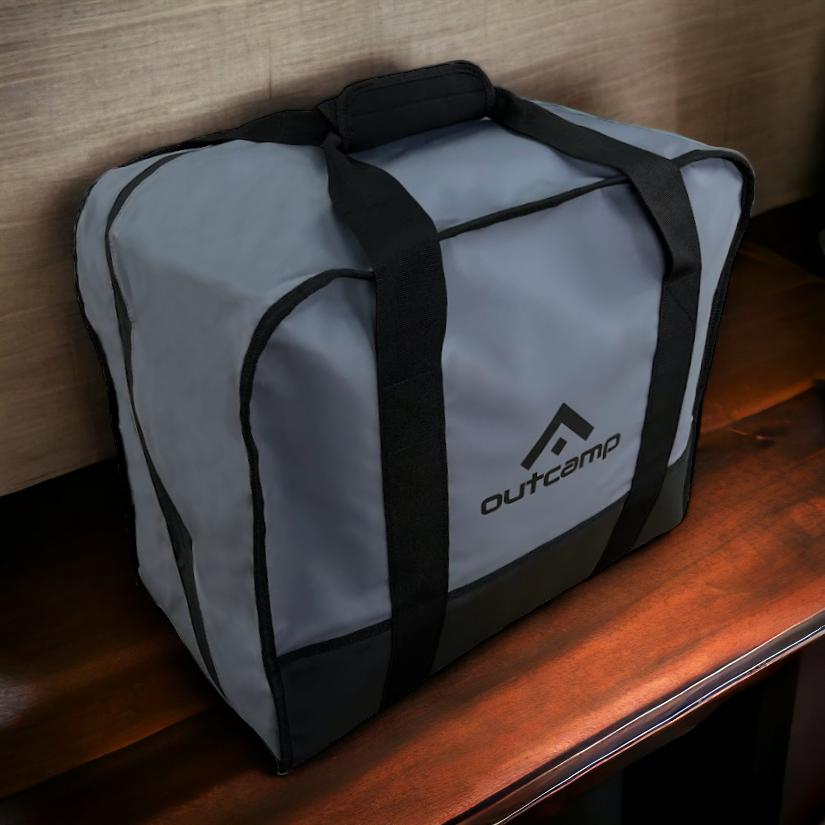
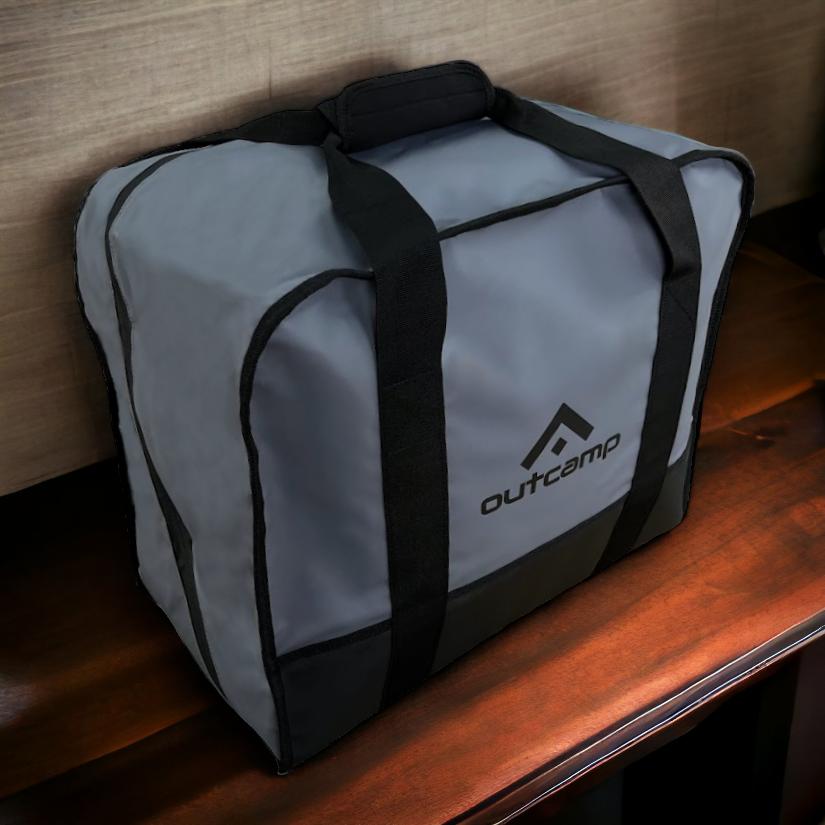
For drivers who need to stow the dish safely during rough legs of a journey or when temporarily removing it from the vehicle, the Starlink Mini Hard Protective Travel Case provides solid protection. The Starlink Mini Carry Bag is a lighter option suitable for regular handling during driver changeovers and depot check-ins, keeping the dish and cables organised without adding bulk to the cab.
Powering Starlink Mini from a Truck's Electrical System
Starlink Mini runs on 20V DC power, which means it can't be connected directly to a standard 12V or 24V vehicle outlet. For trucks and commercial vehicles — which typically run either 12V or 24V electrical systems depending on make and configuration — you need a converter that steps up the voltage reliably without introducing electrical interference or overheating under sustained load.
Outcamp's Starlink Mini 12V to 24V Power Supply (Anderson Plug) and Starlink Mini 12V to 30V Power Supply (Anderson Plug) are both designed for commercial vehicle applications and use Anderson plug connectors — the industry standard for auxiliary power in Australian fleet vehicles. These units integrate cleanly into existing auxiliary power setups, including those already running Anderson plugs for refrigeration units, lighting bars, air compressors, or recovery equipment.
Hardwiring for Permanent Fleet Installations
For vehicles in a permanent fleet configuration where Starlink Mini will stay installed long-term, a hardwired setup is more reliable and professional than a plug-in solution. Vibration and repeated connect-disconnect cycles can loosen plug connections over time on working vehicles, and a hardwired installation eliminates that risk entirely. The Starlink Mini Hardwire Power Cable (3.0M) connects the dish directly to the vehicle's electrical system via a fixed fuse and wiring run, providing a solid, low-maintenance connection.
The Starlink Mini 20V Hardwired Power Socket with Integrated Voltage Booster takes this a step further, providing a dedicated panel-mounted socket that handles voltage conversion internally. This is a clean, professional solution for fleet vehicles that will run Starlink Mini as a permanent fixture — the socket can be installed in the cab fascia or in a weatherproof enclosure in the tray, keeping the installation tidy and protected from the elements.
Backup Power for Depots and Overnight Stops
Remote depots, roadhouse stops, and overnight parking areas often have limited or unreliable mains power. The Starlink Mini Portable UPS Power Supply (7–10 Hours) gives drivers a standalone power source that can keep the dish running through extended rest stops, maintaining tracking and communication system activity even when the engine is off and the vehicle's alternator isn't charging. This is particularly useful for managing the required ten-hour rest breaks under fatigue regulations, where continuous system connectivity may be needed for compliance logging.
For drivers who carry Makita or Milwaukee power tool batteries for on-road maintenance and repairs, the PeakDo LinkPower 2 Portable Power Bank (99Wh) can power Starlink Mini from the same battery ecosystem already on the vehicle. The PeakDo Power Dock for Makita provides a stable platform for running these batteries as a power source, reducing the number of separate charging systems a driver needs to manage during a long haul.
Depot and Yard Connectivity with Starlink Mini
The connectivity challenge isn't limited to moving vehicles. Remote depots, transfer yards, and staging areas in outback Australia often run on expensive and slow legacy satellite plans or simply do without reliable internet access altogether. Scheduling systems, driver check-in processes, vehicle inspection software, and even basic communications all suffer as a result.
Installing Starlink Mini at a fixed remote depot is straightforward. The Starlink Mini Flat Mount provides a clean, low-profile installation on a depot roof or container top, while the Starlink Mini Tripod Mount is ideal for temporary or semi-permanent setups that need to be relocated or adjusted without tools. Both options give the depot consistent broadband that supports the kinds of operational systems that logistics companies now rely on.
Networking Multiple Devices at a Remote Site
A single Starlink Mini dish can serve a small depot office across multiple wired and wireless devices. The Starlink Mini/Gen 3 Ethernet Adapter (4 Ports) connects computers, printers, time-and-attendance terminals, and other wired devices through a single dish connection, providing more reliable throughput than WiFi for fixed workstations. For outdoor installations where the cable run needs to withstand dust, rain, and temperature extremes, the Gen 3/Mini SPX to RJ45 Waterproof Ethernet Adapter Kit and Gen 3/Mini Waterproof Connector Ethernet Cables are built for the conditions.
If your depot needs to share internet across a larger area — a yard office, a driver's amenities block, and a maintenance shed, for example — connecting the Starlink Mini router to an existing network switch or a secondary access point gives you full coverage without multiple dish subscriptions. The hardware investment is modest compared to the operational improvement.
Improving Safety and Compliance at Remote Locations
Reliable depot connectivity also supports the safety management systems that remote transport operations are required to maintain. Driver check-in systems, fatigue monitoring platforms, incident reporting tools, and CCTV recording with cloud backup all depend on consistent internet access. When a depot is genuinely offline, these systems either fail silently or generate compliance gaps that create problems during audits.
With Starlink Mini providing broadband at the depot, these systems run as intended. Drivers checking in at the end of a long haul can complete their electronic work diary submissions, upload inspection photos, and access updated route and weather information before the next run — all from a location that may previously have had no usable internet at all.
Building a Fleet Connectivity Setup That Works
When evaluating Starlink Mini for a transport or logistics operation, a few practical decisions will determine how effectively it integrates into your existing setup. The first is power architecture. Most Australian prime movers run 24V systems, so confirm you're ordering the right voltage converter for your fleet's configuration. Anderson plug connectivity is almost always the right choice for vehicles already wired for auxiliary power — it's fast to connect, standardised across the industry, and allows the dish to be moved between vehicles without rewiring.
Second, think about how often the dish will be removed and reinstalled. For fleet vehicles where the driver changes between runs, a magnetic mount combined with a carry bag is the most practical workflow — quick to set up, quick to remove, and easy to transport without damaging the hardware. For vehicles with a dedicated driver and a fixed route, a permanent hardwired installation is worth the additional setup time for the improved reliability it delivers.
Third, consider your depot and base connectivity needs alongside your vehicle requirements. A Starlink Mini subscription covers one active terminal at a time, so an operation that needs both vehicle and depot coverage will need to plan accordingly. Outcamp's full range of accessories means you can configure both fixed and mobile installs from the same product catalogue, keeping procurement simple regardless of how many vehicles or locations are involved.
Conclusion: Closing the Connectivity Gap for Australian Transport
Australia's transport and logistics sector has always found practical ways to operate across vast distances and difficult terrain. Starlink Mini connectivity — supported by the right mounting, power, and cabling accessories — is the next practical tool in that tradition. It closes the connectivity gap that has defined remote haul operations for decades, brings compliance and safety systems online in areas where they couldn't previously function reliably, and gives fleet operators the real-time visibility they need to manage vehicles and freight across the continent.
Outcamp stocks the full range of accessories needed to integrate Starlink Mini into commercial transport and logistics operations, including vehicle mounts suited to a wide range of truck and ute configurations, power solutions for 12V and 24V systems, hardwiring kits for permanent fleet installs, ethernet adapters for depot networking, and protective carry bags and cases for regular dish handling between runs. Whether you're outfitting a single vehicle or standardising connectivity across an entire fleet, the Outcamp product range has the components to do it properly.




Leave a comment (all fields required)