


Australia’s forests, national parks, and conservation reserves stretch across some of the most isolated terrain on the planet. From the dense rainforests of Far North Queensland to the vast eucalypt woodlands of Western Australia, the people tasked with protecting and monitoring these environments face a fundamental challenge that has nothing to do with ecology — reliable internet connectivity. Without it, critical data stays trapped on devices in the field, ranger teams operate in communication blackspots, and environmental compliance reporting becomes a logistical nightmare of USB drives and delayed uploads.
Starlink Mini is changing the way forestry workers, park rangers, environmental scientists, and conservation teams operate across remote Australia. With a compact, portable satellite dish that delivers high-speed internet virtually anywhere with a clear view of the sky, field teams can now upload sensor data in real time, coordinate across vast distances, and maintain the kind of digital connectivity that modern environmental management demands. Paired with the right accessories — purpose-built mounts, portable power solutions, and protective carry gear from Outcamp — Starlink Mini becomes a genuinely practical tool for professionals working in Australia’s most remote landscapes.
Real-Time Environmental Data Collection with Starlink Mini
The shift from manual data collection to connected sensor networks has transformed environmental science globally, but in remote Australia, the lack of reliable internet has kept many monitoring programs stuck in an older paradigm. Teams still drive hours to collect SD cards from weather stations, manually download wildlife camera footage, and batch-upload water quality readings when they finally return to a town with mobile coverage. It works, but it introduces delays that can mean the difference between catching an ecological event as it happens and discovering it weeks later.
Starlink Mini bridges this gap by providing a persistent or on-demand internet connection at field sites that were previously completely offline. Whether you are running a long-term biodiversity study in a national park or monitoring air and water quality around a forestry operation, having connectivity at the point of data collection changes the entire workflow.
Weather Station and Climate Monitoring Networks
Remote automatic weather stations are the backbone of bushfire risk assessment, flood prediction, and long-term climate research across Australia. These stations generate continuous streams of temperature, humidity, wind speed, rainfall, and soil moisture data. In many cases, the stations rely on older satellite or radio telemetry systems that offer limited bandwidth and high latency, restricting the volume of data that can be transmitted in real time.
Deploying a Starlink Mini unit at or near a remote weather station cluster opens up significantly higher bandwidth for data transmission. Rather than transmitting compressed summary data every few hours, stations connected via Starlink Mini can push high-resolution datasets at frequent intervals, giving meteorologists and fire agencies a far more granular picture of conditions on the ground. For bushfire season planning, this level of detail can be critical.
Setting up Starlink Mini at a remote weather station is straightforward with the right mounting and power gear. The Starlink Mini Flat Mount works well on existing station infrastructure, while the Starlink Mini 12V to 24V Power Supply (Anderson Plug) allows the dish to run from the same solar battery systems that typically power weather instruments. For stations that require a more temporary or seasonal setup, the Starlink Mini Tripod Mount provides a stable, freestanding option that can be deployed and packed up as conditions demand.
Wildlife Monitoring and Camera Trap Networks
Camera trap networks have become one of the most important tools in Australian conservation, used to track everything from quoll populations in Tasmania to feral predator movements in arid zones. The limitation has always been data retrieval — someone has to physically visit each camera to swap memory cards, a process that can take days across a large survey area and risks disturbing the very wildlife being studied.
With Starlink Mini providing internet access at a central hub within the survey area, camera traps equipped with wireless connectivity can transmit images and video back to that hub for upload to cloud storage or research databases. This means researchers can review footage the same day it is captured, adjust camera placements remotely based on what they are seeing, and respond quickly to significant sightings. For threatened species monitoring programs, where early detection of population changes or predator incursions matters enormously, this responsiveness is a genuine advantage.
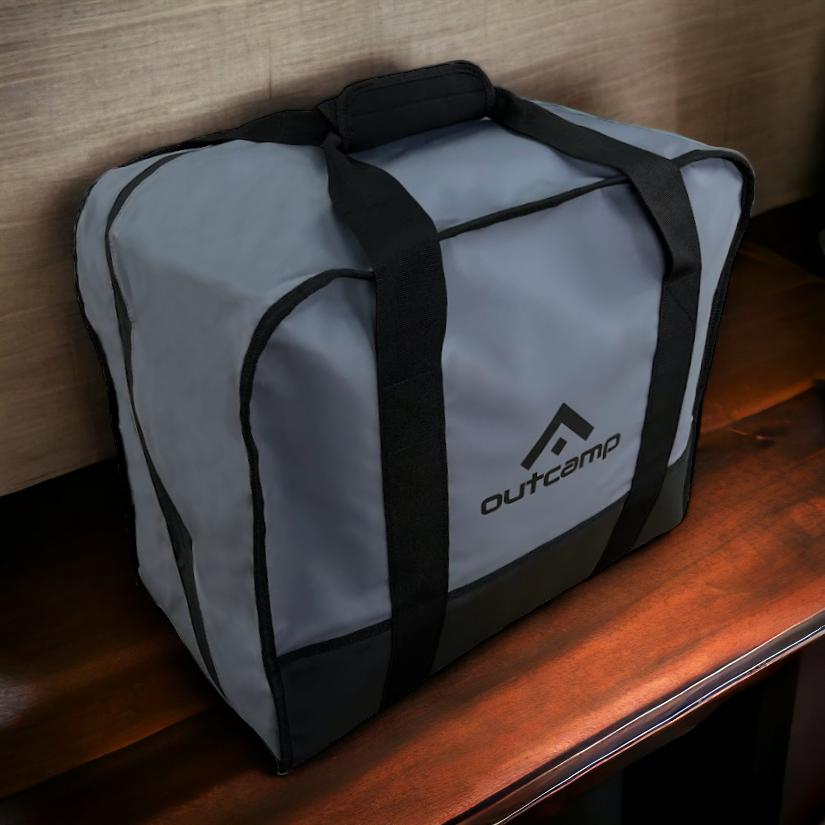
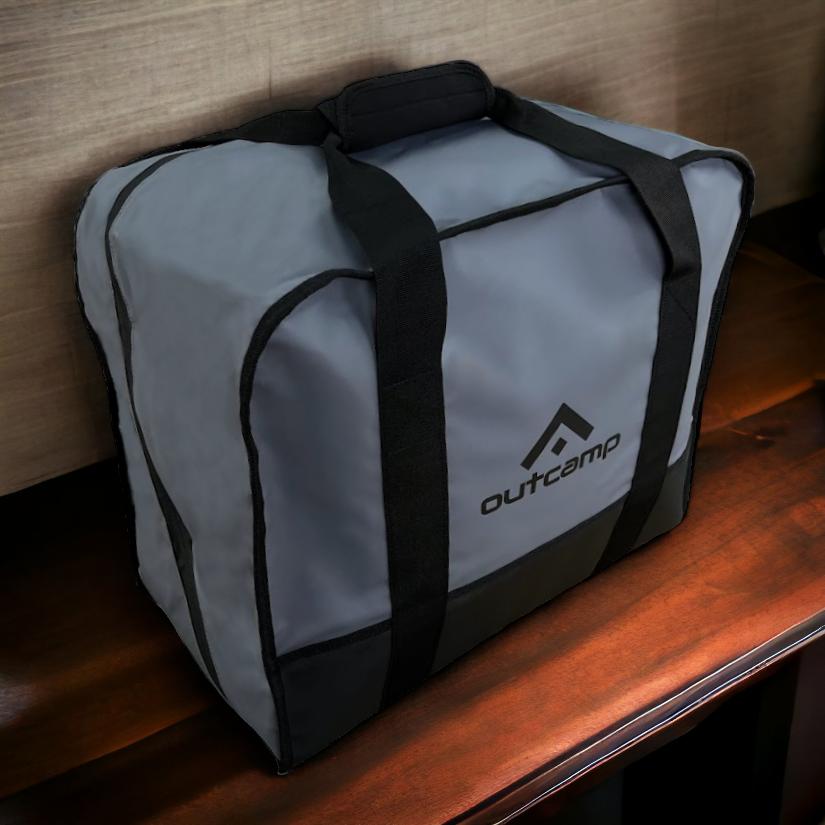
The Starlink Mini Carry Bag makes it practical to transport the dish into dense bushland on foot, protecting it from branches and moisture during the hike in. Once on site, the Starlink Mini Suction Mount or Starlink Mini Clamp on Universal Mount can secure the dish to a vehicle roof or temporary camp structure. Power in these settings often comes from portable batteries — the Starlink Mini Portable UPS Power Supply provides seven to ten hours of operation, enough for a full day of data uploading before needing a recharge.
Water Quality and Hydrological Monitoring
Australia’s river systems, wetlands, and groundwater resources are monitored by a network of sensors that track flow rates, turbidity, pH levels, dissolved oxygen, and contamination markers. Many of these sensors sit in catchments that are hours from the nearest town, and the data they generate is essential for both environmental management and regulatory compliance. Delayed data can mean a pollution event goes undetected for days, allowing contaminants to spread further downstream.
Starlink Mini enables near-real-time reporting from remote hydrological monitoring stations. When a sensor detects an anomalous reading — a sudden spike in turbidity after a storm, or an unexpected drop in dissolved oxygen — that data can be transmitted immediately to a central monitoring dashboard, triggering alerts and enabling a faster response. For organisations managing water quality around forestry operations, mining sites, or agricultural land, this kind of responsiveness is increasingly expected by regulators.
Mounting Starlink Mini near waterways requires some thought about splash protection and stability. The Starlink Mini Clear Protective Cover shields the dish from rain and spray without significantly affecting signal quality, while the Starlink Mini Silicone Cover adds a layer of impact and moisture resistance for rougher conditions. For vehicle-based monitoring teams who drive between multiple sites, the MagLock Pro Magnetic Vehicle Mount allows quick deployment from the vehicle roof at each stop, with the dish stowed safely inside a Starlink Mini Hard Protective Travel Case between locations.
Connectivity for Park Rangers and Field Teams
Managing a national park or state forest involves far more than ecological monitoring. Rangers coordinate pest control programs, manage visitor infrastructure, respond to incidents, conduct compliance inspections, and communicate with head office — all tasks that rely on connectivity. In many Australian parks, particularly in the Northern Territory, Western Australia, and outback Queensland, mobile coverage is nonexistent across the majority of the managed area.
For decades, rangers have relied on HF and VHF radio for voice communication, which works but offers no data capability. The administrative side of the job — submitting reports, updating databases, ordering supplies, completing workplace health and safety documentation — gets squeezed into the limited time spent at a ranger station with a satellite internet connection or, in some cases, has to wait until the ranger returns to a regional town.
Daily Operations and Reporting
Starlink Mini allows rangers to complete administrative tasks from wherever they are working that day, rather than driving back to base. Setting up the dish at a campsite or temporary work location takes a few minutes, and the connection is fast enough for email, database access, report submission, and even video calls with management or specialist advisors. This might sound like a minor convenience, but across a team of rangers covering hundreds of thousands of hectares, the accumulated time savings are substantial.
The practical reality of ranger work means gear needs to be tough and portable. The Starlink Mini Travel Backpack (USB Charging Port and TSA Lock) is designed for exactly this kind of use, allowing a ranger to carry the dish, cables, and a power bank in a single pack alongside other field equipment. For vehicle-based patrols, the Starlink Mini Sports Bar Ute Mount fits neatly onto the sports bar of a ute — a standard vehicle in most park fleets — keeping the dish elevated for a clear sky view while the vehicle is stationary.
Power management on extended patrols is a key consideration. Many ranger vehicles run a dual-battery system with Anderson plug outlets, making the Starlink Mini Anderson Plug to DC Power Cable (5.0M) a natural fit. The five-metre cable length gives enough reach to run from the vehicle battery box to the dish mounted on the roof or sports bar, and the Anderson plug connection is the same standard already used across most government and commercial fleet vehicles in Australia.
Bushfire and Incident Response Communications
When a bushfire breaks out in a remote national park, communication becomes the single most important capability for coordinating the response. Fire crews, aviation assets, incident management teams, and evacuation coordinators all need to share information in real time. While dedicated emergency radio networks handle voice communications, the modern incident management framework increasingly relies on digital tools — mapping platforms, resource tracking systems, situation reports, and weather data feeds — that require internet connectivity.
Starlink Mini can be deployed at a forward command post or staging area within minutes, providing the internet backbone for these digital tools. Its compact size means it can travel with an incident management team in a vehicle without taking up significant space, and its power requirements are modest enough to run from a vehicle battery or portable generator. In situations where the fire has destroyed terrestrial communications infrastructure — mobile towers, landlines, and microwave links — Starlink Mini’s satellite connectivity is completely independent of ground-based networks.
For incident response kits, the Starlink Mini Explorer Bundle Pack provides a ready-to-go package that includes the essentials for rapid deployment. Paired with the Starlink Mini Cigarette Lighter Power Supply (165W USB-C), the system can run directly from any vehicle’s cigarette lighter socket, eliminating the need for additional power infrastructure in the critical early hours of an incident response.
Coordination Across Large Conservation Estates
Many Australian conservation programs span multiple properties, parks, or management zones, with teams spread across vast distances. Coordinating feral animal control programs, prescribed burn schedules, weed management campaigns, and threatened species recovery efforts across these areas requires constant communication and data sharing. Without connectivity, coordination defaults to periodic meetings and delayed email exchanges, which slows decision-making and can lead to duplicated effort or missed opportunities.
With Starlink Mini, field teams can participate in video briefings from their work location, update shared project management platforms as tasks are completed, and access the latest maps and data layers before heading into the field each morning. This level of coordination was previously only possible for teams based at well-connected regional offices, not for the people actually doing the work on the ground.
The Starlink Mini Roof Rack Mount is a practical choice for conservation teams who move between sites frequently, as it secures the dish to the vehicle’s roof rack for transit and provides a stable elevated position for operation. For teams working from boats on rivers or coastal areas, the Starlink Mini Marine Rail Mount (25-32mm) attaches to standard marine railing, keeping the dish secure even in choppy conditions.
Compliance Reporting and Regulatory Requirements for Forestry Operations
Commercial forestry operations in Australia are subject to a comprehensive framework of environmental regulations that require ongoing monitoring and reporting. Timber harvesting plans, biodiversity assessments, erosion control measures, and rehabilitation progress all need to be documented and submitted to regulatory authorities, often within specified timeframes. The remote location of most forestry coupes means that the people collecting this data — environmental officers, harvest supervisors, and forestry planners — frequently work without internet access.
This disconnect creates a compliance bottleneck. Data collected in the field has to be transferred to a computer at a base office, formatted into the required reporting templates, and then submitted online. The lag between observation and submission can be days or even weeks, which creates risk for the operator if a compliance issue arises during that window.
On-Site Environmental Auditing
Environmental auditors visiting remote forestry sites can use Starlink Mini to access regulatory databases, submit preliminary findings in real time, and communicate with head office during the audit rather than compiling everything after the fact. This immediacy improves the accuracy of audits, as findings can be discussed and clarified while the auditor is still on site and can verify details first-hand.
For auditors who travel between multiple coupes in a day, the Starlink Mini Portable Magnetic Roof Mount provides a quick-attach, quick-detach solution that works on any vehicle with a metal roof. The magnetic base holds firm on corrugated forestry roads, and the dish can be removed and stowed in a Starlink Mini Carry Bag between stops in under a minute.
The Starlink Mini 3-in-1 DC Power Cable (USB-C/DC/Cigarette Lighter) is worth noting here, as it provides flexibility to power the dish from whichever source is available — USB-C power bank, DC outlet, or cigarette lighter socket. For auditors and compliance officers who use different vehicles on different days, this versatility eliminates the need to carry multiple cables.
Harvest Plan Updates and Spatial Data Uploads
Forestry harvest plans often need to be adjusted in response to conditions discovered during operations — an unexpected waterway, a hollow-bearing tree that needs to be retained, or a slope that exceeds the planned gradient. These adjustments require updated spatial data to be communicated to the planning team and, in some cases, to the regulator before work can proceed.
With Starlink Mini on site, harvest supervisors can upload GPS tracks, drone survey imagery, and annotated maps directly to cloud-based planning platforms. The planning team can review the data, update the harvest plan, and return the amended documents to the field — all within the same working day. Without connectivity, this process could take a week or more of back-and-forth, during which machinery and crews may be standing idle.
For operations running heavy machinery on site, the Starlink Mini Dish Protector Shield provides an extra layer of physical protection for the dish against dust, debris, and the general rough handling that comes with a working forestry coupe. The Starlink Mini Alloy Magnetic Mount With Shield combines a sturdy magnetic mount with integrated shielding, making it a practical all-in-one solution for vehicles operating in dusty or debris-heavy environments.
Drone Operations and Aerial Survey Data
Drones are increasingly used in forestry and environmental management for tasks including canopy health assessment, erosion mapping, fauna surveys, and post-harvest rehabilitation monitoring. The high-resolution imagery and LiDAR data generated by these flights can run to gigabytes per mission, and processing often requires cloud-based software platforms that need an internet connection.
Starlink Mini enables drone operators to upload survey data from the field immediately after a flight, rather than waiting until they return to an office with broadband. This means processed outputs — orthomosaics, elevation models, vegetation indices — can be available to the broader team within hours rather than days. For time-sensitive applications like post-fire damage assessment or flood extent mapping, this turnaround time is a significant operational advantage.
The Starlink Mini Makita 18V Battery Connector is a practical power option for drone operators who already carry Makita batteries for their equipment. Rather than packing a separate power source for Starlink Mini, operators can run the dish from the same battery platform they use for other tools, simplifying their field kit and reducing weight. The Starlink Mini Milwaukee 18V Battery Adapter offers the same convenience for teams running Milwaukee power tools.
Making Starlink Mini Work in Harsh Bush Environments
Australian bush environments present specific challenges for electronic equipment — extreme heat, dust, moisture, insects, and the ever-present risk of physical damage from branches, rocks, and rough handling. Starlink Mini is a robust piece of hardware, but treating it as indestructible is a mistake. The right accessories extend the life of the dish and ensure it performs reliably in conditions it was not specifically designed for.
Protection starts with transport. The Starlink Mini Hard Protective Travel Case provides rigid protection during vehicle transit on corrugated roads and rough tracks, while the Starlink Mini Travel Backpack allows foot-access to sites where vehicles cannot go. Once deployed, the Starlink Mini Silicone Cover protects against UV degradation and minor impacts, while the Starlink Mini Clear Protective Cover adds rain and splash resistance without blocking the signal.
For teams who use Starlink Mini daily in harsh conditions, investing in a reliable mounting and power system pays for itself quickly in reduced downtime and fewer damaged cables. The Starlink Mini Hardwire Power Cable (3.0M) offers a cleaner, more permanent power connection than USB-C for vehicle-based setups, and the Starlink Mini DC Extension Cable provides the extra reach needed when the dish has to be positioned away from the vehicle for a better sky view. Outcamp’s full range of Starlink Mini mounts, power solutions, cables, and protective accessories are designed specifically to make satellite connectivity practical and reliable in the conditions Australian professionals actually work in.




Leave a comment (all fields required)