


Starlink Mini for Emergency Services: Reliable Connectivity for Bushfire, Flood and Disaster Response
When disaster strikes in regional Australia, communication infrastructure is often the first casualty. Bushfires burn through above-ground cables and melt mobile towers. Floodwaters submerge exchanges and sever underground links. Cyclones flatten the very structures that keep communities connected. For emergency responders arriving at these scenes, the loss of connectivity is not just an inconvenience — it is a direct threat to the speed, coordination and effectiveness of their response.
Starlink Mini is changing how Australian emergency services operate in the field. Compact enough to fit in a backpack and capable of delivering high-speed satellite internet almost anywhere on the continent, it gives incident controllers, SES volunteers, rural fire brigades and paramedics a communications backbone that does not depend on ground-based infrastructure. When paired with the right accessories from Outcamp, Starlink Mini becomes a deployable, ruggedised connectivity solution built for the harsh realities of Australian disaster response.
Why Traditional Communications Fail During Australian Disasters
Australia's emergency communication challenges are shaped by the country's geography and climate. Vast distances between regional centres mean that a single point of failure — one damaged tower, one severed fibre route — can isolate entire communities. During the 2019-20 Black Summer bushfires, hundreds of mobile base stations were destroyed or rendered inoperable across New South Wales and Victoria. The pattern repeats with every major disaster event, leaving responders scrambling for alternatives at the moment they need reliable communications most.
Traditional satellite communication systems have been available for decades, but they come with significant drawbacks for emergency deployment. BGAN terminals are slow and expensive to operate. Legacy VSAT equipment is heavy, requires trained technicians to align, and demands a generator to run. These systems served a purpose when there were no alternatives, but they are fundamentally ill-suited to the fast-moving, resource-constrained reality of modern disaster response in Australia.
The Speed Problem in Disaster Response Communications
In the critical first hours of a disaster response, incident management teams need to establish a common operating picture. This means sharing mapping data, aerial imagery, weather forecasts, resource allocation spreadsheets and real-time situation reports across multiple agencies. Legacy satellite systems, with their limited bandwidth and high latency, simply cannot support these data-intensive workflows at the speed modern incident management demands.
Starlink Mini addresses this gap directly. With download speeds that support video conferencing, large file transfers and cloud-based incident management platforms, it provides the kind of bandwidth that emergency coordinators previously only had access to in permanent facilities. The difference this makes in the field is substantial — decisions that once waited hours for information can now be made in minutes.
The compact form factor of Starlink Mini is equally important. When a rural fire brigade captain arrives at a staging area, they do not have time to wait for a satellite technician to set up a complex system. They need to pull a dish from a vehicle, point it at the sky and have working internet within minutes. That is exactly what Starlink Mini delivers, and it is why emergency services across Australia are increasingly adding it to their standard deployment kits.
Infrastructure Independence as a Strategic Advantage
The fundamental advantage of Starlink Mini for emergency services is that it operates independently of terrestrial infrastructure. It does not rely on mobile towers, fibre optic cables, or local power grids. This makes it resilient in precisely the scenarios where traditional communications fail. A bushfire can destroy every piece of ground-based infrastructure within a hundred kilometres, and Starlink Mini will continue to function as long as it has power and a view of the sky.
This infrastructure independence also means that emergency services can establish communications in locations where no infrastructure has ever existed. Remote staging areas, forward observation posts in national parks, flood evacuation centres in rural halls — these locations have historically been communication dead zones during disaster events. Starlink Mini turns any of them into a connected operations centre within minutes of arrival.
For state emergency services and rural fire brigades operating across vast areas with limited budgets, this capability represents a fundamental shift in how they can coordinate their response. Instead of concentrating command functions at locations with existing connectivity, they can distribute their operations across the incident area, placing commanders closer to the action and improving situational awareness at every level.
Deploying Starlink Mini in Emergency Response Scenarios
Effective deployment of Starlink Mini in emergency situations requires more than just the dish itself. The operating environment during a disaster is harsh, unpredictable and unforgiving of equipment that is not properly protected and powered. Outcamp's range of Starlink Mini accessories has been designed with exactly these conditions in mind, providing the mounting, power and protection solutions that make field deployment reliable and repeatable.
Each type of emergency scenario presents unique challenges for connectivity deployment. Bushfire operations demand heat resistance and rapid mobility. Flood response requires waterproofing and elevated mounting. Storm damage recovery needs robust protection from debris and wind. Understanding these requirements and matching them with the right equipment setup is essential for emergency services planning their Starlink Mini deployment strategy.
Bushfire Operations: Mobile Command and Fireground Communications
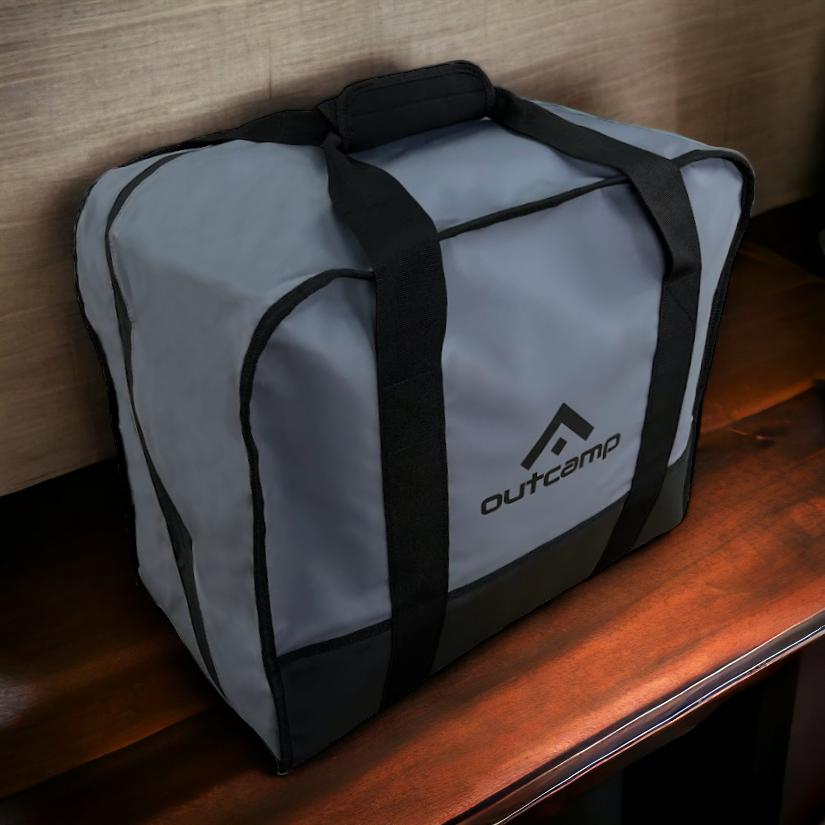
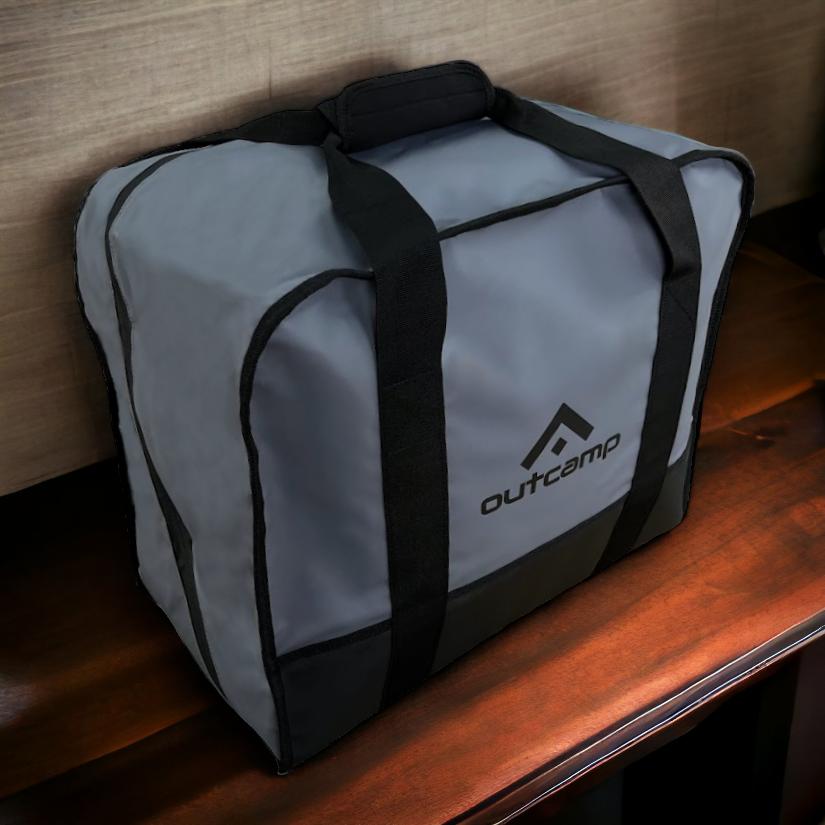
During bushfire operations, incident management teams frequently relocate as fire fronts shift. This demands a connectivity solution that can be set up, packed down and redeployed quickly. The Starlink Mini Carry Bag provides padded protection during transport between staging areas, while the Starlink Mini Magnetic Mount allows the dish to be secured to the roof of any emergency vehicle in seconds. For brigades using bull bars or roof racks on their tankers and command vehicles, the Starlink Mini BullBar/Railing Mount and Starlink Mini Roof Rack Mount offer more permanent installation options that keep the dish secure during off-road travel to fireground locations.
Power is a critical consideration during extended bushfire campaigns. Vehicles may be stationary at staging areas for hours or days, and running engines solely to charge devices is neither practical nor safe in a fire environment. The Starlink Mini Portable UPS Power Supply provides seven to ten hours of standalone operation, enough to maintain connectivity through a full operational shift. For vehicles with auxiliary battery systems, the Starlink Mini 12V to 24V Power Supply with Anderson Plug connection allows the dish to draw directly from the vehicle's power without risk of flattening the starting battery.
Protecting the equipment from heat, ash and ember attack is also essential. The Starlink Mini Silicone Cover shields the dish from airborne debris while maintaining signal quality. Combined with the Starlink Mini Dish Protector Shield, this setup provides a level of environmental protection that helps ensure the dish survives the challenging conditions around active firegrounds. The Starlink Mini Hard Protective Travel Case offers maximum protection during transport between incidents, preventing damage from equipment shifting in the back of a loaded emergency vehicle.
Flood Response: Elevated Connectivity for Inundated Areas
Flood events present a different set of challenges for connectivity deployment. Rising water levels can make ground-based mounting impractical, and the high humidity and rain that accompany flooding can affect unprotected equipment. The Starlink Mini Tripod Mount elevates the dish above potential water levels and provides a stable platform on soft or uneven ground. For operations based out of boats or temporary structures, the Starlink Mini Suction Mount secures the dish to any smooth surface without drilling or permanent modification.
SES flood boats and rescue vessels benefit from the Starlink Mini Marine Rail Mount, which clamps securely to standard 25-32mm rail fittings found on most emergency watercraft. This keeps the dish stable during boat operations and ensures that rescue coordinators maintain communications while operating on floodwaters. The ability to run real-time mapping and weather data on a rescue boat transforms flood response capability — crews can see updated inundation modelling, identify priority rescue locations and coordinate with other vessels without returning to shore.
Powering Starlink Mini during flood operations often means working away from vehicle-based power sources. The PeakDo LinkPower 2 Portable Power Bank provides a compact, portable power solution that can run the dish for extended periods away from vehicles. For crews using battery-powered tools from brands like Makita and Milwaukee, the Starlink Mini Makita 18V Battery Connector and Starlink Mini Milwaukee 18V Battery Adapter allow the dish to draw from the same battery packs that power their rescue equipment — a practical solution that reduces the amount of specialised gear teams need to carry.
Storm Damage and Cyclone Recovery: Hardened Connectivity Hubs
After severe storms or cyclones, emergency services often need to establish semi-permanent connectivity hubs at evacuation centres, recovery coordination points and community relief stations. These installations may need to operate for days or weeks while permanent infrastructure is repaired. The Starlink Mini Flat Mount provides a low-profile, secure mounting solution for temporary buildings and structures, while the Starlink Mini Clamp on Universal Mount adapts to whatever mounting surfaces are available in improvised recovery centres.
For these longer-duration deployments, hardwired network connections become important. Multiple agencies, government departments and relief organisations may need to share the same internet connection. The Starlink Mini/Gen 3 Ethernet Adapter with four ports allows the Starlink connection to be distributed to multiple devices via wired connections, providing more reliable and secure connectivity than Wi-Fi alone. The Gen 3/Mini SPX to RJ45 Waterproof Ethernet Adapter Kit ensures that outdoor cable runs between the dish and the operations centre remain protected from the elements.
Cable management in temporary installations is often overlooked, but it matters for both safety and reliability. The Starlink Mini Anderson Plug to DC Power Cable at five metres provides adequate reach between vehicle power sources and dish locations, while the Starlink Mini DC Extension Cable allows further extension when needed. The Starlink Mini 2-in-1 DC Power Cable + RJ45 Data combines power and data into a single run, reducing cable clutter in busy operations centres. Clean cable management is not cosmetic — in a high-traffic emergency operations centre, loose cables are a trip hazard and a point of failure.
Building a Starlink Mini Emergency Response Kit
Emergency services organisations looking to incorporate Starlink Mini into their standard equipment need a systematic approach to kit configuration. The goal is to create a self-contained deployment package that any trained operator can set up quickly in the field, with enough flexibility to handle the range of scenarios they are likely to encounter. Outcamp's product range provides the building blocks for these kits, and different configurations suit different operational requirements.
A well-designed emergency response kit balances comprehensiveness with portability. Carrying every possible accessory defeats the purpose of a rapid-deployment communications system. The key is to select the core components that address the most likely deployment scenarios for your particular service, with a few versatile items that extend capability when unusual situations arise.
The Rapid Deployment Kit: Vehicle-Based Operations
For services that primarily operate from vehicles — rural fire brigades, SES units, ambulance services — the vehicle-based kit is the most practical starting point. The Starlink Mini Explorer Bundle Pack provides a solid foundation, combining the essential accessories in a single package. To this base, add the MagLock Pro Magnetic Vehicle Mount for instant roof-top deployment, and the Starlink Mini 12V to 24V Power Supply with Anderson Plug for direct vehicle power connection.
The Starlink Mini Carry Bag serves as the primary transport container, keeping the dish and cables organised and protected between deployments. Inside the bag, include the Starlink Mini 3-in-1 DC Power Cable for versatile power connection options, and a spare Starlink Mini USB-C to DC Power Cable as a backup. The Starlink Mini Cigarette Lighter Power Supply offers a quick connection option for any vehicle without an Anderson plug setup, ensuring the kit works regardless of which vehicle it ends up in.
For units that frequently establish forward command posts away from their vehicles, adding the Starlink Mini Travel Backpack allows a single operator to carry the complete connectivity setup to a location on foot. This is particularly valuable for bushfire operations where vehicle access may be restricted, or flood scenarios where the operations centre is set up in a building some distance from the vehicle staging area.
The Extended Operations Kit: Multi-Day Deployments
When a disaster response extends beyond the initial hours into a multi-day operation, additional equipment becomes necessary. The Starlink Mini Portable UPS Power Supply is essential for maintaining connectivity during vehicle movements or power source transitions. Multiple units can be rotated to provide continuous coverage — one powering the dish while others charge from vehicle or generator power.
Network distribution becomes critical as more personnel and agencies arrive on scene. The Starlink Mini/Gen 3 Ethernet Adapter provides wired connectivity for command laptops and fixed workstations, while the Waterproof Ethernet Port RJ45 and Waterproof DC Wall Socket Passthrough allow professional-grade cable routing through walls and temporary structures. These components transform a basic Starlink connection into a proper field network that supports the complex communications requirements of a multi-agency response.
The modular mount system from Outcamp adds further versatility to extended deployments. The 1.5 inch ball mount system with various base options allows tablets, screens and additional devices to be mounted alongside the Starlink dish on vehicles or at command posts. The Double Socket Arms in various lengths provide adjustable positioning, and the VESA 75x75 Adapter supports mounting standard monitors for situation displays. This kind of infrastructure might seem like a luxury, but during a week-long disaster response, a well-organised command post with properly mounted screens and a reliable internet connection makes a measurable difference to coordination effectiveness and responder welfare.
Training and Operational Planning for Emergency Starlink Deployment
Having the right equipment is only half the equation. Emergency services need clear procedures and trained operators to make Starlink Mini deployment effective under pressure. The simplicity of the system is an advantage here — unlike legacy satellite equipment that required specialist knowledge, most personnel can learn to set up and operate Starlink Mini in a single training session. However, there are operational considerations that benefit from planning and practice.
Pre-positioning equipment, establishing standard operating procedures for deployment, and conducting regular drills that include communications setup as part of the exercise all contribute to faster and more reliable connectivity when a real incident occurs. Organisations that treat Starlink Mini as a standard piece of operational equipment — rather than a technology novelty — get the most value from it.
Site Selection and Signal Optimisation
Starlink Mini requires a clear view of the sky to connect with the satellite constellation. In most open Australian landscapes, this is straightforward. However, bushfire staging areas are often located under tree canopy for shade and protection, and flood operations may be conducted near buildings or under temporary shelters. Training operators to quickly assess a location for optimal dish placement — considering both signal quality and operational proximity — saves valuable time during deployment.
The various mounting options from Outcamp provide solutions for most site challenges. If ground-level placement is obstructed, the Starlink Mini Tripod Mount raises the dish above obstacles. Vehicle-roof mounting using the Starlink Mini Portable Magnetic Roof Mount gets the dish above surrounding clutter while keeping it accessible. For permanent or semi-permanent installations at known staging areas or fire stations, the Starlink Mini Flat Mount provides a reliable fixed-position option that is always ready for activation.
Operators should also be trained to use the Starlink app's built-in obstruction detection tool during site setup. A few minutes spent optimising dish placement can make the difference between a marginal connection that drops during critical communications and a solid, reliable link that supports the full range of incident management activities. Building this check into standard deployment procedures ensures it is not overlooked in the pressure of an active incident.
Power Planning for Extended Operations
Running out of power is the most common failure mode for field communications equipment. Emergency services should develop power plans that account for the full expected duration of an incident, with contingency for extensions. Starlink Mini draws modest power compared to legacy satellite systems, but continuous operation still requires planning.
The most reliable approach is to establish a primary and backup power chain. The primary connection might be the Starlink Mini 12V to 24V Power Supply running from a vehicle auxiliary battery, with the Starlink Mini Portable UPS Power Supply as an automatic backup when the vehicle needs to move or the battery needs recovery time. For operations with generator access, the Starlink Mini 20V Hardwired Power Socket with Integrated Voltage Booster provides a clean, regulated power feed that protects the dish from the voltage fluctuations common with field generators.
Services that standardise on Makita or Milwaukee battery platforms for their power tools have an additional option. The Starlink Mini Makita 18V Battery Connector or Starlink Mini Milwaukee 18V Battery Adapter lets the dish run from the same batteries used across other equipment, simplifying logistics and reducing the variety of power sources that need to be managed during an incident. When every minute of setup time counts, using a battery that is already charged, available and familiar to every crew member is a practical advantage.
The Future of Emergency Connectivity in Australia
Australian emergency services are entering a period of rapid capability improvement driven by satellite technology. As Starlink's constellation grows and Starlink Mini continues to evolve, the bandwidth and reliability available in the field will only increase. Organisations that invest now in building their deployment capability — training their people, equipping their vehicles and developing their operational procedures — will be best positioned to take advantage of these improvements as they arrive.
The value of reliable field connectivity extends beyond the immediate operational benefits. It supports better after-action review through improved data capture. It enables real-time training and mentoring of less experienced personnel by remote experts. It allows welfare checks and family communication for volunteers deployed away from home during extended incidents. These secondary benefits contribute to stronger, more resilient emergency service organisations over time.
Outcamp provides the complete range of Starlink Mini mounting, power and protection accessories that Australian emergency services need to build effective field connectivity kits. From magnetic vehicle mounts and ruggedised carry cases to portable power supplies and weatherproof networking equipment, every component is designed for the demanding conditions of Australian emergency response. Browse the full range at outcamp.com.au and equip your service with the connectivity capability that modern disaster response demands.




Leave a comment (all fields required)