


There's a quiet revolution happening across Australian campgrounds, national parks, and free camps. Instead of cramming five destinations into a two-week holiday, more Australians are pulling up at one spot and staying put. A week. A fortnight. Sometimes a month.
It's called slow travel, and in 2026, it's not just a trend — it's becoming the default way Australians explore their own backyard.
According to Wotif's Unpack '26 travel trends report, 50% of Australian travellers are planning to swap over-planned holidays for peaceful escapes in smaller towns. The research, drawn from 24,000 travellers across 18 countries, found that 80% are actively seeking destinations with fewer crowds, and 67% say they feel more relaxed after spending time in slower-paced communities.
Meanwhile, caravan and camping tourism is booming. Industry data shows Australians took over 15 million caravan and camping trips in recent years, logging an astonishing 57 million nights under canvas (or on a mattress in the back of a Troopy). With rising flight and hotel costs, the economics are simple: a well-equipped 4WD setup pays for itself within a few extended trips.
But there's one thing that used to hold people back from truly extended stays in remote Australia: connectivity. That's where Starlink Mini has completely changed the equation.
What Is Slow Travel, and Why Does It Suit Australia So Well?
Slow travel means spending more time in fewer places. Instead of ticking off landmarks on a checklist, you settle into a destination. You learn the rhythm of the local town. You find the best bakery, the swimming hole the locals keep quiet about, the sunset spot that doesn't appear on Google Maps.
Australia is uniquely built for this. The distances between destinations are enormous — it's over 3,000 km from Melbourne to Broome — so rushing between them was always a bit absurd. Slow travel embraces the reality of Australian geography: pick a region, explore it properly, and actually enjoy the drive instead of white-knuckling through 800 km days.
The trend is strongest among three groups:
- Remote workers and digital nomads who can work from anywhere with a reliable connection
- Families looking to reduce the stress and cost of jam-packed school holiday itineraries
- Grey nomads who've always travelled slowly but now have better gear and connectivity to support longer stays
Australia's Best Extended-Stay Destinations in 2026
If you're planning a slow travel trip, these regions reward campers who stay longer:
The Kimberley, Western Australia
The Gibb River Road alone justifies a three-week trip. Add El Questro, the Bungle Bungles, and the coast around Broome, and you could comfortably spend six weeks here. Most free camps and station stays have zero phone reception — a reliable Starlink Mini setup means you can stay connected without cutting your trip short.
Tasmania's West Coast and Highlands
Cradle Mountain, Strahan, the Tarkine, and the wild Southwest. Tasmania rewards slow exploration — the weather changes constantly, and the best days often come after a stretch of patience. Many campers spend 2–4 weeks looping the state.
The Flinders Ranges to the Eyre Peninsula, South Australia
Red gorges, ancient geology, and some of the best coastal free camping in Australia. Robe — named one of Wotif's top “Slow Down Towns” for 2026 — is a cracker of a base camp on the Limestone Coast.
Cape York and the Tropical North, Queensland
The dry season (May–October) opens Cape York to adventurous tourers. With limited infrastructure, most travellers spend weeks working their way north. Trinity Beach, near Cairns, was also flagged as a 2026 slow travel hotspot — a tropical base with easy access to the reef and hinterland.
The Red Centre, Northern Territory
Alice Springs as a base, then radiating out to the MacDonnell Ranges, Uluru, Kings Canyon, and beyond. Plenty of room to breathe, and more than enough to fill a month.
How Connectivity Changes the Camping Equation
Here's the honest truth: five years ago, an extended camping trip meant going off-grid in every sense. No email, no video calls, no online banking. For grey nomads, that was fine. For working families? It was a dealbreaker.
Starlink Mini has removed that barrier. Drawing just 25–40W of power, the Mini delivers high-speed, low-latency internet virtually anywhere in Australia with a clear view of the sky. That changes everything:
Remote Work from Camp
With a stable connection, you can run video calls, access cloud documents, and stay productive from a campsite on the Gibb River Road. A Starlink Mini roof rack mount keeps the dish secure while you're driving between camps, and you can be online within minutes of pulling up.
Kids' Education on the Road
Road-schooling is growing fast. Families on extended trips use online platforms, video lessons, and educational apps to keep kids learning. Reliable internet means no more hunting for a pub with passable WiFi so your kid can submit an assignment.
Staying in Touch
Regular check-ins with family, telehealth appointments, weather updates for remote areas, and the ability to book campsites or mechanic appointments online. Connectivity doesn't ruin the camping experience — it removes the anxiety of being completely cut off.
Safety
In genuinely remote areas, having an internet connection is a safety net. You can check road conditions, monitor fire alerts, and communicate with emergency services if needed.
Gear Essentials for Long-Term Camping Setups
Extended stays demand more from your gear. Here's what experienced slow travellers prioritise:
Connectivity
- Starlink Mini with a durable mounting solution — roof rack, bullbar, or magnetic mount depending on your vehicle setup
- A PeakDo portable battery pack to run the Mini without draining your vehicle battery
- Quality power cables rated for continuous outdoor use — cheap cables degrade fast in Australian heat
Power
- A 200W+ solar panel setup is the minimum for running Starlink, charging devices, and powering a fridge long-term
- A lithium battery system (100Ah+ recommended) with a proper DC-DC charger
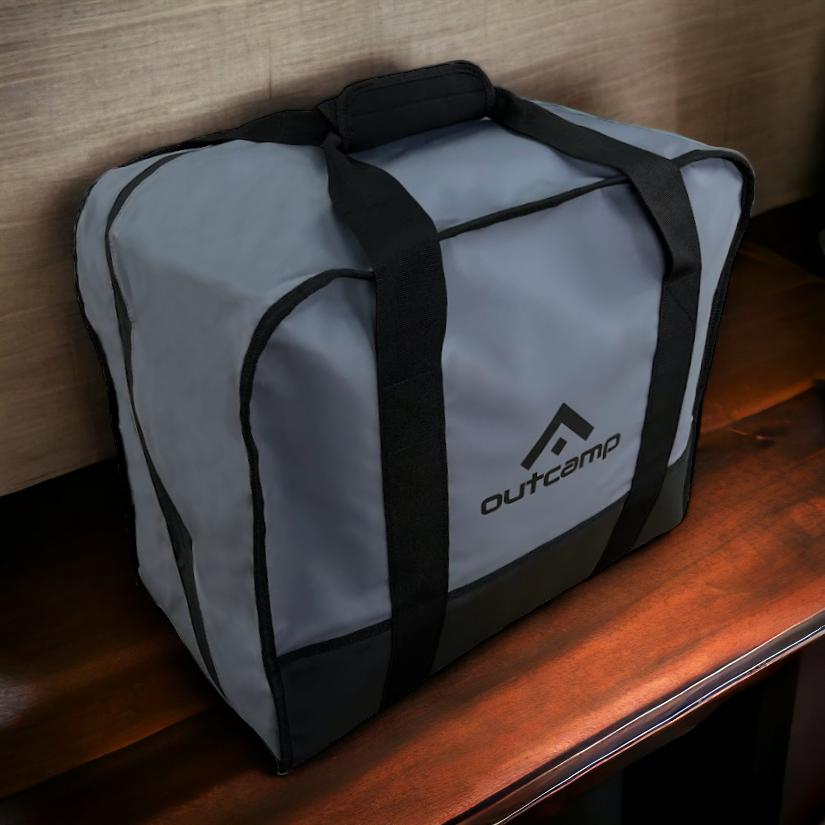
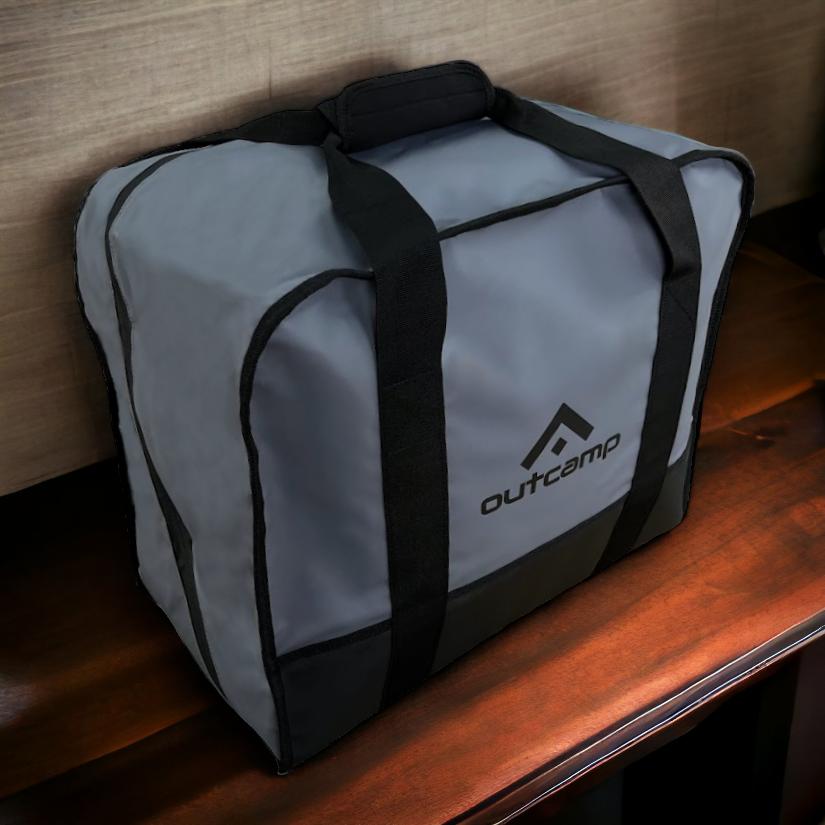
- A generator carry bag — Outcamp's range protects your backup genny from dust, rain, and UV damage during extended outdoor storage
Camp Comfort
- A quality awning or shelter for shade and rain protection over weeks, not just weekends
- Decent camp chairs and a table — you'll be sitting in them every day
- Waterproof gear bags to keep kit organised and protected across long trips
Vehicle Protection
- Cable plug protectors — dirt, dust, and moisture get into everything on extended outback trips
- Roof rack accessories to secure gear for thousands of kilometres of corrugated roads
Cost Comparison: Extended Camping vs. Short Holiday Trips
Here's where slow travel really makes sense financially. Let's compare a family of four:
| Expense | 2x One-Week Resort Holidays | 1x Four-Week Camping Trip |
|---|---|---|
| Accommodation | ,200 (2 weeks hotel/resort) | (mix of free camps + caravan parks) |
| Fuel/Transport | ,200 (flights or long drives) | ,000 (one extended loop) |
| Food | ,800 (eating out) | ,600 (cooking at camp) |
| Activities | ,000 | (most are free — hiking, swimming) |
| Internet (Starlink) | Included in hotel | /month (Starlink Roam plan) |
| Total | ,200 | ,650 |
That's a saving of over ,500 — and the camping trip is twice as long. Even factoring in the upfront cost of gear, most families recoup the investment within two to three trips.
Real Camper Stories: Why They're Staying Longer
Mark and Jules, Retired, SA — “We did the Kimberley over seven weeks last dry season. In the past, we'd have rushed it in three. Having Starlink on the roof meant Jules could keep up with her online book club, and I could check the footy scores without driving 50 km to find signal. We'll never go back to rushing.”
The Nguyens, Family of Five, VIC — “We pulled the kids out for Term 2 and drove from Melbourne to Cairns over six weeks. The kids did their schoolwork online every morning, then we'd explore in the afternoons. Starlink Mini was the one piece of gear that made the whole thing possible.”
Damo, Solo Traveller, WA — “I'm a freelance graphic designer. I spent three months working from campsites across the south-west last year. Roof rack mount for the Starlink, a decent solar setup, and I was earning money while camping at places most people only visit for a weekend.”
Ready to Set Up for Slow Travel?
Whether you're planning a three-week loop of Tassie or a full dry season in the Top End, reliable internet and durable gear are what make extended trips sustainable — not just survivable.
At Outcamp, we design and build Starlink Mini mounting solutions, power accessories, and camping gear specifically for Australian conditions. Our products are built for continuous use over weeks and months, not just the odd weekend away.
Browse Our Starlink Mini Range →
Got questions about setting up your Starlink for extended travel? Drop us a line — we've helped hundreds of Aussie campers get connected and stay out longer.




Leave a comment (all fields required)