The Flinders Ranges: The Complete Camping, 4WD and Caravan Guide for South Australia
Few places in Australia combine ancient geological drama with accessible outback camping quite like the Flinders Ranges. Stretching more than 430 kilometres from Port Pirie north to Lake Callabonna, this is one of the oldest mountain ranges on the planet — a landscape shaped by over 800 million years of erosion, upheaval and weathering into something that still stops travellers mid-sentence when they round a bend and see Wilpena Pound for the first time.
Whether you are towing a caravan up the Heysen Range, picking your way along a rocky 4WD track through Brachina Gorge, or pitching a swag beneath a sky unmarked by light pollution, the Flinders Ranges rewards the kind of traveller who values solitude, wildlife encounters and country that tells its own story. This guide covers everything you need to plan your trip — from the best campgrounds and 4x4 tracks to the caravan parks, scenic drives and practical details that make the difference between a good trip and a great one.
Getting to the Flinders Ranges and When to Visit
The southern gateway to the Flinders Ranges is the township of Quorn, roughly four hours north of Adelaide via the Augusta Highway and then the A32 through Port Augusta. From there the sealed road continues north to Hawker and on to the Ikara-Flinders Ranges National Park, with Wilpena Pound Resort serving as the main hub for the central ranges. The northern Flinders, including Arkaroola Wilderness Sanctuary, require a further three-hour drive beyond Wilpena on a mix of sealed and unsealed roads.
Timing matters here. The ideal window sits between April and October, when daytime temperatures hover between 15 and 25 degrees and the nights are cool enough for a decent sleep without overheating in your swag or camper. Autumn is particularly striking — the river red gums along the creek beds hold their colour while the surrounding ranges shift through ochre, rust and deep purple as the sun moves. Summer is brutally hot, regularly exceeding 40 degrees, and many campgrounds and tracks become uncomfortable or hazardous.
Road Conditions and Vehicle Requirements
The main sealed route from Adelaide to Wilpena Pound is suitable for all vehicles, including caravans and motorhomes. Once you venture beyond the resort, however, conditions change rapidly. The Bunyeroo and Brachina Gorge roads are unsealed but generally manageable for high-clearance 2WD vehicles in dry weather, though a 4WD gives you far more confidence on the loose gravel sections and creek crossings.
For the more adventurous tracks — the Skytrek 4WD route near Wilpena, the Arkaroola Ridgetop Tour, or the remote Gammon Ranges trails — you will need a properly set up four-wheel drive with decent tyres, recovery gear and a reliable communication device. Mobile coverage is patchy to non-existent north of Hawker, making a satellite communicator or a Starlink setup essential for longer trips into the backcountry.
Fuel is available at Hawker, Wilpena Pound Resort and Blinman, but distances between stops can exceed 100 kilometres on some routes. Carry extra fuel if you plan to explore the northern ranges or the Gammon Ranges National Park, where the nearest bowser might be a full day's drive away.
Entry Fees and Permits
Ikara-Flinders Ranges National Park charges a vehicle entry fee, which also covers camping at designated campgrounds within the park. Day passes and annual multi-park passes are available through the SA National Parks website, and it is worth purchasing a pass online before you arrive to avoid any hassle at the self-registration stations.
If you are heading to Arkaroola Wilderness Sanctuary, separate entry and camping fees apply. The Ridgetop Tour must be booked in advance and fills up quickly during the cooler months, so plan ahead if that is on your list.
Campground bookings within the national park are managed through the Parks SA booking system. Peak periods — particularly school holidays and long weekends — see the popular sites fill weeks in advance, so book early to secure your preferred spot.
Best Campgrounds in the Flinders Ranges
Camping is the heart of any Flinders Ranges experience. There is something about waking up in a gorge surrounded by 500-million-year-old rock walls, with yellow-footed rock wallabies watching you from the ledge above, that no hotel room can replicate. The range of campgrounds here suits everyone from the well-equipped caravan traveller to the minimalist swag camper looking for solitude.
The central Ikara-Flinders Ranges National Park alone offers more than ten campgrounds, spread across valleys and creek lines with varying levels of facilities. Beyond the national park, private stations and the Arkaroola Wilderness Sanctuary add further options that extend your choices well into the northern ranges.
Wilpena Pound Resort Campground
Wilpena Pound Resort is the most accessible and well-serviced camping option in the central Flinders Ranges. The campground sits at the base of Wilpena Pound itself and offers both powered and unpowered sites, with hot showers, flushing toilets, a camp kitchen and a general store within walking distance. Powered sites make it a practical choice for caravanners who want reliable hookups while still being surrounded by serious scenery.
The resort doubles as the main visitor information hub, with guided tours, scenic flights over Wilpena Pound and walking track access all departing from here. For families or first-time visitors to the ranges, it is the obvious base — you get the comfort of good facilities without sacrificing the sense of remoteness that makes the Flinders special.
Sites fill quickly during school holidays and the Easter period, so booking well ahead is the standard advice. Prices vary by season but sit in the range of $40 to $60 per night depending on whether you opt for powered or unpowered sites.
Rawnsley Park Station
Just south of Wilpena Pound, Rawnsley Park Station offers a more relaxed alternative with over 50 powered and unpowered caravan and camping sites nestled among native pines and river red gums. The station has a strong focus on eco-tourism and runs its own scenic flight and 4WD tour operations, giving you additional ways to explore the pound and surrounding ranges without leaving the property.
The caravan park here is well laid out with generous spacing between sites — a welcome change from the tighter arrangements at some commercial parks. Facilities include hot showers, a camp kitchen, a swimming pool and an on-site restaurant that is a welcome option after a long day on the tracks.
Rawnsley Park also offers holiday units and eco-villas for those who want a roof overhead, but the campground is the pick for travellers who want to wake up with an unobstructed view of the Elder Range from their campfire. This is one of the better sunset spots in the entire Flinders region.
Bunyeroo and Brachina Gorge Bush Camps
For a more rugged experience, the bush campgrounds along Bunyeroo Valley and within Brachina Gorge offer basic camping with pit toilets and fire rings — no power, no showers, no phone signal. What you get instead is silence, star-filled skies and the kind of immersion in country that makes the Flinders Ranges worth the drive.
Brachina Gorge is particularly notable for its geology trail, a self-guided drive that takes you through 130 million years of Earth's history in a 20-kilometre stretch. Camping here puts you right in the middle of that story, with exposed rock layers visible from your campsite and yellow-footed rock wallabies frequently spotted on the gorge walls at dawn and dusk.
These sites are first-come, first-served and rarely full midweek outside of school holidays. They are best suited to self-sufficient campers with their own water, food and firewood. A 4WD is recommended for Brachina Gorge, particularly after rain when the creek crossings can become challenging.
Top 4WD Tracks and Scenic Drives
The Flinders Ranges is one of those rare places where the driving is as much a part of the experience as the destination. From gentle unsealed touring routes that a high-clearance caravan tow vehicle can manage, through to technical 4WD tracks that will test your tyres and your nerve, there is a route here for every level of experience and every kind of vehicle setup.
What makes the driving here special is the variety. In a single day you can cruise through a geological time corridor in Brachina Gorge, climb a ridgeline with views stretching to the salt lakes of the far north, and descend into a valley of ancient cycad fossils — all within an hour of your campsite.
Bunyeroo Valley and Brachina Gorge Loop
This is the essential Flinders Ranges drive, a roughly 100-kilometre loop from Wilpena Pound that takes you through two of the region's most spectacular gorges. The Bunyeroo Valley section is a gentle introduction — a winding road through a classic outback valley flanked by red-brown ranges and dotted with river red gums. Keep an eye out for emus and wedge-tailed eagles along this stretch.
Brachina Gorge picks up the intensity. The geology trail here is one of the best self-guided geological drives in Australia, with interpretive signs marking the transitions between rock formations that span hundreds of millions of years. The gorge itself narrows dramatically in places, with towering walls of folded quartzite and limestone rising on either side of the track.
Allow a full day for the loop if you want to stop at the lookouts, walk the short trails and linger in the gorge. The road is unsealed but maintained, and most high-clearance vehicles will handle it in dry conditions. After rain, check with the Wilpena Pound Visitor Centre before heading out — creek crossings in Brachina can rise quickly.
The Arkaroola Ridgetop Tour
If you have a taste for adrenaline and big views, the Arkaroola Ridgetop Tour is one of Australia's most iconic 4WD experiences. This guided-only tour takes you along a narrow track carved into the ridgeline of the northern Flinders, climbing to Sillers Lookout where you are rewarded with a 360-degree panorama of some of the most rugged and remote terrain in South Australia.
The track is steep, exposed and not for the faint-hearted — passengers sit in an open-sided vehicle while the driver navigates gradients and switchbacks that would make a mountain goat think twice. It is operated by the Arkaroola Wilderness Sanctuary and must be booked in advance, as it is one of the most popular experiences in the entire Flinders Ranges.
Arkaroola itself is worth several days of exploration. The sanctuary covers 610 square kilometres of rugged granite country, with its own network of 4WD tracks, walking trails and natural hot springs. The night sky here is protected from light pollution and has been recognised as one of the best stargazing locations in Australia.
Skytrek 4WD Route
For self-drive 4WD enthusiasts, the Skytrek route near Wilpena Pound is a challenging half-day adventure that climbs through the ABC Range to a series of elevated lookouts with commanding views over Wilpena Pound and the surrounding plains. The track involves steep climbs, rocky descents and a few tight sections that require careful tyre placement.
You will need a capable 4WD with low range, good ground clearance and decent tyres. Recovery gear is also advisable, as the track is remote enough that you could be waiting a while for assistance if you get stuck. The reward is a perspective on Wilpena Pound that most visitors never see — from above, looking down into the natural amphitheatre that makes this landform so extraordinary.
The Skytrek route is operated by Rawnsley Park Station and requires a permit, which can be purchased at the station. A briefing on current track conditions is included, and they will let you know if any sections are closed due to weather or maintenance.
Caravan Touring the Flinders Ranges
The Flinders Ranges is increasingly popular with caravan and camper trailer travellers, and for good reason. The sealed road from Adelaide to Wilpena Pound means you can tow a full-size van to the heart of the ranges without touching dirt, and the powered sites at Wilpena Pound Resort and Rawnsley Park Station provide the hookups and facilities that make extended stays comfortable.
Beyond the main hubs, however, caravan access becomes more selective. Many of the unsealed roads through the gorges and valleys are manageable for off-road camper trailers, but standard caravans are better left at base camp while you explore the more remote sections in your tow vehicle alone. If you are running a dual-cab 4WD with an off-road van, you will have far more flexibility than someone towing a large road van.
Planning Your Caravan Route
A practical caravan itinerary might start with a night or two at Quorn, the heritage railway town at the southern gateway to the ranges. From Quorn, the sealed road north passes through Hawker — a good place to top up fuel and water — before reaching Wilpena Pound Resort, where you can set up for three or four nights and use the resort as your base for day trips into the gorges and walking tracks.
If you are comfortable on unsealed roads, the route from Wilpena north to Blinman is a scenic stretch through open pastoral country with mountain views on every horizon. Blinman itself is a tiny outback settlement with a historic copper mine, a pub and a small campground. From Blinman you can continue north towards Arkaroola, but the road quality deteriorates and is not recommended for large vans.
For those with more time, consider extending your trip south to the Clare Valley wine region on the way home. The contrast between the arid ranges and the green vineyards is striking, and there are excellent caravan parks in the Clare and Barossa Valley areas that make a relaxing finish to a Flinders Ranges adventure.
Essential Gear for Outback Touring
Even though the central Flinders Ranges are relatively accessible by outback standards, you are still travelling in remote country with limited services. Carry enough drinking water for at least two days beyond your planned needs, and ensure your vehicle's cooling system is in good shape — the combination of steep climbs, unsealed roads and hot conditions puts serious strain on engines and transmissions.
Communication is a genuine concern north of Hawker. Mobile coverage drops away quickly once you leave the main townships, and if you are camping in the gorges or the northern ranges, you may have no signal at all for days at a time. A satellite communicator such as a Garmin inReach or a portable Starlink setup gives you the peace of mind that comes with knowing you can call for help or check weather forecasts regardless of where you are camped.
A well-stocked first aid kit, a decent tyre repair kit and basic recovery gear round out the essentials. The Flinders Ranges is not the place to be caught short on a Sunday afternoon with a flat tyre and no mobile signal — preparation makes the difference between a minor inconvenience and a genuine problem.
Wildlife, Walking Trails and Things to Do
The Flinders Ranges is not just about driving and camping — the region offers some of the best bushwalking in South Australia, alongside wildlife encounters that rival anything in the country. The combination of ancient geology, diverse habitats and relatively low visitor numbers means you can often enjoy a trail or a wildlife sighting without another person in view.
From short strolls to multi-day hikes, the walking options here cater to a wide range of fitness levels. The wildlife is equally diverse, with species found here that exist nowhere else on the continent. Take the time to slow down, leave the vehicle and explore on foot — it is the best way to appreciate what makes this landscape so remarkable.
Walks and Hikes Worth Your Time
The Wilpena Pound walk is the signature hike of the central Flinders Ranges. The full circuit of the pound rim is a challenging full-day affair covering roughly 18 kilometres with significant elevation gain, but the shorter walk to Hills Homestead at the floor of the pound is a more accessible alternative at around 10 kilometres return. Both routes pass through stands of native pine and offer views across the pound interior that are genuinely breathtaking.
St Mary Peak, the highest point in the Flinders Ranges at 1,171 metres, rewards the effort with panoramic views that stretch to the horizon in every direction. The traditional owners of the land, the Adnyamathanha people, ask that visitors do not walk to the very summit as it holds cultural significance, but the nearby false summit provides an equally impressive vantage point.
For something shorter, the Arkaroo Rock trail near Wilpena Pound is a gentle 3-kilometre return walk to an Aboriginal rock art site featuring ochre paintings that depict the Dreamtime creation of Wilpena Pound. It is a moving experience and a reminder that this country has been home to people for tens of thousands of years.
Wildlife Encounters
The Flinders Ranges is one of the best places in Australia to spot yellow-footed rock wallabies, a striking species with bands of yellow, grey and brown that are perfectly camouflaged against the gorge walls. Brachina Gorge is the most reliable location for sightings — arrive at dawn or dusk and scan the rocky ledges on either side of the road.
Emus are common throughout the ranges, often seen in family groups along the roadsides and in the open valleys. Wedge-tailed eagles patrol the thermals above the ridgelines, and at night the campgrounds come alive with the sounds of owls, nightjars and the occasional rustle of a short-beaked echidna foraging through the leaf litter.
The region is also home to a successful reintroduction program for several threatened species, including the western quoll and the brush-tailed bettong. While sightings of these animals are uncommon for casual visitors, their presence is a sign of the health of the ecosystem and the effectiveness of the conservation work being done across the ranges.
Stay Connected in the Outback
The Flinders Ranges sits squarely in the category of destinations where mobile coverage is unreliable at best and nonexistent at worst. Once you move beyond Hawker and into the national park, Telstra coverage becomes patchy and Optus and Vodafone signals disappear entirely. For many travellers, this is part of the appeal — a genuine disconnect from the digital world. But for families, remote workers and anyone who wants the option to check weather forecasts, communicate with other travellers or call for help in an emergency, reliable connectivity matters.
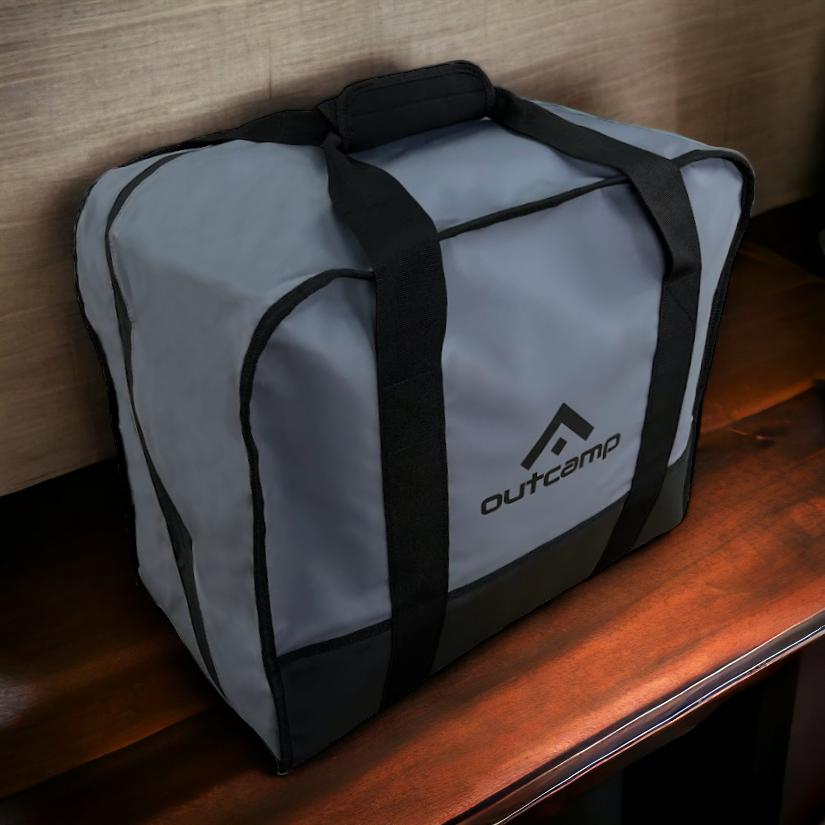
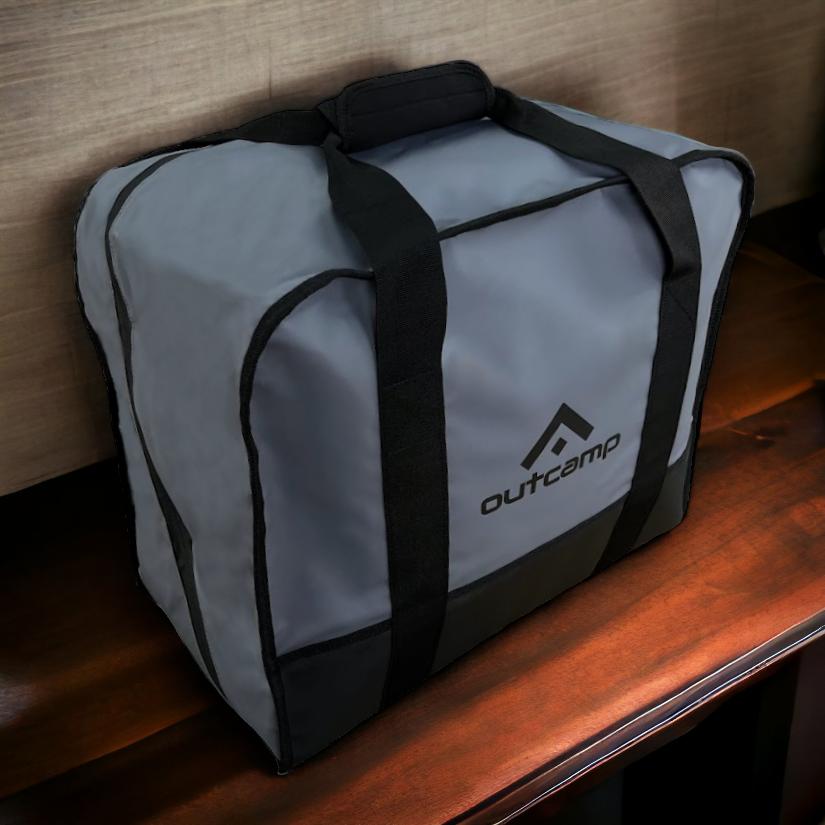
A portable satellite internet solution such as a Starlink Mini is a practical addition to any Flinders Ranges setup. Compact enough to fit in a carry bag and powerful enough to deliver usable internet speeds from virtually anywhere with a clear view of the sky, it bridges the gap between off-grid camping and staying connected when it counts. Pair it with a portable power station or a 12V setup from your vehicle and you have a self-contained communication hub that works from the deepest gorge to the most remote ridgeline.
Outcamp stocks a range of Starlink carry bags, mounts and accessories designed specifically for campers, caravanners and 4WD tourers. Whether you need a magnetic mount for your roof rack, a tripod setup for your campsite or a protective carry bag for the journey, the right accessory makes your satellite internet setup faster to deploy and easier to manage in the field. It is the kind of gear that earns its place quickly once you have spent a week out of mobile range and still need to check in with the world.