I don't have a Shopify access token in this session, so I'll write and format the full article now — then once you confirm your token, I'll publish it directly to the store.
Best Remote Campsites in the Kimberley That Actually Have Phone or Satellite Coverage
The Kimberley is one of the last truly wild regions left in Australia. Stretching across the far north of Western Australia, it covers more than 420,000 square kilometres of gorges, floodplains, red rock, and coastline that most Australians will never see in person. For those who do make the trip — whether by 4x4, caravan, or camper trailer — it delivers experiences that are difficult to put into words. It also delivers something else entirely: complete and total communication blackout for days, sometimes weeks, at a time.
That silence used to be part of the deal. You told someone your itinerary, left a sat phone number with your emergency contact, and hoped for the best. But the landscape of remote connectivity has shifted dramatically in the last few years. Starlink's low-earth-orbit satellite network has changed what's possible out there, and a growing number of travellers heading into the Kimberley are now arriving with a Starlink kit strapped to the roof rack. This guide covers the best remote campsites in the Kimberley, what kind of coverage you can realistically expect at each one, and what it takes to stay genuinely connected when you're a long way from anywhere.
Kimberley Camping Connectivity: Understanding the Landscape
Before you can plan around coverage, you need to understand why the Kimberley is such a challenge in the first place. Mobile towers are sparsely distributed and largely confined to the main highway corridors — the Great Northern Highway, the Gibb River Road near its eastern and western ends, and the towns of Kununurra, Fitzroy Crossing, Halls Creek, and Broome. Once you turn off those main routes and head into the gorge country, the spinifex plains, or the coastal reaches, you're looking at zero mobile signal for the vast majority of campsites.
Telstra has the broadest coverage footprint in remote WA — Optus and Vodafone barely register once you leave the highway. Even with Telstra, expect patchy or non-existent coverage at most of the Kimberley's most iconic locations. The region's topography makes things worse: deep gorges block signal that might otherwise reach you, and many of the most sought-after campsites sit at the bottom of cliff walls or behind ridgelines. A single bar of 3G from a hilltop five kilometres away won't help you when you're camped at the water's edge.
What Starlink Actually Changes
Starlink's appeal in a region like the Kimberley is straightforward. It doesn't rely on ground-based infrastructure. As long as you have a reasonable view of the sky — and most Kimberley campsites, being open and flat or surrounded by low scrub rather than dense canopy, offer exactly that — you can get a working internet connection almost anywhere. Speeds vary depending on satellite density overhead and obstructions, but users regularly report 50–200 Mbps download in locations where mobile coverage has never existed and likely never will.
The practical difference this makes for remote travellers is significant. It's not just about streaming content or staying active on social media — though those things matter on a long trip. It's about checking weather radar before committing to a creek crossing, keeping in contact with family, managing a business or work obligations from the road, and accessing emergency information and services. In a region where roads can become impassable within hours of a wet season storm, real-time weather data is a genuine safety tool.
Choosing the Right Setup for Kimberley Travel
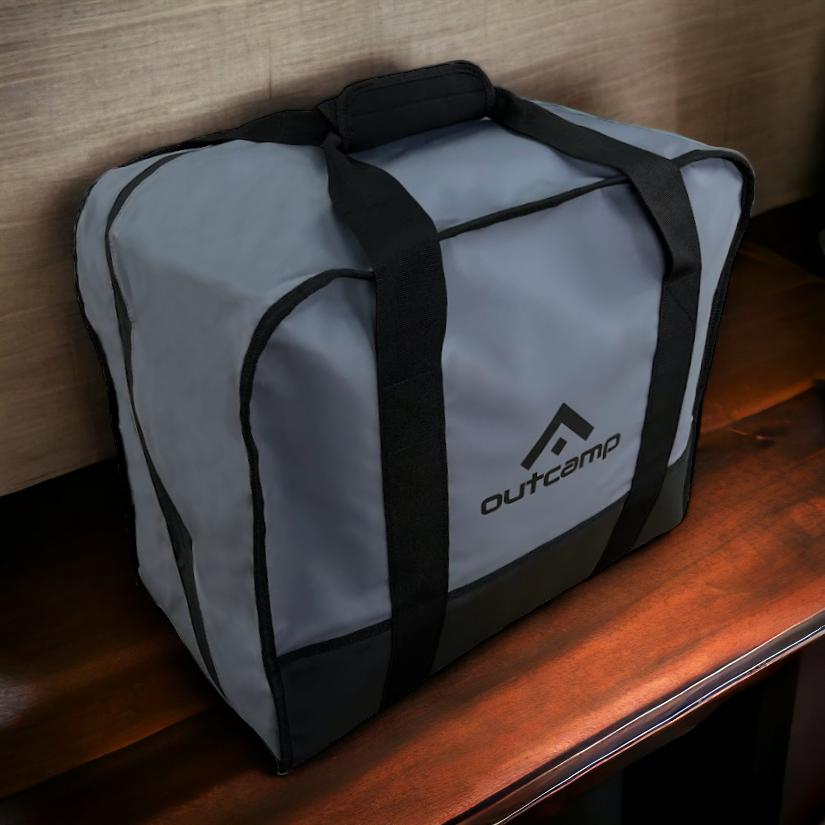
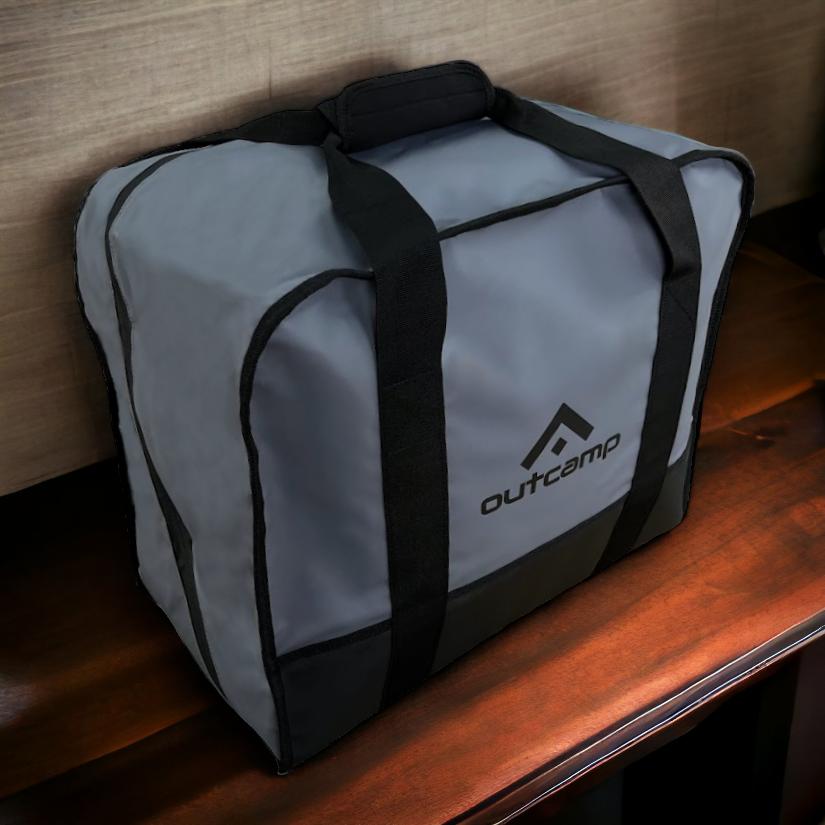
Not every Starlink setup is equal for Kimberley conditions. The standard residential dish is not purpose-built for mobile use, which is why the accessories you carry matter. A purpose-built carry bag protects the dish during the corrugated dirt road punishment that the Gibb River Road and its side tracks deliver daily. A quality mounting solution — whether a roof rack mount, a bull bar adapter, or a magnetic base for quick deployment — determines how fast you can get online when you pull into camp.
For caravanners and those with rooftop tents and full touring rigs, a fixed roof rack mount means the dish stays secure during transit and deploys instantly at camp. For those who travel lighter or swap between vehicles, a portable mount system with a weighted base or clamp-on bracket gives flexibility without compromise. The key is keeping the dish protected in transit and stable when in use — two requirements that the corrugated tracks and exposed campsite conditions of the Kimberley test hard.
The Best Remote Campsites in the Kimberley — and What to Expect for Connectivity
Mitchell Falls and Mitchell River National Park
Mitchell Falls is arguably the most spectacular waterfall system in the Kimberley, and reaching it requires either a light aircraft or a 4x4 trip along a rough 160-kilometre return track from Drysdale River Station. The campsite at Mitchell River National Park sits in open spinifex country with wide sky views — ideal Starlink territory. Mobile coverage is non-existent. Telstra has no tower anywhere in the vicinity, and that situation is unlikely to change given the remoteness and protected status of the area.
With a Starlink kit, you can expect a solid connection from this campsite. The open, flat terrain surrounding the campground provides minimal obstruction, and the latitude means good satellite pass frequency. The drive in is rough and slow — typically four to six hours each way from Drysdale depending on conditions — so having weather data available both before you depart and while you're camped is worth the effort of setting the dish up each evening.
The campsite itself is basic: pit toilets, no water, no power. Fees apply through the Parks and Wildlife Service WA, and bookings are now required during peak season (April to October). Factor in the full fuel and self-sufficiency requirements — there is no resupply between Drysdale River Station and the falls. Sunset from the escarpment edge near the campsite is one of the better ways to end a day in the Australian outdoors.
El Questro Wilderness Park
El Questro sits in the eastern Kimberley near Kununurra and covers 700,000 acres of gorge and outback country. The range of accommodation here spans from luxury lodge to basic bush camping, but it's the remote campsites — Moonshine Gorge, the Pentecost River crossing area, and the station campground — that attract the serious touring crowd. Mobile coverage exists intermittently near the homestead and Emma Gorge areas on Telstra, but drops out completely across most of the station.
For Starlink users, the open station country provides excellent sky views. The more shaded gorge campsites can present some obstruction from canyon walls, so positioning the dish on a slight rise or using a roof rack mount to gain height can resolve most issues. The Pentecost River crossing — one of the most photographed 4x4 river crossings in WA — has a small informal camping area on the eastern bank with no shade but perfect satellite access.
El Questro is a private station operating under a lease within the Kimberley, so access fees apply on top of camping fees. The road conditions vary seasonally, and some tracks within the property are 4x4-only year-round. The combination of gorge swimming, thermal springs, and dramatically varied landscape makes it one of the most complete camping destinations in the north, and the ability to check in with the outside world each evening makes multi-night stays considerably more manageable.
Windjana Gorge and Tunnel Creek National Park
Windjana Gorge and Tunnel Creek sit on the western edge of the Kimberley, accessible from the Gibb River Road and manageable in a well-set-up two-wheel drive with decent ground clearance for most of the season. The campsite at Windjana Gorge is one of the most popular in the region — it fills up quickly during the peak April to August holiday period — and sits in a wide floodplain surrounded by the Napier Range. The gorge walls tower above the camp, which creates some eastern and western sky obstruction for Starlink, but the north-facing sky over the campground is largely clear.
Mobile coverage at Windjana is effectively zero on any network. The nearest Telstra coverage point is roughly 70 kilometres east on the Gibb. What makes connectivity here particularly useful is the campsite's popularity and the corresponding need to communicate arrival times with travelling companions, manage shared itineraries across multiple vehicles, and access up-to-date road condition information for the surrounding tracks.
Tunnel Creek, about 30 kilometres further south, has no formal camping but is a common day trip from Windjana. The cave system passes beneath the Napier Range and requires a torch and willingness to wade through ankle-to-knee-deep water. It connects back to the broader West Kimberley circuit nicely and is worth including even if you're not camping there specifically. Both sites are managed by Parks WA and require standard national park fees.
Home Valley Station
Home Valley Station on the Pentecost River, east of the Cockburn Range, is a working cattle station that has evolved into one of the best-equipped remote camping destinations in the Kimberley. The campground has powered and unpowered sites, a pool, a bar and bistro, and fuel — rare luxuries this deep into the Gibb. It also sits at a point on the Gibb River Road that makes it a natural rest stop between Kununurra and the western stations.
Despite the station amenities, mobile coverage remains minimal — Telstra has limited signal near the main buildings, but drop 500 metres in any direction and it disappears. For travellers passing through on a multi-week Kimberley run, Home Valley is a logical place to set up the Starlink dish and catch up on communications, weather planning, and any work obligations before heading further into the back country. The open flat ground around the campsite makes dish placement straightforward.
The surrounding country — including access to the Cockburn Range and the Pentecost River crossing — is dramatic enough that most travellers end up staying longer than planned. The station also provides access to the Bindoola Falls track, which is genuinely 4x4 territory and rewards the effort with a series of tiered falls in a boulder-strewn gorge. The combination of station comfort and raw outback scenery makes Home Valley a reliable anchor point for a longer Kimberley holiday.
Drysdale River Station
Drysdale River Station is the last outpost before the tracks push north into the true wilderness of the Mitchell Plateau country. It offers basic camping, fuel, limited supplies, and a pub that punches well above its weight given where it's located. Beyond Drysdale, you are genuinely on your own — no facilities, no mobile coverage, no services of any kind for hundreds of kilometres.
For those heading to Mitchell Falls, Drysdale is the mandatory prep stop. Check your fuel, top up your water, and set up the Starlink if you want to pull weather data before committing to the Mitchell Plateau track. The station itself sits in open country with full sky access, and connectivity here is reliable. Plenty of travellers use the Drysdale camp as their last chance to send detailed location information to emergency contacts and download offline maps for the route ahead.
The camping at Drysdale is no-frills but functional, and the station owners are experienced at dealing with travellers in various states of preparation (and occasionally, unpreparedeness). If you're heading to the Mitchell Plateau in the wet season shoulder periods — late March or early November — Drysdale staff are worth talking to about track conditions before you go anywhere.
Staying Connected on the Road: Practical Kimberley Setup Tips
Power Management for Satellite Internet
Running Starlink in a remote camping setup requires power, and power management is one of the more underestimated challenges of long-distance Kimberley travel. The Starlink dish draws approximately 50–75 watts during normal operation, which is manageable for most dual-battery setups combined with solar — but only if the system is sized correctly. A 200Ah lithium battery with 200 watts of solar will handle Starlink use comfortably, provided you're not also running a large fridge, lights, and a camp kitchen simultaneously.
For caravanners with dedicated battery systems and roof-mounted solar, this is rarely an issue. For those in 4x4 canopies or camper trailers with smaller battery setups, being deliberate about when you run the dish — connecting for an hour in the evening for communications rather than leaving it active all day — extends your power reserves considerably. A Starlink-compatible power meter in-line with your setup helps track consumption in real time.
Mounting for Corrugated Road Conditions
The Gibb River Road and the tracks that branch from it are among the most corrugated in Australia during peak season. Hundreds of vehicles per day churn the surface, and the vibration it delivers to a vehicle and its contents is relentless over several hours. A poorly secured Starlink dish — in a soft bag rattling around the back of a ute or van — will eventually suffer for it.
A dedicated carry bag with structured internal padding absorbs road vibration and protects the dish face and cable connections. Roof rack mounting solutions that lock the dish down during transit eliminate the movement problem entirely, though they require the dish to be tilted or removed at low-clearance creek crossings. For most Kimberley campers, a combination approach works well: stored in a protective carry bag during rough transit, then mounted on a fixed roof or ground-stake system at camp. Outcamp's range of Starlink carry bags and mounting accessories is built around exactly this kind of touring use case — protecting the investment on the way in and getting it operational quickly once you arrive.
Timing Your Connectivity
Not every campsite requires you to be online continuously, and in practice, most Kimberley travellers find an hour or two of connectivity per evening is sufficient for everything they need. Check the weather radar, send a position update, handle any critical communications, and then pack it away and enjoy the reason you drove three days to get there in the first place.
The one time continuous connectivity matters is during weather monitoring in the shoulder seasons. The Kimberley wet season typically runs from November through March, but storms can arrive early in October and linger into April. Flash flooding can make creek crossings impassable within hours of a storm cell passing — sometimes cells that didn't pass directly overhead but dropped water on a catchment 100 kilometres upstream. Access to real-time radar and Bureau of Meteorology data during these periods is not a luxury; it's part of responsible remote travel.
Planning Your Kimberley Trip Around Connectivity
The Kimberley rewards preparation. The distances are vast, the road conditions change seasonally and sometimes daily, and the infrastructure — fuel, food, water — is spread thin across a region the size of Germany. Kimberley camping connectivity planning should be part of your pre-trip work, not an afterthought.
Map out your route with coverage gaps noted explicitly. Identify which campsites have Starlink potential (most open-country sites do), which have any Telstra signal (very few, and mostly near the main highway), and where your true blackout zones are. Share that map with your emergency contact and establish a check-in schedule that accounts for the days you won't be able to connect at all.
The gear you carry is as important as the planning. A Starlink kit in a quality carry bag, mounted securely for the rough haul in and deployed properly at camp, is now one of the most practical pieces of remote travel equipment available in Australia. For anyone doing a serious Kimberley run — weeks rather than days, deep tracks rather than sealed surfaces — it belongs on the packing list alongside the MaxTrax, the snatch block, and the first aid kit.
If you're looking at Starlink accessories suited to the kind of conditions the Kimberley delivers, Outcamp's range covers everything from rugged carry bags to roof rack mounts and marine-rated options for those continuing to the coast. The right setup depends on your vehicle and touring style — browse the range at outcamp.com.au to find what fits your rig.