


The Starlink network has hit a string of milestones in early 2026 that matter to anyone who relies on satellite internet away from the grid. From game-changing V3 satellites on the horizon to aggressive price cuts on the Starlink Mini, the landscape for remote connectivity in Australia is shifting fast.
Whether you are setting up camp in the Kimberley, running a caravan park in outback Queensland, or simply trying to stay connected on a long weekend away from mobile towers, these developments are worth paying attention to. Here is where things stand right now.
The Constellation Today: 10,000 Satellites and Counting
SpaceX has been launching at a relentless pace since the start of the year. The numbers tell the story clearly, and the network is maturing into something genuinely formidable for users in remote and regional areas.
As of late March 2026, the Starlink constellation sits at 11,641 satellites launched, with 10,126 in orbit and 10,116 operational. That is a staggering fleet by any measure, and SpaceX shows no sign of slowing down — the company passed its 600th satellite launched for 2026 before the end of the first quarter.
What the Numbers Mean for Coverage
More satellites in orbit translate directly to better coverage and lower latency, particularly in the southern hemisphere where Australia sits. Gaps in coverage that once caused dropouts during peak hours or in remote locations are steadily shrinking. For campers and caravanners in places like the Nullarbor, Cape York, or the Red Centre, this is the difference between a reliable connection and a frustrating one.
The current median download speed across the network sits at around 170 Mbps, with Priority plan users seeing up to 300 Mbps. That is more than enough to stream, video call, or manage a remote worksite without thinking twice about bandwidth.
SpaceX has also been expanding its inter-satellite laser link network, which allows satellites to relay data to each other in orbit rather than relying solely on ground stations. For Australia — a continent with vast stretches of unpopulated land between ground stations — laser links are a critical piece of the reliability puzzle.
Starlink Mobile: Direct-to-Phone Gets Serious
One of the bigger stories in 2026 is the rebrand of SpaceX’s direct-to-phone service to Starlink Mobile. This is no longer an experimental curiosity. SpaceX is projecting 25 million active users by end of year, up from roughly 10 million today, adding around 52,000 new users per day through partner carriers.
For Australians in areas with patchy or nonexistent mobile coverage, this could eventually mean basic connectivity — texts, calls, and low-bandwidth data — without needing a dish at all. It is early days, but the trajectory is clear.
The recently announced partnership between Starlink and Airtel Africa to support calling in areas with no network coverage hints at the kind of carrier deals that could eventually roll out across other markets, including Australia.
V3 Satellites and Starship: The Next Leap Forward
If the current network is impressive, the next generation promises to be transformative. SpaceX has been teasing its V3 satellites for months, and 2026 is shaping up to be the year they actually reach orbit.
Each V3 satellite is designed to deliver more than one terabit per second of downlink capacity and 200 gigabits per second of uplink — over 10 times the downlink and 24 times the uplink capacity of the current V2 satellites. That is not an incremental improvement. It is a fundamental step change.
Why Starship Changes Everything
The key enabler for V3 is Starship, SpaceX’s next-generation launch vehicle. A single Starship launch could add 60 terabits per second of capacity to the network — more than 20 times what a Falcon 9 launch delivers today. SpaceX is targeting the first V3 deployment via Starship in the first half of 2026.
For users on the ground, this means the network’s total capacity is about to grow dramatically. More capacity means less congestion, better speeds during peak times, and the ability to serve far more users without degrading performance.
Block 3 Starship preparations are accelerating at Starbase, with SpaceX pushing towards the configuration needed for operational Starlink deployment. The sheer scale of what Starship enables — 60 V3 satellites per flight — makes the current Falcon 9 cadence look modest by comparison.
What This Means for Australian Campers and Travellers
The practical impact for anyone travelling with a Starlink dish is straightforward: better speeds, more consistent performance, and fewer dead spots. As V3 satellites begin replacing older units and filling in coverage gaps, the experience of using Starlink in remote Australia will only improve.
For those running Starlink on a caravan, boat, or at a remote worksite, the combination of V3 capacity and expanded laser links means the gap between satellite internet and fixed broadband continues to close. The days of satellite internet being a compromise are numbered.
Think of it this way — within the next 12 months, pulling into a bush camp and getting genuinely fast, low-latency internet from a dish the size of a laptop could become the norm rather than the exception.
Starlink Mini Price Drop: Portable Internet Gets More Accessible
In hardware news, SpaceX has continued to slash prices on the Starlink Mini, making it the most affordable entry point into satellite internet to date. The Mini’s MSRP has dropped from $299 to $249, and promotional pricing has pushed it as low as $199 for new customers.
That is a remarkable shift. When the Mini launched, it carried a $499 price tag. In under two years, it has shed 67% of that cost, putting portable satellite internet within reach of far more Australians.
Size, Weight, and Practicality
The Starlink Mini is about the size of an iPad Pro and weighs just 2.43 pounds — roughly a kilogram. It fits in a backpack, sits on a camp table, and draws minimal power. For anyone who has lugged the full-size Starlink Standard dish to a campsite, the Mini is a revelation.
Download speeds on the Mini range from 65 to 260 Mbps depending on conditions and plan type. Paired with the Roam 100GB plan at $50 per month, it is a cost-effective solution for weekend campers, overlanders, and digital nomads who do not need unlimited data every day.
The Mini’s low power draw also makes it a natural fit for solar setups and portable battery systems — a setup that many 4x4 and caravan travellers already run.
Protecting Your Gear on the Road
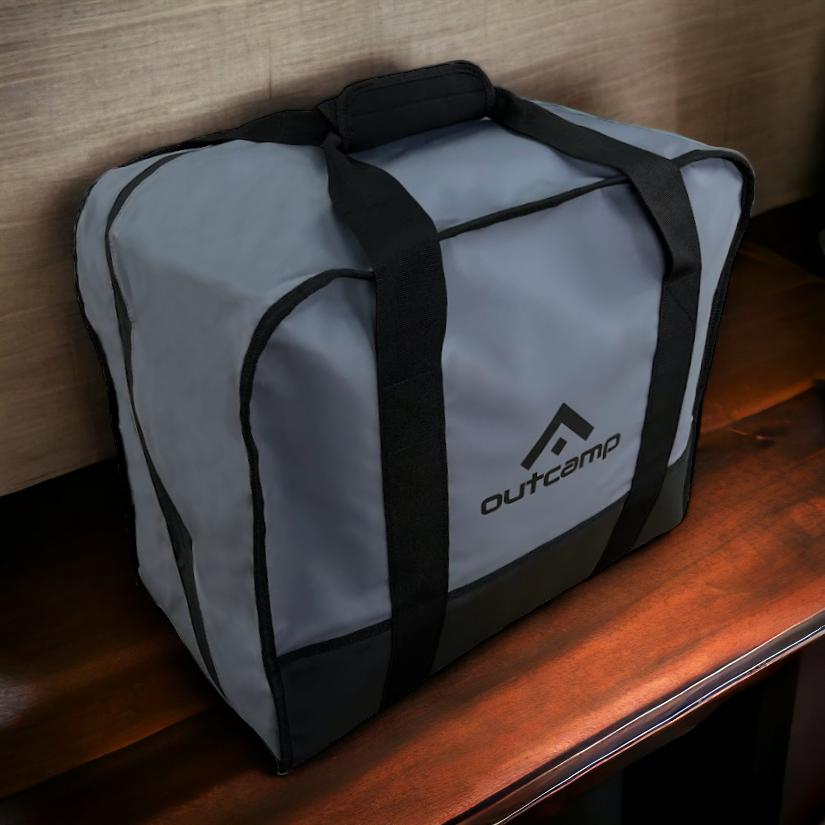
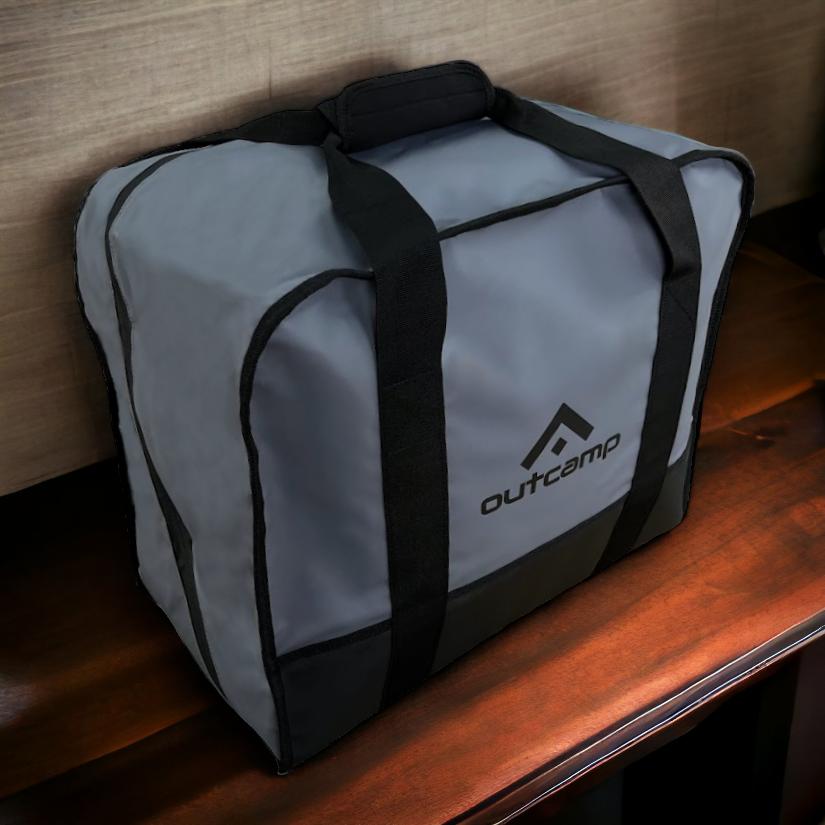
If you are carrying a Starlink Mini or Standard dish in the back of a 4WD or strapped to a caravan, protecting it from dust, vibration, and the odd knock is worth thinking about. A purpose-built carry bag or case keeps the dish safe in transit and makes setup quicker when you arrive at camp. Outcamp carries a range of Starlink carry bags and protective cases designed specifically for Australian conditions and the rigours of outback travel.
What to Watch Next
The first half of 2026 is shaping up as a pivotal period for Starlink. The V3 satellite deployment via Starship, continued expansion of laser links, the growth of Starlink Mobile, and hardware price cuts are all converging to make satellite internet faster, cheaper, and more practical than ever.
For anyone who camps, caravans, or works remotely in Australia, the message is clear: the connectivity options available to you in the bush are improving at a pace that would have seemed unlikely even two years ago.
If you are looking to kit out your setup with the right Starlink accessories — carry bags, mounts, cables, and more — check out what is available at Outcamp. The right gear makes the difference between a reliable connection and a dish rattling around in the back of the ute.




Leave a comment (all fields required)