Litchfield National Park: The Complete Camping and 4WD Guide for 2026
Less than two hours south of Darwin, Litchfield National Park draws over 260,000 visitors each year with its towering waterfalls, crystal-clear swimming holes and ancient sandstone formations. For campers, caravanners and four-wheel drive enthusiasts, it remains one of the Northern Territory's most rewarding destinations — offering everything from easy 2WD campgrounds beside postcard-perfect plunge pools to rugged 4WD-only tracks that lead deep into the bush.
What sets Litchfield apart from its more famous neighbour Kakadu is accessibility. You can leave Darwin after breakfast, be swimming beneath a waterfall by mid-morning, and set up camp in time for a sunset barbecue. Yet the park also rewards those willing to push further along the Reynolds River 4WD Track, where isolated camping spots and hidden falls await anyone with a capable rig and a sense of adventure.
Getting to Litchfield National Park and What You Need to Know
Litchfield National Park sits roughly 120 kilometres south of Darwin, accessible via the Stuart Highway and then the Litchfield Park Road. The main sealed road through the park connects the most popular attractions and campgrounds, making it perfectly manageable in a standard vehicle. If you are towing a caravan or camper trailer, the sealed sections present no issues — though you will want to unhitch before tackling any of the unsealed spurs.
The dry season from May through October is the ideal window for visiting. During these months, skies are reliably clear, humidity drops to comfortable levels, and all roads and tracks within the park are typically open. The wet season brings spectacular water flow over the falls, but many tracks close, campgrounds flood, and crocodile activity increases in waterways. If you are planning a 4WD trip along the Reynolds River Track, aim for June through September when river crossings are at their shallowest.
Park Passes and Campsite Bookings
All visitors to Litchfield require a Northern Territory Parks Pass, which you must purchase online before arriving. There is no option to pay at the park itself, so sort this out in advance to avoid any dramas at the gate. The pass covers entry and is separate from camping fees, which vary depending on the campground category.
Campsite bookings must also be made online through the NT Parks website. During peak season — particularly the school holidays in June, July and September — popular campgrounds like Wangi Falls and Florence Falls fill up quickly. Booking several weeks ahead is strongly recommended if you want to secure a spot at these high-demand locations.
Category A campgrounds such as Florence Falls and Wangi Falls offer hot showers, flushing toilets, BBQ facilities and picnic tables. Category B sites along the Reynolds River Track are more basic, with pit toilets and fire rings. Prices range from around $3.30 per person per night at remote sites to $10 for adults at the more developed campgrounds.
What to Pack for Litchfield
Even during the dry season, you should carry plenty of drinking water. While there is fresh water available at some campgrounds, water sources in the park are untreated and need to be sterilised before consumption. A reliable water filtration system or purification tablets should be part of your kit.
Firewood collection is not permitted within the park, so bring your own supply or purchase it from vendors along Litchfield Park Road. A good quality gas stove is a practical backup, particularly if you are staying at the more remote 4WD campsites where facilities are limited. Pack insect repellent — the mosquitoes near waterways can be relentless, even in the dry.
If you plan to tackle the Reynolds River Track, ensure your vehicle is equipped with a snorkel. Several river crossings along the route can hold water well into the dry season, and water depths vary considerably depending on how recently the wet season ended. Recovery gear, a tyre repair kit and a UHF radio are also essential for the more isolated sections.
The Best Waterfalls and Swimming Holes for Camping
Litchfield is, at its heart, a waterfall park. The sandstone plateau that forms the park's backbone channels rainfall into dozens of cascades that tumble over escarpment edges into deep, cool plunge pools. For campers, the best part is that several of the most spectacular falls have campgrounds right on their doorstep.
Swimming is a major drawcard, and most of the accessible waterholes are safe during the dry season. That said, always check current signage at each site — crocodile traps are monitored regularly, and swimming areas can be closed temporarily if a saltwater crocodile is detected. Never swim in areas that are not designated as safe.
Wangi Falls
Wangi Falls is the most iconic image of Litchfield National Park. Twin cascades drop into a large, deep swimming hole surrounded by monsoon rainforest, and the scene looks exactly like the kind of place you would see on a tourism poster — because it regularly is. A sealed, accessible path leads from the car park directly to the water's edge, complete with handrails and steps into the pool.
The Wangi Falls campground sits just a short walk from the falls and accommodates caravans, camper trailers, campervans and tents on unpowered sites. Facilities are excellent for a national park — hot showers, flushing toilets, rubbish bins, picnic tables, BBQs, a cleaning station and fresh water taps. Campground hosts are present during peak season to assist with queries and keep things running smoothly.
One thing worth noting is that Wangi Falls swimming hole is the most frequently closed due to crocodile activity. The pool connects to downstream waterways, and during the transitional months between wet and dry seasons, closures are common. Check the NT Parks alerts page before setting your heart on a swim here.
Florence Falls and Buley Rockhole
Florence Falls offers what many consider the best swimming experience in the park. The twin falls drop into a deep, enclosed plunge pool that you can swim right up to, feeling the mist on your face as thousands of litres of water thunder down from the plateau above. Access is via a staircase of around 160 steps that winds down through monsoon vine forest — a beautiful walk in its own right.
The Florence Falls campground is a category A site with both 2WD and 4WD sections, powered by solid facilities including hot showers, flushing toilets and well-maintained BBQ areas. It serves as an excellent base for exploring the northern end of the park, with Buley Rockhole just a few minutes' drive away.
Buley Rockhole is less a single swimming hole and more a series of natural cascades and plunge pools strung along a river course. You can spend hours working your way upstream, finding your own private pool amongst the smooth rocks. There is no camping at Buley itself, but the proximity to Florence Falls campground makes it easy to visit as a day trip from your base.
Tolmer Falls
Tolmer Falls is the one major waterfall in Litchfield where swimming is permanently off limits. The falls and the caves behind them provide critical habitat for colonies of orange horseshoe bats and ghost bats, both of which are protected species. The viewing platforms, however, offer a dramatic perspective on the single-drop cascade plunging into the gorge below.
A 1.6-kilometre loop walk takes you along the escarpment edge with views across the surrounding woodland and the falls themselves. It is a worthwhile stop between campgrounds, particularly in the late afternoon when the light catches the spray. There are no camping facilities at Tolmer, but it makes for an easy side trip from either Florence or Wangi.
Despite the swimming restriction, Tolmer Falls is one of the most photographed spots in the park. The combination of the tall, narrow cascade and the rugged gorge walls creates a scene that rewards anyone with a camera and a bit of patience.
The Reynolds River 4WD Track: Litchfield's Hidden Backbone
If the sealed road through Litchfield is the park's public face, the Reynolds River 4WD Track is its soul. This 44-kilometre route runs through the southern heart of the park, connecting the Litchfield Park Road to the Stuart Highway via a series of river crossings, bush tracks and some of the most peaceful camping spots in the Top End.
The track is open during the dry season only, typically from May or June through to September, and is gated at both ends. It is graded for high-clearance 4WD vehicles, and while the terrain is relatively flat without major hill climbs or rocky sections, the river crossings are the main challenge. Water depths vary considerably depending on when the wet season ended, and a vehicle fitted with a snorkel is strongly recommended by park authorities.
Sandy Creek and Tjaynera Falls
About two kilometres down a rough spur track off the Reynolds River Track, you will find the Sandy Creek campground — and it is worth every bump getting there. The campground has individual bays set back into the bush, each with its own fireplace, and some with picnic tables. An amenities block provides flushing toilets and cold showers, which is a pleasant surprise given how remote it feels.
From the campground, a 1.6-kilometre walking trail winds through open woodland and stands of paperbark to Tjaynera Falls. The falls drop over a tall red cliff into a large, deep pool surrounded by monsoon forest. The water is crystal clear, and a small rocky ledge provides entry into the swimming hole. It is one of those places that genuinely feels untouched — you might share it with a handful of other campers, or you might have it entirely to yourself.
Camping fees at Sandy Creek are $10 for adults and $5 for children up to 15 years. Campground hosts are sometimes present during peak season. Bookings are essential and must be made online before you arrive. If you can only pick one stop along the Reynolds River Track, make it this one.
Surprise Creek Falls
Further south along the track, Surprise Creek Falls is the most isolated campground in Litchfield National Park. The name is apt — the falls appear almost without warning as you follow the creek upstream from camp, and the series of cascades each flowing into their own cauldron-like swimming hole feels genuinely hidden from the rest of the world.
Facilities here are basic: a tin-shed pit toilet, designated BBQ areas, and not much else. Bring your own toilet paper, all your water, and everything you need to be self-sufficient. At just $3.30 per person per night, it is arguably the best-value bush camping in the Territory. The trade-off for minimal facilities is maximum solitude.
The swimming at Surprise Creek is exceptional. Each pool along the creek has its own character — some deep enough for jumping, others shallow and warm, all framed by sandstone and native vegetation. Spend a morning working your way upstream and you will understand why people who know this spot keep coming back year after year.
Blyth Homestead: A Window into Pastoral History
Roughly midway along the Reynolds River Track, the ruins of Blyth Homestead offer a glimpse into the early European pastoral history of the region. The tin and timber structures date back to the early 1900s, when the Blyth family ran cattle across this unforgiving landscape. Interpretive signage explains the history and the sheer difficulty of making a living out here before sealed roads and modern logistics.
There is no camping at Blyth Homestead, but it makes for a worthwhile stop to stretch your legs and absorb a bit of Territory history. The surrounding woodland is excellent for birdwatching, particularly in the early morning when flocks of cockatoos and lorikeets move through the canopy.
The homestead also serves as a useful checkpoint for gauging your progress along the track. From here, you can calculate distances to either Sandy Creek to the north or Surprise Creek to the south, and plan your overnight stop accordingly.
Beyond the Waterfalls: Other Things to See in Litchfield
While the waterfalls rightly dominate most itineraries, Litchfield has a few other drawcards that deserve your attention. These sites are all accessible on sealed or well-maintained roads, making them easy additions to any camping trip regardless of your vehicle setup.
Taking the time to visit these spots rounds out the Litchfield experience and gives you a deeper appreciation for the geological and ecological diversity packed into this relatively compact park.
Magnetic Termite Mounds
Shortly after entering the park from the north, you will encounter the magnetic termite mounds — rows of tall, flat structures aligned precisely on a north-south axis. The termites build them this way to regulate temperature within the colony, minimising exposure to the harsh midday sun while maximising warmth in the cooler morning and evening hours. A raised boardwalk allows you to wander among them without disturbing the structures.
The mounds are a fascinating example of natural engineering and make for excellent photographs, particularly when the late afternoon light casts long shadows across the grassland. Allow around 30 minutes for the visit, including time to read the interpretive panels that explain the biology behind the alignment.
Nearby, a separate viewing area showcases cathedral termite mounds — enormous structures that can reach over six metres in height. The contrast between the slim, blade-like magnetic mounds and the massive cathedral mounds illustrates just how diverse termite building strategies can be within the same environment.
The Lost City
Accessible only by 4WD, the Lost City is a collection of large sandstone pillars and outcrops that have been weathered over millions of years into formations resembling ruined buildings and towers. The name is evocative, and the reality does not disappoint — walking among the pillars feels genuinely otherworldly, as if you have stumbled into the remains of some ancient civilisation.
The track to the Lost City branches off the main Litchfield Park Road and requires a high-clearance 4WD. It is a relatively short detour but adds significant character to your trip. Early morning visits are recommended, when the low-angle light brings out the texture and colour in the sandstone.
There are no facilities at the Lost City, so bring water and wear sturdy footwear for scrambling around the formations. It is a place that rewards exploration — the further you wander from the main viewing area, the more impressive the formations become.
Staying Connected in Remote Litchfield
Mobile phone coverage in Litchfield National Park is limited at best. You may pick up a weak Telstra signal at Wangi Falls or Florence Falls, but once you head onto the Reynolds River Track, conventional connectivity drops away entirely. For many campers, that is part of the appeal. For others — particularly those who need to stay in touch for work or safety — it presents a genuine challenge.
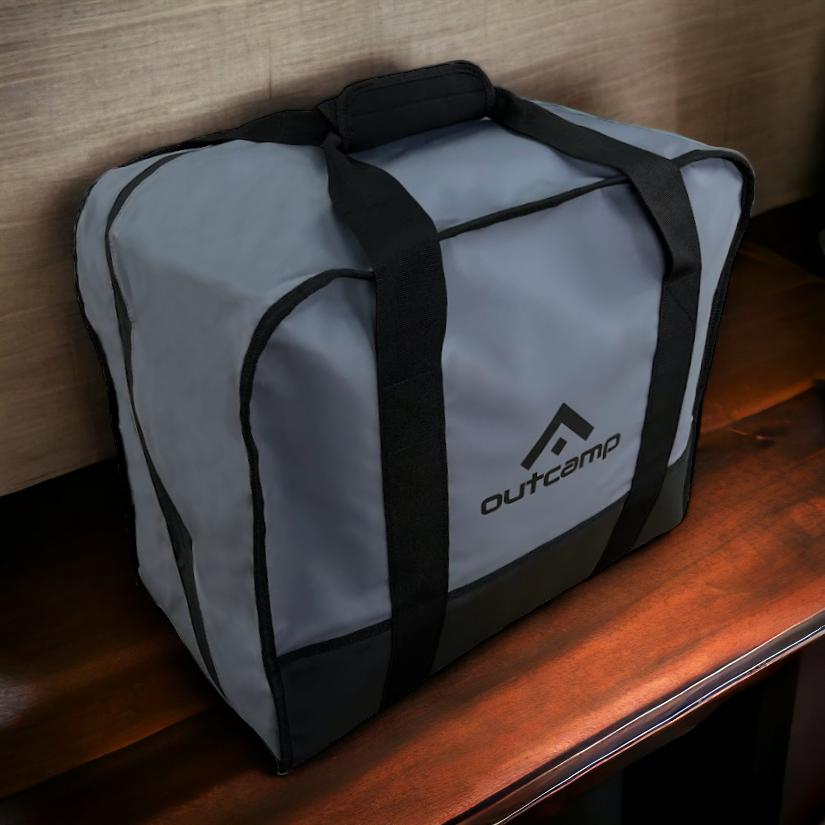
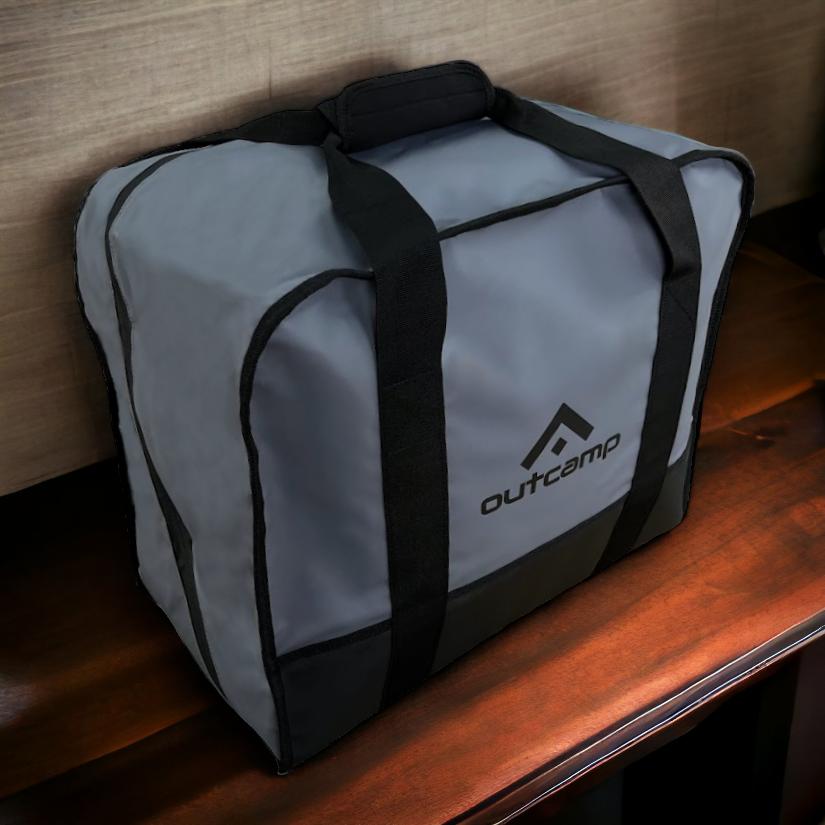
Portable satellite internet solutions like Starlink have changed the equation for remote camping across Australia. A compact setup with a carry bag and portable mount means you can have reliable high-speed internet at even the most isolated campsite along the Reynolds River Track. Whether you need it for safety communications, remote work, or simply keeping the family entertained during downtime, satellite connectivity removes one of the last barriers to extended stays in truly remote locations.
Why Connectivity Matters for Remote Camping Safety
The Reynolds River Track and the southern sections of Litchfield are genuinely remote. If something goes wrong — a vehicle breakdown, a medical issue, or an unexpected change in track conditions — being able to communicate your situation can make the difference between a minor inconvenience and a serious emergency. A UHF radio covers short-range communication with other travellers, but satellite internet or a personal locator beacon provides the longer-range link back to help.
Outcamp stocks a range of Starlink carry bags, mounts and accessories designed specifically for the kind of travel that Litchfield demands. Compact enough to fit alongside your camping gear and robust enough to handle corrugated tracks and dust, they are purpose-built for Australian conditions. If you are planning a trip along the Reynolds River Track or any extended Top End adventure, it is worth considering how you will stay connected when the mobile towers disappear.
At the end of the day, Litchfield National Park rewards preparation. The campers who get the most out of this extraordinary landscape are the ones who arrive with their vehicle serviced, their bookings confirmed, their water tanks full and their gear sorted. Do that, and you will find yourself swimming beneath waterfalls, camping under some of the clearest night skies in Australia, and wondering why it took you so long to get here.