The West MacDonnell Ranges (Tjoritja): The Complete Camping, Caravan and 4WD Guide for Central Australia
The West MacDonnell Ranges stretch for roughly 160 kilometres west of Alice Springs, and for campers, caravanners and four-wheel drive travellers they offer one of the most rewarding short-haul routes in the Northern Territory. Known traditionally as Tjoritja by the Arrernte people, the ranges are a continuous spine of quartzite and shale rising from the red plains of Central Australia, split by permanent waterholes, narrow chasms and some of the country's best bushwalks. If you are planning a Red Centre holiday in 2026, this is the loop that earns its keep on fuel, time and payload.
What makes Tjoritja different from the bigger-name parks is accessibility. Most of the main gorges sit within an easy day's driving from Alice Springs along sealed bitumen, yet the side tracks, bush camps and remote loops reward drivers with capable 4x4 rigs and a bit of patience. You can dip your toes into the park with a pop-top caravan and a sedan, or push deeper with a rooftop tent, winch and long-range tanks. This guide walks through when to go, which sites to prioritise, where to camp, and how to handle the rougher tracks on the western end of the range.
Planning Your Trip to Tjoritja / West MacDonnell National Park
The West MacDonnells sit squarely in the arid zone, so weather and water are the two levers that shape every trip. Summer brings 40-degree afternoons, flooded creek crossings after storms, and campgrounds that are technically open but functionally unusable before sunrise or after about 9am. The cooler months from April through September are the sweet spot, when daytime temperatures hover between 20 and 28 degrees and the swimming holes stop feeling like ice baths.
You do not need a permit to enter the park, but every key campground and most walking trailheads operate on a pre-booked system. Plan your itinerary in advance, lock in camp bookings online, and build a realistic driving schedule that accounts for gravel side roads and short but steep gorge walks at each stop.
When to Visit and What to Pack
April to September is the recognised Central Australian travel season, and the shoulder months of April and September tend to be the quietest. May and June nights can drop below zero at higher-elevation camps like Redbank Gorge and Ormiston Pound, so a proper four-season sleeping bag, a thermal liner and a warm beanie earn their space in the rig. July school holidays are by far the busiest window, particularly at Ormiston, so book early or plan your stays either side of that peak.
Water is non-negotiable. The park advises carrying your own drinking water because tank supplies are limited and should be treated before drinking. A minimum of seven litres per person per day covers drinking, cooking and basic washing, and you should add a buffer for dogs, recovery days, or any vehicle issues that slow you down. A gravity-feed filter or UV purifier lets you top up from tanks or creeks without burning through your bottled supply.
Pack layers rather than a single heavy jacket. Mornings start cold, middays climb fast, and evenings around the fire drop quickly once the sun sets behind the ranges. A wide-brim hat, UPF sun shirt, closed-toe hiking shoes and thick socks cover most of the walking. Add a small dry bag for swimming gear, because the waterholes at Ellery and Ormiston are deep, cold and far more enjoyable if you keep your clothes dry for the return walk.
Getting There and Road Conditions
The park is accessed from Alice Springs via two sealed roads, Larapinta Drive to the south and Namatjira Drive to the north. They loop together into a drivable circuit, with the turn-offs for Simpsons Gap, Standley Chasm, Ochre Pits and Ormiston Gorge all bitumen. The short access roads into Ellery Creek Big Hole and Glen Helen are corrugated gravel but are generally fine for a 2WD caravan tow if you take them at a sensible speed.
Conditions in 2026 are worth watching closely. The territory experienced severe weather events in February and March, and as of late March 2026, road and track conditions across Central Australia were still variable and challenging in places. Always check the NT Road Report the morning you travel, and carry recovery gear including a snatch strap, recovery points, traction boards and a basic shovel. Mobile reception drops out quickly west of Standley Chasm, so treat any advice you receive in Alice Springs as the last live update you will get until Glen Helen.
Fuel planning matters. Top up in Alice Springs before heading out, and aim to top up again at Glen Helen Roadhouse if you are pushing west to Redbank Gorge, Tylers Pass or the Mereenie Loop. A long-range tank is a genuine asset out here, and a spare jerry is sensible insurance if you plan to connect through to Kings Canyon (Watarrka) on the Mereenie. Tyre pressures on corrugated side roads should come down to around 28 to 30 psi for a loaded caravan and 22 to 26 psi for a laden 4WD, with a compressor ready to reinflate before you hit bitumen.
Fees, Bookings and Park Rules
Park entry itself is free, but camping fees apply at every designated campground. The current rate is around $10 per adult and $5 per child per night, payable online through the NT Parks and Wildlife booking system. Bookings are required at Ellery Creek Big Hole, Ormiston Gorge, Redbank Gorge Ridgetop, Redbank Gorge Woodland and Two Mile, and walk-ups are not guaranteed a site during the peak season.
Fires are allowed only in provided fire pits and only in the cooler months when no total fire ban is in place. Wood collection inside the park is prohibited, so bring your own or buy bundled firewood in Alice Springs or Glen Helen. Generators are banned at most park campgrounds to preserve the quiet, which is one of the genuine luxuries of a night in Tjoritja, so a decent lithium power station or a solar-and-battery setup is the way to run lights, fridges and devices.
Dogs are not permitted within the national park boundaries at any of the gorges or walking tracks, so if you are travelling with a camp dog, your overnight options are at Glen Helen Homestead Lodge or other pet-friendly stops outside the park. Respect for cultural sites is serious country out here. Stick to marked tracks, do not climb rock formations with sacred significance, and keep noise down in gorge areas where sound carries for kilometres.
The Best Gorges and Swimming Holes Along Namatjira Drive
The West MacDonnells are essentially a string of permanent waterholes connected by a single corridor of sealed road. Each gorge has a different character, and unless you have a fortnight, you will need to be selective. The three that consistently sit at the top of every serious camper's list are Ellery Creek, Ormiston Gorge and Redbank Gorge, with Glen Helen and Serpentine Gorge filling out the rest of a comfortable five- to seven-day loop.
All three of the headline gorges are swimming gorges, and the water stays cold year-round thanks to the sheer rock walls and deep pools. Even in October you will find the temperature sitting well below what most southern swimmers would call pleasant, but in a country where summer afternoons push past 40 degrees, cold water is the point.
Ellery Creek Big Hole
Ellery Creek Big Hole is the closest of the major gorges to Alice Springs, about 90 kilometres west on Namatjira Drive. The swimming hole itself is a broad, deep waterhole framed by vertical red walls and white sand beaches, and it is a natural first stop on any westbound trip. A 3-kilometre return Dolomite Walk climbs out of the creek line and gives you the big-picture view of the gorge, which is worth the effort on a cool morning.
The campground holds ten designated sites and sits just behind the waterhole in low scrub. Facilities are deliberately simple: pit toilets, fire pits, picnic tables and no showers. It suits small caravans, camper trailers and swag setups, and the gravel access road is easy enough for most rigs to handle at reduced speed. Expect other travellers, school groups and day trippers between about 10am and 3pm, then the site empties out and the evenings become remarkably quiet.
If you are planning to swim, pack a decent pool noodle, inflatable mat or proper flotation device. The waterhole is cold enough to cause rapid onset of cramping, even for confident swimmers, and it is over ten metres deep in places. Kids love it, but supervise closely, and do not jump or dive from the rock walls. A wetsuit top is not a ridiculous bit of kit to carry in a Central Australian holiday packing list.
Ormiston Gorge and Pound
Ormiston Gorge is the jewel of the park and the site most travellers wish they had allocated an extra night to. The gorge opens into a natural amphitheatre of red cliff, with a permanent waterhole at the base and the 7-kilometre Ormiston Pound Walk looping up through the surrounding country. The Pound Walk is one of the best day hikes in Central Australia, and it is genuinely worth planning a full rest day around.
The campground at Ormiston is the most developed inside the park, with flush toilets, hot showers, shaded picnic tables and a small kiosk that sells coffee, ice creams and basic supplies during daylight hours. The sites are generous enough for caravans up to around 22 feet, and a handful of sites will accommodate larger camper setups if you arrive early. Power is not provided, and generators are not permitted, so plan for solar or battery-only operation.
Time your visit around the morning light if you want the classic photograph of Ormiston Gorge. The sun hits the eastern face of the cliff from about 7am, and the reflections in the waterhole last for roughly an hour before the glare takes over. Sunset back at the campsite is equally worth stopping for, with the western ridges turning a deep burgundy that photographs never quite capture. Bring a proper camp chair, a warm drink and settle in.
Glen Helen, Redbank and the Finke River
Glen Helen Gorge sits at the western edge of the sealed road and marks the point where the Finke River, one of the oldest watercourses on the planet, cuts through the range. The nearby Glen Helen Homestead Lodge offers powered sites, cabins, fuel, meals and a bar that genuinely feels like the end of the road. For travellers towing larger caravans who want a base camp with amenities, Glen Helen works as a comfortable headquarters for day trips to Ormiston, Ochre Pits and Redbank.
Redbank Gorge is another 25 kilometres west of Glen Helen along a corrugated dirt road that becomes noticeably rougher in its final stretch. The gorge itself is narrow and deeply shaded, and reaching the actual waterhole requires scrambling over river stones and boulders from the day-use car park. It is the coldest swimming hole in the range by a clear margin, so a small inflatable or a dry bag for a camera is almost essential. Camping at Redbank is split between two sites, Ridgetop and Woodland, both with pit toilets and fire pits, and both booked through the online system.
For those with the right setup, the Finke River bush camps downstream of Glen Helen are a chance to camp alongside one of the world's most ancient rivers. Access is via soft sandy tracks and river crossings, so a properly set-up 4x4 with deflated tyres is essential. This is remote country with no services, no phone reception and no reliable water, and it should be treated accordingly. A PLB or satellite communicator, extra water and a fully stocked recovery kit are baseline requirements.
Camping in the West MacDonnells: Sites, Setup and What to Expect
Tjoritja rewards campers who plan their setup to match the conditions. Nights are cold, days are dry, dust is everywhere, and power has to come out of whatever you brought with you. A rig that works beautifully on the east coast can struggle here without a few adjustments, so it is worth thinking through power, water, dust sealing and cooking before you turn onto Larapinta Drive.
The park's campgrounds are all vehicle-based. There are no drive-through powered sites, no amenities blocks beyond Ormiston's hot showers, and no communal kitchens. Expect to be self-sufficient for the duration of your stay, with a clear plan for waste disposal, water refills at Glen Helen or Alice Springs, and a sealed system for keeping food cold in temperatures that can swing 25 degrees between midnight and midday.
Vehicle-Based Campgrounds
The main vehicle-based campgrounds in Tjoritja are Ellery Creek Big Hole, Ormiston Gorge, Redbank Gorge Ridgetop, Redbank Gorge Woodland and Two Mile, along with Serpentine Chalet Dam further west. Each has a different feel. Ellery Creek is compact and social, Ormiston is the most polished, Redbank Ridgetop has the most dramatic views, and Serpentine Chalet is the quietest, tucked away in ironwood country.
Site surfaces vary from gravel pads to hard-packed dirt with patchy grass. Levelling blocks are essential for caravans, because many sites have a gentle slope that catches you off guard when you pull up at dusk. A small rake or brush helps clear sharp rocks from under your awning or swag, and a dedicated groundsheet will save your floor or tent base from red dust stains that never fully wash out. Consider a set of quality drawers or a cargo system that keeps fine Central Australian dust out of your food and clothing.
Generators are prohibited at most park sites, which puts the emphasis on a quiet, self-sufficient power setup. A 100Ah lithium battery paired with a 200W portable solar blanket is enough for most campers to run a 12v fridge, LED lights and device charging indefinitely in sunny conditions. If you plan to run a diesel heater through the cold nights, step up to a 200Ah bank and factor in fridge load when you size your solar. A DC-DC charger is the third essential, especially for caravans, because alternator charging alone will not keep a lithium bank topped up on shorter daily drives.
Caravan and Camper Trailer Access
Most standard caravans and camper trailers can comfortably reach Ellery Creek, Ormiston Gorge and Glen Helen. Redbank Gorge is accessible to camper trailers and small off-road caravans, though the final few kilometres of corrugated gravel will shake loose anything that is not properly secured. Full-size touring caravans over around 22 feet start to struggle at Redbank, not because of the road itself but because of the tight turning circle in the campground.
For large rigs, Glen Helen Homestead Lodge is the natural base. Power, water, a dump point and a bar with cold beer are all on hand, and the drive out to Ormiston is an easy unhitched day trip. Day-tripping from a powered site also lets you run a single long shower each evening and keep the fridge cold without cycling lithium batteries, which matters more than most first-timers expect on a Red Centre trip.
Dust management inside a caravan becomes a daily job. Weber Baby Q covers, outdoor storage tubs, external shoe racks and a small handheld vacuum all help. If you have a camper trailer with canvas, close the awning and vents when you leave camp, and carry a clean damp cloth for wiping down seals before you open up at the next site. A battery-powered blower is an underrated piece of kit for clearing dust off covers and annexes before pack-up.
Bush Camping, Larapinta Trail and Permits
The Larapinta Trail runs 223 kilometres through the heart of the park, following the spine of the ranges from Alice Springs Telegraph Station west to Mount Sonder. It is a world-class multi-day walk, rated moderate to hard depending on section, and it is a serious undertaking that demands proper preparation. Overnight bushwalkers must book through the Larapinta Trail booking system and camp only at designated sites along the route.
Section walking is increasingly popular with Australian holiday-makers who want the Larapinta experience without a three-week commitment. The 16-kilometre Section 12 from Redbank Gorge to Mount Sonder is the most celebrated single section, particularly as a sunrise summit, and it can be completed in a long day from a car-based camp at Redbank. Sections 9 and 10 through Hugh Gorge and Ellery Creek also offer accessible two- to three-day walks with dramatic gorge scenery.
Self-sufficient camping off the Larapinta is not permitted inside the national park. Any bush camping needs to be outside park boundaries, typically along the Finke River south of Glen Helen or on freehold land with permission. Water caches are the lifeline of long-distance walkers out here, and any group doing a self-supported section should plan drop points with a 4x4 support driver well in advance. A Garmin inReach or similar satellite communicator is a genuine safety baseline in Tjoritja, where ground-based reception vanishes quickly once you leave the main camp grounds.
4WD Side Tracks and Remote Loops for Experienced Drivers
The West MacDonnells reward 4x4 travellers who push beyond the bitumen. The sealed road gives you easy access to the headline gorges, but the most memorable Central Australian camping happens on the side tracks, where you trade amenities for space, silence and a real sense of distance from anywhere. These routes are for properly set-up vehicles, not stock-standard soft-roaders, and they should be tackled with full recovery gear and current information.
Sand, corrugations, rocky climbs and river crossings all feature across the wider Tjoritja region, often in the same day. Deflate your tyres, drive to the conditions, and be honest with your vehicle's capability. The nearest mechanical help is Alice Springs, and a recovery from deep in the Finke River system is expensive, slow and entirely avoidable with good preparation.
The Mereenie Loop to Watarrka
The Mereenie Loop is the famous connection between the West MacDonnells and Watarrka National Park (Kings Canyon). It runs from Glen Helen through Aboriginal freehold country to the Watarrka turnoff, covering roughly 200 kilometres of formed dirt road that alternates between smooth-running clay and teeth-rattling corrugations. A valid Mereenie Tour Pass is required, available in Alice Springs, Glen Helen or Kings Canyon, and it permits travel on the route only.
Conditions vary dramatically with weather. After rain, the clay surface becomes slick and sections can be closed for days. In the dry, corrugations build up quickly between grader runs, and tyre pressures of around 25 psi are a sensible compromise between grip and comfort. Caravans are towable on the Mereenie with careful driving, but camper trailers and rooftop tents on well-rated off-road chassis handle it better. If you are towing, carry two full-size spares.
Kings Canyon is a worthy payoff at the southern end of the loop, with the 6-kilometre Rim Walk offering one of the most visually arresting day hikes in the country. Combining Watarrka with the West MacDonnells turns a five-day holiday into a proper ten- to fourteen-day Red Centre loop, and it is the single most rewarding four-wheel drive itinerary in Central Australia for travellers with the time and setup to manage it.
Tylers Pass and the Gosse Bluff Detour
Tylers Pass is the high lookout on the Mereenie Loop, with a panoramic view over Tnorala (Gosse Bluff), a 142-million-year-old meteorite impact crater visible as a near-perfect ring of hills on the plain below. The lookout is a short walk from a dirt pull-off and it is one of the genuine photographic highlights of the trip, particularly in the long afternoon light. Tnorala is an important cultural site for the Western Arrernte, and access into the crater itself requires a permit and respectful behaviour.
The detour into Tnorala adds around 30 minutes to a Mereenie run but gives you the chance to stand inside a crater that is visible from space. The short internal walking trail is flat and family-friendly, and interpretive signs explain both the geological and cultural significance of the site. Dogs, drones and climbing are not permitted, and the cultural rules are enforced.
Further along Tylers Pass Road, there are short side tracks that 4x4 travellers sometimes use for overnight bush camps. These are not designated campgrounds, and you need to confirm you are outside national park boundaries before setting up. A mapping app with offline topographic layers, along with paper backups, makes it much easier to stay inside the law while finding a quiet spot for a fire and a swag.
Staying Connected in the Ranges
Phone reception in the West MacDonnells is limited to a short radius around Alice Springs, Standley Chasm and parts of Glen Helen. Everything west of Ormiston Gorge is effectively a dead zone for Telstra, Optus and Vodafone, so any plan that depends on mobile data will fall over within the first day. For travellers running a business from the road, keeping in touch with family, or simply wanting a safety fallback, a satellite solution has become the default in 2026.
Starlink Roam and Starlink Mini have changed remote Central Australian camping more than any other bit of gear in the last five years. With a clear view of the northern sky, which you will have at almost every campground in the park, both units deliver usable speeds for video calls, streaming and real-time weather updates. Power draw is the main thing to manage: figure on around 30 to 50 watts average for a Mini and up to 100 watts for a Standard kit, and size your battery and solar accordingly.
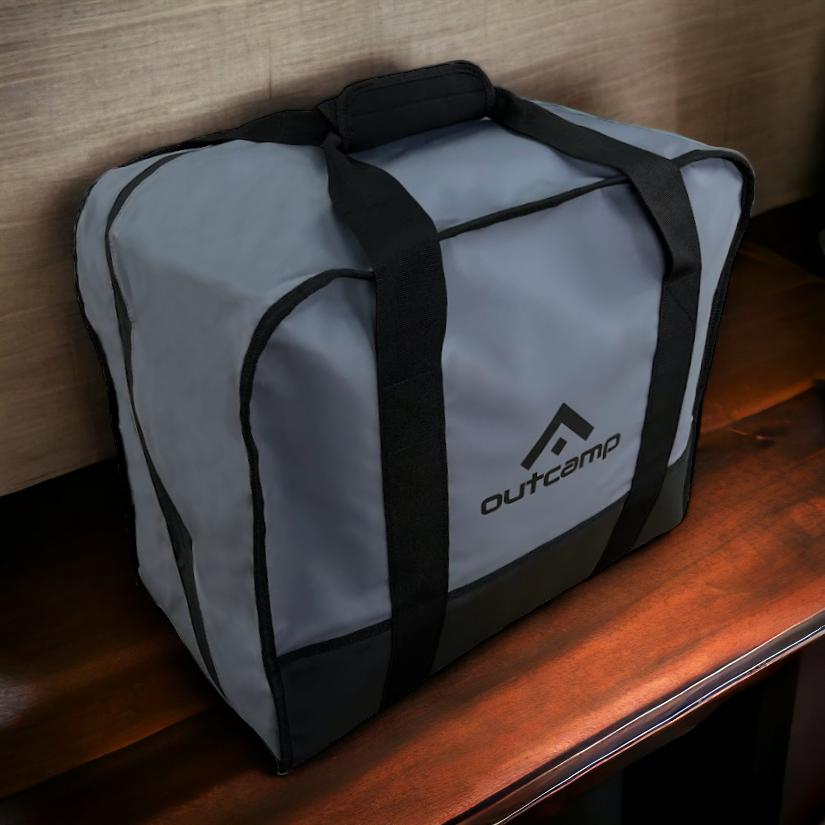
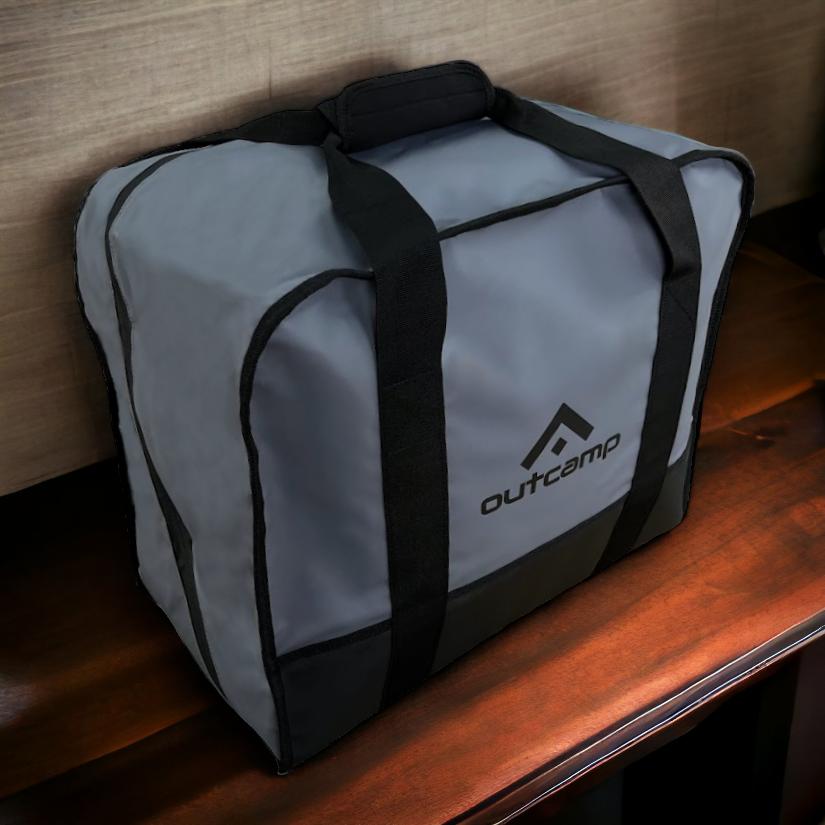
The other piece of connectivity worth planning is a proper mounting and carry solution. A padded carry bag protects the antenna during rough Mereenie corrugations, a purpose-built 4x4 mount lets you set up in minutes at each camp, and a weatherproof cable run keeps dust and moisture out of your power setup. This is exactly the gap Outcamp was built to fill, and our range of Starlink carry bags, flat mounts, suction mounts and vehicle mounts is designed for Australian touring conditions rather than suburban driveways.
Planning the Trip and Making the Most of Tjoritja
The West MacDonnell Ranges are a rare kind of park. They are accessible enough for first-time Central Australian travellers to enjoy from a sealed-road caravan trip, yet remote enough at the western end to demand real four-wheel drive skill and proper preparation. A well-planned seven-day loop out of Alice Springs covers Ellery Creek, Ormiston, Glen Helen, Redbank and a couple of the smaller gorges, with time for a Larapinta section walk and a sunrise climb of Mount Sonder if the legs and weather cooperate.
Build your trip around the cooler months, book your camps ahead of time, carry more water than you think you need, and set the rig up for dust, cold nights and off-grid power. Whether you are in a camper trailer, a small touring caravan or a fully kitted 4x4 tourer, Tjoritja will give back more than you put in, and it tends to be the part of a Red Centre holiday that travellers ask to return to.
If you are pulling your kit together for a West MacDonnells trip this season, have a look through the Outcamp range of Starlink accessories, 4x4 storage solutions and camping gear built for conditions exactly like these. Our carry bags, vehicle mounts and off-grid accessories are designed in Australia for Australian touring, and they are the quiet pieces of kit that make the difference between a good trip and a genuinely well-run one.