


There is a freedom in Australian free camping that you just can't find in a crowded caravan park. Whether you're tucked into a hidden cove on the Eyre Peninsula or parked up under a canopy of stars in the Queensland hinterland, the "off-grid" life is the ultimate goal for many Aussie tourers. However, as more people hit the tracks in 2026, the rules are changing. "Self-containment" is no longer just a recommendation; in many of our best free camps and national parks, it is a legal requirement. At the heart of that requirement is one piece of gear that every camper eventually has to face: the portable toilet.
Gone are the days when a shovel and a roll of paper were the standard kit for every bush camp. Modern waste management is about protecting the pristine environments we love to visit. A high-quality portable toilet setup doesn't just keep you compliant with local rangers; it significantly improves the comfort and hygiene of your campsite, especially on those long-haul winter tours where the nearest public block is 200 kilometres away.
TL;DR: The Quick Choice
- Best for Families: A 20L chemical flush toilet (like the Thetford Porta Potti) offers the most capacity and stability.
- Best for Minimalists: A folding seat with compostable bags is lightweight and takes up zero room in a small 4WD.
- Best for Extended Off-Grid: A composting or urine-diverting toilet allows for longer trips without needing a dump point.
- The Golden Rule: Always check if your destination requires a "sealed, self-contained system" before you rely on a simple bag setup.
1. What to Look For in a Camping Toilet
Choosing a toilet is about balancing three things: space, capacity, and how often you want to visit a dump point.
Waste Tank Capacity (10L vs 20L)
Size matters when it comes to portable toilets. A 10L waste tank is compact and easier to hide in a drawer system, but it will fill up fast—usually within 2 days for a couple. A 20L tank is the sweet spot for a family of four or a couple on a 4-day stint. Remember that 20L of waste weighs roughly 20kg. If you have to carry that tank a long distance to a dump point, you'll want a model with integrated wheels or a very sturdy handle.
Flush Mechanism: Piston vs Bellows
Most cassette-style toilets use one of two flush types. A bellows pump is simpler and cheaper but can be prone to cracking over time. A piston pump is more robust and easier to use for kids or older campers, providing a more powerful flush. In 2026, we are also seeing more high-end units with electric flushes, which are convenient but require 12V power or batteries.
Seat Height and Stability
There is nothing worse than a toilet that feels like it’s going to tip over when you use it. Look for a model with a wide base and a seat height that is as close to your home toilet as possible (usually around 40-45cm). If you are tall, the "standard" height models will be far more comfortable for daily use than the "portable" low-profile units.
2. Common Pitfalls for New Campers
The "Self-Containment" Trap
In 2026, many regional councils across QLD, NSW, and WA have implemented strict "Self-Contained Only" zones. To stay legally in these areas, you usually need a toilet that is fixed or portable and has a dedicated waste storage tank. A simple folding seat with a bag often does not count as self-contained in the eyes of a ranger. If you plan on doing a lot of free camping, a cassette-style toilet is your safest bet for avoiding a hefty fine.
Ignoring the Chemicals
Nobody wants their campsite to smell like a portaloo. In the Australian heat, waste breaks down fast. Traditional blue chemicals are powerful but can be harsh on septic-based dump points. Green chemicals or bio-tabs are the way to go in 2026—they are biodegradable, easier to use, and accepted at all dump points across Australia.
3. Maintenance and Care: Protecting Your Investment
A portable toilet is a significant investment, and looking after it will save you from leaks and smells down the track.
- Seal Care: The rubber seal between the bowl and the tank is the most important part of the unit. Use a dedicated seal lubricant (or a light coat of olive oil in a pinch) to keep it from drying out and cracking.
- Avoid Household Cleaners: Never use bleach or harsh bathroom cleaners on a camping toilet. They can perish the seals and damage the plastic. Use a dedicated toilet cleaner or simple soapy water.
- The "Double-Bag" Rule: If you are using a bag-based system, always double-bag. A puncture in a 4WD drawer system is a trip-ending event.
Real-World Touring Tips
- The Ensuite Tent: Don't just set up in the middle of camp. A simple pop-up ensuite tent provides privacy and keeps the "business" away from the kitchen area.
- Night Access: If you’re in a swag or tent, keep the toilet in the annex or the back of the car for easy access at 2 AM.
- Dump Point Etiquette: Always leave the dump point cleaner than you found it. Rinse the area and ensure the lid is closed.
- Paper Selection: Use rapid-dissolving 2-ply paper designed for RVs. Standard household quilted paper can clog the spout of your cassette, making it a nightmare to empty.
Protecting Your Gear on the Move
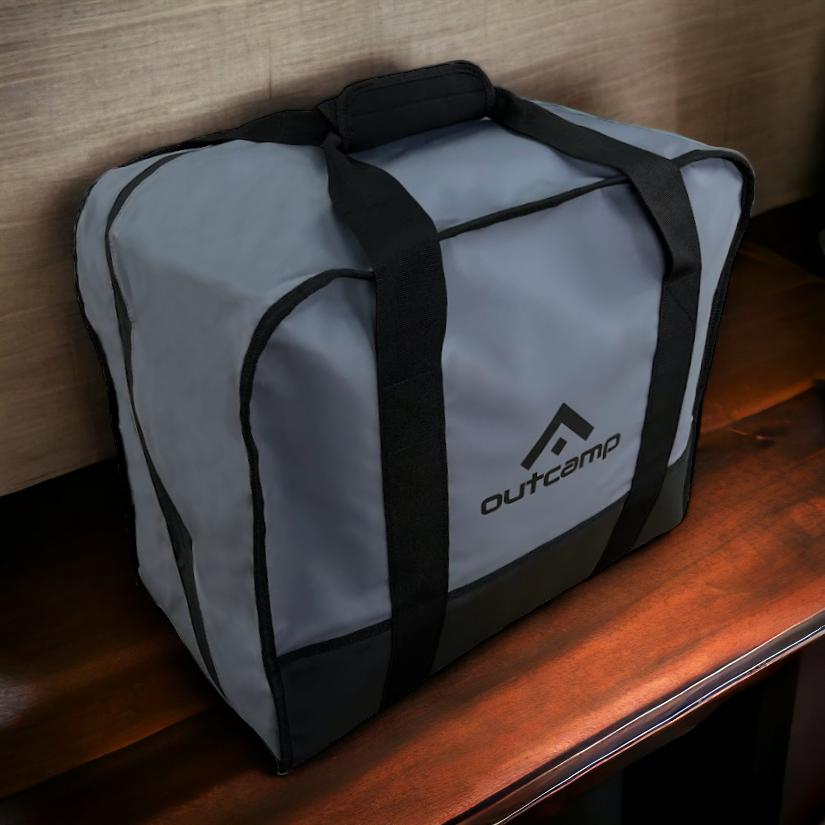
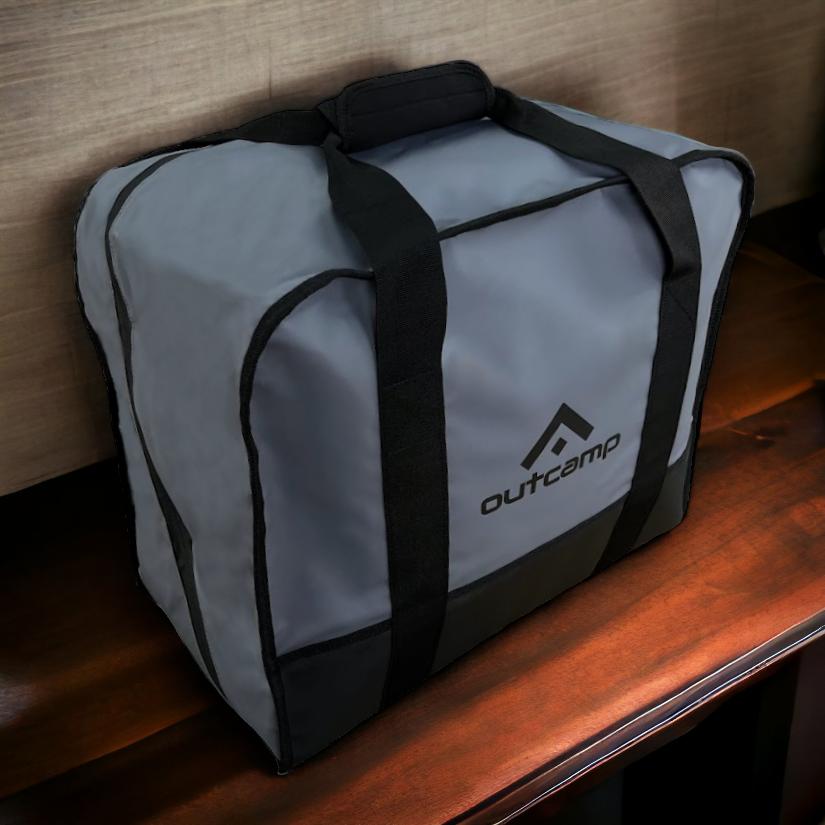
One of the biggest challenges with portable toilets is transporting the cassette once it’s been used—or even just keeping it clean in a dusty canopy. There is nothing worse than a dirty cassette dripping onto your recovery gear or camping furniture. To keep your vehicle hygienic and your gear protected, we highly recommend using a dedicated, heavy-duty carry bag.
Our Thetford C263 Toilet Cassette Bag is designed specifically for one of the most common Australian toilet models. It features a waterproof internal lining and heavy-duty zips to ensure that any "mess" stays contained within the bag and away from the rest of your kit.
Final Thoughts
Managing waste is the "unsexy" part of camping, but getting it right means we get to keep enjoying the remote places that make Australia special. Take the time to choose a setup that fits your vehicle and your travel style, and always follow the "leave no trace" principle.
Do you have a "best-kept secret" for managing the camp toilet? Share your tips in the comments below!




Leave a comment (all fields required)