Karijini National Park: The Complete Camping and 4WD Guide for Western Australia
Karijini National Park sits in the heart of Western Australia's Pilbara region, roughly 1,400 kilometres north of Perth. It is one of the most spectacular natural landscapes in the country, carved over two billion years of geological history into a maze of deep gorges, rust-red cliffs, and crystal-clear rock pools. For anyone who has spent time travelling the outback, Karijini is the kind of place that resets your expectations of what Australian wilderness can deliver.
Whether you are heading up in a four-wheel drive with a rooftop tent or towing a caravan along the Great Northern Highway, Karijini rewards those who plan ahead. The park covers more than 627,000 hectares and sits at the northern edge of the Hamersley Range, which means you are dealing with remote terrain, limited services, and some of the most dramatic scenery anywhere in the country. This guide covers everything you need to know to make the most of your trip.
Getting to Karijini: Routes and 4WD Access
Reaching Karijini requires a commitment of time and distance, but the journey itself is part of the experience. Most travellers approach from one of two directions, and each route has its own character. Planning your entry and exit carefully will help you avoid backtracking and make the most of your fuel and supplies.
The park has two main entry points, and the road conditions between them vary significantly. Understanding what your vehicle can handle will determine which gorges and campsites you can access during your stay.
From Perth via the Great Northern Highway
The most common approach is to drive north from Perth along the Great Northern Highway, passing through Newman before turning west into the park. This route covers roughly 1,400 kilometres and is fully sealed all the way to the eastern park entrance. Most travellers break the trip over two days, stopping overnight in Meekatharra or Newman.
Newman is the last major town before the park and the best place to top up on fuel, water, and groceries. There is a Coles supermarket and several service stations, so use this as your final resupply point. Once you pass Newman, services drop away quickly.
The sealed Karijini Drive connects the Great Northern Highway to the park's eastern gorges, including Dales Gorge. This section is accessible to all vehicles, including caravans, though the road can be corrugated in patches after heavy use during peak season.
The Western Approach via Tom Price
Coming from the west through Tom Price opens up the less-visited western side of the park, including Hamersley Gorge. The road from Tom Price to Hamersley Gorge is approximately 50 kilometres of unsealed gravel, and while it is signposted as four-wheel drive only, the surface is generally manageable for high-clearance vehicles driven carefully.
This western route is worth the effort. Hamersley Gorge sees fewer visitors than the eastern gorges, and the layered rock formations and spa-like pool at the bottom are among the most photographed spots in the park. If you are already travelling through the Pilbara, approaching from Tom Price and exiting via the eastern entrance makes for a logical loop.
Be aware that during the wet season, roughly October to April, both sealed and unsealed roads in the region can be subject to flooding and closures. Always check Main Roads WA for current conditions before setting out, and carry a satellite communication device for emergencies.
Road Conditions and Vehicle Requirements
The main sealed roads within Karijini are suitable for two-wheel drive vehicles and caravans, which means the eastern gorges around Dales Campground are accessible to most travellers. However, the unsealed roads to Hamersley Gorge and some of the day-use areas on the western side are best tackled with a four-wheel drive or at minimum a high-clearance SUV.
If you are towing a caravan, plan to set up at Dales Campground and use your tow vehicle to explore the wider park. The access roads to Weano Gorge, Joffre Falls, and Knox Gorge are sealed but narrow, and towing through these sections is not recommended.
Carrying two spare tyres is sensible for the unsealed sections, particularly if you are exploring tracks beyond the main tourist routes. Tyre pressure should be reduced on gravel to around 28-30 PSI, and a quality tyre repair kit is essential gear for any Pilbara trip.
Camping in Karijini: Where to Set Up
Karijini offers two main camping options inside the park, and they cater to quite different styles of travel. Whether you prefer a powered site with hot showers or a basic bush camp under the stars, there is something here that fits. Booking ahead is critical during peak season, as both campgrounds fill up fast.
Outside the park, Newman and Tom Price offer caravan parks with full amenities, which can serve as a comfortable base if you prefer to day-trip into the gorges. But staying inside the park is the experience most travellers come for — the night skies alone are worth it.
Dales Campground
Dales Campground is the main camping area inside the park, managed by the Department of Biodiversity, Conservation and Attractions. It sits on the eastern side of Karijini, within walking distance of Dales Gorge, Fortescue Falls, and Circular Pool. Sites are compacted gravel with enough room for a vehicle and tent or swag setup.
Facilities are basic but functional: pit toilets, a camp kitchen with gas barbecues, and non-potable water. There is no power, so if you are running a fridge or charging devices, you will need a dual battery system or portable solar setup. The campground is generally quiet and well-maintained, with clearly marked sites spread across lightly wooded terrain.
Fees are around $15 per adult per night, payable via the Park Pass system. A national park entry fee also applies. Booking online through the WA Parks website is essential between April and October, as walk-up sites are rarely available during the dry season. This is one of those places where staying connected with a portable satellite internet setup pays for itself — you can check availability, rebook sites, and stay in touch even in one of the most remote corners of the country.
Karijini Eco Retreat
For those who want something a step above a basic campsite, the Karijini Eco Retreat offers a range of options from unpowered camping sites to glamping-style eco tents with proper beds and linen. The retreat sits near the junction of Weano, Joffre, and Hancock gorges, making it the ideal base for exploring the western gorges.
The retreat has a licensed restaurant and bar, which is a genuine luxury after days of camp cooking. Unpowered sites start around $20 per person per night, while the eco tents run upwards of $300 per night depending on the season. It is a popular spot for couples and families who want the outback experience without going fully off-grid.
Even at the Eco Retreat, mobile phone reception is essentially non-existent. If you need to stay connected for work or safety, a portable satellite internet device like a Starlink Mini is the only reliable option out here. Plenty of travellers now carry one as standard equipment for remote Pilbara trips, and the difference it makes to trip planning and safety communication is substantial.
Free Camping Near the Park
If the in-park campgrounds are full or you want to extend your stay without the nightly fees, there are several free and low-cost camping options within an hour's drive of Karijini. The roadside rest stops along the Great Northern Highway between Newman and the park turnoff are popular with self-sufficient travellers, though they offer minimal facilities.
Hamersley Station Stay, a working cattle station on the western side of the park, offers basic bush camping for a small fee. The station is a genuine Pilbara experience — red dirt, big skies, and very few neighbours. It is a good option for those approaching from Tom Price who want to break the journey before entering the park.
Wherever you camp outside the park, ensure you are fully self-sufficient with water, waste disposal, and fire safety. Total fire bans are common throughout the Pilbara during the hotter months, and penalties for non-compliance are severe.
The Gorges: What to See and How to Explore Them
The gorges are why people come to Karijini, and they do not disappoint. Carved through ancient banded iron formations over billions of years, these chasms plunge up to 100 metres below the flat Pilbara plateau. The contrast between the dry, spinifex-covered surface and the cool, water-filled gorges below is one of the most striking things about the park.
There are more than a dozen gorges to explore, ranging from easy walks along the rim to serious scrambles through narrow slot canyons. Grading your walks according to your fitness and experience is important, as several of the gorge trails involve climbing over loose boulders, wading through waist-deep water, and navigating uneven rock surfaces.
Dales Gorge, Fortescue Falls, and Circular Pool
Dales Gorge is the most accessible gorge in the park and the one most visitors see first. A well-maintained trail leads from Dales Campground down into the gorge, where Fortescue Falls drops into a large pool surrounded by ferns, fig trees, and red rock walls. It is the only permanent waterfall in the park and flows year-round, even in the driest months.
From Fortescue Falls, a trail follows the gorge floor to Circular Pool, a wide, tranquil swimming hole enclosed by sheer cliffs. The walk is roughly two kilometres each way and rated Class 4, meaning it involves some rock-hopping and uneven surfaces. Bring sturdy footwear with good grip — thongs and sandals are not suitable for any gorge walk in Karijini.
The rim walk above Dales Gorge is an easier option and offers spectacular views down into the canyon. It connects the campground, Fortescue Falls lookout, and Three Ways Lookout along a mostly flat trail. This is a good choice for families with younger children or anyone who wants the views without the scramble.
Weano Gorge and Handrail Pool
Weano Gorge is where Karijini gets serious. The trail descends steeply into a narrow slot canyon, passing through sections where you need to use a metal ladder and handrail to navigate the rock walls. At the bottom, Handrail Pool sits in a tight, cathedral-like chamber where the gorge walls nearly touch overhead. The water is cold, the acoustics are extraordinary, and the sense of scale is humbling.
This walk is rated Class 5 — the highest difficulty in the park — and should only be attempted by confident, fit walkers. The trail involves climbing down metal staircases bolted into the rock face, scrambling over boulders, and wading through thigh-deep water in the final approach to the pool. Waterproof bags for your phone and camera are essential.
Despite the difficulty, Handrail Pool is one of the most memorable experiences in Western Australia. The geological layers in the rock walls tell a story stretching back 2.5 billion years, and swimming in water that has been filtering through iron-rich stone for millennia feels like stepping into another world entirely.
Joffre Gorge, Knox Gorge, and Hancock Gorge
The remaining major gorges on the western side each offer something different. Joffre Gorge is best appreciated from the rim lookout, where you can see the full amphitheatre of red and purple banded rock curving around a seasonal waterfall. The descent into the gorge is challenging and often closed due to rock fall risk, so check conditions at the visitor centre before planning to go down.
Knox Gorge provides a moderate walk down a steep staircase to a swimming hole at the base. It receives fewer visitors than Weano or Dales, which means you are more likely to have the pool to yourself. The late afternoon light in Knox Gorge is particularly impressive, as the sun catches the iron-rich rock and turns the walls a deep, glowing red.
Hancock Gorge connects to Weano via the Junction Pool trail, creating one of the best half-day walks in the park. The trail follows Spider Walk, a narrow section where you brace yourself between the gorge walls to traverse above the water. It is exhilarating, physically demanding, and absolutely worth the effort if you have the fitness for it.
Essential Gear and Preparation for a Karijini Trip
The Pilbara is remote, hot, and unforgiving if you arrive unprepared. Karijini sits at an elevation that moderates temperatures slightly compared to the coast, but daytime highs during the shoulder season still regularly exceed 35 degrees Celsius. Proper planning and the right equipment make the difference between a trip you remember fondly and one that tests your patience.
Beyond the standard camping kit, there are a few Karijini-specific items that experienced travellers always pack. The gorge walks demand certain gear, and the remoteness of the park means you cannot rely on ducking back to town if you forget something.
Water, Fuel, and Supplies
Carry a minimum of 10 litres of drinking water per person per day. The campground water is non-potable, and the nearest reliable water refill is in Newman or Tom Price, both of which are more than an hour's drive from the park. A quality water filtration system is a worthwhile investment if you plan to supplement from park sources.
Fuel availability within the park is zero. Fill up in Newman or Tom Price and carry additional fuel if your vehicle's range is under 600 kilometres. A jerry can with 20 litres of diesel or petrol is standard practice for Pilbara touring. If you are exploring the western gorges and returning to Newman, budget for at least 300 kilometres of driving within and around the park.
Groceries are limited to what you bring or what you can buy at the Eco Retreat's small shop, which stocks basics at outback prices. Plan your meals before you leave town and pack an esky with enough ice or a 12-volt fridge to keep perishables fresh for the duration of your stay.
Gorge Walking Gear
Enclosed shoes with good grip are non-negotiable for every gorge walk. The rock surfaces are slippery when wet, and loose gravel on the descents can catch you out in open footwear. Many experienced walkers use approach shoes or hiking sandals with toe protection and grippy soles designed for wet rock.
A dry bag for your phone, wallet, and camera is essential for the deeper gorge walks where you will be wading through chest-deep water. Quick-dry clothing beats cotton for these walks — you will get wet, and sitting around in damp cotton in the late afternoon when temperatures drop is a recipe for discomfort.
A basic first aid kit with compression bandages, antiseptic, and blister treatment should be in your daypack on every walk. The nearest medical facility is in Newman, and helicopter evacuation from the gorge floor is the only option for serious injuries. Take the difficulty ratings seriously, and turn back if conditions feel beyond your ability.
Staying Connected in the Pilbara
Mobile phone coverage inside Karijini is effectively non-existent. Telstra has some patchy coverage along the Great Northern Highway near Newman, but once you turn off towards the park, you are on your own. This is one of the most common surprises for first-time visitors who are used to having at least basic reception at most Australian camping destinations.
A satellite communication device is essential safety equipment for Karijini. At minimum, carry a PLB or satellite messenger for emergencies. But for travellers who want to stay properly connected — checking weather forecasts, updating family on your location, or even doing some remote work from camp — a portable satellite internet setup like a Starlink Mini changes the game entirely. You can check road conditions, book campsites, and maintain reliable communication from one of the most remote national parks in the country.
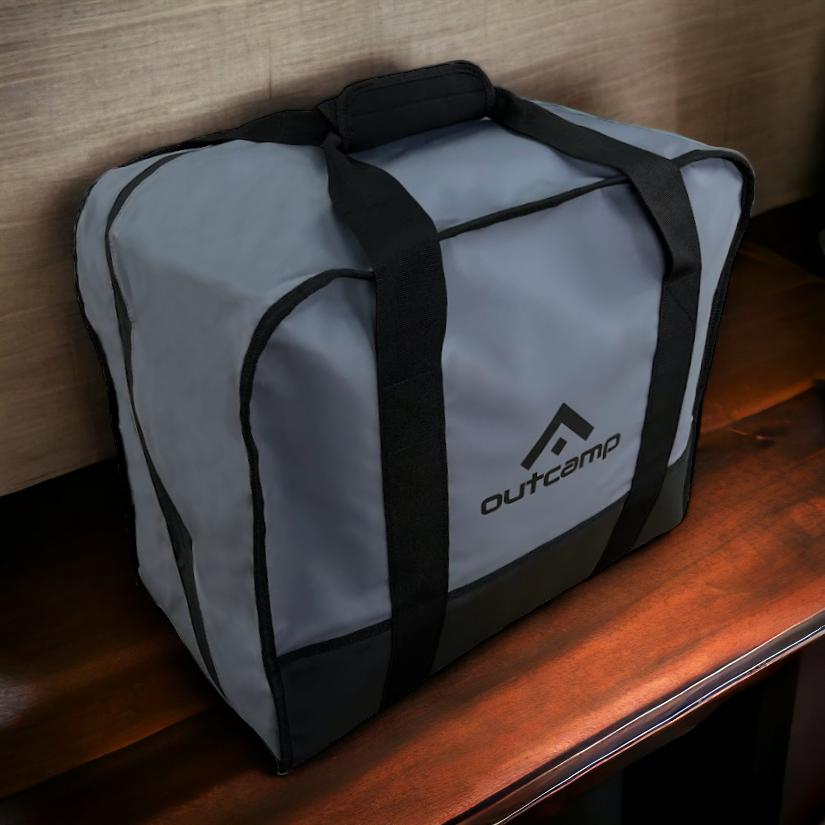
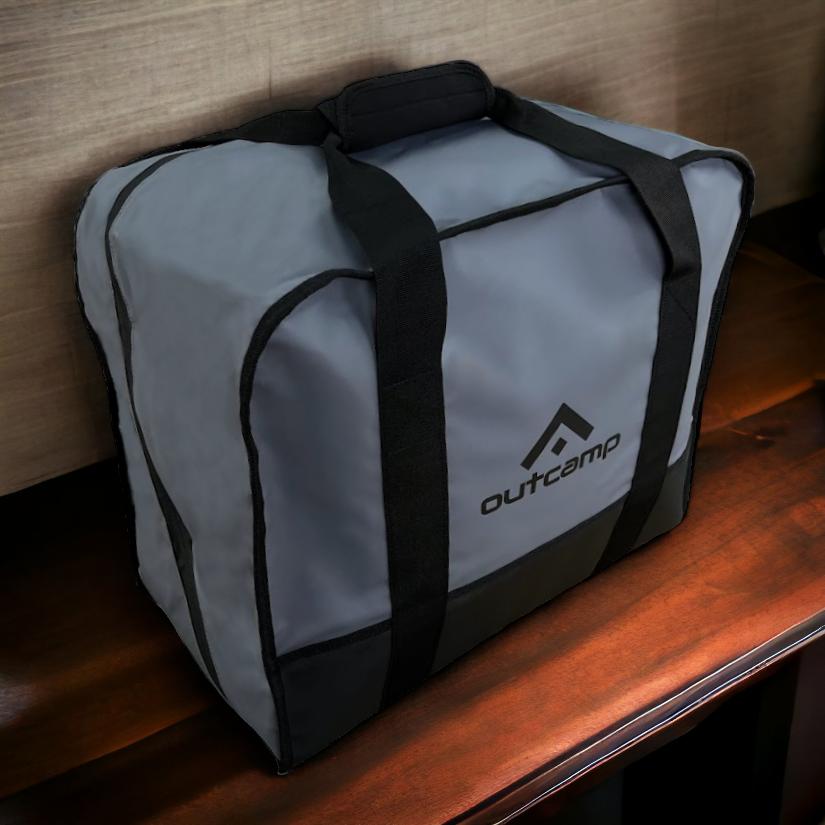
Outcamp carries a full range of Starlink accessories purpose-built for outback travel, including carry bags, portable mounts, and cable management solutions that make setting up and packing down your satellite connection quick and painless. When your nearest town is two hours away and there is no phone signal, having reliable internet is not a luxury — it is a practical tool for safer, more enjoyable travel.
Best Time to Visit and What to Expect
Timing your Karijini trip correctly is one of the most important planning decisions you will make. The park operates on a distinctly seasonal rhythm, and visiting at the wrong time can mean closed trails, extreme heat, or flooded roads. Getting the timing right means you will enjoy comfortable temperatures, flowing waterfalls, and accessible gorges.
The Pilbara has two broad seasons: the hot, wet summer from October to March, and the cooler, dry winter from April to September. Each has its advantages, but for most camping and four-wheel drive travellers, the dry season is the sweet spot.
Peak Season: April to September
The dry season is peak visitor time for good reason. Daytime temperatures sit between 25 and 32 degrees Celsius, nights are cool and clear, and all gorge trails are typically open. The waterfalls and pools are at their best in the early dry season (April to June) when water levels are still high from the summer rains.
School holidays in July are the busiest period, and both Dales Campground and the Eco Retreat book out weeks in advance. If you can travel outside school holidays, May, June, and August offer the best balance of good weather, reasonable water levels, and fewer crowds. Book your campsite as soon as the 180-day booking window opens — popular sites go fast.
Night temperatures can drop below 10 degrees Celsius in June and July, so a quality sleeping bag rated to at least 5 degrees is important. The clear winter skies also make Karijini one of the best stargazing locations in Australia — the lack of light pollution this far from any city is remarkable.
Wet Season Considerations
Visiting during the wet season is possible but comes with significant restrictions. Many gorge trails close due to flash flooding risk, and the unsealed roads to Hamersley Gorge and some campgrounds may be impassable. Temperatures regularly exceed 40 degrees Celsius, and humidity is high.
That said, the wet season brings dramatic thunderstorms, lush green spinifex, and the gorge waterfalls at their most powerful. If you are an experienced outback traveller with a capable four-wheel drive and flexible schedule, a shoulder-season visit in April or October can deliver stunning conditions with fewer crowds than the peak months.
Regardless of when you visit, check the Parks and Wildlife Service website for current trail closures and fire conditions before you head in. Conditions can change quickly in the Pilbara, and a trail that was open yesterday may be closed today after an unexpected rain event.
Making the Most of Your Karijini Adventure
Karijini National Park is one of those rare places that exceeds expectations. The scale of the gorges, the clarity of the water, and the sheer age of the rock formations create an experience that stays with you long after you have packed up camp and headed south. It is remote, it demands preparation, and it rewards effort with some of the most extraordinary natural scenery in Australia.
Plan for a minimum of three nights to do the park justice. Five nights is better if you want to explore both the eastern and western gorges without rushing. Build in rest days for swimming, reading in camp, and simply absorbing the landscape — Karijini is not a place to tick off a checklist. It is a place to slow down and let the Pilbara get under your skin.
Before you head out, make sure your gear is sorted for the conditions. Outcamp's range of carry bags, mounts, and connectivity accessories are designed for exactly this kind of trip — remote, rugged, and far from the nearest phone tower. Whether it is keeping your Starlink setup protected in transit or mounting it securely at camp, having the right accessories means one less thing to worry about when you are focused on the adventure ahead.