

The Atherton Tablelands: The Complete Camping, Caravan and Waterfall Guide for Queensland
Perched high on the Great Dividing Range behind Cairns, the Atherton Tablelands feel like an entirely different world from the tropical coast below. Where the lowlands swelter under humidity and cane fields, the Tablelands deliver cool breezes, volcanic crater lakes, towering curtain figs, and some of the most underrated camping in Queensland. For anyone travelling with a caravan, camper trailer, or 4WD, this region offers a rare combination: World Heritage rainforest, reliable dry-season weather, and enough variety to fill a week without retracing your steps.
Despite sitting barely an hour from Cairns, the Atherton Tablelands remain overlooked by many travellers fixated on the coast. That works in your favour. Campgrounds here are quieter, the scenery is world-class, and the network of sealed and unsealed roads connects waterfalls, swimming holes, and bushwalks in a loop that suits everything from a weekend getaway to an extended touring holiday. Whether you are chasing waterfalls, looking for a base to explore Tropical North Queensland, or simply want to escape the coastal crowds, the Tablelands deliver.
Why the Atherton Tablelands Deserve a Spot on Your Queensland Camping Itinerary
The Tablelands sit on a fertile volcanic plateau stretching from Mareeba in the north to Ravenshoe in the south. The landscape shifts dramatically as you climb from the coast: sugarcane gives way to avocado orchards, coffee plantations, and dense pockets of rainforest that have survived since the Gondwana era. The volcanic history is written into the land itself, with crater lakes, basalt columns, and lava tubes scattered across the region.
For camping and caravan travellers, the appeal is practical as much as scenic. The Tablelands sit at roughly 700 to 900 metres elevation, which means overnight temperatures are noticeably cooler than the coast — a genuine relief if you have been touring through tropical Queensland. Towns like Atherton, Malanda, and Yungaburra are well-serviced with fuel, supplies, and dump points, making it easy to top up between camps without long detours.
Getting There: The Scenic Routes Up
Two main roads climb from the coast to the Tablelands, and both are worth driving. The Gillies Highway rises from Gordonvale south of Cairns in a series of tight switchbacks through dense rainforest. It is sealed and suitable for caravans, though you will want to take it slowly — the curves are relentless and the gradient is steep. The reward is a dramatic entrance onto the plateau with views back over the coastal plain.
The Kuranda Range Road from Smithfield is the more commonly travelled route, winding through the Barron Gorge National Park before arriving at the tourist village of Kuranda. From there the road flattens out through Mareeba and onto the Tablelands proper. Both routes are accessible to caravans and motorhomes, though the Gillies is the more challenging of the two.
If you are coming from the south, the Kennedy Highway from Cardwell and Ravenshoe is the least dramatic but most practical approach, running through open woodland and farmland. Travellers heading north from Townsville or Charters Towers will find this the most direct route in, and it is fully sealed with gentle gradients that suit any rig.
Best Time to Visit
The dry season from May to October is the sweet spot. Daytime temperatures hover around 22 to 25 degrees, nights drop to single digits in some areas, and the waterfalls still carry reasonable flow from the tail end of the wet season. July and August can bring genuinely cold mornings — if you are in a swag or ground tent, bring a decent sleeping bag rated to at least zero degrees.
The wet season from November to April brings heavy rainfall that transforms the waterfalls into thundering spectacles, but some unsealed roads and campgrounds close during this period. If you visit in the shoulder months of April or November, you will often get the best of both worlds: flowing waterfalls and passable tracks without the peak-season crowds.
School holidays in June and September are the busiest periods on the Tablelands. If you are flexible with dates, mid-week camping during term time offers the quietest experience, particularly at the national park campgrounds around Lake Tinaroo and the crater lakes.
Camping and Caravan Options Across the Tablelands
The Atherton Tablelands offer a solid spread of camping options, from fully serviced caravan parks in town to bush camps beside volcanic lakes. The range suits everyone from grey nomads in large rigs to swag-and-ute minimalists looking for a quiet spot by the water. Planning ahead is important for the national park sites, which require online booking through the Queensland Parks system.
One of the region's strengths is that you can base yourself at a single campground and day-trip to most of the major attractions. The distances between towns are short — Atherton to Yungaburra is twenty minutes, Yungaburra to Malanda is fifteen, and the entire Waterfall Circuit can be driven in a couple of hours with stops. That said, spreading your stays across two or three camps gives you a better feel for the region's variety.
Lake Tinaroo and Danbulla Forest
Lake Tinaroo is the largest body of water on the Tablelands, a man-made reservoir surrounded by eucalypt woodland and pockets of rainforest. The Danbulla State Forest on its shores contains six designated campgrounds: Platypus, Downfall Creek, Kauri Creek, School Point, Fong-on-Bay, and Curri Curri. All must be pre-booked through the Queensland Parks website, and fees are modest.
The campgrounds vary in character. Fong-on-Bay and Downfall Creek are the most popular, sitting right on the lake shore with direct water access for kayaking, fishing, and swimming. Platypus Campground is quieter and better suited to those seeking solitude. Facilities are basic — pit toilets and fire rings — so you need to be self-sufficient with water and cooking gear. Generators are not permitted, which keeps the camps peaceful.
For caravanners who need power and amenities, Lake Tinaroo Holiday Park sits on the northern shore and offers powered sites, a camp kitchen, hot showers, and a small shop. It makes a comfortable base for exploring the surrounding forest roads, many of which are unsealed and suited to 4WD or high-clearance vehicles. The Danbulla Forest Drive is a scenic loop that connects several of the campgrounds and passes through stands of kauri pine and native hoop pine.
Yungaburra and the Crater Lakes
The village of Yungaburra sits between Lake Eacham and Lake Barrine, two volcanic crater lakes formed by explosive eruptions thousands of years ago. Both lakes are now tranquil swimming spots ringed by dense rainforest, and they serve as the scenic centrepiece of any Tablelands visit. Lake Eacham in particular is one of the finest natural swimming spots in Queensland — crystal-clear water, no boats, and a walking track that circles the entire lake through cathedral-like rainforest.
Lake Eacham Tourist Park is the closest camping option to both crater lakes, offering powered and unpowered sites in a rainforest setting. It is a small, well-maintained park with hot showers, a camp kitchen, and campfire areas. The park fills quickly during school holidays, so booking ahead is essential. Yungaburra itself is a heritage-listed village with a handful of cafes, a general store, and the famous Yungaburra Markets held on the fourth Saturday of each month.
Platypus viewing is a genuine drawcard here. Peterson Creek, which runs through Yungaburra, is one of the most reliable wild platypus viewing sites in Australia. Dawn and dusk are the best times — bring a camp chair and patience, and you will almost certainly see them feeding in the shallows. It is one of those quiet wildlife encounters that stays with you far longer than any theme park.
Budget and Free Camping Options
The Tablelands are generous with low-cost camping if you know where to look. Rocky Creek War Memorial Park between Walkamin and Tolga is a large grassy area beside the highway with toilets and a small fee collected by an onsite caretaker. It suits self-contained travellers looking for an overnight stop rather than a multi-day base, but the convenience and price are hard to argue with.
Ravenshoe, the highest town in Queensland at over 900 metres elevation, has the Ravenshoe Railway Caravan Park with powered and unpowered sites at very reasonable rates. The town itself has a country pub, a bakery, and walking tracks into the surrounding forest. For free camping, Innot Hot Springs about thirty minutes south of Ravenshoe offers thermal pools beside the Nettle Creek — a memorable spot to camp if you are self-contained and prefer hot water sourced by geology rather than gas.
Ringers Rest RV Park near Mareeba caters to self-contained vans in a quiet bushland setting at budget-friendly rates. It is a no-frills operation, but the location gives you easy access to the northern end of the Tablelands and the Mareeba Wetlands, one of the best birdwatching sites in Far North Queensland. If you are carrying a kayak or canoe, the wetlands are worth a paddle.
Waterfalls, Walks and Natural Attractions
The Atherton Tablelands are often called the Waterfall Capital of Australia, and the claim is not an exaggeration. The combination of high rainfall, volcanic geology, and elevation drops has created a concentration of waterfalls that rivals anything on the east coast. Most are accessible by sealed road, making them easy additions to any touring itinerary.
Beyond the waterfalls, the region delivers ancient rainforest walks, volcanic crater lakes, wildlife encounters, and some genuinely impressive geological features. You could spend a week doing nothing but bushwalks and swimming holes and still not tick everything off. The key is to resist the urge to rush — the Tablelands reward slow exploration.
The Waterfall Circuit
The classic Tablelands Waterfall Circuit is a short driving loop south of Millaa Millaa that takes in three of the most photogenic waterfalls in Queensland. Millaa Millaa Falls is the poster child — a perfectly symmetrical curtain of water dropping into a deep swimming hole surrounded by tropical greenery. It is the most photographed waterfall in Australia for good reason, and swimming beneath it is an experience that lives up to the hype.
Zillie Falls and Ellinjaa Falls complete the circuit, each offering a different character. Zillie is viewed from above, with a short walk to a platform overlooking the gorge. Ellinjaa tumbles over columnar basalt — hexagonal rock formations created by cooling lava — and has a scramble track down to the base where you can swim in the wet season. The entire circuit can be driven in under an hour, but allow half a day if you want to swim and linger.
Beyond the main circuit, Pepina Falls and Dinner Falls are worth the detour for those wanting fewer crowds. Nandroya Falls in the Wooroonooran National Park requires a longer bushwalk — around four hours return — but rewards the effort with a towering double cascade in deep rainforest that feels genuinely remote. It is one of the finest waterfall walks in Tropical North Queensland and rarely crowded.
The Curtain Fig Tree and Ancient Rainforest
The Curtain Fig Tree near Yungaburra is one of those natural landmarks that photographs cannot adequately capture. A strangler fig that began life in the canopy of a host tree centuries ago, it has sent aerial roots cascading down in a curtain over fifteen metres wide. A boardwalk circles the base, and the scale only becomes apparent when you stand beneath it and look up into the tangle of roots and branches overhead.
The Cathedral Fig Tree near Lake Tinaroo is equally impressive, with a massive buttressed trunk that several people could stand inside. Both trees are easily accessed from sealed roads and have parking suitable for caravans. They serve as a reminder that this rainforest is not just scenic backdrop — it is a genuine remnant of the ancient forests that once covered the supercontinent Gondwana, and it carries World Heritage listing to prove it.
For a longer immersion in the rainforest, the Lake Barrine Circuit Walk is a flat five-kilometre track that loops the entire lake through dense tropical vegetation. You will hear (and likely see) Boyd's forest dragons on the tree trunks, Musky rat-kangaroos shuffling through the leaf litter, and a remarkable variety of birdlife. It is an easy walk suitable for all fitness levels and one of the best ways to appreciate the ecology of the Wet Tropics without breaking a sweat.
Millstream Falls and the Southern Tablelands
Millstream Falls, located near Ravenshoe, holds the title of the widest single-drop waterfall in Australia. It is not the tallest or the most dramatic, but the sheer breadth of water tumbling over the basalt ledge is genuinely impressive, particularly after good rains. A short walking track leads to a viewing platform, and there is a picnic area with facilities nearby. It is an easy stop if you are exploring the southern end of the Tablelands.
The Ravenshoe area is also home to some of the best 4WD tracks on the Tablelands. The Koombooloomba Dam area south of Ravenshoe offers unsealed forest roads winding through eucalypt woodland to a remote dam with basic bush camping. The tracks range from well-maintained gravel to rougher forest trails, and the area sees far fewer visitors than the northern Tablelands — ideal if your idea of camping involves solitude rather than amenities.
The Tully Falls and Blencoe Falls tracks further south push into more serious 4WD territory. Blencoe Falls in particular requires a high-clearance four-wheel drive and drops into a gorge in the Girringun National Park that feels genuinely wild. Access can be seasonal — check conditions with Queensland Parks before committing, especially in the shoulder months when the last of the wet-season rains may have left sections boggy.
Staying Connected on the Tablelands
Mobile coverage on the Atherton Tablelands is patchy once you leave the main towns. Atherton, Mareeba, Malanda, and Yungaburra all have reliable reception, but the national park campgrounds and forest areas can be dead zones depending on your provider. Telstra generally offers the best regional coverage, but even their network drops out in the more remote pockets around Danbulla Forest and the southern tracks near Ravenshoe.
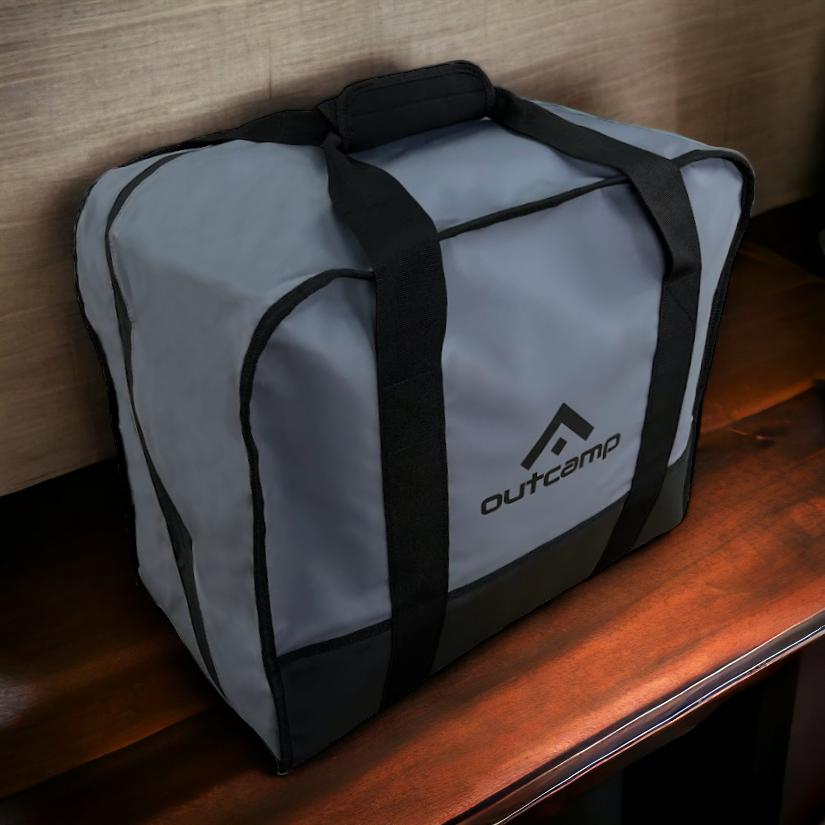
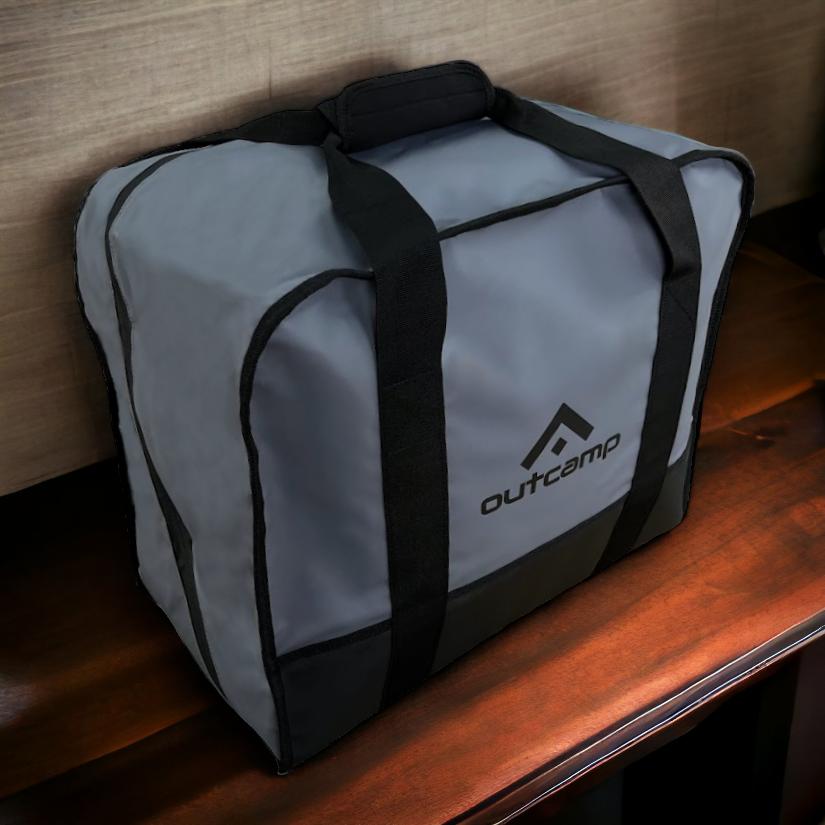
If staying connected matters — whether for remote work, keeping the family updated, or simply having a weather forecast before heading out — a portable satellite internet setup like Starlink is worth considering. The Tablelands' elevated terrain and open sky views at most campgrounds make it well-suited to satellite connectivity. Outcamp carries a range of Starlink accessories including carry bags, mounts, and power solutions designed for exactly this kind of touring, letting you set up reliable internet at camp without relying on patchy mobile signal.
Power and Essentials
The cooler climate on the Tablelands means your camping fridge will not be working as hard as it does on the coast, which is a welcome bonus for battery life. That said, if you are spending multiple nights at unpowered bush camps around Lake Tinaroo or the southern forests, a solid 12-volt setup with solar is still essential. The shorter winter days at this latitude mean solar panels need clear sky exposure during the middle of the day to keep up with demand.
Fuel is available in all the main Tablelands towns, with Atherton offering the widest selection of servos. If you are heading into the southern tracks around Koombooloomba or Blencoe Falls, top up in Ravenshoe — there is nothing further south until you reach the lowlands. Water at bush camps should be treated or filtered, even if the creeks look clean. A portable water filter is a sensible addition to your kit for this region, where the water sources are plentiful but not guaranteed safe.
Supplies are easy to find. Atherton has supermarkets and hardware stores, Yungaburra has a general store with the basics, and Malanda has a surprisingly good selection for a small town. If you are the type who likes to eat well on the road, the Tablelands are famous for their local produce — avocados, macadamias, coffee, and cheese are all sourced from farms you will drive past. The Gallo Dairyland in Atherton and the Malanda Dairy Centre are worth a stop for anyone who appreciates knowing where their food comes from.