


Camping Headlamps and Portable Lighting: The Complete Guide for Australian Adventurers
Lighting is one of those categories that campers tend to underinvest in until they have spent a frustrating night fumbling around in the dark looking for their water bottle or tripping over tent pegs. Good camping lighting — particularly a quality headlamp — transforms the after-dark experience at camp, whether you are cooking dinner, reading in the tent, navigating to the bathroom block, or finding your way back from the campfire.
Australian camping conditions present some specific challenges: extreme heat in summer affects battery performance, insects are attracted to white light, and remote camping often means you are relying entirely on your own lighting rather than any ambient illumination. Understanding these factors helps you choose gear that actually works well in Australian conditions rather than gear that looks impressive in a shop.
Camping Headlamps: The Most Important Light You Will Own
A headlamp is hands-down the most versatile piece of lighting gear you can carry camping. It keeps your hands free for cooking, setting up tent, climbing over rocks, or carrying firewood, while directing light exactly where you are looking. A quality headlamp worn around the neck of someone who knows how to use it does the job of multiple other lights combined.
The headlamp market has matured significantly over the past decade. Modern LEDs produce extraordinary output from small, lightweight units that would have seemed impossible not long ago. The key is understanding the specifications and what they mean in real-world use — because not all lumens are equal, and a headlamp that claims 1,000 lumens on maximum is often less useful in practice than one with 400 lumens and excellent beam quality, smart battery management, and a comfortable fit.
Understanding Headlamp Specifications
Lumen output is the most advertised specification, but it tells only part of the story. Maximum lumen output on most headlamps drains the battery rapidly and is only useful for short bursts — navigating through thick bush, spotting wildlife, or working in absolute darkness. More practically useful is the mid-range output, which is what you will use for 90 percent of camp tasks. A headlamp that runs for 8 hours at 100 lumens is more useful for camping than one that runs for 90 minutes at 1,000 lumens.
Beam pattern matters enormously for different tasks. A flood beam spreads light wide and is ideal for camp tasks, cooking, and reading — you want to illuminate your immediate surroundings without a harsh spot in the centre. A focused spot beam reaches further and is better for navigating trails, spotting trail markers, or searching for something at distance. The best headlamps for Australian camping offer both options, with a simple switch or button to toggle between them.
Battery Type and Australian Conditions
The choice between rechargeable and disposable battery headlamps matters more in the Australian context than it might elsewhere. Rechargeable USB headlamps are more economical and environmentally sound, but in remote camping without reliable solar charging, you need the confidence of knowing you can swap in fresh AA or AAA batteries from a servo. Many experienced Australian campers choose headlamps with dual-fuel capability — rechargeable when convenient, standard batteries as a backup.
Heat affects battery performance significantly. A lithium battery headlamp that performs brilliantly in mild temperatures can lose 20 to 30 percent of its effective runtime in sustained 40-degree heat. For summer outback or tropical camping, this is a genuine consideration. Brands like Petzl, Black Diamond, and LED Lenser design their higher-end models to manage heat more effectively, and they are worth the price premium if you are camping in extreme temperatures.
Top Headlamp Picks for Australian Camping
The Petzl Actik Core sits at the sweet spot for most Australian campers — 600 lumens maximum, hybrid battery capability (USB rechargeable with standard AAA backup), a comfortable and adjustable headband, and a red light mode that preserves night vision and does not attract insects the way white light does. At around $90-100, it is not the cheapest option but it will last years of hard use.
For serious bushwalkers and hikers who need the lightest possible pack weight, the Black Diamond Spot 400-R delivers excellent performance in a compact unit, and its IPX8 waterproofing rating handles Australian creek crossings and unexpected downpours comfortably. LED Lenser's H7R Core is a premium option with exceptional build quality and beam clarity — it is the headlamp that trade workers and search and rescue volunteers reach for when reliability is non-negotiable.
Portable Lanterns: Base Camp Lighting Done Right
Where a headlamp handles individual tasks and movement, a lantern creates ambient light that makes your camp comfortable and functional after dark. A good lantern hung inside the tent vestibule or from an awning frame turns the camp into a genuinely liveable space — you can read, play cards, sort gear, or simply sit comfortably in the evening without squinting at a single directed beam.
The best camping lanterns for Australian conditions balance three things: light quality (warm or neutral white, not the clinical blue-white of cheap LEDs), runtime (you want to last comfortably through a long evening), and packability. Weight and bulk matter when you are hiking, but for 4x4 and caravan camping they are secondary to light quality and runtime.
LED Lanterns for Caravan and Car Camping
For 4x4 and caravan camping where weight is less of a concern, a larger lantern with greater output and longer runtime makes sense. The Goal Zero Lighthouse 600 is a popular choice among Australian overlanders — it produces up to 600 lumens, has a built-in rechargeable battery that handles USB charging, and includes a hand crank for emergency power situations. The warm white output is easy on the eyes for extended evening use.
Coleman LED lanterns represent excellent value for families camping with an established campsite. The CPX 6 and 4D Battery LED lanterns produce wide flood illumination, run for many hours on standard batteries, and are robust enough to handle the rough treatment that family camping inevitably involves. The trade-off is that they are heavier and bulkier than purpose-designed adventure lanterns — fine for car camping but not practical for serious hiking.
Collapsible and Ultralight Lanterns for Hiking
For backpackers and bushwalkers who need to count every gram, collapsible LED lanterns have become remarkably capable. The Petzl Noctilight combines with Petzl headlamps to create a lantern using the headlamp itself as the light source, eliminating the need to carry separate lighting at all. The Black Diamond Moji rechargeable lantern collapses flat for packing and produces enough light for a tent or small shelter at a weight that barely registers.
The Uco Sprout Plus is worth a mention for its balance of packability, output, and runtime — it produces 150 lumens from a USB-rechargeable battery and collapses small enough to fit in a trouser pocket. For multiday hiking in Australia's national parks where you typically have a campfire for primary lighting, a compact lantern like this provides all the supplementary light you need without adding meaningful weight to your pack.
Red Light Mode: A Feature Worth Prioritising
Red light deserves a section of its own because it is genuinely useful in the Australian camping context in two distinct ways. First, red light preserves night vision — your eyes adapted to darkness can see adequately by red light without the 20-minute readjustment period that follows exposure to white light. This matters for navigating camp at night without waking others, stargazing, and spotting nocturnal wildlife.
Second, and practically important in Australian conditions, insects are far less attracted to red light than to white light. If you have spent a summer night in northern Queensland, the Northern Territory, or coastal New South Wales with a white lantern running, you know the insect situation can become genuinely unpleasant. Switching to red light reduces but does not eliminate insect attraction — particularly useful when cooking or sitting outside in the evenings.
Choosing Headlamps with Good Red Light Implementation
Not all red light modes are equal. Some headlamps offer a single dim red LED that provides barely enough light to navigate without stubbing your toe. Others, like the Petzl Actik Core and Black Diamond Spot series, offer multiple red light levels with good coverage that you can comfortably read by. When evaluating a headlamp for Australian use, always check the red light specification alongside the white light output.
A useful feature found on some premium headlamps is a red light mode accessible without cycling through the maximum white brightness first — useful at 3am in camp when you need to quietly find your water bottle without waking your partner or tent neighbours. Petzl's CORE-based headlamps include this feature via their multi-click interface, which is one reason they are so popular with experienced campers.
Camp String Lights and Mood Lighting for Extended Stays
For caravanners and campers who spend multiple nights in one location — particularly around popular destinations where you set up a proper camp — string lights transform the atmosphere of an outdoor space. Solar-powered LED string lights hung around an awning or between trees create a warm, inviting space that makes evening hours genuinely enjoyable rather than functional.
USB-rechargeable string lights are the practical choice for caravan and 4x4 camping, where a 12V outlet or power bank can keep them topped up from your vehicle's solar system. Many of the options from brands like Luminoodle and Goal Zero are specifically designed for outdoor use with weather resistance ratings appropriate for Australian conditions — important given the afternoon thunderstorms common in Queensland summers and the coastal environments where many Australian camping trips take place.
Solar String Lights for Remote Camping
Pure solar string lights — with a small panel that charges during the day to power LEDs in the evening — remove the need for any power source entirely and are ideal for campers who prefer to minimise their electrical footprint. Quality matters significantly in this category: cheap solar string lights often have undersized panels or poor-quality batteries that deliver disappointing runtime after cloudy days. Look for lights with panels larger than 5W and lithium batteries rather than NiMH for better performance in Australian heat.
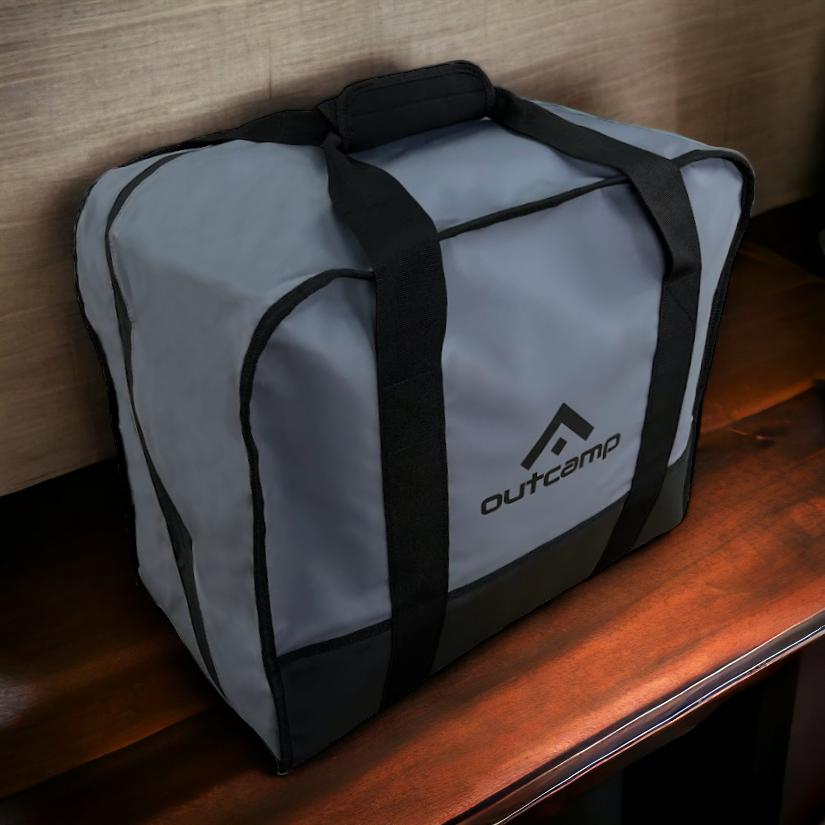
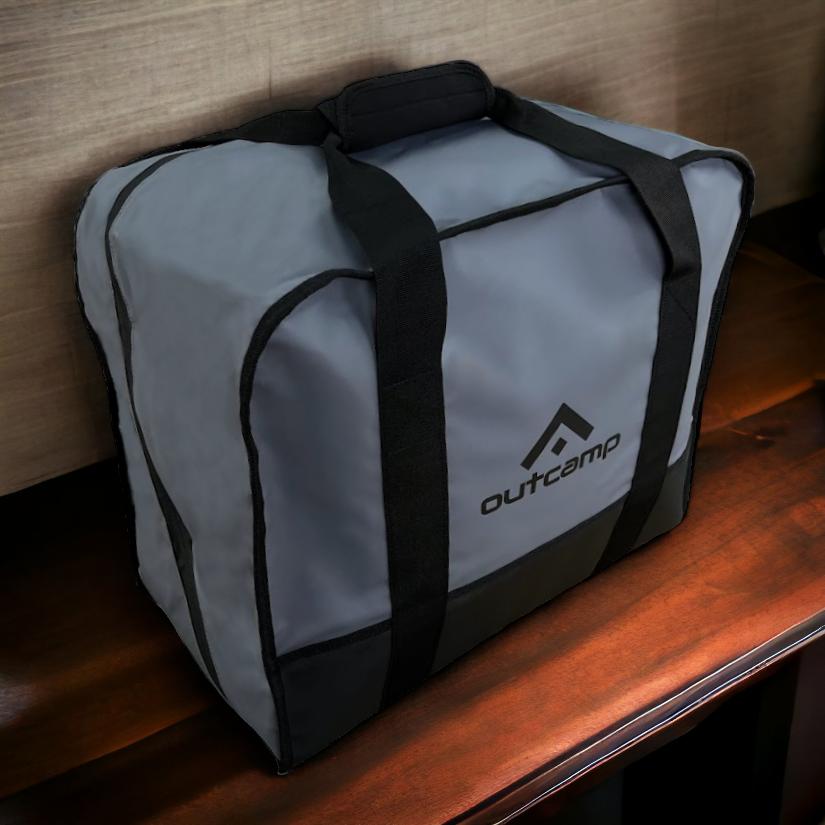
However you approach your camp lighting setup, the goal is the same: enough light to work comfortably, the right light quality for each task, and reliability that does not let you down when you need it. Outcamp's range of outdoor accessories includes solutions for powering and managing your camp lighting setup — worth exploring alongside the rest of your caravan and 4x4 gear as you build the kit for your next adventure.




Leave a comment (all fields required)